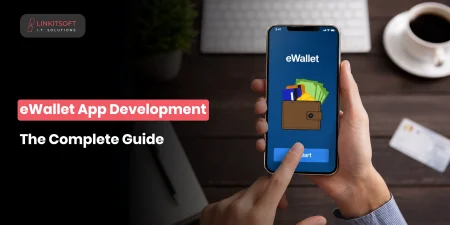


Imagine going out for coffee but realizing that you forgot your wallet. You’ve got no cash and no cards on you. You’ll probably start panicking. But not anymore… With a simple tap on your phone, your coffee’s paid for, and you’re on your way. That’s the magic of ewallet apps.
They’ve turned our smartphones into digital vaults, reshaping how we pay, save, and even split dinner bills with friends. You get to do all this without worrying about carrying loose change around with you. Hence, there’s no risk of theft.
If you’re thinking about developing your own ewallet app, you’re not alone. It gives so many benefits and makes so many things easier. Everybody would want one. Yet, the process is complex. Digital payments are booming. Users are demanding faster and smarter ways to manage their money. They want a Fintech app where their information and earnings stay safe.
So, now is the time. These days, building an ewallet app is more relevant than ever. But before you jump into it, consider a few things. Things might get overwhelming quickly.
But don’t worry, though. We know the struggle. That’s why we are presenting this guide to you. Here, we will break down everything you need to know about ewallet app development. Let’s get started and learn more about ewallets.
Understanding ewallet apps
So, you want to create a mobile banking application. It could be an amazing way for your business to make money. But how does it work? What exactly is an ewallet app? So, first, it works the same way as your physical wallet. But it’s just digital and smarter.
It securely stores your credit/debit card information. This also includes loyalty cards and even cryptocurrencies. All of this is kept in one place. Where? Your mobile phone! It’s easily available in your pocket at all times.
With just a few taps, you can easily use your money. Think of how easy it is to pay for groceries, transfer money, and do more. You don’t have to worry about excess cash. Plus, there is no plastic.
Think about PayPal. It has made payments faster. They are contactless and way more convenient. ewallets aren’t just a trend. They are the future of financial transactions. There are already huge numbers of digital wallet users worldwide. It is expected to rise from 4.4 billion in 2024. It has the potential to go up to 5.8 billion by 2029! That’s a 35% increase over the next five years.
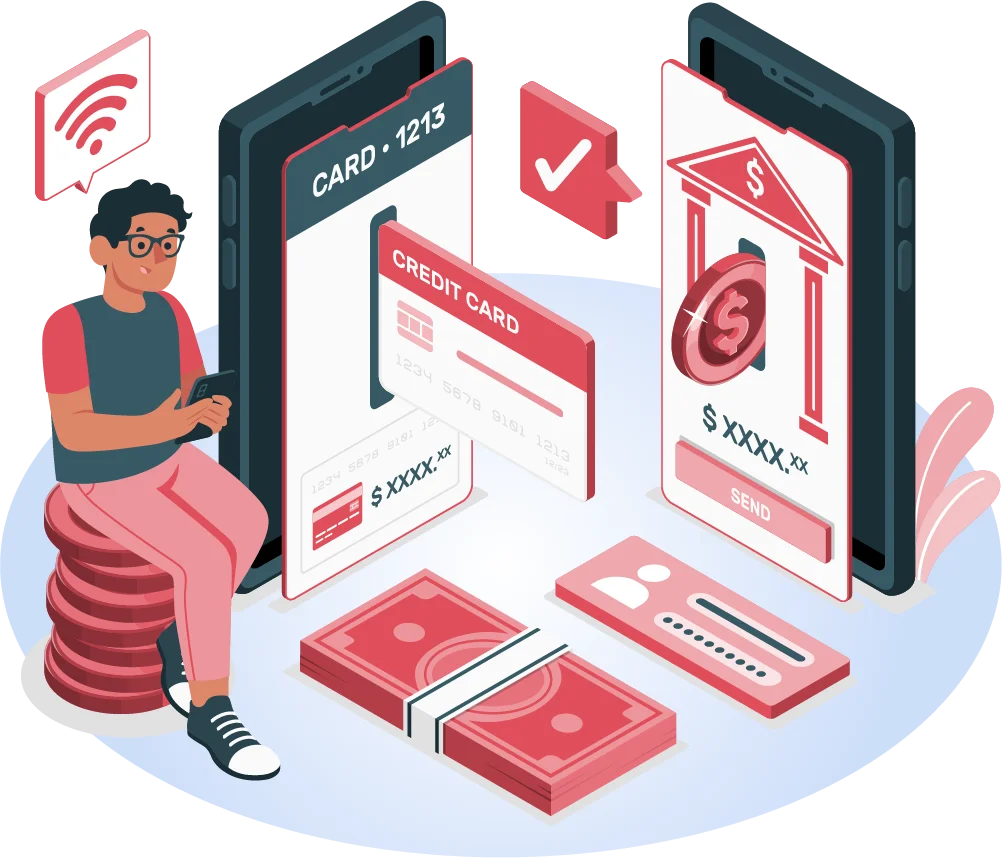
What are the benefits of ewallet app development?
Building a great ewallet app isn’t just about enabling payments. It’s about creating a unified, secure, and user-friendly experience that people can trust. Let’s check out the other benefits of ewallet app development:
- Enhanced Convenience: Users can make payments and transfer funds quickly and easily. They can manage their finances anytime and anywhere. It’s all directly from their smartphones.
- Security Assurance: FinTech apps have powerful encryption and biometric authentication. They even have real-time fraud detection. This way, they provide top-tier security to protect sensitive financial data.
- Cross-Border Transactions: ewallets support international payments and currency conversion. This makes it so much more ideal for global users and businesses. No more worrying about international payments.
- Faster Transfers: Instant payments and transfers mean no more waiting in lines. You don’t have to deal with delays anymore. This makes ewallets perfect for the fast-paced world we live in.
- Cost-Effective: These apps have lower transaction fees. They eliminate the need for physical infrastructure. Additionally, you don’t have to go through the whole effort of going to a bank.
These benefits highlight how ewallet apps can improve users’ financial lives. They also benefit businesses and developers. Mobile app testing is also a vital part of iOS app development. Similarly, the same applies to ewallet app development.
What are the types of ewallet apps?
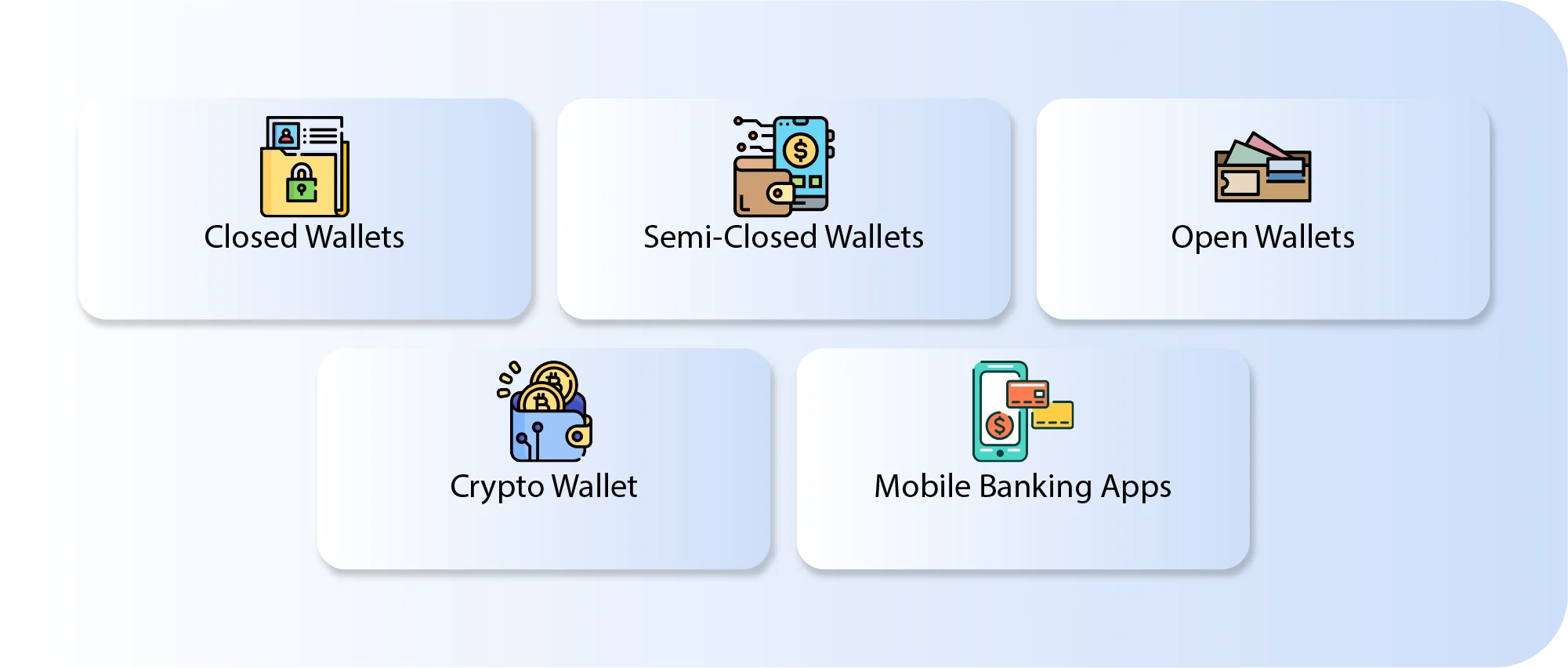
So, you have got some FinTech app ideas. Your business is now demanding an ewallet app. But do you know about the different types of ewallet mobile apps? You should be aware of these to finalize the kind of banking app you need.
Closed Wallets
You’ve probably seen an individual app for your favorite food chains. Think about KFC here. They have their own app for transactions. Here, you can only transfer money to their accounts. You can’t transfer money to another restaurant or a friend from the KFC app.
That’s what a closed wallet is. It’s a platform through which you can easily make payments. But only to a specific company. However, this form of ewallet app will only work for branded retail stores or certain individual platforms.
This closed wallet will give the brand a huge boost. This is especially true regarding reputation and customer loyalty. Your company will even generate more revenue through it.
Semi-Closed Wallets
Semi-closed wallets allow users to store money and make payments but with a limited set of merchants or service providers. These wallets cannot withdraw funds or transfer money to bank accounts. Paytm is an example of a semi-closed wallet.
These wallets typically work with a network of affiliated merchants. While users can store and spend money, they can’t use it everywhere like in an open wallet. So, these kinds of wallets have certain needs. This is why they aren’t that popular.
This type of wallet works best for businesses that want to create an app with a large but specific network of retailers or partners. This way, things are more secure.
Open Wallets
Open wallets are easily the most versatile type of digital wallet. They are also one of the most popular. They are linked to your main bank account or credit card. This way, users can make purchases both online and at physical stores.
These wallets can also transfer funds to other wallets or even bank accounts. PayPal and Apple Pay are excellent examples of open wallets. In iOS app development, Apple Pay alone had over 640 million users in 2024. Think of how big these numbers are!
Financial institutions usually provide these wallets. Large corporations can even make them and allow them to support a broad range of transactions. They are best for businesses that want to provide a complete payment solution.
Crypto Wallet
Crypto wallets allow users to store, send, and receive cryptocurrencies. This includes Bitcoin and others. These wallets offer a secure way to manage digital assets. This often provides a private key for safe transactions.
Crypto wallets can be either online wallets or they could just be there for offline storage. They support a range of crypto transactions. This includes buying, selling, and trading digital currencies. A popular example of this can be Coinbase.
These types of ewallet apps are great for businesses in the cryptocurrency space. They’re also good for those looking to integrate blockchain-based payments and services.
Mobile Banking Apps
Maybe you’re a bank that wants to create its own digital transaction app. This is a blend of finance and technology and we call it a Fintech app. So, mobile banking apps are excellent options for Banks and financial institutions.
Mobile banking apps offer a wide range of services. These go from simple transactions to advanced banking functions. This even involves loan applications and investments. They can be categorized as the most complex type of ewallets.
The Bank of America mobile banking app can be a prime example of this. It is a digital mobile banking space that reflects how effective banking app development services shape user experience. Moreover, it provides several features. They are essential for a company its size.
What are the features you need in an ewallet?
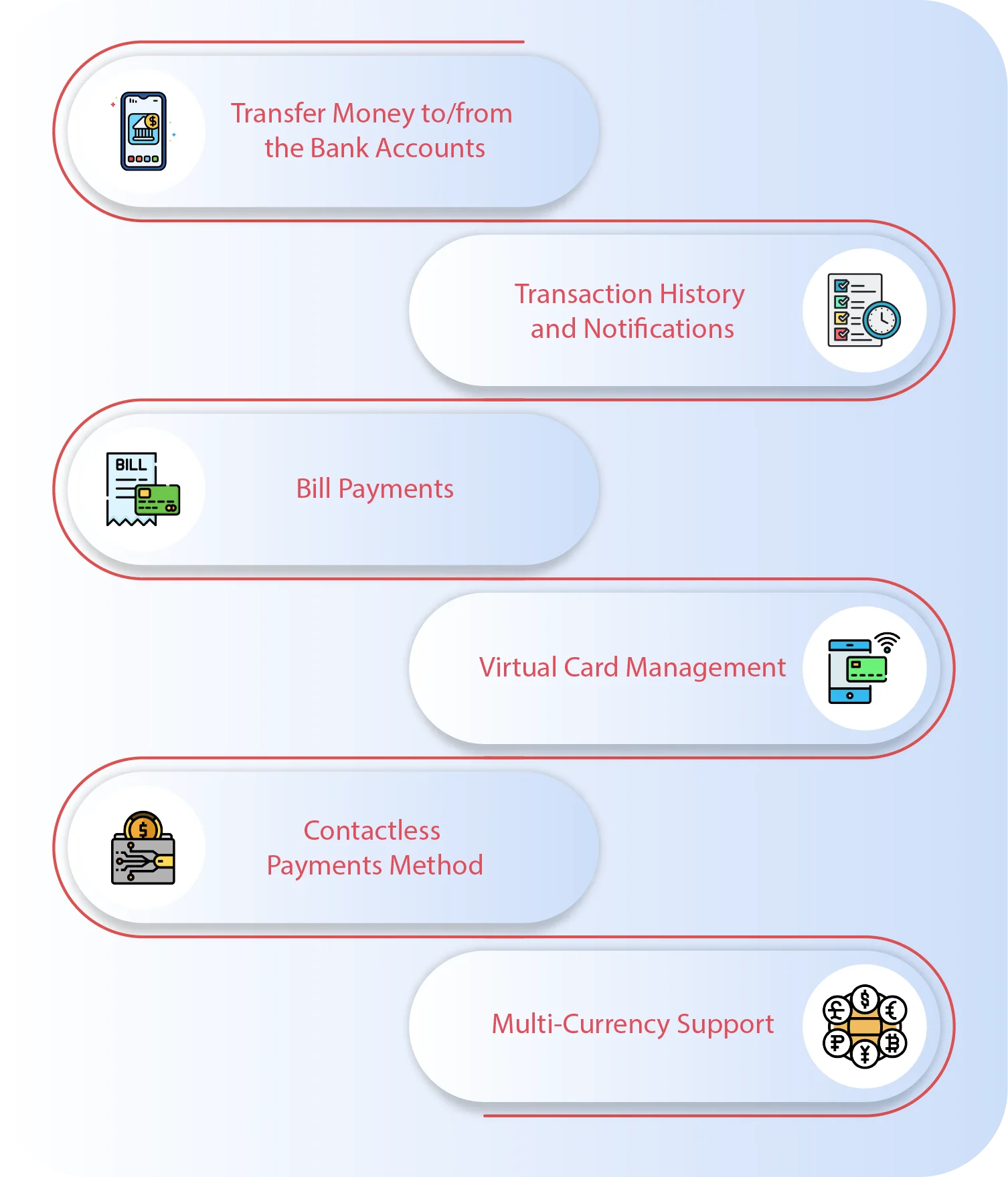
Every app has its own unique features. This is because there are different types of applications. Think about gaming apps vs ewallet apps. Gaming apps have certain features like touchscreen sensitivity or sound optimization that you wouldn’t need in a banking app. Well, let’s explore the features you need to have in a bank account.
Transfer Money to/from the Bank Accounts
Initially, this is the purpose of ewallet app development in the first place. The main objective is to transfer money easily. Think of how it gets hard to keep money safe with you. There is a constant chance of theft or loss. Then, you don’t know when you might meet someone. So, there are other struggles.
With an ewallet app, you don’t have to worry about any of this. You just need another person’s account number. You enter it and tap a few more times, and the money securely reaches them. This feature is unique to only fintech apps.
Transaction History and Notifications
After you create mobile banking apps, you take responsibility. It’s true that it makes things easy to transfer money online. Yet, it isn’t so secure. This is because sometimes, technical delays cause issues. Even then, it’s not that much of a problem. Still, you need a way to prove that you’ve made the transaction. During this time, transaction history comes in.
Notifications also give proof of transactions. They tell you when you receive a transaction. They also tell you when your account has received money. This way, you’re able to keep track of your transactions, and you have a record of them.
Bill Payments
We all know the struggle of standing in long lines to pay your monthly bills. Those efforts of paying your electricity bills on hot summer days are now gone. Ewallet app development makes bill payment so much easier. However, it’s essential to make it safe. So, as the ewallet app developer, you need to ensure secure payments.
You can do this by integrating third-party services. This way, you will simplify the bill payment process for users. People can then easily pay their electricity, gas, and water bills from your ewallet app. Mobile app testing is mandatory in ewallet apps.
Virtual Card Management
Credit and debit cards have made life so much easier. There’s never a need to carry around change or coins. You easily have one card with all your finances. They make it so easy to manage your savings. Yet, you need a platform where you can review these cards and manage them. Additionally, you need to ensure that your ewallet app complies with PCI-DCC security practices. They ensure that a client’s data stays safe.
Cards can also be of different types. They are made according to a user’s needs. People should be able to upgrade to a new card whenever they need. Your app should also provide a secure, one-tap system to add money to their wallets.
Contactless Payments Method
Imagine you’re outside window shopping with your friends. You don’t have extra cash with you. Then, you’re also carrying a wallet that does not have your card in it. Yet, when passing by a store, you really like a pair of jeans. You want them, but neither you nor your friend have extra money. However, you have some cash in your ewallet app. What would you do in this situation?
This is where a contactless payment method comes in. It uses technologies like NFC and QR Codes. You have probably already seen them in retail chains. That’s because of their ease of use. Your ewallet should provide contactless payments because they are growing.
Multi-Currency Support
Think of PayPal here. It’s a digital ewallet app. It works in several countries worldwide. On that platform, users can hold money in over 25 currencies. Additionally, they can withdraw money in 56 currencies. It doesn’t end here. PayPal users can also receive money in 100+ currencies. Due to this, PayPal is the preferred ewallet platform. It’s the top secure choice for online transactions around the globe.
PayPal is so trusted that 36% of North American retailers were already accepting PayPal as a payment method in December 2018. If your app is aiming to manage worldwide payments, then multi-currency support is vital. In early 2024, PayPal had 427 million users. With the right development efforts and mobile app testing, this could be your ewallet app, too.
What is the ewallet app development process?
The ewallet app development process is like any other app development process. Yet, it comes with its own differences and challenges. There may be a lot of perks in owning an ewallet app, yet it’s vital to pay strict attention during development.
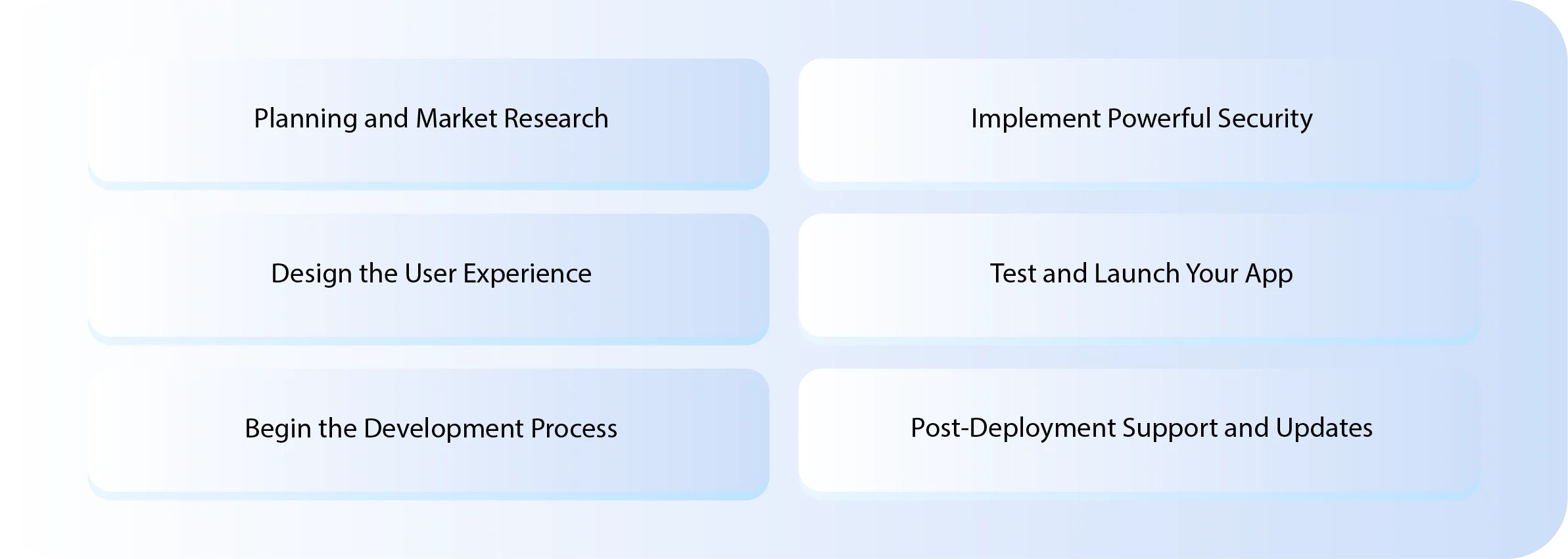
Mobile app testing is also important. Over 75% of the total cost of software is spent on maintenance and bug fixes. This happens after launch. So, mobile app testing for your fintech app can help you a lot here. Anyways, let’s get into the ewallet development process:
Planning and Market Research
Every software’s development needs to begin with planning. You may get an interesting idea but you need to actually plan and see how it can improve. The purpose isn’t only to have your own app. It starts with making something that directly makes you stand out and look better than your competitors. So you should:
- Start brainstorming. Write down the features you want in your ewallet app.
- Research your competitors. Look at what they’re doing. Find out where they are lacking.
Creating a plan for your app involves taking notes. You get to decide what you want your app to have easily. You can do this alone or collaborate with someone. Once you have a plan, let’s move further.
Design the User Experience
Designing a wireframe for your app allows you to visualize before development. This helps you save time and money. Additionally, you can create site maps and user journeys. This will give you a clear idea of how users will navigate your app. What features will they use? What page will they go to when they want to perform a specific task? A prototype will help you decide this. Hence, you should:
- Use a free tool like Figma to create a working prototype for your project. It should closely resemble your final app.
- Focus on the user experience and design. This way, you can create a beautiful and smooth user interface.
The user interface plays an important role in any app’s creation. Many users leave when the UI is confusing. Create an easy-to-understand but creative user interface. Around 80% of people are willing to pay extra for a better user experience design. Investing in it is essential for success.
Begin the Development Process
So, now that you have created the user interface, you know what features you want in your ewallet app. It’s time to start developing your fintech app ideas. It’s like any other mobile app development process. But, with ewallet app development, you need to be extra careful about bugs. This is because of how sensitive the information is on these apps. So:
- Ensure you find an experienced development team. It should be capable of carefully developing your ewallet app.
- Add in extra secure features. Users care about their privacy. They’ll only stay on your app if they feel safe.
How long the development time takes, comes down to your requirements. With every feature you add, the costs and time period increase. Essentially, an ewallet app’s development process can even take months or longer.
Implement Powerful Security
Do not skip this step at any cost. If you care about your company’s reputation and user data, then you need to use the best security practices. Over 66% of US clients would not trust a company that has faced a data breach with their data before. This means that if you face even one threat, you could lose a lot of clients. So, you should:
- Comply with the security and privacy standards. Make sure you keep client data safe.
- Add powerful cybersecurity measures. Bank accounts are always on the line.
Adding strong security for ewallet apps comes without saying. This isn’t something that you should take lightly. When you prioritize your users, you naturally want to provide them with the best services.
Test and Launch Your App
So, the mobile app development process for your ewallet platform is almost complete. You have the UI/UX design ready. The development phase is also nearing an end. You think you’re getting closer to your goal. You are, but this is where you meet a new challenge. Mobile app testing. With ewallet apps, you’ll find this to be extra daunting. You need to:
- Conduct extensive testing. During this time, you’ll also have to iterate on features.
- Ensure that there are zero bugs and crashes before launch. This guarantees smooth deployment and fewer expenses later on.
Mobile app testing is an essential aspect of app development. Around 62% of people uninstall an app if they experience crashes after launch. So, you should conduct proper testing for your app before launching it.
Post-Deployment Support and Updates
Remember that notification you receive at 2 am from your bank? It tells you that you won’t be able to make transactions because of maintenance. Yes, well, that maintenance is critical to keep your data safe. Sure, it might create small issues, but it’s for you. This is why it takes place after midnight. During this time, transactions are lower. You should:
- Monitor your ewallet app’s health. Make sure that it is safe from threats. It needs to be up-to-date with security standards.
- Provide updates with time. Either add new features or bug fixes.
After deploying your ewallet app, you’ll be a part of the market. Now, users will start installing your app. Users will rarely find some issues, but they may find some issues. You can improve them post-launch and add new updates easily.
How do you implement strong security in ewallet app development?
You know you have to add strong security during ewallet app development. It is vital, and you can’t ignore it. So, how exactly do you add powerful security to your ewallet app? Let’s see:
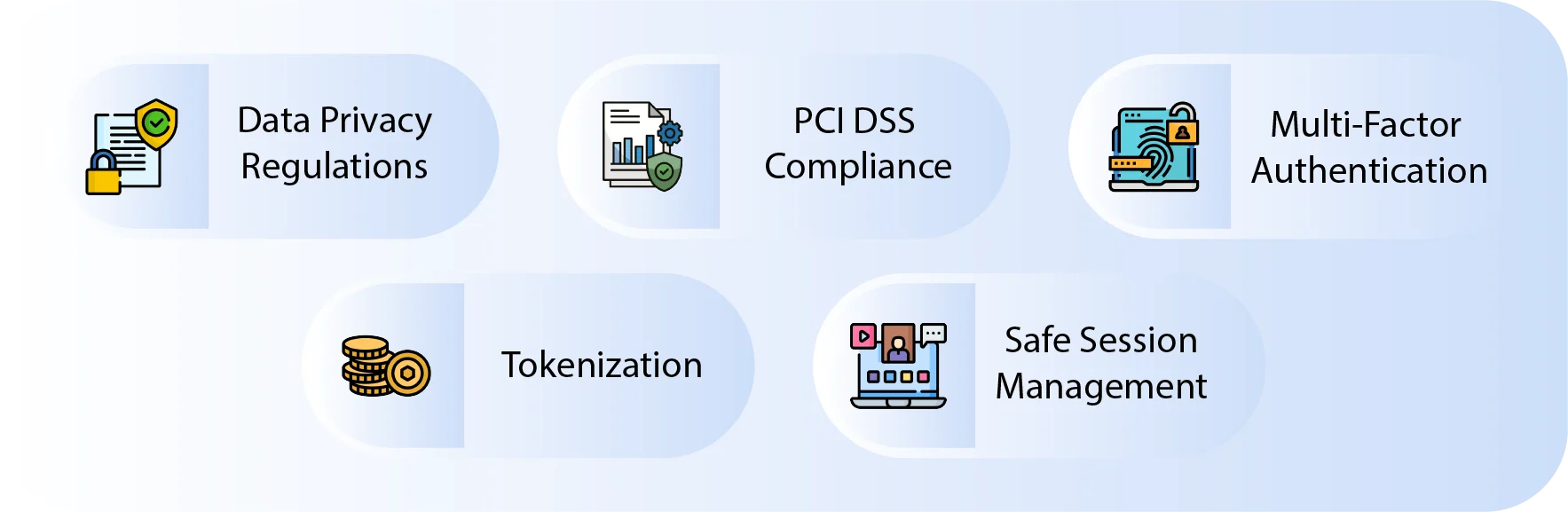
Data Privacy Regulations
In ewallet app development, security isn’t optional. Your app should adhere to data protection laws like GDPR and CCPA. Compliance isn’t just about avoiding fines. It’s about building user confidence by taking their privacy seriously.
PCI DSS Compliance
PCI DSS stands for Payment Card Industry Data Security Standards. These are security standards that help protect your data. This is specifically the one connected to your card.
Multi-Factor Authentication
You need to add layers to your login process. With MFA, users not only enter a password but also verify through biometrics or a one-time code—making it nearly impossible for intruders to break in.
Tokenization
Forget storing sensitive data as-is. Go for tokenization to replace user details with secure tokens—rendering them useless even if intercepted during a cyberattack. Think ahead.
Safe Session Management
Every user session should be monitored and protected. You should add features like auto timeouts and session expiration. Moreover, secure logout flows prevent session hijacking and unauthorized access.
Make sure you provide robust security for your ewallet app. Once users start trusting you, your app will begin generating high revenue. Our developers make sure they add the strongest security features while delivering high performance.
A study revealed that over 50% of ewallet apps are susceptible to fraud and data theft. Why? It is due to inadequate security layers. Do better for your clients by implementing more powerful security.
How can Linkitsoft help with your ewallet app development?
There are various benefits for your business when you consider ewallet app development. Yet, it isn’t just a casual platform to store money. Sure, it’s often very easy to send and receive payments. You get to tap a few times, and your bills are paid. Yet, you’ll learn about the challenges when you get to the development side.
When you create a mobile banking application, you have to take responsibility. But for what? Well, when clients start using it, they’ll begin trusting you. That information isn’t something casual. It is their earnings. The ones they work hard for. They’ll even give your app access to their other sensitive information.
Hence, it’s essential that you have a powerful development team by your side. This team should be able to ensure that your platform is secure. It should comply with security and privacy standards. It’s vital for a FinTech app. Where can you find that kind of expertise? These days, finding one at an affordable price can seem to be a heavy challenge.
But that’s why Linkitsoft is here. We’re here to present our developers. They are capable of secure and powerful ewallet app development. They are aware of the importance of high performance and security for ewallet apps. So, they ensure that they are safe, secure, and fast every time they create mobile banking apps.
Wrapping it up
Your Fintech app ideas could be a reality. Yet, it isn’t just limited to that. It should be a powerful reality. One where you get to make more than you’re investing. How else will you make a profit from this? In the end, you aren’t just developing your ewallet app for the fun of it. You’re expecting to earn, too, right?
At Linkitsoft, we understand that. We have had several clients struggle with the development phase. Yet, ewallet app development is and more about implementing powerful security. This is why we ensure that:
- Our developers ensure powerful security. They implement best practices like end-to-end encryption, authentication, and more.
- We design an intuitive and user-friendly interface. It allows users to navigate account details and transactions easily.
- We build smooth fund transfer systems. This enables quick and secure payments. Whether it’s within the bank or external accounts.
- We implement customizable notifications that alert users of every activity—keeping them informed and secure.
- The app’s backend is structured for high scalability and reliability. This way, your app can handle large volumes of concurrent users smoothly.
If you want to add any additional features, our company is always here for you. We understand how necessary it is for an ewallet app to be smooth and quick. 65% of adults in the U.S. say that they use a digital wallet at least once a month. So? Everyone wants that convenience. But they want it with high performance.
So, connect with us today. Let’s work together and create mobile banking apps that will become the next favorite. Linkitsoft can be the partner you need to handle this. Let’s get started with ewallet app development!