Enterprise software has become a core part of modern digital infrastructure. Businesses rely on enterprise apps to streamline operations, connect departments, manage large volumes of data, and support complex internal workflows.
In 2026, these platforms play a key role in digital transformation as organizations move from fragmented tools to integrated systems. They use them to automate processes and deliver real-time insights for better decision-making.
Why Are Companies Investing in Enterprise Apps in 2026 (With Market Data)?
Businesses today operate across multiple digital channels, handle massive data volumes, and coordinate teams distributed across departments and geographic regions. Managing this level of complexity without centralized software systems is nearly impossible.
- The global enterprise software market is genuinely projected to reach over $517 billion by 2026, according to Statista.
- Research from IDC also indicates that global spending on digital transformation technologies is projected to exceed $3.4 trillion by 2026, with enterprise software playing a major role in that investment.
- A McKinsey study found that nearly 70% of organizations worldwide are accelerating automation initiatives, many of which rely on enterprise apps.
What is the Cost of Enterprise App Development Based on Complexity?
The cost of enterprise app development varies primarily based on the complexity of the system being built. Enterprise platforms range from small internal tools used by limited teams to large-scale systems supporting thousands of users.
Understanding these categories helps businesses estimate realistic development budgets.
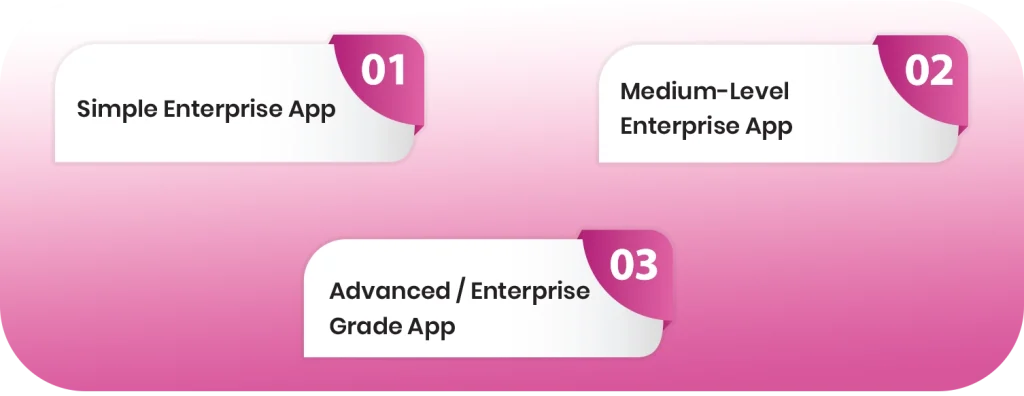
Simple Enterprise App
Estimated Cost
$30,000 – $70,000
Simple enterprise apps are typically designed for internal use within a single department or small team. These systems are usually built to solve specific operational problems rather than manage organization-wide processes.
Typical Use Cases
- HR management tools
- Internal communication dashboards
- Basic workflow management systems
Common Features
- User authentication
- Basic dashboard interface
- Data management systems
- Limited role-based access control
- Reporting tools
Medium-Level Enterprise App
Estimated Cost
$70,000 – $180,000
Medium-level enterprise apps are designed for organizations that require coordination across multiple departments. These systems often serve as central operational hubs where data, workflows, and collaboration tools come together.
Typical Use Cases
- CRM systems
- Project management platforms
- Inventory and supply chain tools
Common Features
- Advanced dashboards
- Workflow automation systems
- Third-party integrations
- Analytics and reporting tools
- Multi-user collaboration capabilities
Advanced / Enterprise-Grade App
Estimated Cost
$180,000 – $500,000+
Enterprise-grade apps represent the most complex type of enterprise software. These systems support large organizations and often serve as mission-critical infrastructure.
Typical Use Cases
- ERP platforms
- Large SaaS enterprise platforms
- Multi-tenant enterprise systems
Common Features
- Advanced automation systems
- AI and machine learning analytics
- Multi-system integrations
- Enterprise-grade security frameworks
- Role-based access control
- Multi-region cloud deployment
- Custom workflow engines
Quick Cost Comparison
| App Type | Typical Cost Range | Best For |
| Simple EnterpriseApp | $30,000 – $70,000 | Small internal systems |
| Medium-Level Enterprise App | $70,000 – $180,000 | Growing companies |
| Advanced Enterprise App | $180,000 – $500,000+ | Large enterprises |
What Are the Major Factors That Influence Enterprise App Development Cost?
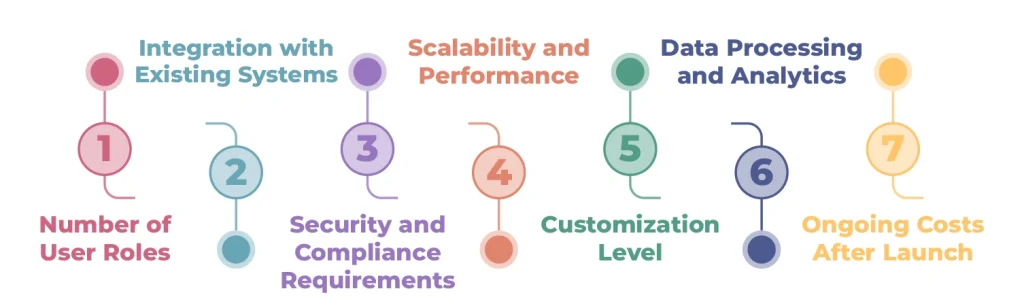
Enterprise apps rarely follow a standardized structure. Every organization operates with different workflows and operational goals, which means enterprise software must often be built around unique business requirements.
Number of User Roles
Enterprise apps typically support multiple user roles across different departments. Enterprise systems must accommodate administrators, managers, employees, customers, and sometimes external vendors or partners.
Each role requires different permissions, interfaces, and access levels within the system. As the number of roles increases, so does the complexity of development, which naturally leads to higher development costs.
Integration with Existing Systems
Most organizations already rely on a variety of software systems to manage their operations. When a new enterprise app is developed, it often needs to integrate with these existing platforms. This ensures smooth data flow across the whole organization.
Because of the technical work involved, complex integrations can significantly increase both development time and project costs.
Security and Compliance Requirements
Security is a major priority in enterprise app development. This is because these systems often manage sensitive business and customer data. Organizations must ensure that their apps meet strict security standards and comply with regulatory requirements.
Designing and maintaining this level of security requires specialized expertise and additional development effort, which increases both the initial development budget and long-term maintenance costs.
Scalability and Performance
Enterprise systems must be able to handle huge numbers of users and high volumes of data without performance issues. As businesses grow, their software platforms must scale accordingly.
Achieving this scalability requires careful infrastructure planning. Although these measures increase development complexity, they ensure the system can grow alongside the organization without requiring expensive redesigns later.
Customization Level
Enterprise workflows are rarely identical across organizations, which means many companies require software made according to their specific operational processes.
While customization allows enterprise software to align closely with business operations, it also increases development time and cost because more features must be designed and built from scratch.
Data Processing and Analytics
Modern enterprise apps rely heavily on data analysis to support decision-making. Businesses expect their software platforms to collect, process, and visualize operational data in meaningful ways.
Implementing these advanced analytics capabilities requires additional infrastructure and engineering expertise, which contributes to higher development costs
Ongoing Costs After Launch
An enterprise app requires continuous investment even after deployment. Launching the app is only the beginning of its lifecycle.
Maintenance activities such as bug fixes, feature updates, and security patches are essential for keeping enterprise systems stable and secure.
Infrastructure costs also continue after launch. Most enterprise apps operate on cloud platforms that require ongoing hosting and database management.
Industry estimates suggest that annual enterprise app maintenance usually ranges between 15% and 25% of the original development cost.
What should be the Team & Budget Structure for Enterprise App Development?
Organizations must also decide how they will structure their development teams when building enterprise software.
In-House Development
Building an internal development team provides organizations with full control over system architecture and development priorities. This approach allows companies to align app development closely with internal workflows and business strategies.
However, maintaining an internal development team requires significant investment in recruitment, salaries, training, and infrastructure.
Outsourcing Development
Many organizations choose to outsource enterprise software development to specialized technology companies. Outsourcing allows businesses to access experienced developers quickly without the long recruitment process required for building internal teams.
While outsourcing can reduce operational overhead, it also requires careful project management and vendor selection to ensure successful collaboration.
Regional Developer Cost Comparison
| Region | Development Cost |
| North America | $120 – $200 |
| Western Europe | $80 – $150 |
| Eastern Europe | $40 – $90 |
| Southeast Asia | $25 – $70 |
What are the Hidden Costs in Enterprise App Development?
Enterprise app projects often involve hidden expenses that are not immediately visible during initial planning.
- Third-party API usage can significantly increase operating costs, particularly for platforms that rely on external services. This can include payment gateways or mapping tools.
- Infrastructure scaling is another potential expense. As enterprise platforms grow and user traffic increases, additional cloud resources may be required to maintain system performance.
- Security audits are often necessary for organizations operating in regulated industries. These audits ensure enterprise systems comply with security standards and regulatory frameworks.
- Data migration can also be costly. Moving legacy data into a new enterprise platform often requires extensive cleaning, validation, and transformation processes.
- Employee training programs may also be required to ensure staff can effectively adopt the new system.
What Are Some Smart Ways to Control Enterprise App Development Costs?
Enterprise software projects can quickly become expensive if development is not carefully planned. However, organizations can control costs by adopting strategic development approaches that focus on efficiency and long-term value.
Below are several practical strategies businesses use to manage enterprise app development budgets more effectively.
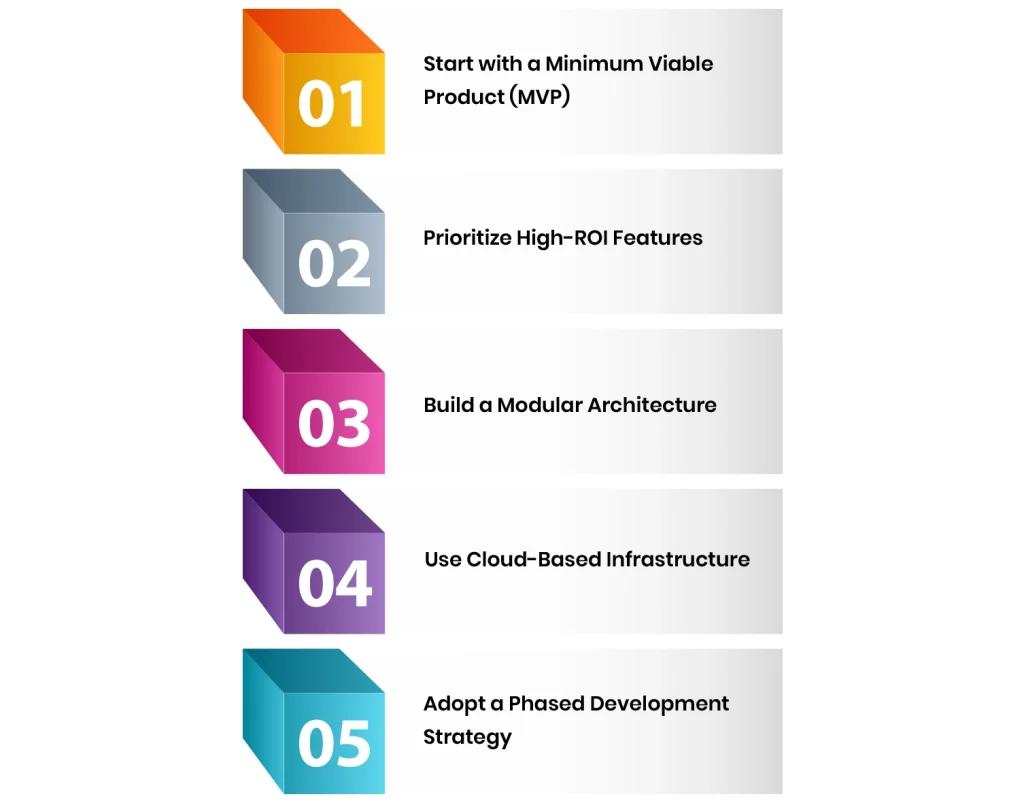
Start with a Minimum Viable Product (MVP)
Launching a Minimum Viable Product allows organizations to build only the core features required to make the app functional. Instead of investing heavily in a fully developed platform from the start, companies can release a basic version. It can allow the business to test system performance and gather feedback from internal teams or users.
This approach reduces initial investment and helps businesses refine the app based on real usage patterns before they commit to large-scale development.
Prioritize High-ROI Features
Not every feature delivers equal value to an organization. Focusing on features that directly improve productivity or decision-making helps ensure that development resources are used strategically.
By prioritizing high-impact features first, businesses can maximize the return on their development investment. They can easily do this while avoiding unnecessary complexity.
Build a Modular Architecture
A modular system architecture allows different components of the app to function independently while remaining connected. This design approach makes it easier to scale the platform as business needs evolve.
Instead of rebuilding the entire system when new functionality is required, organizations can simply add or upgrade individual modules, reducing both development time and long-term costs.
Use Cloud-Based Infrastructure
Cloud platforms allow organizations to scale computing resources based on real demand rather than investing heavily in physical infrastructure. This flexibility helps reduce initial development costs and allows businesses to expand their infrastructure gradually as the app grows.
Cloud environments also simplify maintenance, backups, and system updates, which further contribute to long-term cost efficiency.
Adopt a Phased Development Strategy
Developing an enterprise app in phases allows organizations to introduce features gradually rather than attempting to build a fully complex system in a single development cycle.
This strategy helps distribute development costs over time while allowing businesses to continuously improve the platform based on user feedback and business needs.
Conclusion
Enterprise apps are becoming the digital foundation of modern organizations. As companies expand their digital ecosystems, enterprise platforms increasingly determine how efficiently teams collaborate and how well organizations adapt to change.
A well-designed enterprise system can reshape internal workflows and create a unified environment where data and processes move seamlessly across departments.
For this reason, building enterprise apps should be approached less as a one-time development project and more as the foundation of a company’s digital future.