The financial technology sector continues to expand at a remarkable pace. Global fintech revenues are now projected to surpass $400 billion within the next few years, according to multiple industry analyses. This rapid growth is all thanks to rising digital adoption and consumer preference for mobile-first banking solutions.
Understanding fintech app development cost is essential for organizations planning to enter this competitive market. This is why Linkitsoft has done the research for you in this blog.
What is the Average Fintech App Development Cost?
Fintech app pricing varies significantly depending on the complexity, security layers, integrations, and regulatory scope. Below is a practical breakdown used by most software consultancies.
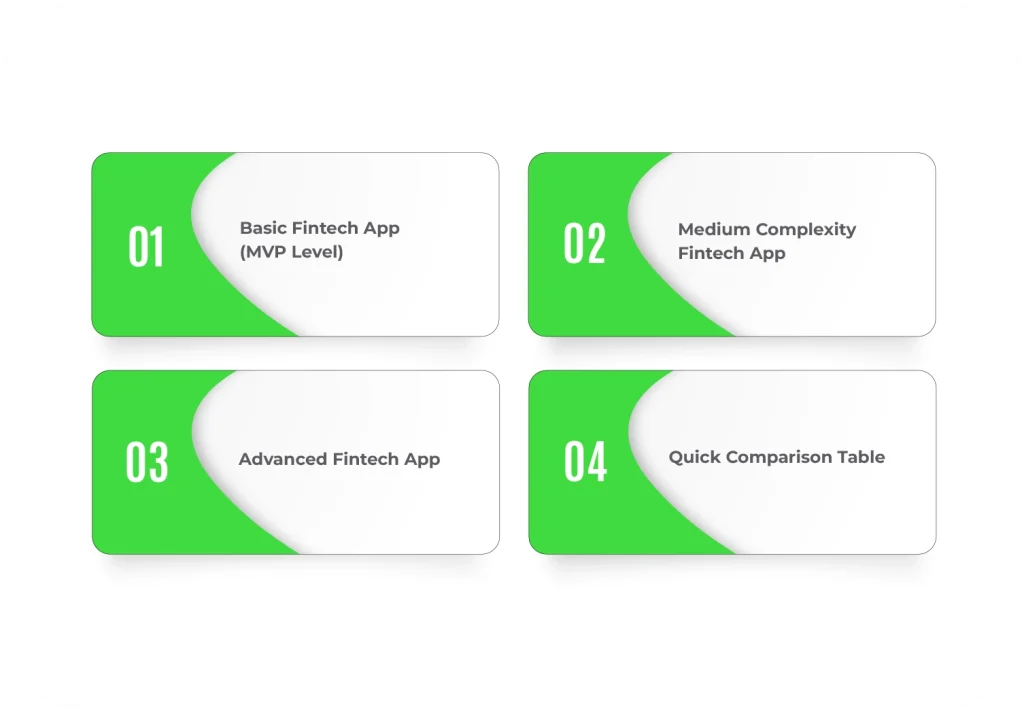
Basic Fintech App (MVP Level)
A minimum viable product typically includes features like user registration and a basic dashboard. This follows with transaction tracking and basic payment or account functions.
Estimated Cost: $25,000 – $60,000
Development Time: 3–5 months
This stage focuses on validating the product-market fit before scaling it.
Medium Complexity Fintech App
Mid-level fintech platforms incorporate advanced features. This can include payment gateways with more detailed analytics dashboards. These apps also often need third-party APIs and multi-layer authentication.
Estimated Cost: $60,000 – $150,000
Development Time: 5–9 months
These apps often represent startups that are preparing for early market expansion.
Advanced Fintech App
Enterprise-grade fintech platforms include AI analytics with blockchain modules. The trading engines are powerful and reliable, with live data processing and full regulatory compliance systems.
Estimated Cost: $150,000 – $500,000+
Development Time: 9–18 months
These solutions are typically built for banks or financial institutions.
Quick Comparison Table
| App Level | Cost Range | Timeline | Ideal For |
| MVP | $25K–$60K | 3–5 months | Startups testing ideas |
| Medium | $60K–$150K | 5–9 months | Growing fintech companies |
| Advanced | $150K–$500K+ | 9–18 months | Enterprises |
What are the different types of Fintech Apps?
Different fintech app categories require distinct features and compliance frameworks. These technical and regulatory differences directly influence the overall fintech app development cost.
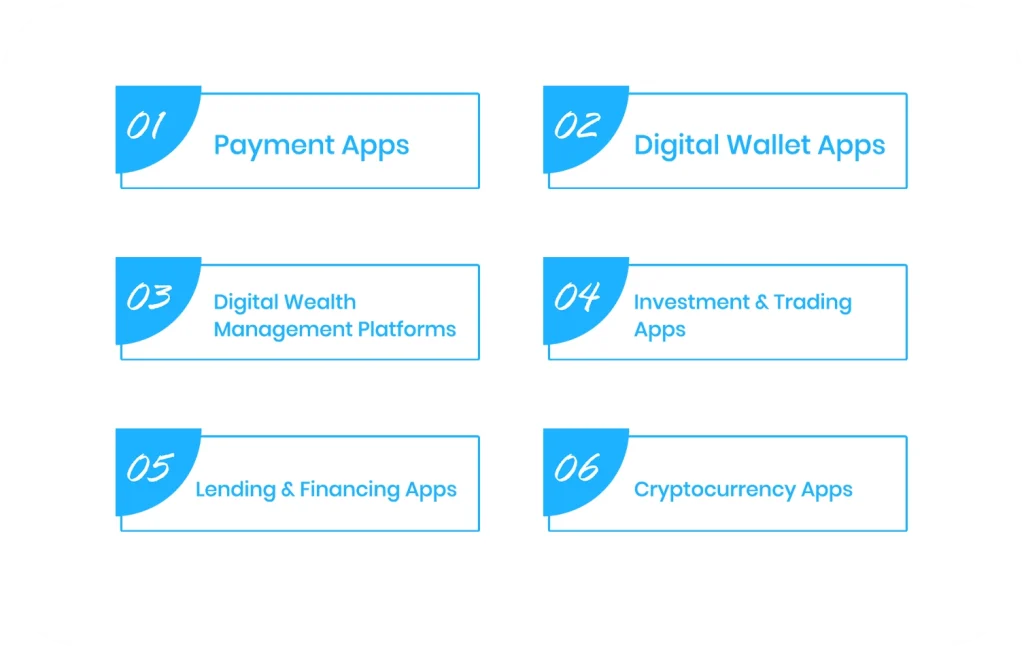
1. Payment Apps
Payment apps focus on fast and secure money transfers between users and banks. Their primary value lies in quick, live processing with seamless integrations with banking networks. Most payment apps have strong fraud detection mechanisms.
To operate reliably, these apps require:
- Live payment gateways
- Multi-bank API integrations
- Fraud detection systems
- Transaction monitoring dashboards
- PCI-DSS compliance
Examples:
- PayPal
- Stripe
2. Digital Wallet Apps
Digital wallet apps allow users to store card details and make contactless payments. They also let users manage their digital assets. These apps go beyond simple payments. This is because they need to support secure authentication and encrypted storage.
Main development requirements include:
- NFC payment support
- Biometric authentication
- End-to-end encryption
- Multi-device synchronization
- Secure tokenization systems
Examples:
- Apple Pay
- Google Pay
3. Digital Wealth Management Platforms
Wealth management platforms are significantly more complex than standard fintech apps. They rely on advanced algorithms to manage portfolios and assess financial risk. This way, they can generate trustworthy and carefully calculated investment insights.
The core components often include:
- Algorithm-based portfolio allocation
- Risk profiling engines
- Financial goal tracking modules
- AI recommendations
- Advanced analytics dashboards
Examples:
- Betterment
- COLBR
4. Investment & Trading Apps
Trading apps operate in a highly time-sensitive environment where milliseconds matter. They need to process real-time market data and execute trades almost instantly. Moreover, they also need to display live charts without any delays.
Development requirements typically include:
- Real-time stock exchange data feeds
- Trade execution engines
- Low-latency backend infrastructure
- Live charting systems
- Secure brokerage integrations
Examples:
- Robinhood Markets
- Fidelity
5. Lending & Financing Apps
Lending platforms automate the outdated financial borrowing process. They update it from application submission to risk assessment and repayment tracking. These apps even combine financial logic with regulatory compliance requirements.
The most critical features here include:
- Automated loan approval workflows
- Credit scoring algorithms
- Risk assessment models
- EMI and repayment tracking systems
- Regulatory compliance monitoring
Examples:
- LendingClub
- SoFi
6. Cryptocurrency Apps
Cryptocurrency apps are among the most technically demanding fintech digital products. They require powerful blockchain integration along with secure wallet management. Their transaction validation mechanisms are very powerful.
Core technical requirements include:
- Blockchain node integration
- Private key management
- Multi-layer encryption
- Smart contract support
- Distributed ledger validation
Examples:
- Coinbase
- Binance
How Do Features Affect the Overall Fintech App Development Cost?
Every added feature increases development time, testing cycles, and infrastructure needs. For instance:
- Biometric login = adds security engineering hours
- Real-time analytics = requires a scalable backend architecture
- Multi-currency support = demands global payment integrations
Even a small feature that you add can raise budgets by thousands of dollars when compliance testing is involved.
What Factors Affect Fintech App Development Cost?
Several technical and business variables determine the final pricing involved in financial app development.
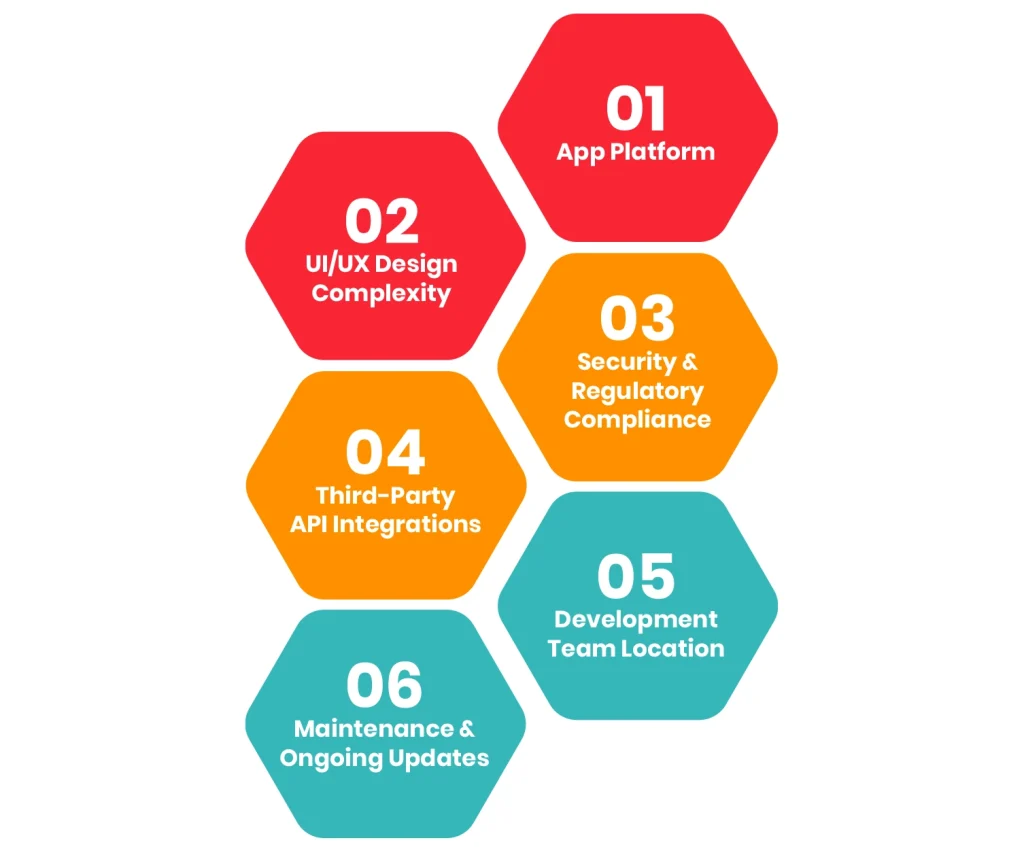
App Platform
Native apps (such as iOS and Android) cost more because each platform requires separate codebases. On the other hand, cross-platform frameworks reduce the cost. However, they may limit performance for financial operations that deal with a lot of data.
UI/UX Design Complexity
Fintech users expect clean dashboards and intuitive charts. FinTech is a complex field, so users already expect frictionless and easy onboarding. Advanced visualization tools and interactive interfaces increase the design hours. Hence, the prototyping costs go up.
Security & Regulatory Compliance
Financial apps must comply with strict regulations such as KYC verification standards, payment security certifications, and regional data protection laws. Implementing these safeguards often accounts for 20–30% of the total development budget.
Third-Party API Integrations
Most fintech platforms rely on external services for payments and identity verification. That’s how they deal with banking data or analytics. Each integration requires proper configuration and testing. This is so that the fallback mechanisms, all of which add development effort.
Development Team Location
Labor rates vary widely depending on the region and experience level. It also comes down to the developer’s specialization. Hiring a team in North America costs more than outsourcing to Asia or Eastern Europe, even for identical feature sets.
Maintenance & Ongoing Updates
Post-launch maintenance typically costs 15–25% of the initial development annually. This includes bug fixes and OS updates. It also covers server monitoring and security patches.
Fintech App Development Cost by Region
Regional pricing differences can also significantly impact your project’s budget. This is because of local labor rates, infrastructure standards, and the overall cost of living.
USA Development Cost
- Hourly Rate: $100 – $200
- Best for enterprise-grade builds requiring top-tier expertise and compliance support.
Europe Development Cost
- Hourly Rate: $60 – $150
- Offers a balance between quality and cost, especially in Western and Central Europe.
Asia Development Cost
- Hourly Rate: $25 – $80
- Popular outsourcing destination for startups seeking skilled developers at competitive rates.
Regional Rate Comparison
| Region | Average Hourly Cost | Typical Use Case |
| USA | $100–$200 | Enterprise platforms |
| Europe | $60–$150 | Mid-scale fintech |
| Asia | $25–$80 | MVPs & startups |
Why Is Fintech App Development Expensive?
Financial software costs more than most app categories because it must meet strict performance, security, and legal requirements.
High-Level Security Requirements
Fintech platforms generally handle sensitive personal and financial data. Secure authentication and penetration testing are mandatory. And the more security you need for a platform, the more expensive it will get.
Data Encryption & Fraud Detection
Advanced encryption protocols and machine-learning fraud detection systems must operate in real time, increasing infrastructure and engineering costs.
Compliance Standards
Regulations like KYC verification, payment, and more card standards require specialized development and legal oversight. Many platforms also have to keep up with global privacy laws.
Scalability & Performance Demands
Financial apps must process thousands of transactions per second without delays. Building scalable cloud architecture and load-balancing systems requires significant investment.
Tips to Reduce Fintech App Development Cost
Organizations can manage budgets strategically without sacrificing quality. By optimizing and prioritizing the right features, companies can significantly manage their costs and still develop a high-quality fintech app.

Start With an MVP
Launching with core features helps validate user demand before investing in advanced functionality. This way, you will be able to test you idea and improve it before finalizing it.
Choose the Right Tech Stack
Selecting reliable programming frameworks and cloud services can reduce the infrastructure costs. This also speeds up the development time.
Outsource Strategically
Combining in-house leadership with offshore development teams often provides the best balance between cost and expertise. Or, you can go offshore completely with a trustworthy fintech app development company.
Focus on the Essential Features First
Avoid feature overload during the initial releases. Additional modules can always be added after user feedback and revenue validation.
Conclusion
When it comes to developing FinTech apps, a clearly defined project scope is the most effective way to control expenses while ensuring technical success.
Organizations that are planning to build a financial app should begin with detailed requirement analysis and professional cost estimation. A structured consultation with an experienced development team helps translate business goals into a realistic budget and technical strategy. This will genuinely lay the foundation for a secure and scalable fintech product.