The real estate world has changed a lot. Buyers, sellers, investors, and property managers no longer rely only on agents or offices. Mobile and web apps now let people search for properties, compare prices, see images, and contact agents directly. These apps make property hunting easier and faster.
Before, most property deals depended entirely on real estate agents and manual paperwork. Now, with more people using digital tools, real estate businesses are adopting apps to keep up with demand and stay competitive.
Whether you are a realtor, investor, buyer, or renter, property transactions involve serious time, money, and legal responsibility. The process can be complex and stressful. This is why many businesses are now investing in digital solutions. But before starting, one key question needs to be answered: how much does real estate app development cost?
Purpose of Real Estate Apps
A real estate app is a mobile platform that helps people and businesses handle buying, selling, and renting property more easily. It is not just about houses; apps can also include rental, commercial, and investment properties, which have different rules and processes.
These apps allow buyers to browse listings at any time, sellers to show their properties to more people, and investors to keep track of opportunities without visiting every property. A 2024–2025 survey by the National Association of Realtors found that 95% of homebuyers use online tools to search for homes, showing how important apps have become.
For users and real estate professionals, apps keep all important information in one place. Documents, contacts, and property details can be managed easily. Users can filter listings, view images and floor plans, and contact sellers directly. This way, real estate apps have become an essential tool for anyone buying, selling, or renting property.
Types of Real Estate Apps
Real estate is a diverse industry, and the kind of real estate app you build depends on your role and goals. Here are the main types of real estate apps and what they typically do:
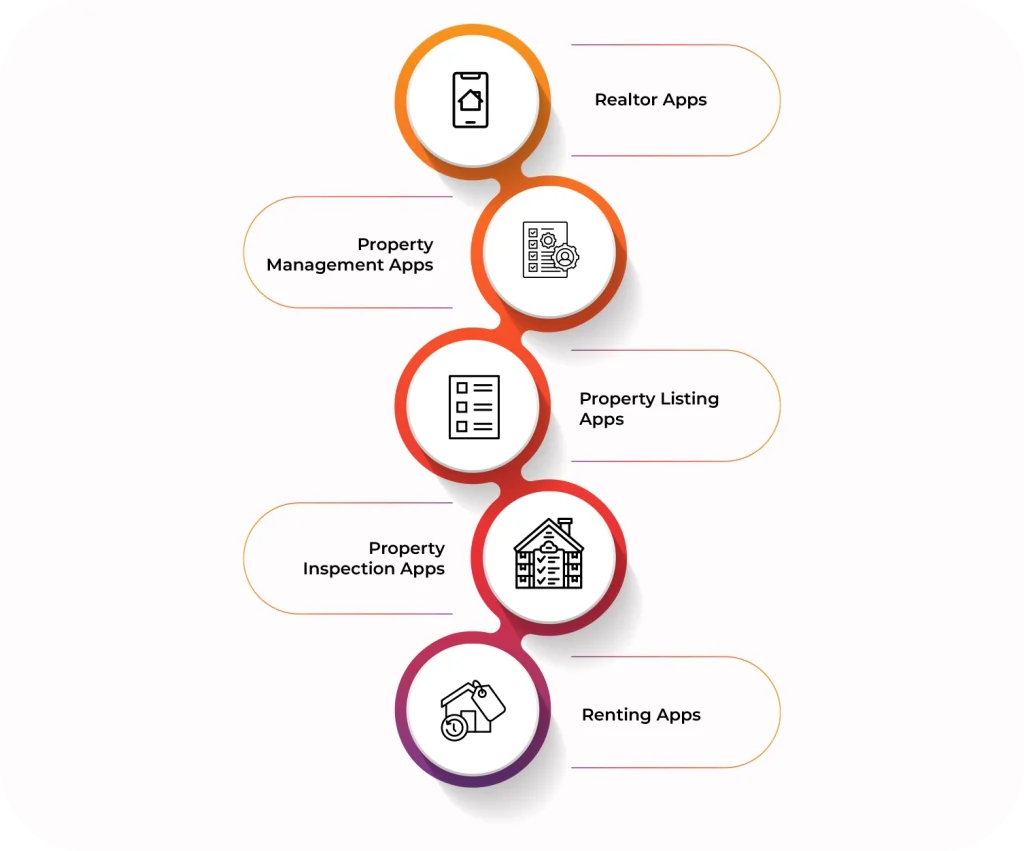
Realtor Apps
Realtor apps help agents keep track of clients, properties, and documents in one place. They also help with communicating with clients and organizing property information. As a result, realtors can work faster and avoid missing important details.
Property Management Apps
Property management apps are meant for homeowners and landlords who need to handle maintenance, repairs, and tenant requests. They allow users to log schedules for repairs, store important documents like mortgages or insurance papers, and manage tenant communications. This helps keep everything organized and avoids confusion.
Property Listing Apps
Listing apps provide an updated catalog of available properties. Users can view details about a property, filter searches by price, location, or features, and even schedule visits directly through the app. Therefore, both buyers and sellers can save time and make decisions faster.
Property Inspection Apps
Inspection apps let inspectors record results, mark issues, and keep track of upcoming inspections or deadlines. In this way, everyone involved stays up to date and nothing gets overlooked.
Renting Apps
Renting apps help tenants with applications, signing leases, making payments, and keeping track of due dates. Consequently, tenants and landlords can handle everything more smoothly and avoid delays.
Factors That Affect Real Estate App Development Cost
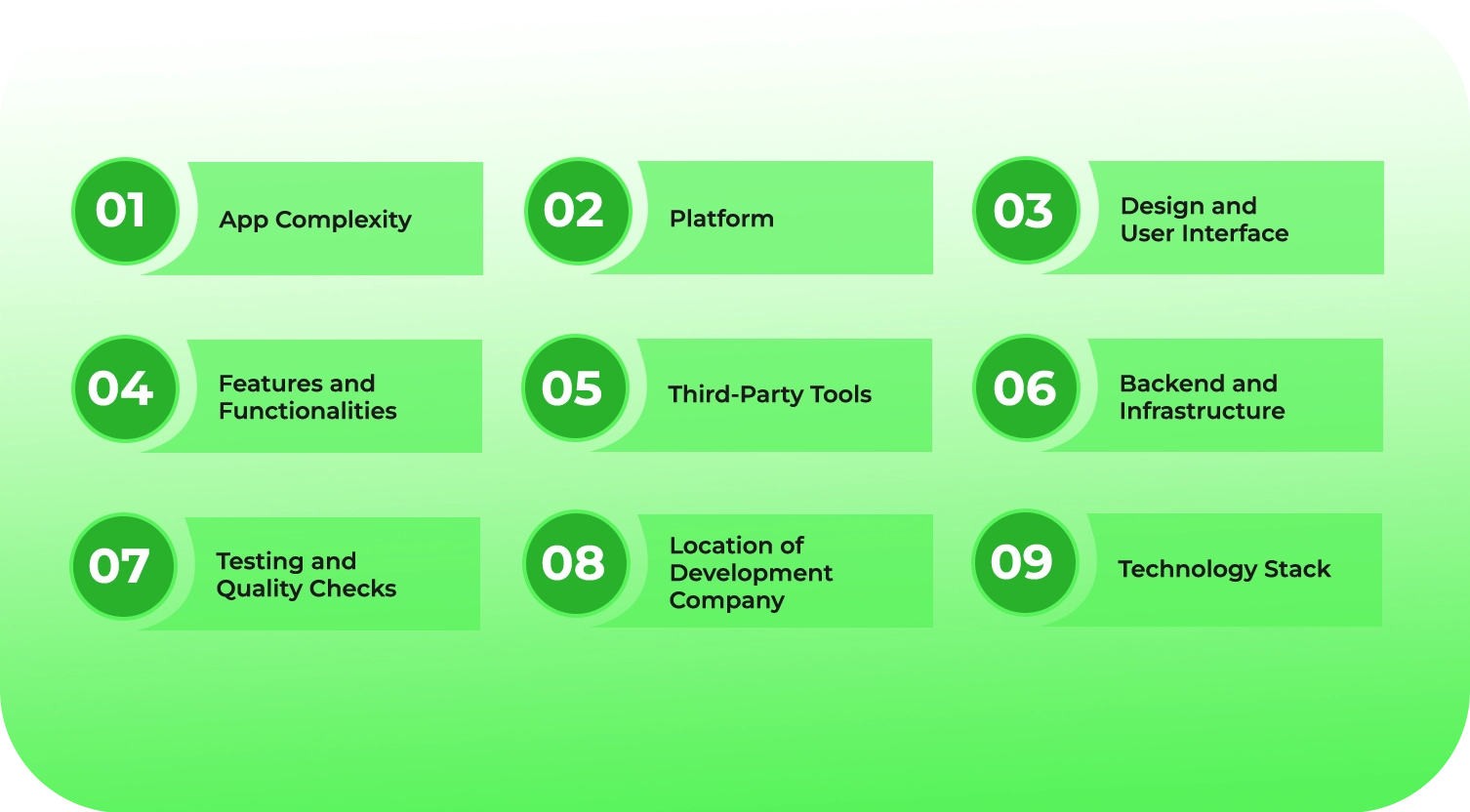
The cost of building a real estate app can vary widely, usually ranging between $80,000 and $200,000. It is important to consider each of these during planning so that the app works well and fits your budget.
App Complexity
The more features and functions an app has, the higher the cost. A simple app with basic property listings and search functions may cost between $40,000 and $60,000. A moderately complex app with filters, maps, and dashboards can range from $60,000 to $100,000. While a highly complex app with advanced features like virtual tours, interactive maps, and integrated messaging can reach $100,000 to $300,000.
Platform
The platform you choose affects the cost. For example, an iOS app can cost between $25,000 and $100,000, while an Android app may range from $20,000 to $90,000. If you want to create a cross-platform real estate app that works on both iOS and Android, the cost will be higher because it involves developing for both systems.
Design and User Interface
The look and layout of your app also influence the cost. A basic design may cost $3,000 to $10,000, whereas a complex design with custom layouts, smooth navigation, and appealing visuals can cost $10,000 to $50,000. A well-designed app keeps users engaged but requires more work.
Features and Functionalities
The features included in the app play a major role in the cost of a real estate app. Basic features such as property listings, search options, and user profiles can cost $10,000 to $30,000. On the contrary, advanced features such as interactive floor plans, virtual tours, or saved searches can raise the app cost to $15,000 to $60,000.
Third-Party Tools
Adding extra tools like maps, payment systems, or calendar services also adds to the cost. Third-party integrations typically cost $5,000 to $20,000, depending on the number and complexity of the tools.
Backend and Infrastructure
The backend supports all the app’s data and operations. Infrastructure and backend development can cost $5,000 to $30,000, depending on how much data needs to be stored and managed, and how complex the app functions are.
Testing and Quality Checks
Testing is an important step to make sure the app runs smoothly. Quality assurance and testing usually cost $5,000 to $20,000, and the more features the app has, the more thorough the testing needs to be.
Location of Development Company
The cost of building a real estate app depends significantly on where your development team is based. Different regions charge different hourly rates, which can make quite a difference in the overall budget. Here’s an approximate range of hourly rates for developers in various regions:
| Region | Hourly Rate (USD) |
| UAE | $60–$65 |
| US | $95–$100 |
| Western Europe | $80–$90 |
| Australia | $70–$90 |
| Eastern Europe | $50–$55 |
| Asia | $25–$40 |
Choosing a team in a region with lower rates can reduce costs, but it’s important to balance price with experience and quality.
Technology Stack
The choice of technology also influences development costs. Using modern tools and frameworks for a feature-rich app increases the budget.
For example, adding smart features that help manage listings, detect duplicates, highlight unusual pricing, or flag potential issues takes more development work. While this raises the cost, it makes the app more reliable and easier to manage for both users and operators.
What are the Must-Have Features of a Real Estate App?
A feature-rich app can make your real estate platform more useful and popular. If you are planning to build an app like Zillow or Trulia, it helps to understand the core features that make these apps successful. Here are some key features to consider:
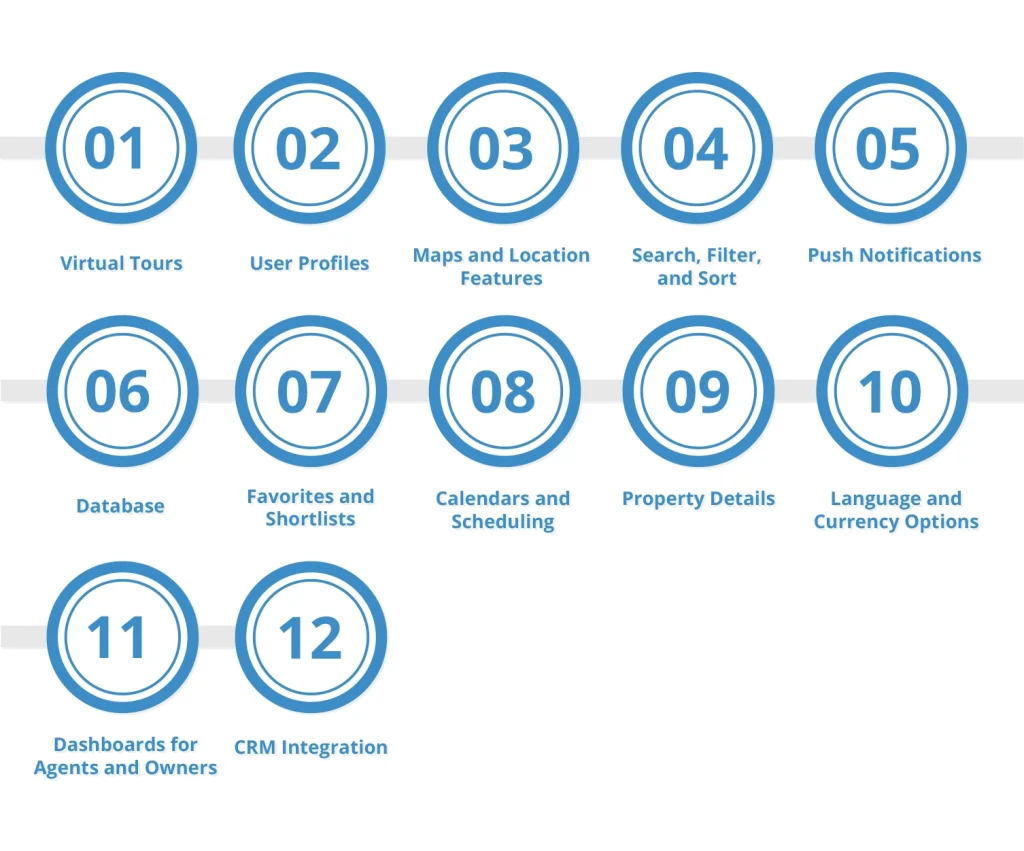
Virtual Tours
Virtual tours let users explore a property without visiting in person. Using technologies like AR or VR, users can walk through homes virtually. This can turn your casual visitors into serious prospects.
User Profiles
The app should assist buyers, sellers, and agents in building their own profiles. So, buyers can save favorites, make inquiries, or schedule visits, while agents can manage listings and track interested buyers.
Maps and Location Features
Maps are an essential feature in any property application. They show where a property is located and highlight nearby schools, hospitals, or shops. Smart maps can even display neighborhood statistics, helping users make better decisions.
Search, Filter, and Sort
Users should be able to search for properties and filter results by price, location, type of home, or number of bedrooms. Sorting and filtering make it easier for users to find properties that match their needs.
Push Notifications
Push notifications keep the keen users updated about the new listings, price changes, or upcoming appointments. This helps maintain engagement and ensures users do not miss important updates.
Database
A strong database is the backbone of any successful real estate app. It stores property listings, user data, and other important information. The more updated the database, the more useful the app becomes for real estate users.
Favorites and Shortlists
Users should be able to save properties they like. This allows them to compare options later without losing track of potential choices.
Calendars and Scheduling
A calendar feature helps schedule property visits, open houses, or meetings with agents. This keeps both buyers and agents organized and prevents any conflicts.
Property Details
Each listing should include full details, such as descriptions, photos, videos, pricing, and contact information. The more information provided, the easier it is for users to make decisions.
Language and Currency Options
The app can offer different languages and a simple currency converter. This makes it easier for users from various countries, including the UAE, to use the app without confusion.
Dashboards for Agents and Owners
Agents and property owners can see all important information in one place. Listings, inquiries, leads, and performance data appear clearly. So your teams can focus on what needs attention and manage their work without extra tools.
CRM Integration
Many teams already use a CRM. Instead of replacing it, the app can link with it so all leads, messages, and follow-ups stay updated. This helps agents keep track of everything and manage their work easily.
Now that we have covered the main factors and features, let’s discuss how much it actually costs to develop a real estate app.
What is the Average Cost of Building a Real Estate App?
The cost of a real estate application depends on its features, design, and complexity. On average, a standard app can range from $80,000 to $120,000, while simpler versions may cost around $40,000 to $60,000. More advanced apps with virtual tours, dashboards, and multi-language support can exceed $200,000.
Platform choice and design also affect the price. Making an app for both iOS and Android or creating a highly customized interface increases the cost, and adding complex features or backend integrations adds further to the real estate app budget. The location of your development team can also affect costs, because hourly rates vary across regions. This is why the choice of a real estate app development company can also influence the overall project cost. Because of these differences, the choice of a real estate app development company can also influence the overall project cost.
Considering these factors, many real estate businesses start with an MVP version first and expand features over time. This approach helps manage costs while still providing a functional real estate application that meets users’ needs. Planning carefully ensures a realistic budget and avoids unexpected expenses.
How to Reduce Real Estate App Development Costs?
Building a real estate app can require a serious budget. Still, that doesn’t mean costs can’t be managed. If you plan carefully from the start, you can control expenses without affecting the overall quality of the app.
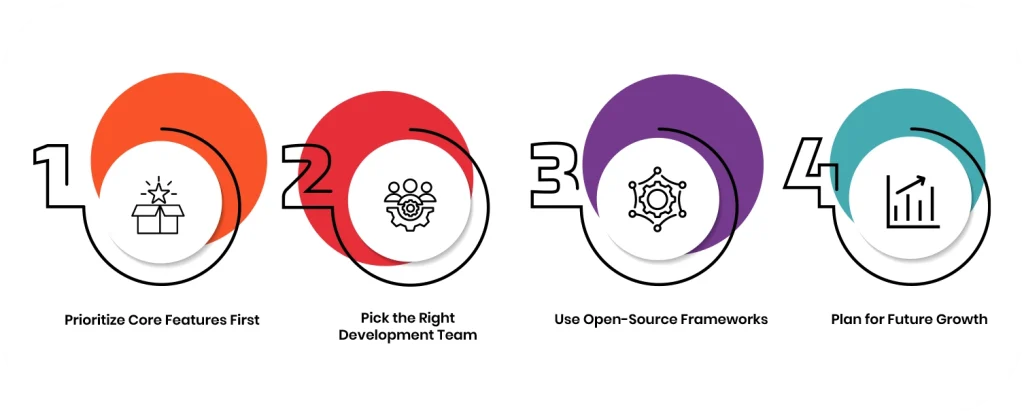
1. Prioritize Core Features First
To begin with, focus on the features your users actually need. Property listings, search filters, and user profiles usually form the foundation of any real estate app. However, if you try to include too many advanced features in the first version, the cost can rise quickly. So, concentrate on the essentials and expand gradually as your platform grows.
2. Pick the Right Development Team
An experienced team works more efficiently and reduces the chances of costly revisions later. Although some regions offer lower hourly rates, it’s important to balance affordability with skill and reliability. In many cases, paying slightly more for the right team can actually save money over time.
3. Use Open-Source Frameworks
In addition, using open-source frameworks can help reduce expenses. Instead of building the app from scratch, developers can rely on proven tools that speed up the process. As a result, development takes less time, especially when building for both iOS and Android, which helps lower the overall cost.
4. Plan for Future Growth
Thinking ahead can prevent major redesign costs later. If the real estate app is built with scalability in mind, adding new features becomes much easier. Without proper planning, future updates can become expensive and time-consuming.
Key Takeaway
Building a real estate app requires careful planning because costs can vary based on features, platform, and overall complexity. If you focus on the core features and design a simple, intuitive interface, the app can deliver real value while keeping users engaged.
At the same time, the real estate market is always changing, which means your real estate app should evolve as well. By regularly improving features, listening to user feedback, and updating the application, you can keep it relevant, streamline operations, and further strengthen your position in a competitive market.
Frequently Asked Questions
What factors affect the cost of developing a real estate app?
As discussed in the blog, there are several factors that can influence the cost. For example, the app’s complexity and the number of features play a big role. At the same time, the platform you choose, the design, the technology used, and the location and experience of your development team also impact the final price.
How much does it cost to develop a real estate app?
Costs can change depending on your needs. For instance, a simple real estate app with basic features may range from $40,000 to $60,000, while a standard app usually falls between $80,000 and $120,000. On the other hand, a highly complex app with advanced features and integrations can exceed $150,000.
How can I lower the cost of creating a real estate app?
One way to manage costs is to focus on the most essential features first. In addition, using efficient development frameworks, choosing a skilled but cost-effective team, and planning for future updates rather than including everything at launch can also help lower expenses.
Should I outsource the development of my real estate app?
Outsourcing can be a smart option because it often reduces costs and gives you access to skilled teams around the world. However, it’s important to balance affordability with experience and reliability to make sure the app meets your quality standards.
Which platform should I start with, Android, iOS, or both?
It depends on your target audience. Starting with a single platform can save time and money, whereas building for both platforms expands reach. But, it also increases development costs and effort.