Companies are launching fully developed products while you’re still budgeting your MVP. In 2026, you don’t have time; someone is always working harder than you. If you’re just a little confused about launching your MVP on the proper budget, you’re exactly who this blog is for.
In 2026, an MVP decides whether you’ll validate your idea or watch someone else deploy a version of your vision first. The window of opportunity is smaller, and users expect more, even from your “minimum” product.
This is why you need to invest smart and launch faster. In this blog, we’ll walk you through a detailed cost breakdown for developing MVPs. This will help you make the right decision.
What Exactly is an MVP?
A Minimum Viable Product (MVP) is the simplest workable version of a digital product that delivers core value to users with minimal features and effort. It’s not a prototype, but a functional product that real users can interact with so you can validate assumptions and gather feedback. This helps make better and more powerful decisions with data.
The goal for launching an MVP is to learn quickly without heavy investments. You’re able to learn if your idea solves a real problem and whether users are willing to use or pay for it. Once you know what should be prioritized next, you can scale this MVP up to a complete app or product.
Is an MVP Worth it?
In 2026, an MVP is worth more than you know. It’s your safest and smartest path to entering the market and becoming the first choice for your users.
Instead of months of effort and a full budget into something you hope users will love, an MVP gives you real-world answers fast. It tells you whether your solution actually matters and whether people will use it the way you expect.
Launching an MVP means you’re learning with every tap and every tiny piece of feedback. It saves you from unwanted, expensive mistakes and helps you focus on features that matter to your end users.
What is the MVP Development Cost based on Size and Factors?
Although an MVP is only meant to focus on the core feature, it still has several types and sizes. Based on this, the factors that most affect your MVP development costs can help you decide the scope.
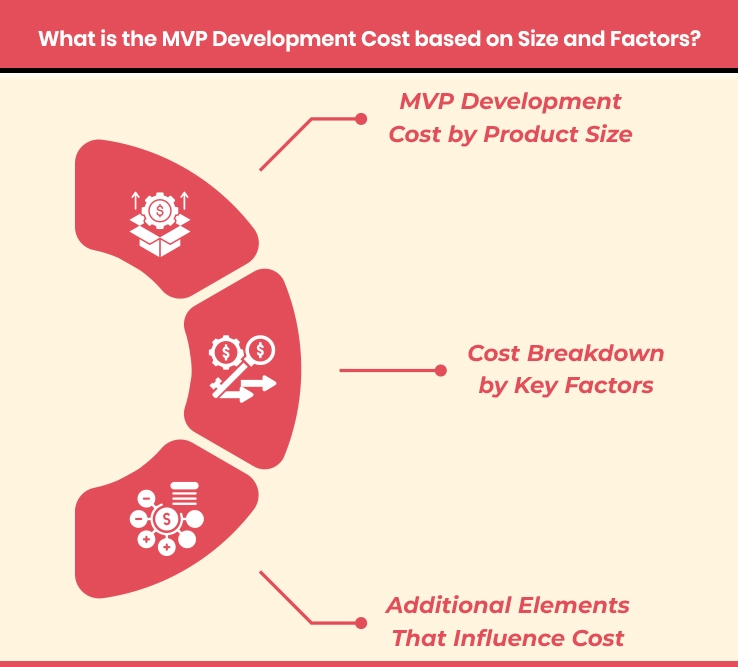
MVP Development Cost by Product Size
| MVP Type | MVP Timeline | MVP Cost |
| Small MVP | 2-4 months | $5,000 – $15,000 |
| Medium MVP | 5-10 months | $15,000 – $45,000 |
| Large / Complex MVP | 12+ months | $45,000 – $150,000+ |
Cost Breakdown by Key Factors
MVP development cost is a mix of choices you make along the way. The more ambitious your features and complex your tech decisions, the higher the bill. On the other hand, being intentional about scope and platforms can keep costs lean without compromising on quality.
Design Requirements
This will depend on how many screens and elements your MVP will have. Your designer will charge according to this; on the other hand, you can save up by using Figma to design your own wireframes.
Cost Breakdown:
- Basic UI: $800–$2,000
- Custom UX + UI for flows: $2,000–$5,000
Tech Stack
The technology stack will help you create a foundation for how scalable and intuitive your minimum viable product will be.
Cost Breakdown:
- Standard Tech Stacks: $5,000-$50,000+
Platform Choice
You could be developing an MVP for desktop or mobile, but you need to specify the platform, too. Windows or Linux? Apple or Android? Cross-platform?
Cost Breakdown:
- Single platform: $5,000–$20,000
- Web + mobile: $15,000–$35,000
Team Type
The developers you choose to build your MVP come with different cost structures. In-house teams often charge more per hour. Outsourced developers can be even easier to afford, but they generally require more collaboration.
Cost Breakdown:
- In-House: $30,000-$60,000+
- Outsourcing: $12,000–$35,000
Integrations and Third-Party Services
Every integration adds even more maintenance effort. Some tools also come with pricing, so you’re not just paying for when you’re using them, but also in subscription or API costs.
Cost Breakdown:
- Basic integrations: $500–$2,000
- Complex Tool Integration: $1,500–$4,000
Additional Elements That Influence Cost
Although we’ve covered the mains, there are still a few hidden or additional costs that you have to keep in mind.
User Testing & Validation
Getting an MVP built is one thing, but making sure it actually works for real users is another. Usability tests and analytics setup both add to the budget but also reduce the risk of investing in the wrong features.
Cost Breakdown:
- Informal testing: $200–$800
- Paid user sessions: $800–$3,000
Project Management and Communication
Someone has to keep the project moving. This is done by experienced project managers who lead the whole project from planning to launch and support.
Cost Breakdown:
- Light coordination: $300–$1,000
- Dedicated project management: $1,000–$4,000
Security and Compliance
Even at the MVP stage, you can’t ignore basics like secure auth and compliance. This is with laws like GDPR or regional privacy rules if your MVP will be handling user data.
Cost Breakdown:
- Basic security best practices: $500–$2,000
- Extra compliance work: $2,000–$5,000
Play/App Store Fees
If you’re shipping a mobile MVP, publishing itself has a small but fixed cost. These fees aren’t huge, but they’re recurring and easy to forget when budgeting.
Cost Breakdown:
- Google Play Developer account: ~$25 one-time
- Apple Developer Program: ~$99/year
Maintenance & Post-Launch Support
After the MVP goes live, there will be bugs and small improvements. Even if you’re not adding big new features, you’ll want someone on standby.
Cost Breakdown:
- Basic support: $300–$800/month
- Ongoing improvements: $800–$2,500/month
How to Effectively Plan Your Budget for MVP Development:
Optimizing your budget for an MVP isn’t about picking a random number and hoping it works out; you have to be intentional with where every dollar goes. If you don’t plan the budget properly, you either end up overspending on features users don’t care about or underfunding critical pieces like testing and post-launch support.
This is why you need to know the secrets to plan your budget effectively.
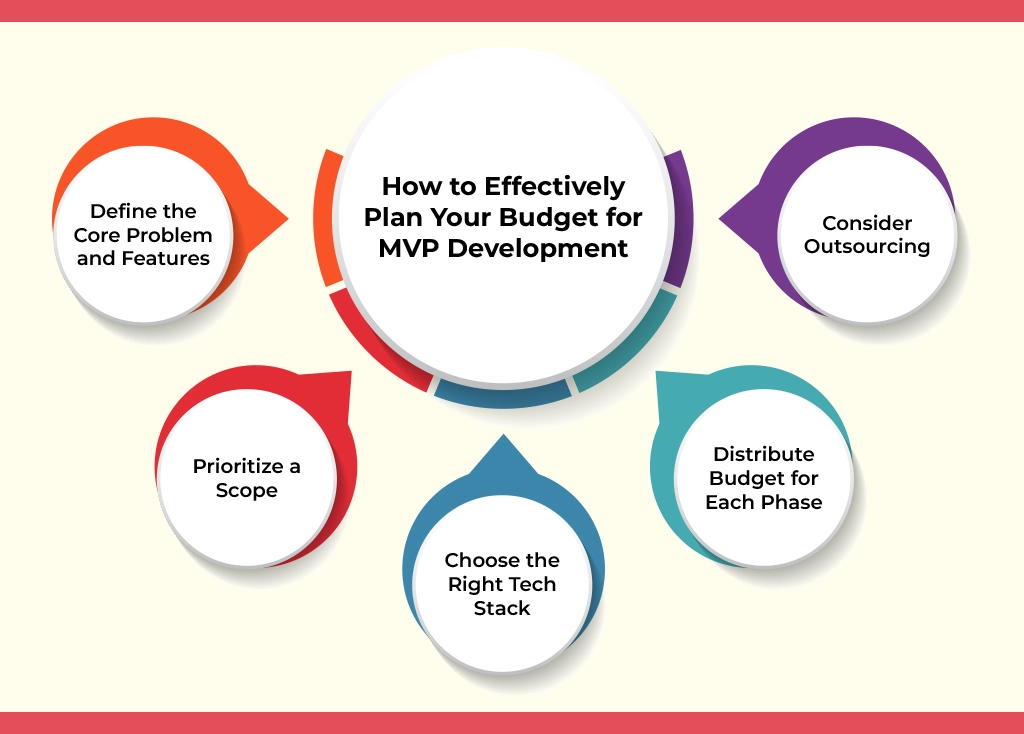
Define the Core Problem and Features
Start by getting clear on what problem you’re solving and for whom. Once that’s defined, list out all possible features and then filter them down to only the ones directly tied to solving that core problem. Remember that an MVP is just a lightweight version of your final product.
Prioritize a Scope
You don’t have to add all features to your MVP scope. Use prioritization methods like MoSCoW or simple scoring to decide what makes it into the MVP. The goal is to prepare a realistic scope that fits your budget and time period. You shouldn’t have to adjust the budget every time a new idea appears.
Choose the Right Tech Stack
Your tech stack should match your team’s skills and budget. Go for popular frameworks and tools that your developers are already experienced with, so you’re not paying for a learning curve. If you choose a complex stack, it often shows up as extra cost and delays.
Distribute Budget for Each Phase
This helps you see where most of your money is going and whether that aligns with your priorities. It also forces you to reserve some budget for iteration after real users start using the product, instead of spending everything on the initial build.
Consider Outsourcing
If you don’t have an in-house team or want to move faster, outsourcing to a small remote team can make sense. It can give you access to experienced designers and developers under one roof, often at a predictable and more affordable cost.
Frequently Asked Questions
What is the average cost to develop an MVP in 2026?
The simple and basic MVPs start from $5,000, with complex ones going all the way up to $60,000+. This depends on the features and complexity.
Which factors tend to affect the MVP Development Cost the most?
The cost usually shifts based on development requirements, such as features and tech stack selection. Integrations and scalability plans also make a difference.
Can Linkitsoft build my MVP in a month?
Yes. If your scope is clear and you know exactly what you need, then we can deliver a basic MVP in about 4 weeks. Our team follows an agile flow, so progress stays fast and transparent.
Which Tech Stack is best for MVP development?
A good MVP stack stays flexible and budget-friendly. You can choose React or Next.js for the frontend and Node.js or Laravel for the backend. For mobile MVPs, Flutter or React Native works great. The best choice still depends on your goals and how fast you want to grow.