
According to Deloitte, more than a third of businesses already use software to automate key processes and workflows. The software development market is also growing rapidly, with experts expecting it to reach $1,475.9 billion by 2033, showing a compound annual growth rate of 14.51 percent from 2025 to 2033.
For startups and established businesses alike, custom software is no longer just an option. It helps improve efficiency, protect data, and scale operations. At the same time, the development process can feel complicated. With multiple stages and decisions to make, it is easy to get confused about what is really needed.
This article will cover what custom software is, why businesses choose it, the development process stage by stage, typical costs for different types of software, factors that influence these costs, and practical tips for planning your budget effectively. Let’s dive in!
What Does the Research Say About Businesses That Develop Custom Software?
Off-the-shelf software can work for basic needs, but it does not fit every company. Custom software, on the contrary, is created specifically for you. Those businesses that use custom systems experience up to a 25% increase in customer retention.
Custom software also helps protect sensitive information. For example, a financial services company that implemented a custom CRM system reported a 40 percent increase in workflow efficiency while keeping client data secure. Companies in healthcare, e-commerce, and logistics are seeing similar benefits from software built specifically for their operations.
Stage-Wise Breakdown of Software Development Costs
When you plan a software project, it can be confusing to think about all the costs. The best way is to see how money is spent at each stage. Let’s go step by step from the first idea to launch.
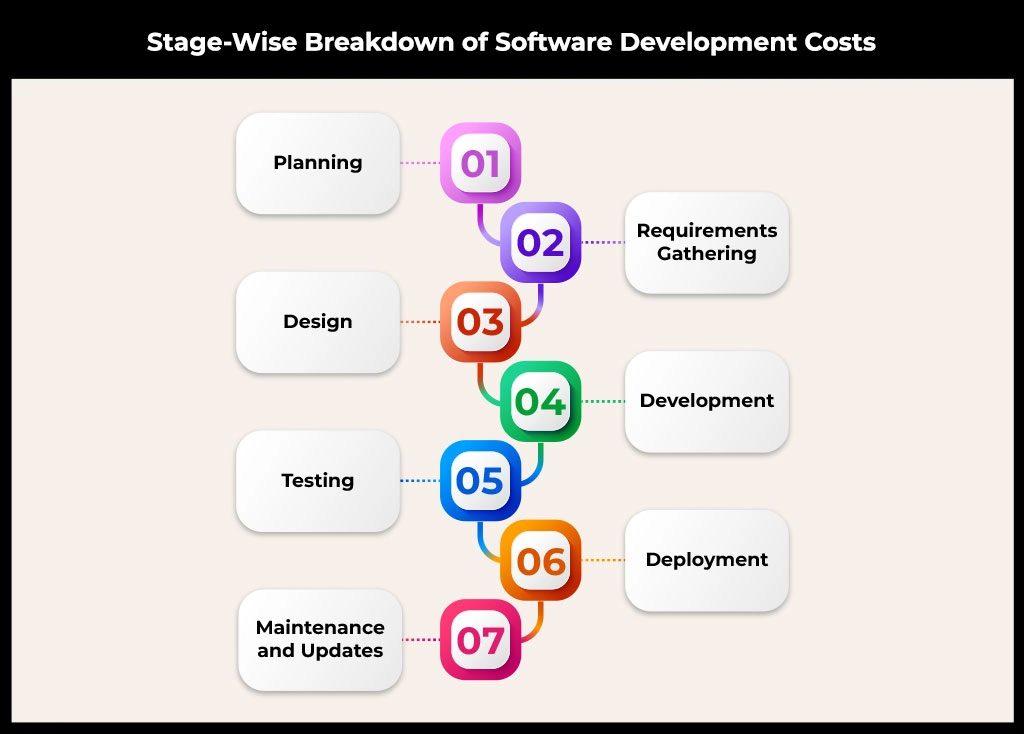
Planning
Every project starts with planning. This is when you decide what the software should do and how it will help your business. Think of it as making a roadmap before starting a journey.
For a small app, planning might cost between 2,000 and 5,000 dollars. For bigger projects like a marketplace or an ERP system, it can cost 10,000 dollars or more just to plan.
One e-commerce startup skipped proper planning and started coding too soon. Later, they had to add new features and this added 15,000 dollars to their budget. Good planning at the start saves time and money.
Requirements Gathering
After planning, you collect all requirements. This is where you write down exactly what the software should do. Features like payment processing, search filters, or dashboards are functional requirements. Things like speed, security, and usability are non-functional requirements.
For a CRM system, gathering requirements usually costs 3,000 to 6,000 dollars. For bigger software like ERP or SaaS, it can go up to 20,000 dollars. Spending time here avoids surprises later when new features are added unexpectedly.
Design
Design is more than just looks. It makes the software easy to use. This includes user experience and user interface.
A simple mobile health app might cost 5,000 dollars to design. A bigger educational platform with dashboards and interactive modules can cost 15,000 to 20,000 dollars or more. Good design helps users understand the software and helps developers build faster.
Development
Development is when the software starts to work. This is usually the most expensive part. A simple web app can cost 10,000 to 25,000 dollars. A complex marketplace like Airbnb can cost 100,000 dollars or more.
Adding advanced features like AI recommendations, chatbots, or real-time notifications can add another 15,000 to 30,000 dollars. The more features you want in your custom software, the higher the cost. So it’s smart to focus on the most important functions first.
Testing
Testing makes sure the software works properly and is safe. This includes checking each feature, seeing if different parts work together, and making sure real users can use it easily.
For a small app, testing might cost 2,000 to 5,000 dollars. For software that handles sensitive data, like finance or health apps, testing can cost up to 15,000 dollars. Skipping testing may save money at first, but can cause expensive problems later.
Deployment
Deployment is when the software goes live. This includes setting up servers, configuring the software, and making sure it works in the real world.
For small projects, deployment might cost 1,000 to 3,000 dollars. For big platforms or marketplaces, expect 5,000 to 10,000 dollars. Proper deployment ensures a smooth start and avoids downtime or frustrated users.
Maintenance and Updates
Software needs care even after launch. Maintenance keeps it secure, bug-free, and updated with new features.
Maintenance usually costs 15 to 20 percent of the initial development cost each year. For a 50,000 dollar project, that is 7,500 to 10,000 dollars per year. Skipping maintenance can lead to crashes, security problems, and old features that turn users away.
Examples of Project Costs by Software Type
Costs for custom software projects vary depending on complexity, features, and technology. Based on experience, here are typical estimates for common types of software projects:
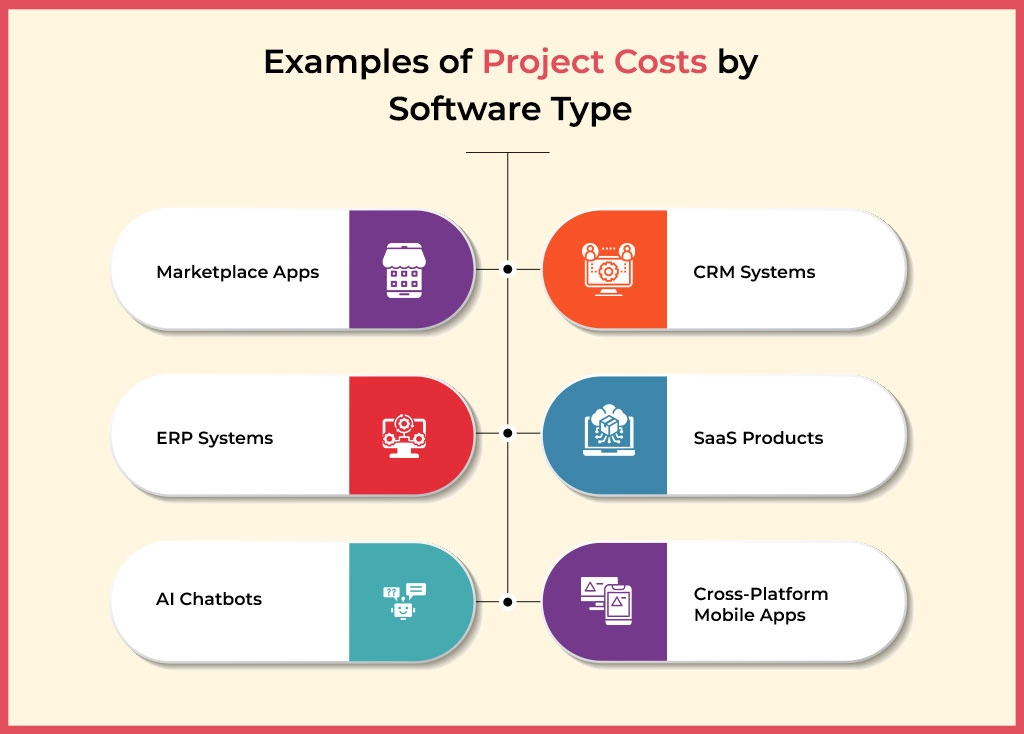
Marketplace Apps
Marketplace apps let multiple vendors sell their products or services in one place, like Amazon, eBay, or Airbnb. They are more complicated than a simple online store because each seller needs their own profile, listings, and dashboards. Other important features include search, secure payments, reviews, and analytics to track sales. A custom marketplace usually starts at around $15,000, but if you use a white-label solution, you could get started for $5,000.
CRM Systems
CRMs help businesses keep track of customers, sales, and marketing in one place. Custom CRMs are built to match your company’s unique processes, which makes work faster and customers happier. A basic custom CRM usually starts at $30,000, depending on how many features you want.
ERP Systems
Enterprise Resource Planning (ERP) systems connect all parts of a business like sales, production and marketing, into one platform. An ERP MVP can cost between $25,000 and $50,000. More advanced ERP solutions with extensive integrations can exceed $100,000.
SaaS Products
Software as a Service (SaaS) products are online applications hosted on the cloud, like Slack, Zoom, or Adobe products. They let people use the software online without installing anything, and they can be easily updated or scaled. Custom SaaS apps usually start at $15,000, depending on the features and complexity.
AI Chatbots
AI chatbots can answer customer questions through text or voice. Simple bots start at $10,000, while advanced bots that use AI to understand and respond intelligently cost more, depending on what they need to do.
Cross-Platform Mobile Apps
Cross-platform apps work on iOS and Android using a single codebase, reducing development time and maintenance costs. They provide consistent performance, attractive interfaces, and scalability. Development typically starts at $15,000 and increases with additional features or integrations.
What Drives the Cost of Your Custom Software
Knowing what affects the cost of building custom software can help you plan your budget and avoid surprises. Here are the main things to keep in mind.
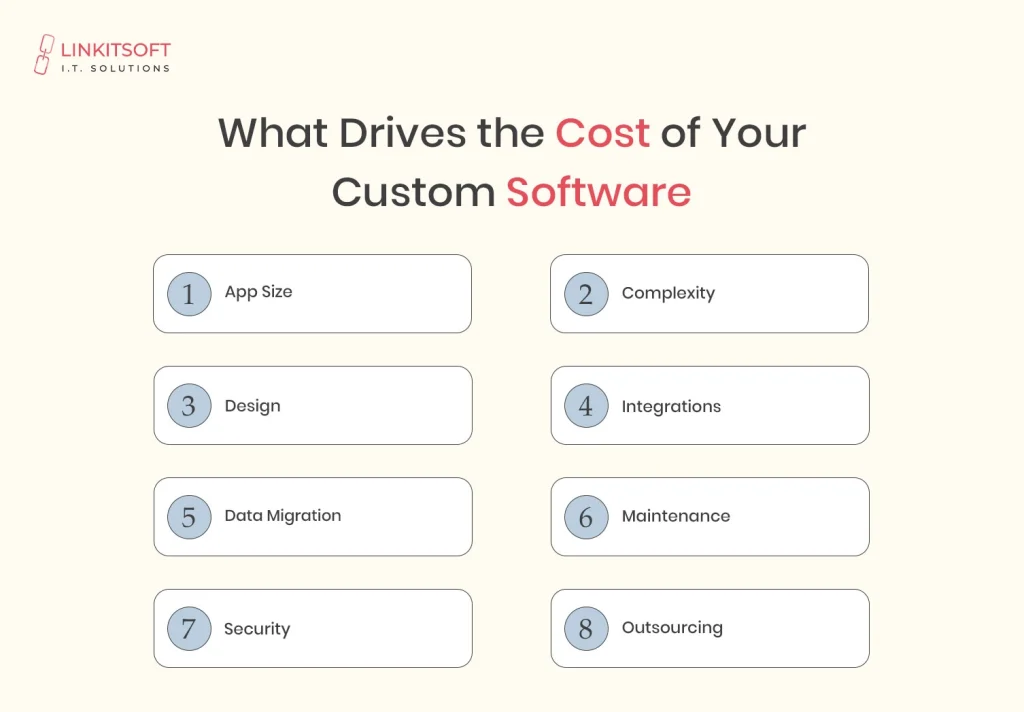
App Size
How big your app is makes a big difference in cost. The number of screens, features, and overall functionality all add up. Small apps usually have 10 to 25 screens. Mid-size apps might have 25 to 40 screens. Large apps have more than 40 screens and take more time to design, build, and test.
Complexity
The more complicated your app, the more it costs. Apps with advanced features, special calculations, or heavy customization need more development time. Large enterprise apps can have hundreds of thousands of lines of code, which adds to both the build and testing effort.
Design
Good design is about more than just looks. Smooth interactions, clear layouts, and attractive visuals make the software easier for users. Most design work costs between 15,000 and 30,000 dollars. If you want extra custom visuals or artwork, it will cost more.
Integrations
Most apps need to connect with other systems, like payment gateways, ERPs, or older software. Some are easy to link, but older or specialized systems can take more time and money to integrate properly.
Data Migration
If you have old data to bring into the new system, it can take a lot of work. Moving and converting data, checking it for mistakes, and making adjustments all take time. The bigger and more complicated your data, the higher the cost.
Maintenance
Your app isn’t done once it’s launched. Updates, bug fixes, and new features are needed regularly. Maintenance usually costs 15 to 20 percent of the original development cost each year. Skipping it can lead to downtime, problems, and unhappy users.
Security
Keeping your software and data safe is crucial, especially in finance, healthcare, or other regulated industries. Adding encryption, security measures, and compliance features can increase costs depending on the requirements.
Outsourcing
Hiring a skilled software team makes life easier. With developers, designers, and project managers all working together, the project runs smoothly. They can handle everything from planning to launch and ongoing support, helping you avoid costly mistakes along the way.
Hidden Costs to Know About
Building software isn’t just about coding. There are several additional expenses that can pop up during a project, and knowing them in advance helps you plan better.
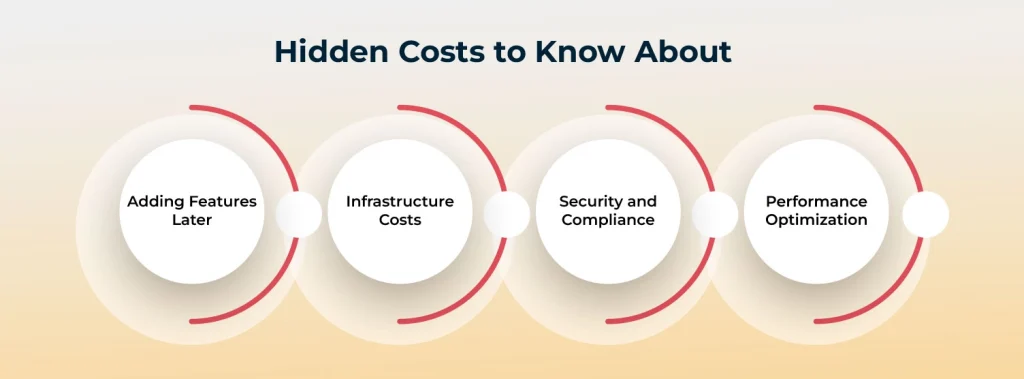
Adding Features Later
Sometimes new ideas for features come up after development has started. This is called scope creep, and it can increase costs by 10 to 20 percent depending on complexity. The best way to avoid surprises is to agree on a clear set of features at the start, while still leaving some room for small improvements.
Infrastructure Costs
Your software needs servers, storage, and databases to run smoothly. Hosting fees can range from 30 to 200 dollars or more, depending on the provider and type of server. Storage costs would depend on capacity and hardware type, and databases may have their own charges. These costs usually grow as more users start using your custom software.
Security and Compliance
Keeping your software secure and following industry rules is essential, especially in areas like healthcare, finance, and e-commerce. Laws like GDPR or HIPAA require audits, certifications, and strong security measures. Adding these protections can increase development costs, but they are critical to keep your data and users safe.
Performance Optimization
Fast and reliable software keeps users happy. Optimizing performance might involve refining code, improving database use, or upgrading hardware. Performance improvements can take 10 to 30 percent of your budget, but they help reduce crashes, speed up your app, and make your software more efficient overall.
How to Reduce Software Development Costs
Building software can be expensive, and going for the cheapest option often leads to headaches. But there are smart ways to save money without cutting corners.
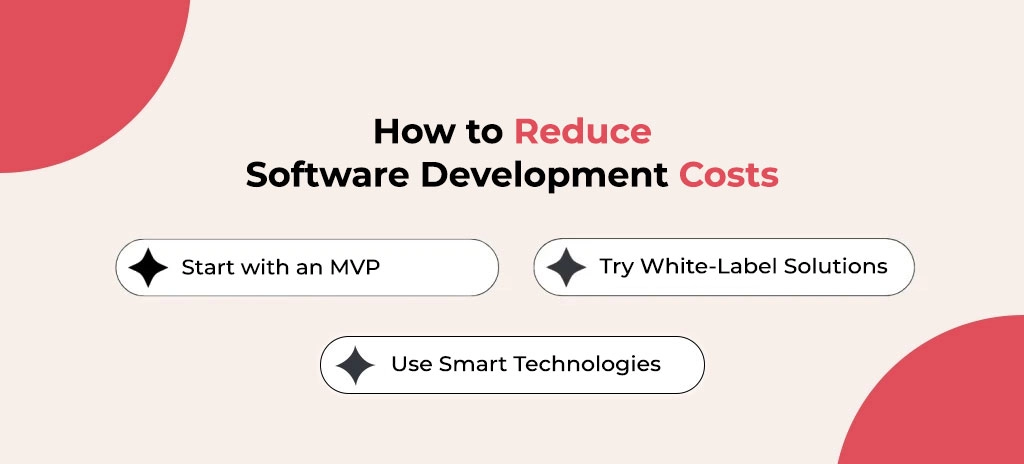
Start with an MVP
One of the easiest ways to keep costs down is to start with a Minimum Viable Product, or MVP. This means you focus only on the essential features first and improve the software as you get feedback from real users. For example, launching a basic CRM MVP could cost $15,000 instead of $30,000 for a full version. You spend less upfront and make better decisions as you grow.
Try White-Label Solutions
White-label software gives you a ready-made product you can customize. It saves time and money because you’re not building everything from scratch. For example, building a marketplace from the ground up might start at $15,000, but using a white-label solution could bring that down to $5,000. You still get what you need, just faster and cheaper.
Use Smart Technologies
Open-source tools are a big help because they are free to use and easy to adapt. Cross-platform development with React Native or Flutter is another great way to save. You can create apps for both iOS and Android at the same time, which reduces the team size, cuts development time, and saves money.
Is Custom Software Worth It?
Yes, it usually is. Custom software is built to fit your business, so it makes daily work easier and more efficient. Costs can go up if you add complex features or need extra security. But in the long run, it often saves time, reduces headaches, and helps your business grow.
The secret is to focus on the features and functions that truly matter. Plan carefully, start with what’s essential, and update regularly. When you do, custom software becomes not just a cost, but a valuable asset for your business.
Frequently Asked Questions
What is the difference between custom software and off-the-shelf software?
Well, absolutely, off-the-shelf software is ready to go and works for general purposes. Custom software, on the other hand, is built just for your business, with the features, integrations, and security your business actually needs.
What does a custom software cost?
It really depends. Small apps can start around $10,000, but bigger projects like marketplaces, ERP systems, or SaaS platforms can easily go over $100,000.
Can I reduce software development costs without compromising quality?
100 percent! You can start with an MVP, use white-label solutions, leverage open-source tools, or build cross-platform apps. These strategies save time and money without compromising quality.
How long does it take to make a custom software?
It depends on the project. Small apps might take a few weeks to a couple of months. Big platforms or enterprise systems? That can take six months to a year or even longer.
Why is post-launch maintenance important?
It’s key. Maintenance keeps your software running smoothly, secure, and updated. Skipping it can lead to crashes, security problems, and unhappy users.