Dubai has become one of the fastest-growing tech hubs in the Middle East. Startups are launching new ideas every day, while established businesses are moving their services online. Because of this digital shift, mobile apps are no longer optional. They are becoming a core part of business growth. However, one big question always comes first. How much is app development cost in Dubai in 2026?
Practically, the cost can start from around AED 15,000 for a basic app. On the other hand, a more advanced or enterprise-level app can go beyond AED 400,000. Because every app has different features, design needs, and technical requirements, the final price can vary a lot. Therefore, understanding what affects the cost is very important before you begin.
In this guide, we will break down the real app development cost Dubai businesses should expect and explain what truly shapes the final budget.
What Is the Real Cost of Building a Mobile App in Dubai?
The cost of building a mobile app in Dubai depends heavily on what you are trying to create. Some apps are simple and focused on one clear function. Others are large-scale platforms with advanced systems running in the background. Because of this difference, pricing can vary widely.
If you are planning a basic application with limited screens and simple features, you may spend somewhere between AED 8,500 and AED 35,000. These types of apps usually do not require complex databases or deep integrations. Therefore, the development process is more straightforward.
However, once you move toward advanced functionality, the investment increases.
Apps that support multiple user roles, custom dashboards, real-time updates, AI features, or complex backend systems can range from AED 150,000 to AED 500,000 or more. This occurs because such projects need stronger architecture, detailed testing, and longer development cycles.
Cost Overview Based on App Complexity
To understand the app development cost Dubai businesses face, it helps to look at pricing by project level. The more advanced your requirements, the more time and resources are needed.
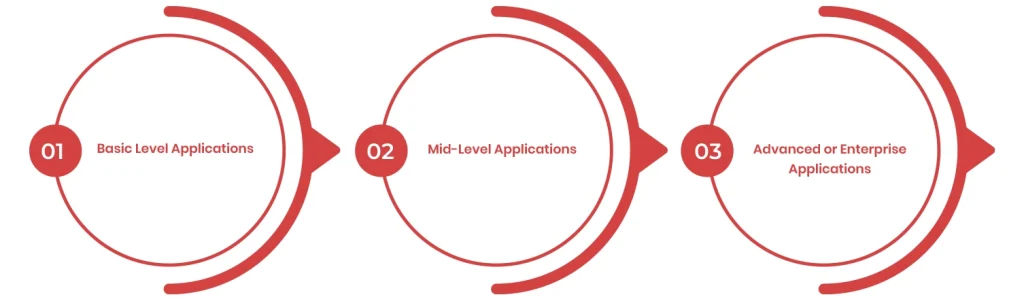
Basic Level Applications
These apps focus on essential functionality. They may involve simple forms, informational pages, or limited user interaction. The interface is pretty standard, and backend requirements are minimal.
Estimated Budget: AED 8,500 to AED 35,000
Typical Timeline: Around 2-5 months
This option is often suitable for startups that are testing a new idea or small businesses going digital for the first time.
Mid-Level Applications
Here, an application becomes more interactive. Features may include user accounts, payment integration, API connections, and a customized interface. Because of these advanced features, app development requires more planning and coordination.
Estimated Budget: AED 35,000 to AED 50,000
Typical Timeline: Around 5-7 months
This level works well for businesses that want stronger engagement and better functionality.
Advanced or Enterprise Applications
These apps are built for scale. They often include real-time data processing, advanced analytics, AI or machine learning elements, multiple third-party integrations, and a fully custom backend system. Moreover, the user experience is carefully designed to handle complex workflows.
Estimated Budget: AED 50,000 to AED 80,000
Typical Timeline: Around 8-12 months
Such projects are common among large businesses or startups aiming for rapid expansion.
What Factors Affect App Development Cost in Dubai?
Your total budget depends on many things, not just the size of your app. In fact, several important factors can increase or reduce the app development cost Dubai businesses pay. Therefore, understanding these elements early helps you plan better and avoid surprises later.
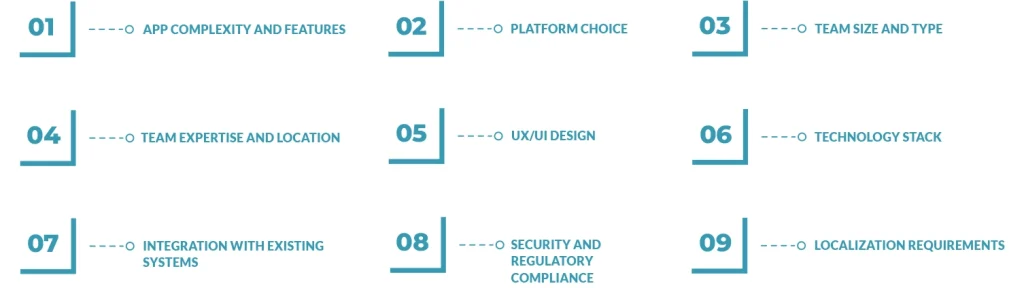
1. App Complexity and Features
First, complexity plays a major role. A simple app with basic features is easier and faster to build. However, once you add advanced functions like real-time tracking, payment gateways, chat systems, or custom dashboards, the cost increases.
This happens because complex features need more development hours. Moreover, they require skilled developers and deeper testing. So the more functionality you add, the more your budget grows.
2. Platform Choice
The platform you pick for your app can significantly impact the cost. Developing for iOS or Android differs in complexity, time, and publishing fees. Cross-platform solutions are another option, but may involve trade-offs in performance.
| Platform | Development Time | Global Market Share | Publishing Charges |
| Android | More time due to device variety | 70.7% | One-time payment of $25 |
| iOS | 40% less complex than Android | 28.5% | $99 annual fee |
| Cross-Platform | Single codebase for both | N/A | Depends on store requirements |
Because Android requires testing across many devices, it often takes longer to develop. On the other hand, iOS apps are simpler but have annual store fees. Selecting the right platform depends on your audience and budget.
3. Team Size and Type
The team you pick to build your app has a big impact on both cost and quality. You can hire an in-house team, work with freelancers, or outsource to an experienced app development company. Each option has its strengths and weaknesses.
| Team Type | Advantages | Drawbacks |
| In-House | Full control over the project, easy communication, and complete visibility | High costs; for example, full-stack developer ~$100,000/year, designer ~$90,000/year, iOS/Android developer ~$80,000/year |
| Freelancers | Lower cost, flexible pricing, and can hire specialists for certain tasks | Less accountability, limited experience with complex projects, potential delays, and less coordination |
| Outsourcing | Cost-effective, access to experienced teams, structured delivery | Less direct oversight, communication must be managed carefully |
For an outsourced app development project, a standard team should have the following:
- 1–2 project managers to handle deadlines and coordination
- 1–2 business analysts to translate ideas into clear requirements
- 1–2 UI/UX designers for UI and user experience
- 2–3 frontend devs for the application’s interface
- 2–3 backend devs for servers and databases
- 1–2 QA analysts to test the application and fix problems before launch
This setup allows a business to handle complex projects without inflating the budget. It also reduces the chances of mistakes or delays during development.
4. Team Expertise and Location
Another key factor is who you hire. Local app developers in Dubai often charge higher rates. However, you benefit from local market knowledge, better communication, and easier meetings.
Outsourcing to another country may reduce costs. But on the other hand, you might face communication gaps, time zone delays, or quality concerns. Therefore, choosing the right team is not just about price. It is about balance.
Here’s a rough estimate of hourly app development rates of various regions:
| Region | Hourly Rate |
| UAE | $60–65 |
| US | $95–100 |
| Western Europe | $80–90 |
| Australia | $70–90 |
| Eastern Europe | $50–55 |
| Asia | $25–40 |
5. UX/UI Design
Design is not just visual. It affects usability and user engagement. Good UX/UI can increase retention, while poor app design drives your users away. Security is also critical, especially for apps handling payments or personal data.
Complying with UAE regulations requires extra testing and careful development. Both design and security add to the budget, but they are essential investments.
6. Technology Stack
The tools and frameworks used to develop your application also affect cost. Choosing the right technology impacts functionality, scalability, and long-term performance.
| Aspect | How It Affects Cost |
| Modern or Advanced Tech | Using the latest tools and frameworks may increase development hours and require more skilled developers. |
| Open-Source vs Proprietary | Open-source technologies can reduce licensing costs, while proprietary solutions may add extra expenses. |
| Complexity of Features | Apps with AI, machine learning, or real-time updates need more advanced tech, increasing cost and time. |
Selecting a solid tech stack upfront reduces complications later and helps keep the app competitive in Dubai’s market.
7. Integration with Existing Systems
Applications often need to connect with existing business tools such as ERP, CRM, or inventory systems. These integrations affect both complexity and cost.
| Type of Integration | How It Affects Cost |
| ERP or CRM Systems | Custom APIs may be required which takes additional time and expertise |
| Payment Gateways | Secure connections and compliance requirements increase development hours |
| Older or Legacy Systems | Connecting with outdated software may need extra coding or middleware, which adds to cost |
The more systems your app needs to connect with, the higher the development budget will be.
8. Security and Regulatory Compliance
Security is especially important in the UAE. If your app handles payments, personal data, or health information, you must follow strict local regulations.
Meeting these standards requires extra development work and proper testing. As a result, the cost increases. However, ignoring compliance can lead to serious legal problems. So in this case, cutting corners is risky.
9. Localization Requirements
Finally, localization matters a lot in Dubai. The UAE has a diverse population with people from many countries. Therefore, your app may need to support multiple languages.
But localization is not just translation. It includes cultural adjustments, content review, and proper testing. Because of this, it adds both time and cost to your project. However, it also helps your app connect with a wider audience.
Typical App Development Costs by Business Type in Dubai
The type of business affects the cost because it determines the features, security, and compliance requirements. Here is a breakdown of common app types in Dubai, with estimated costs and timelines for medium-complexity apps.
| Business Type | Cost Range (AED) | Key Features | Estimated Development Time |
| Startup / Small Business | 35,000 – 100,000 | Basic informational content, simple booking or contact forms, core utility features | 3–5 months |
| E-commerce / Retail | 80,000 – 220,000+ | Product catalog, shopping cart, payment integration, order tracking, user accounts | 5–8 months |
| On-Demand Services | 100,000 – 200,000+ | User and provider profiles, real-time GPS tracking, scheduling, in-app chat | 6–9 months |
| Food Delivery | 120,000 – 250,000+ | Separate interfaces for customers, restaurants, and delivery drivers, real-time tracking, order management, and multiple payment options | 6–10 months |
| Fintech / Banking | 220,000 – 440,000+ | High-level security, regulatory compliance (CBUAE), banking API integration, and real-time transactions | 8–12+ months |
This table shows how costs change depending on the type of app and the features it requires. Each app is different, so the time and budget can vary.
Additional Costs to Consider for App Development in Dubai
Building an app is more than just development. There are hidden costs before launch and recurring expenses afterward. Many businesses underestimate these, which can lead to budget surprises. It is a good idea to set aside about 15–20% of your initial development budget each year for post-launch expenses.
Pre-Launch Costs
Some costs are easy to overlook but are necessary to get your application ready to launch in the market.
| Expense Type | Approximate Cost (AED) | Notes |
| Legal & Compliance | 7,000 – 37,000 | Fees to comply with UAE regulations, including data protection rules. Especially important for finance, health, or payment apps. |
| App Store Accounts | Google Play: 92 (one-time) Apple App Store: 367 (annual) | Required fees to publish your app on major platforms. |
| Feature Additions / Scope Changes | Up to 30% over the initial budget | Adding new features late in development increases costs significantly if the initial plan was unclear. |
Post-Launch Costs
After launch, ongoing investment keeps your application functional, secure, and growing.
| Cost Area | Estimated Annual Cost | What It Covers |
| Maintenance & Updates | 15–20% of the initial development cost | Bug fixes, security updates, OS compatibility, and minor feature improvements. |
| Hosting & Cloud Services | 1,000 – 10,000+ | Platforms like AWS or Google Cloud scale based on user traffic. |
| Marketing & User Growth | 20–30% of the initial development budget | Includes campaigns to attract users, App Store Optimization (ASO), and promotional activities. |
Post-launch investment is important for keeping your app functional, secure, and competitive in Dubai’s fast-moving market.
How to Cut App Development Costs in Dubai?
Developing an application can be expensive, but there are ways to save money without lowering quality. Here are some effective methods:
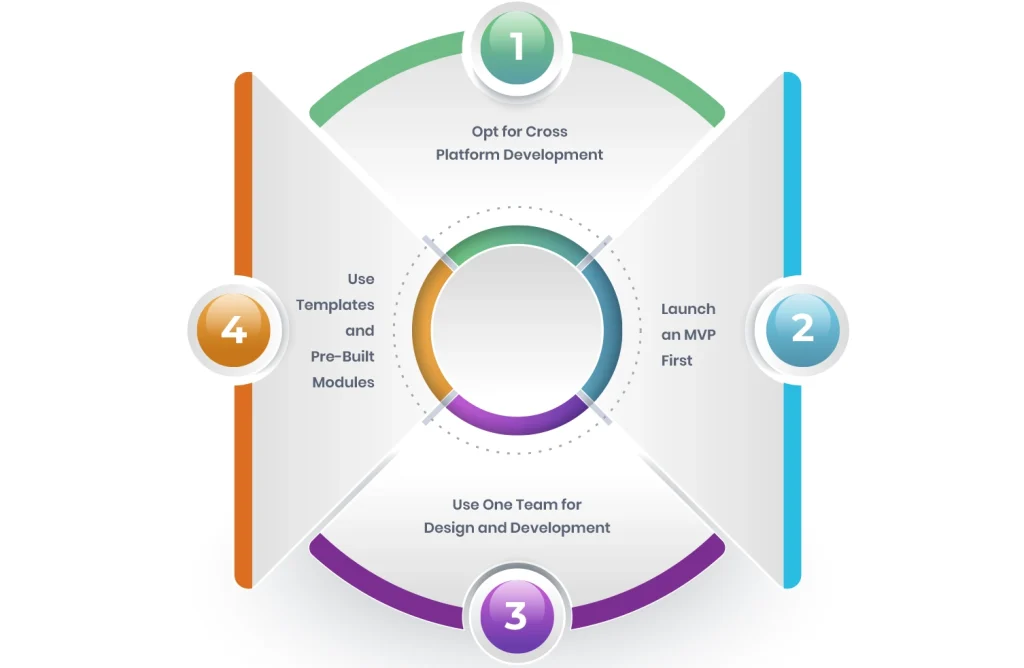
1. Opt for Cross-Platform Development
Instead of creating separate apps for iOS and Android, use frameworks such as Flutter or Xamarin. This approach reduces development time and can lower costs by up to 30 percent. In addition, managing one codebase makes updates and bug fixes easier, which is helpful for apps that plan to grow over time.
2. Launch an MVP First
Making an MVP focuses on the app’s core features first. Testing this version with real users helps you understand which functions matter most. Later, you can add advanced app features based on your user needs and feedback. This step-by-step approach prevents spending on features that might never be used.
3. Use One Team for Design and Development
Using a single company for UI/UX design and app development saves time and money. When designers and developers work together, it reduces miscommunication and avoids repeated changes. It also helps align the visual design with technical requirements. This can improve user experience and app performance.
4. Use Templates and Pre-Built Modules
Templates and pre-built components can speed up development and cut initial costs. On the other hand, they may be difficult to scale or customize later, especially for complex features. These are better for small apps or MVPs, while custom development works better for larger or long-term projects.
Following these steps helps you control costs while still making a practical and functional app.
Wrapping It Up
App development costs in Dubai can vary a lot depending on the features, platform, and complexity of your app project. Therefore, it is important for businesses to plan for all expenses, including hidden costs and ongoing post-launch maintenance. So, it is recommended to start with an MVP, test it with real users, and then expand the app based on feedback and business needs.
Working with an experienced app development company in Dubai helps you get clear cost estimates and reliable timelines. A skilled app development team, be it in-house or outsourced, can guide you on technology choices, compliance, and integrations, making it easier to stay on budget while building an app that meets your goals and works well after launch.