Custom software failures rarely come from bad ideas. They come from poor visibility, weak quality controls, and rushed decisions. One of the most cited examples is Toyota’s mid-2000s software recall, where insufficient testing and disabled safety mechanisms led to massive operational disruption and reputational damage.
For non-technical founders, the lesson is clear: you don’t need to write code, but you do need oversight. Decisions around software architecture, quality assurance, and long-term Total Cost of Ownership (TCO) directly affect risk, scalability, and ROI.
This guide explains custom software development from a founder’s perspective. You’ll learn how to evaluate projects, reduce risk, validate ideas through an MVP (Minimum Viable Product), and make informed decisions without getting lost in technical detail.
Founder Responsibilities in Software Projects
Successful founders don’t succeed by mastering technology. They succeed by maintaining clarity and control. Your role is to define the business problem, align stakeholders, and ensure the product delivers measurable outcomes.
You don’t need to understand every implementation detail. What matters is knowing why decisions are made, how they affect timelines and cost, and whether they introduce long-term risk. When founders focus on outcomes instead of terminology, technical teams execute more effectively.
What Does Custom Software Development Really Mean?
Custom software development means building technology specifically around your business workflows, constraints, and growth plans. Unlike generic tools, custom software is designed to support how your organization actually operates.
The value isn’t customization for its own sakE. It’s control. Custom systems reduce dependency on external vendors, limit unnecessary features, and allow you to evolve your software as the business changes.
Custom Software vs Off-the-Shelf Tools
Off-the-shelf tools are products designed to work for as many businesses as possible. Think of tools like accounting platforms or project management apps. They’re quick to adopt and relatively inexpensive, but they come with trade-offs. Example MS Office, Google Forms.
Custom software is different; it is built around your specific needs. Instead of making your team adapt, the software adjusts according to them. It reflects your workflows and scales as your business grows. While it requires more planning, the advantage is clarity and control.
What Custom Software Can Do for Your Business
Custom software reduces manual errors and provides better visibility into business processes. It allows organizations to align technology with real workflows while remaining flexible for future growth. This is why enterprise-level organizations prefer building their own internal systems like CRMs, tools, or APIs. As a result, teams operate more efficiently and rely on software that directly supports their workflows
How Does Software Development Work?
Software development follows a structured process with defined roles, tools, and checkpoints. Understanding these basics allows founders to evaluate progress without needing technical depth
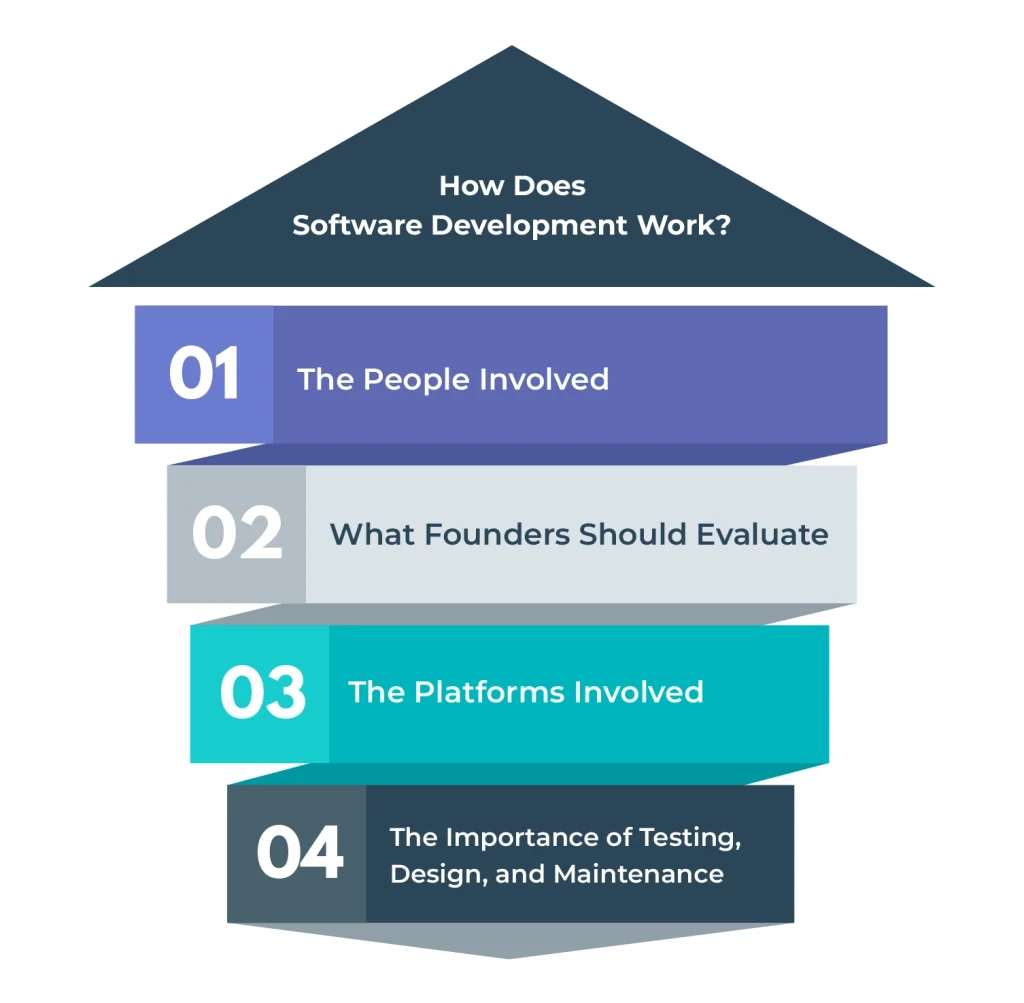
The People Involved
Software is built by people first, not technology. Each role exists to make sure your idea is built correctly and responsibly.
- Project Manager – Acts as the bridge between business goals and technical execution.
- Designers – Focus on how the software looks and feels to users, ensuring it’s intuitive and easy to use.
- Developers – Build the actual software based on the agreed design and requirements.
- QA/Testers – They check the software for bugs and unexpected behavior before users ever see it.
- You (The Founder) – Set priorities and make decisions, not technical ones, but business ones.
What Founders Should Evaluate
Founders don’t need to learn technology stacks, but they should evaluate how technical choices affect hiring, maintenance, and scalability. Stable, well-supported technologies reduce long-term risk and prevent costly rewrites.
The right technology decisions support growth without increasing complexity or operational overhead.
The Platforms Involved
Platforms determine how users access your product and how it scales over time.
- Web Applications: Lower friction and faster iteration.
- Mobile Applications: Deeper device integration and user engagement.
- Cloud Infrastructure: Enables scalability, reliability, and cost control.
Platform decisions should be driven by user behavior and business needs, not trends.
The Importance of Testing, Design, and Maintenance
Design, testing, and maintenance are where most long-term failures originate. Strong design reduces onboarding friction, while a structured QA lifecycle prevents defects from reaching users.
Ongoing maintenance protects security, performance, and compatibility as the business grows. Skipping these areas may accelerate launch, but it almost always increases long-term cost and risk.
Software Development Lifecycle Overview
The software development lifecycle moves from problem definition to real-world usage. Each phase exists to reduce uncertainty and risk. Skipping steps often leads to delays, rework, and cost overruns.
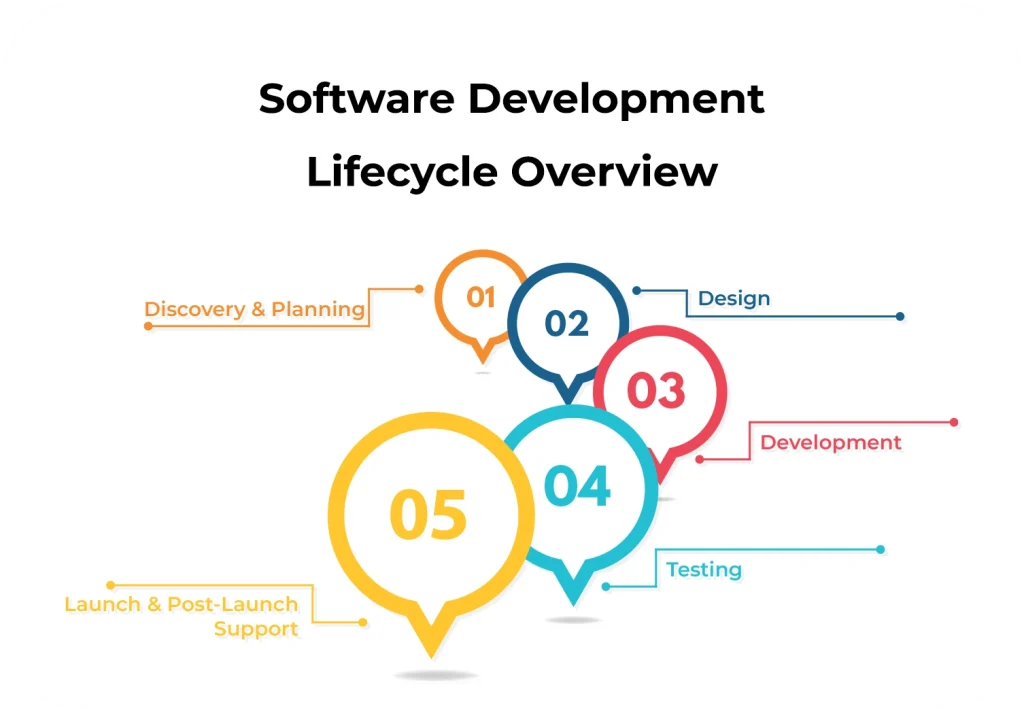
Discovery & Planning
This phase defines scope, constraints, and software architecture at a high level. Strong discovery reduces ambiguity and prevents misaligned expectations later in the project.
Design
Design translates business requirements into user experiences. This is where founders validate usability and ensure the product aligns with user needs before development begins.
Development
Development turns approved plans into working software. Features are built iteratively, allowing feedback and refinement rather than large, risky releases.
Testing
Testing validates functionality, performance, and stability. Issues found here are significantly cheaper to fix than post-launch failures.
Launch & Post-Launch Support
Launch marks the beginning of real usage. Post-launch support ensures the software adapts to feedback, usage patterns, and evolving business needs.
What Impacts the Cost of Software Development?
Software development cost reflects risk, complexity, and responsibility. Understanding cost drivers helps founders make informed trade-offs instead of reacting to estimates.
Complexity
Feature count, integrations, and data flows directly affect build and testing effort. Higher complexity increases both development and long-term maintenance cost.
Time
Longer timelines increase cost, but rushed development often introduces defects and rework. Speed should be balanced with quality.
Team Size
Team size scales with complexity. Larger products require coordination, which increases cost but reduces delivery risk when managed correctly.
Choosing the Right Development Partner
Technical skill alone isn’t enough. The right partner communicates clearly, documents decisions, and takes responsibility for outcomes.
Look for transparency around timelines, costs, and risks. Especially when unexpected issues arise. Experience working with non-technical founders is critical for long-term success.
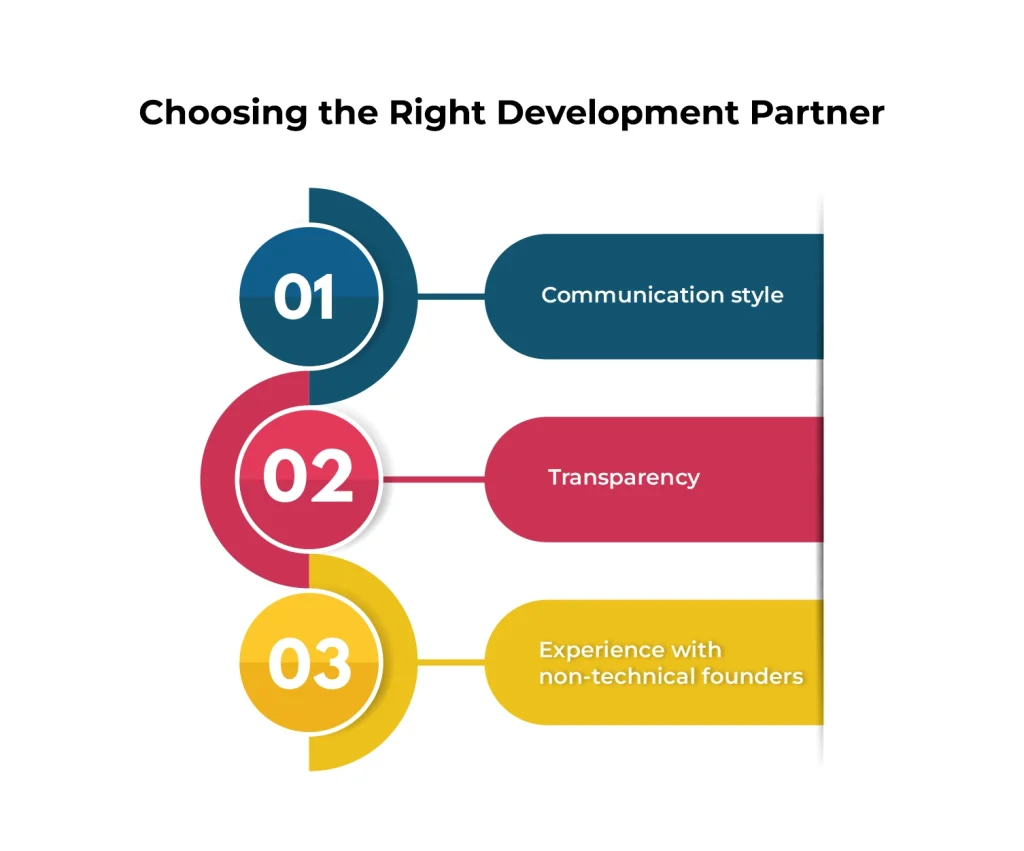
Communication style
Communication should be timely, clear, and consistent, with no unanswered questions or prolonged delays. The developers should be able to answer questions. Moreover, they should ask them back. They should use tools like Slack or Trello to keep each other updated.
Transparency
If they make mistakes, they should be open about it. If something is unexpectedly taking longer or they find bugs while testing right before launch, they will take responsibility. Likewise, they should be transparent about the costs.
Experience with non-technical founders
Most companies have worked with founders who already knew almost everything they needed. This is why you’ll get plus points for working with a custom software development company that has already worked with people who did not have as much of a technical background.
Conclusion
The most successful founders aren’t those who code. They’re the ones who maintain clarity and control. By understanding the software development lifecycle, founders protect quality, manage risk, and make informed decisions.
When built intentionally, custom software becomes a strategic asset that supports growth instead of a recurring source of complexity.
Frequently Asked Questions
Why should custom software be user-friendly?
If users struggle to understand the software, adoption drops and errors increase. Poor usability directly impacts productivity, support costs, and ROI, regardless of how powerful the system is.
Can I validate my idea before investing heavily in development?
Yes. Building a Minimum Viable Product (MVP) allows founders to test assumptions, gather real user feedback, and reduce financial and operational risk before committing to a full-scale build.
How does custom software reduce long-term costs compared to SaaS tools?
While custom software has higher upfront costs, it often lowers Total Cost of Ownership (TCO) by eliminating recurring license fees, reducing workflow inefficiencies, and avoiding vendor lock-in.
How involved should a non-technical founder be during development?
Founders should stay involved at key decision points such as scope changes, priority setting, and trade-offs, without needing to engage at the code level.
What are the biggest risks in custom software projects?
The most common risks include unclear requirements, poor communication, inadequate testing, and rushed timelines. These risks can be reduced through proper discovery, structured quality assurance, and transparent collaboration.
How do I know if my software architecture is future-ready?
Founders do not need to assess architecture technically, but they should ensure it supports scalability, maintainability, and future integrations as the business grows.
What should I expect after launch?
Launch marks the beginning of real-world usage. Post-launch support addresses feedback, performance issues, and evolving business needs to ensure continued value.
How do I measure success after the software is delivered?
Success should be measured by business outcomes such as reduced manual work, improved efficiency, user adoption, and the software’s ability to support growth.