In 2026, building an ecommerce app is a strategic investment. With global ecommerce revenue projected to reach $6.88 trillion and online sales accounting for nearly 24% of total retail, digital commerce is now a competitive necessity.
However, development costs vary widely depending on several factors and goals. Understanding these aspects early is essential for businesses to plan budgets effectively and build a solution that can grow sustainably.
Ecommerce in 2026: What’s Driving Investment
Ecommerce growth is a result of strong shifts in consumer behavior and technology expectations. Businesses are investing in mobile commerce apps to stay competitive. Here are some stats that businesses should consider:
- 59.9% of the global ecommerce revenue currently comes from mobile devices.
- 70%+ of total internet traffic is generated through mobile.
- 2.77 billion people shopped online in 2025.
- 70%+ of online purchases are completed on mobile devices.
- More than 50% of transactions use digital wallets.
What is the Ecommerce App Development Cost: Overview by Complexity
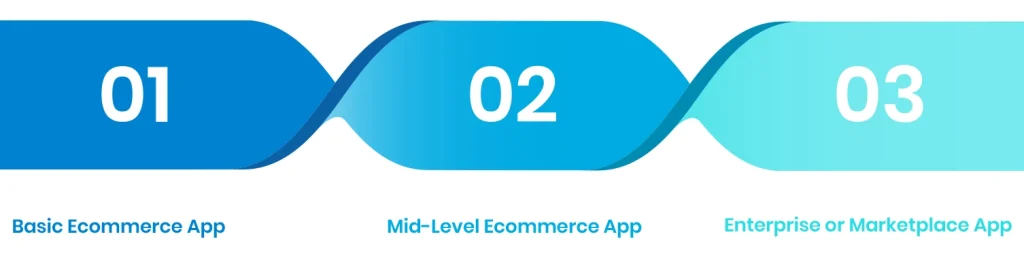
The cost of an ecommerce app largely depends on its complexity level. While prices vary by region and technology stack, most projects fall into three major tiers.
Basic Ecommerce App
A basic ecommerce app is designed for startups or small brands. They are also useful for businesses testing online demand. These apps typically include standard functionality that allows customers to browse products. This way, they are able to place orders without advanced automation or personalization.
Typical features include:
- Product catalog and categories
- Search and filtering
- Shopping cart
- Single payment gateway
- Order tracking
- Push notifications
Estimated Cost:
A basic ecommerce app generally costs $15,000 – $40,000. Apps built with templates and minimal integrations fall on the lower end, while custom UI or scalable backend setups increase the price.
Mid-Level Ecommerce App
Mid-level apps are built for growing brands that already have consistent sales. Their main goal is usually that they want to enhance customer experience. These platforms introduce automation and personalization features.
Common additions include:
- Advanced product filtering
- Wishlist and recommendation engines
- Multiple payment gateways
- Inventory management systems
- Discount and coupon logic
- CRM integrations
Estimated Cost:
Mid-level ecommerce apps typically range between $40,000 – $120,000. Pricing varies based on the number of integrations and whether the system supports real-time syncing or advanced analytics.
Enterprise or Marketplace App
Enterprise-level ecommerce apps are built for large brands or multi-vendor marketplaces. These apps must handle thousands of concurrent users and real-time transactions across multiple regions.
Advanced capabilities often include:
- Vendor onboarding and commission tracking
- Multi-currency and multi-region support
- Personalized product feeds
- Real-time inventory synchronization
- Advanced analytics dashboards
- Fraud detection systems
Estimated Cost:
Enterprise or marketplace ecommerce apps usually cost $120,000 – $400,000+. Highly customized platforms with AI recommendations and enterprise integrations can exceed this range.
What are the Factors That Influence Ecommerce App Cost?
Even within the same complexity tier, development costs vary widely. This depends on technical and strategic decisions. Several key factors determine the final budget.
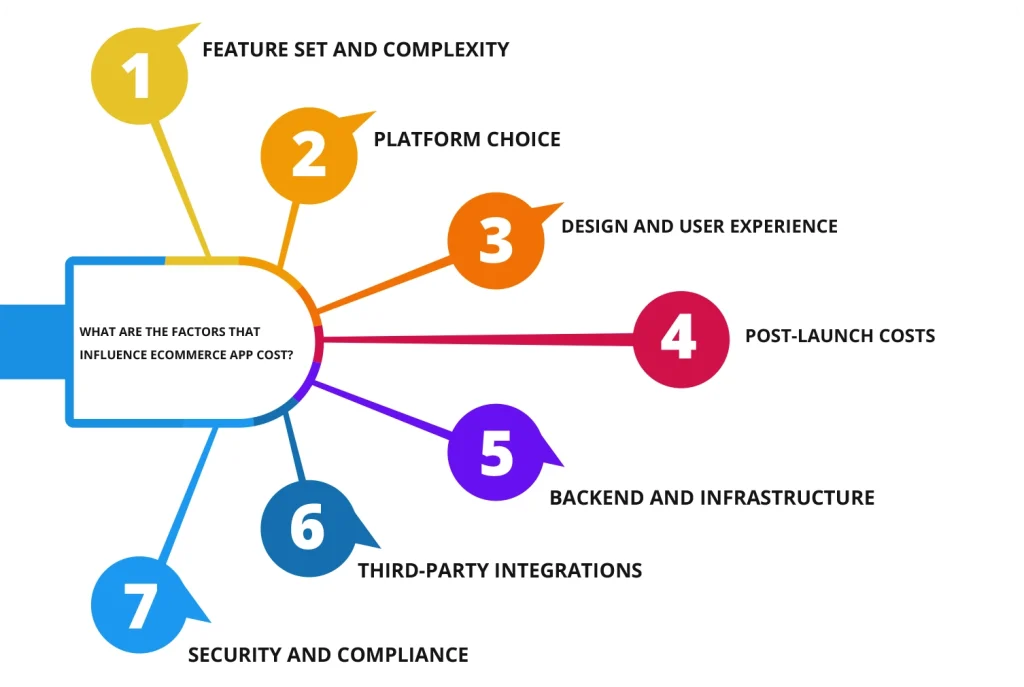
Feature Set and Complexity
The number and sophistication of features directly determine development time and overall cost. If a company adds capabilities such as:
- Subscription billing
- Real-time inventory updates
- Marketplace functionality
- Large product catalogs
- Dynamic pricing
Then, it will increase the costs at each stage of the software development lifecycle.
Platform Choice
Choosing between native and cross-platform development significantly impacts the budget and timeline. Native apps are built separately for iOS and Android. They offer better performance with smoother animations and deeper hardware integration.
However, they require two codebases, which increases cost. Cross-platform apps use a single shared codebase for both platforms. This approach reduces development time and initial investment while still delivering strong performance for most ecommerce use cases.
Design and User Experience
Design is often underestimated when calculating the overall development cost. Things like custom UI design and branded layouts require:
- Research
- Prototyping
- Testing
- Iteration
Strong UX can increase upfront cost but improve long-term revenue by boosting conversion rates. Considering that average ecommerce conversion rates hover around 1.7% globally, even small design improvements can significantly impact sales performance.
Post-Launch Costs
Launching an ecommerce app is only the beginning. Ongoing expenses are essential for maintaining performance and growth. Maintenance typically costs 15–25% of the original development budget annually.
It covers:
- Bug fixes
- OS updates
- Server optimization
- Feature enhancements
Backend and Infrastructure
The backend is the foundation of any ecommerce app. It handles product data, user accounts, payment processing, analytics, and integrations. Infrastructure costs increase as traffic, product catalogs, and transaction volume grow.
The significant backend cost reasons are:
- Cloud hosting and server setup
- Database architecture
- Scalability planning
- API integrations
- Content delivery networks
Apps designed without scalable infrastructure often require expensive redevelopment later.
Third-Party Integrations
Modern ecommerce apps rely heavily on external services. These integrations help the ecommerce app function properly.
Common integrations include:
- Payment gateways
- Shipping providers
- CRM platforms
- Marketing automation tools
- Analytics systems
Each integration adds development effort and ongoing subscription fees.
Security and Compliance
Security is a major cost factor because ecommerce apps handle sensitive user and payment data.
The main security investments include:
- Data encryption
- Secure payment processing
- Fraud detection systems
- Regulatory compliance with regional privacy laws
While compliance increases development costs, it protects businesses from legal penalties and lasting reputational damage.
What are the Core Features and Their Cost Impact?
Different feature categories contribute differently to development cost. Understanding which of them are essential and which are optional helps businesses prioritize investment.
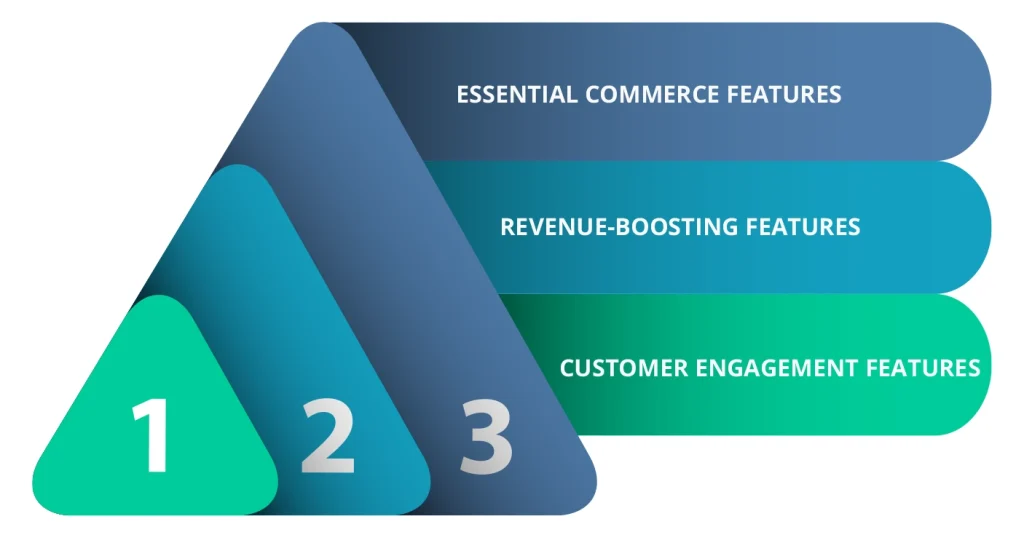
Essential Commerce Features
These features form the foundation of any ecommerce app and are required for basic functionality:
- User registration and login
- Product management system
- Cart and checkout
- Order history
- Notifications
Without these components, the app cannot operate as a transactional platform.
Revenue-Boosting Features
These features increase development cost but directly impact revenue generation:
- Discount engines and coupons
- Loyalty programs
- Personalized recommendations
- Abandoned cart reminders
- Subscription billing
Although optional at launch, these tools can significantly increase customer lifetime value and repeat purchases.
Customer Engagement Features
Customer retention is often much more profitable than acquisition. Engagement features help build loyalty and trust:
- Push notifications
- In-app chat support
- Ratings and reviews
- Social sharing
These features strengthen brand relationships and improve long-term retention metrics.
Development Team and Cost Structure: In-House vs Outsourcing vs Hybrid Teams
The structure of your development team can influence total project cost as much as technical complexity.
Choosing the right development model is a key factor in controlling cost, quality, and speed of an ecommerce app project. Each approach has unique advantages and cost implications.
In-House Team
An in-house team is fully employed by your company. It works exclusively on your app.
Pros:
- Maximum control: Direct oversight of workflow and quality.
- Better collaboration: Face-to-face or real-time communication.
- Deep product knowledge: Team members become experts in your brand and customer base.
Cons:
- High fixed costs: Salaries and office infrastructure.
- Long ramp-up time: Hiring skilled developers and building a cohesive team can take months.
- Limited flexibility: Scaling up or down is slow and expensive.
Best for:
- Long-term product development
- Businesses requiring tight control over security or proprietary features
Outsourcing
Outsourcing mainly includes hiring an ecommerce app development company to handle development.
Pros:
- Affordability: Avoids fixed salaries and office overhead.
- Faster start: Teams are often pre-formed with the required expertise.
- Access to specialized skills: Agencies often have experience with multiple ecommerce technologies and integrations.
Cons:
- Lower control: Communication can be slower or less transparent.
- Potential quality gaps: External teams may not fully understand your business context.
- Dependence on vendor: Future modifications may require the same provider.
Best for:
- Short-term projects
- MVPs or proof-of-concept apps
- Companies without internal technical expertise
Hybrid Model
A hybrid approach combines in-house and outsourced resources.
Pros:
- Balanced control and flexibility: Strategic decisions remain in-house while execution scales easily.
- Affordable: Reduces fixed costs compared to a full in-house team.
- Access to expertise: Outsourced teams provide specialized skills on-demand.
Cons:
- Requires careful project management to coordinate multiple teams.
- Communication overhead can increase if roles and responsibilities aren’t clearly distributed.
Best for:
- Scaling projects without fully expanding internal headcount
- Companies wanting speed plus strategic oversight
- Teams planning continuous feature rollouts and long-term product evolution
Regional Cost Differences
Development rates vary significantly depending on geographic location. The table below shows typical relative cost levels:
| Region | Development Cost |
| North America | $120 – $200 |
| Western Europe | $80 – $150 |
| Eastern Europe | $40 – $90 |
| Southeast Asia | $25 – $60 |
Location influences not only hourly rates but also project management style, communication speed, and time-zone coordination.
What are some Hidden Costs to consider in ecommerce app development?
Some expenses don’t appear in initial project estimates. However, they can significantly affect the long-term investment.
Common hidden costs include:
- Payment gateway transaction fees
- Refund and chargeback processing
- API usage overages
- Feature expansion after launch
- Server scaling during traffic spikes
- Rebuilding outdated architecture
Ignoring these factors can lead to unexpected financial strain. Specifically, once the app begins attracting real users, it gets problematic.
What are some Cost Optimization Strategies?
Reducing development cost doesn’t mean sacrificing quality. Strategic planning can significantly improve budget efficiency.
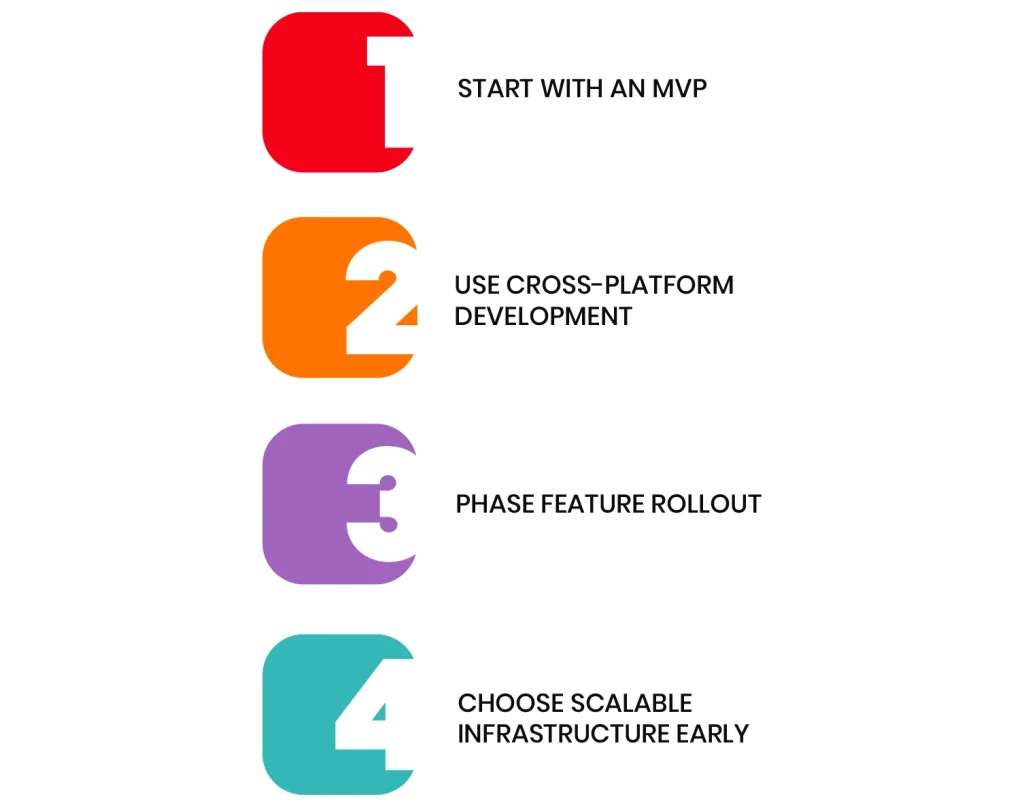
Start with an MVP
Launching with essential features allows businesses to test market demand before investing in advanced functionality. This approach minimizes risk and ensures resources are allocated based on real user feedback.
Use Cross-Platform Development
Building for both iOS and Android simultaneously using a shared codebase reduces development time and upfront cost. For most ecommerce apps, cross-platform solutions provide sufficient performance.
Phase Feature Rollout
Instead of launching with every feature, companies can release advanced capabilities gradually. This strategy spreads cost over time and ensures each new feature is backed by real user demand.
Choose Scalable Infrastructure Early
Investing in scalable architecture during initial development prevents expensive rebuilds later. Scalable systems can handle growth without requiring structural changes.
Conclusion
The cost of developing a complete ecommerce app varies widely. Prioritizing a phased rollout and security from the start ensures apps can grow with user demand. This way, they deliver a seamless experience and generate sustainable value. Planning strategically today positions companies to capture the ecommerce opportunities of tomorrow.