IoT has moved beyond pilots to become a core enabler of enterprise digital transformation. By connecting physical assets with real-time data and analytics, IoT helps organizations improve their workflows and make smarter decisions at scale.
This blog outlines the key advantages, use cases, and strategic relevance of IoT solutions with a focus on how your business can unlock significant value within your own enterprise.
What Are IoT Solutions in an Enterprise Context?
In enterprise environments, IoT solutions represent integrated ecosystems rather than isolated devices. They combine hardware, connectivity, cloud infrastructure, analytics platforms, and business system integrations including IoT system integration. It helps them create a unified intelligence layer across operations.
An enterprise IoT architecture typically consists of five interconnected components:
- Smart devices and sensors embedded in assets
- Connectivity layers such as Wi-Fi, Ethernet, 5G, or LPWAN
- Cloud or edge computing platforms
- Data analytics and visualization dashboards
- Integration with ERP and operational systems
Smart sensors collect real-time data. They do this by getting info from machines, vehicles, facilities, or environmental conditions. Connectivity ensures this data flows securely and reliably to centralized systems.
Cloud platforms store and process the information at scale. Analytics engines then transform these raw inputs into insights that can actually be used. Finally, integration with core enterprise systems ensures data translates into automated workflows and informed decisions.
What are the Key Advantages of IoT Solutions for Enterprises?
IoT solutions can be very beneficial for enterprises across various sectors. Here are a few that we have highlighted:
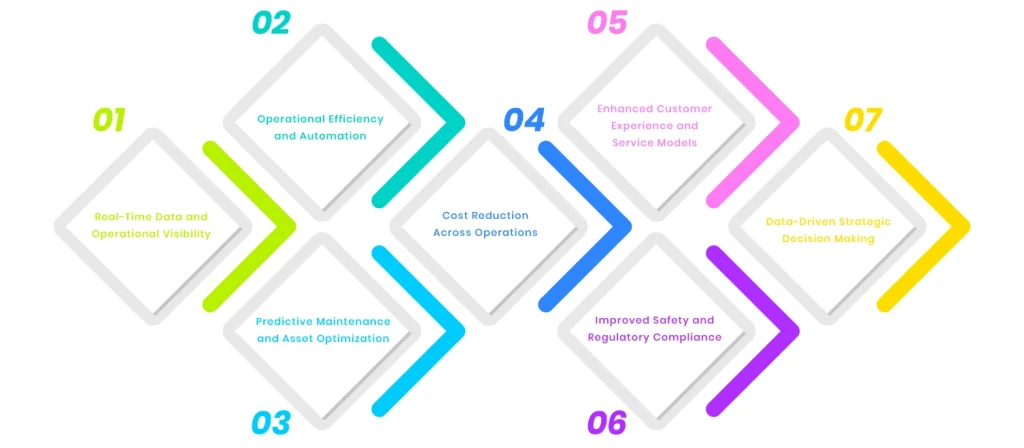
Real-Time Data and Operational Visibility
One of the most transformative advantages of IoT is real-time visibility. Traditional reporting models rely on periodic manual updates, which often introduce delays and inaccuracies. IoT replaces this model with continuous monitoring.
- Machines can transmit performance metrics every second.
- Fleet vehicles can share GPS location and fuel consumption in real time.
- Environmental sensors can continuously monitor temperature or hazardous gas levels.
This level of visibility allows leadership teams to identify anomalies early, respond to disruptions immediately, and make faster operational decisions.
Operational Efficiency and Automation
Productive gains are often the first benefit that enterprises tend to experience with IoT deployment. Connected systems automate routine processes, reduce manual intervention, and minimize human error.
- Smart energy systems can regulate lighting and HVAC usage based on occupancy.
- Production lines can adjust speed dynamically based on real-time performance metrics.
These improvements may appear incremental individually, but at enterprise scale, they get you significant productivity gains.
Predictive Maintenance and Asset Optimization
Traditional maintenance strategies rely either on fixed schedules or reactive repairs after failure. Both approaches carry cost inefficiencies.
IoT enables predictive maintenance by continuously monitoring asset health indicators such as:
- Vibration
- Temperature
- Performance trends.
When abnormal patterns are detected, systems can trigger alerts before breakdowns occur.
According to Deloitte, predictive maintenance powered by IoT can minimize maintenance costs by 25% and decrease breakdowns by as much as 70%. These improvements directly impact uptime and profitability.
Cost Reduction Across Operations
Cost reduction is not limited to maintenance. IoT contributes to financial efficiency across multiple areas.
Energy management systems reduce unnecessary consumption.
- Smart grid integration lowers peak load costs.
- Optimized routing in logistics reduces fuel usage.
- Live monitoring reduces product waste in manufacturing and food supply chains.
In many industries, energy represents a significant portion of the operational expenditure. IoT energy optimization can deliver excellent savings while also supporting sustainability goals.
Enhanced Customer Experience and Service Models
IoT also reshapes how enterprises engage with customers. Connected products generate usage data that enables proactive service and personalization.
For example, equipment manufacturers can monitor deployed machines remotely and schedule maintenance before failure impacts the customer.
- Usage insights allow businesses to introduce subscription or performance-based pricing models.
- This shift from reactive support to proactive engagement strengthens customer relationships.
Enterprises that use IoT for customer experience gain a competitive advantage. It happens through service differentiation.
Improved Safety and Regulatory Compliance
In regulated industries, safety and compliance are very important. IoT solutions provide continuous environmental and operational monitoring. They easily reduce risk exposure. Sensors can detect Hazardous gas leaks and unsafe temperature conditions.
- Wearable devices can monitor worker location in high-risk environments.
- Automated reporting tools streamline compliance documentation.
- These capabilities reduce workplace incidents and simplify regulatory audits.
Instead of manual inspections alone, enterprises gain automated oversight that operates around the clock.
Data-Driven Strategic Decision Making
The true long-term value of IoT lies in data intelligence. Continuous data collection generates a comprehensive view of operational performance over time.
When combined with advanced analytics and AI, this data enables:
- Demand forecasting
- Capacity planning
- Performance simulation
- Strategic scenario modeling
Leadership decisions become evidence-based rather than assumption-driven. This reduces uncertainty and strengthens long-term planning accuracy.
What are the Major Use Cases of IoT in Enterprises?
Here are some use case examples for enterprises across sectors. This will give enterprises an idea of how IoT can benefit them.
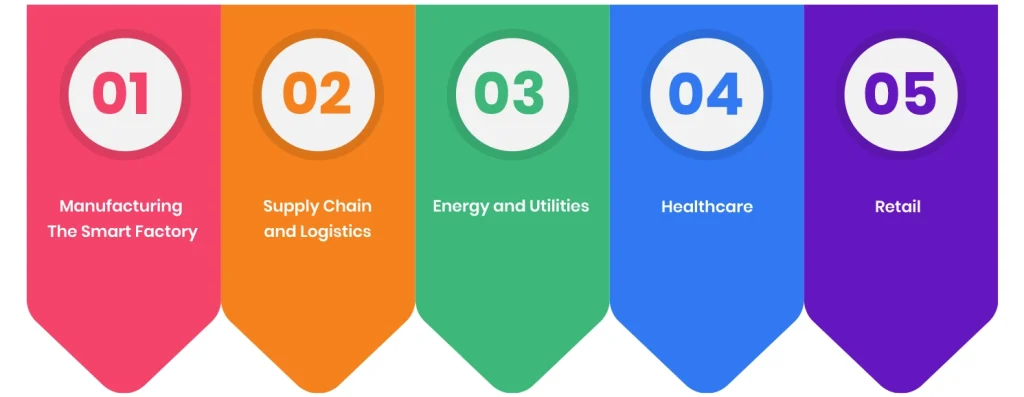
Manufacturing – The Smart Factory
Manufacturing environments have been among the earliest adopters of IoT. Connected production lines allow real-time machine monitoring and production optimization.
Sensors track machine performance and identify bottlenecks. This helps detect quality deviations instantly.
Production managers can adjust operations dynamically to maintain workflows.
The result is higher yield rates and improved quality assurance.
Supply Chain and Logistics
Supply chain operations depend on visibility and coordination. IoT enhances both.
Fleet tracking systems provide live location updates and route optimization. Temperature sensors monitor cold chain shipments. This helps prevent spoilage. Warehouse sensors improve inventory accuracy and space utilization as well.
IoT supply chain solutions can reduce inventory holding costs by 20% to 50% in certain industries.
The strategic impact includes improved reliability and stronger customer trust.
Energy and Utilities
Energy providers use IoT for grid monitoring and consumption optimization.
Smart meters allow live usage tracking. This way, they improve billing accuracy and demand forecasting.
Grid monitoring systems detect faults early. This reduces outage duration and maintenance costs.
These capabilities support both operations and sustainability initiatives.
Healthcare
In healthcare, IoT improves patient care while enhancing operational performance. Remote patient monitoring devices track vital signs continuously. This reduces hospital readmissions. Connected medical equipment ensures optimal performance and timely service.
Asset tracking systems help hospitals locate critical equipment quickly, reducing delays in patient treatment.
The impact is measurable in both patient outcomes and resource utilization.
Retail
Retailers leverage IoT to bridge physical and digital experiences. Smart shelves monitor inventory levels automatically. In-store analytics measure customer movement patterns. Automated checkout systems reduce waiting times.
These capabilities enhance both operational control and customer engagement.
What are the Challenges and Risk Considerations in Implementing IoT solutions for Enterprises?
While IoT offers significant enterprise value, successful adoption requires careful planning and risk management. Below are the key challenges that organizations must address:
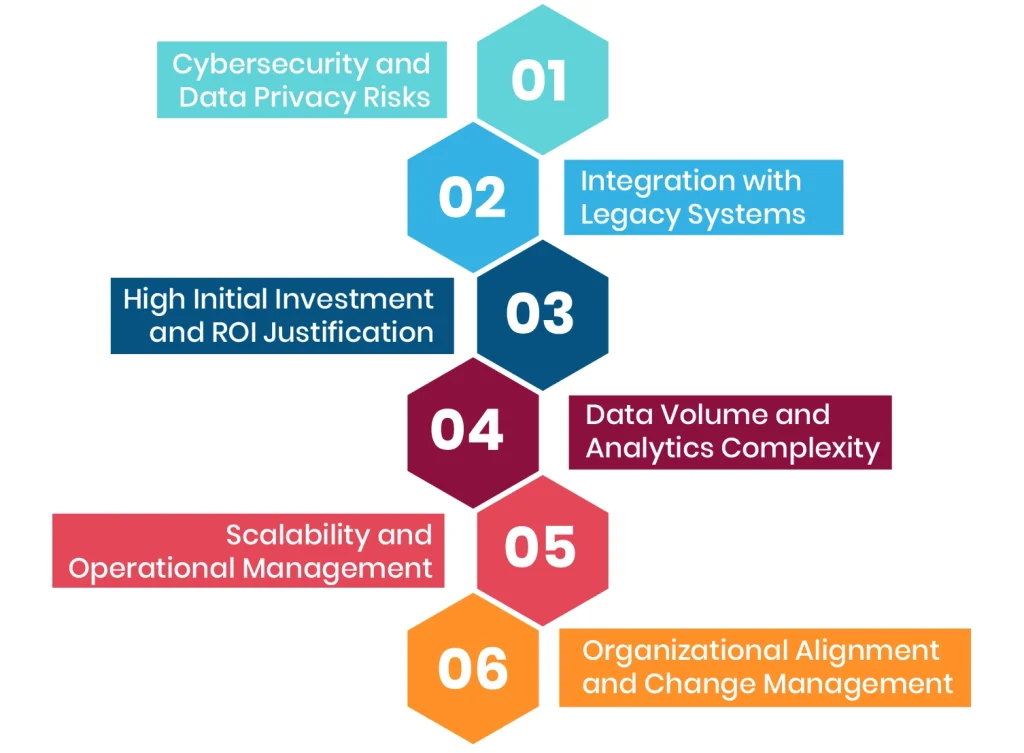
Cybersecurity and Data Privacy Risks
As enterprises deploy more connected devices, the potential attack surface expands significantly. Each sensor and connected endpoint can become a vulnerability if it’s not properly secured.
Integration with Legacy Systems
Most enterprises operate in complex IT environments with legacy ERP and other operational systems. Integrating IoT platforms into these ecosystems can be technically challenging and use heavy resources.
High Initial Investment and ROI Justification
IoT implementation often requires upfront investment in hardware, connectivity, cloud platforms, security infrastructure, and skilled resources.
Data Volume and Analytics Complexity
IoT environments generate massive volumes of real-time data. Without a structured analytics strategy, organizations risk data overload rather than insight.
Scalability and Operational Management
What works in a pilot may not always scale seamlessly across geographies or different business units.
Organizational Alignment and Change Management
IoT initiatives often cut across IT, operations, engineering, and business teams. Lack of alignment can slow implementation and reduce impact.
What are the Best Practices for Successful IoT Adoption?
Enterprises that succeed with IoT typically follow consistent principles. They start with targeted pilots rather than enterprise-wide rollouts. They prioritize cybersecurity from day one. They ensure alignment between IT, operations, finance, and executive leadership. Most importantly, they focus on measurable business outcomes rather than technology experimentation. Continuous monitoring and optimization are essential. IoT is an evolving capability.
Conclusion
IoT solutions provide enterprises with more than connected devices. They deliver operational intelligence and reliable strategic foresight.
From smart factories to intelligent supply chains and connected healthcare systems, the use cases demonstrate clear business value. The data supports the trend. The technology is mature. The competitive advantage lies in execution.
Now is the time for internal teams to identify opportunities and collaborate across departments to unlock the full potential of IoT.