The food delivery industry is growing worldwide as more people prefer to order their food online rather than dine in or take away. This rising demand has turned food delivery platforms such as Uber Eats, Talabat, and DoorDash into household names.
As a result, businesses of all sizes, from small local restaurants to large food chains to grocery chains, are now considering launching their own food delivery applications. Naturally, one of the first questions that comes up is: what does it cost to develop a food delivery app in 2026?
In this guide, we’ll break down the food delivery app development cost in 2026, from simple apps to fully-featured platforms, so you can make informed decisions before building your own food delivery app.
How Much Does a Food Delivery App Cost in 2026?
The cost of building a food delivery app varies depending on features, complexity, and business needs. On average, it ranges from $20,000 to $300,000 or more. Generally, apps fall into three categories.
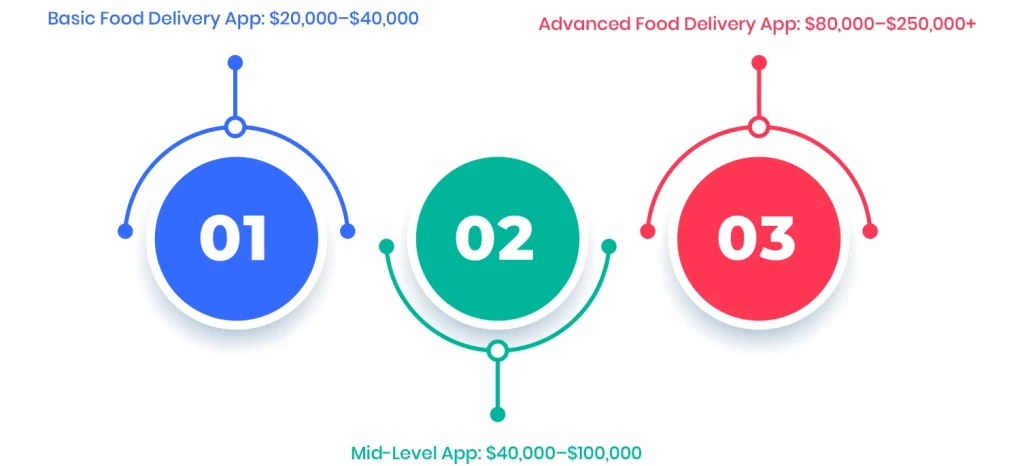
1. Basic Food Delivery App: $20,000–$40,000
A basic app is ideal for startups or a single restaurant. It includes all the essential features to get your business online quickly. So, customers can browse menus, place orders, and pay digitally. Subsequently, restaurants can manage and receive those orders efficiently. This app category keeps things simple and cost-effective, which is perfect for testing your idea in the market.
2. Mid-Level App: $40,000–$100,000
A mid-level food delivery app is designed for platforms that serve multiple restaurants. It includes everything a basic app offers, plus features like real-time order tracking, customer reviews, promo codes, and a simple admin panel for managing multiple vendors. This type of app is great for businesses looking to scale and offer a better customer experience.
3. Advanced Food Delivery App: $80,000–$250,000+
Advanced apps are similar to major platforms like Uber Eats or DoorDash. They include all mid-level features, plus a dedicated driver app, smart features such as personalized recommendations, loyalty programs, and advanced analytics for restaurant and business performance. These apps are ideal for large-scale operations and require a bigger budget to develop.
It’s important to note that figures are approximate. Final costs depend on your features, design, and development team. Later, we’ll break down the factors that affect pricing so you can plan your app budget accurately.
Factors That Affect Food Delivery App Costs
The cost of making a food delivery app depends on many decisions, because each choice you make, from design to features to infrastructure, directly influences the budget. Here are the main elements to consider.
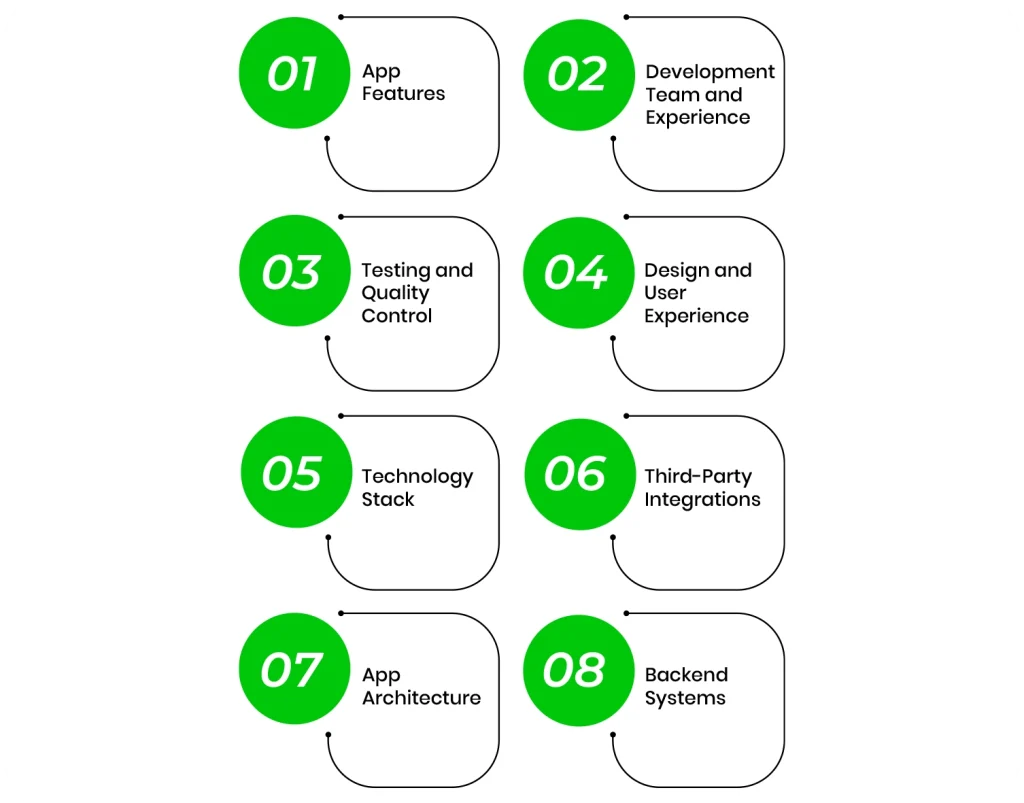
1. App Features
Features are the main factor in app cost. A basic food delivery app that allows its customers to browse menus, place orders, and pay online will cost less. However, adding advanced features such as real-time order tracking, in-app messaging, personalized recommendations, loyalty programs, or support for multiple restaurants will increase both app development cost and time.
2. Development Team and Experience
Where your developers are located and how experienced they are make a big difference in the app development costs. Teams in North America or Western Europe usually charge more, while agencies in Eastern Europe or Asia tend to be cheaper. Moreover, devs who have built delivery or marketplace apps before may charge more upfront, but they often finish the work faster and handle problems better.
3. Testing and Quality Control
Testing makes sure that the food delivery app works for users because payments go through correctly, orders reach the right restaurants, and delivery tracking operates as expected. On the contrary, skipping proper testing can lead to frustrated customers and lost orders. For a mid-level food delivery app, testing usually costs between USD 8,000 and 25,000.
4. Design and User Experience
Good design affects how people use the food delivery app and whether they come back. A simple and functional design may cost $5,000–$50,000. However, a high-quality custom design can range from $50,000–$130,000. Because a clear and simple layout makes ordering faster, investing in thoughtful design can improve repeat orders and sales.
5. Technology Stack
The technology used in the app affects how it works and how easy it is to add new features. Modern, widely used technologies make development faster and cheaper in the long term. On the other hand, using outdated or rare tools can slow down work, increase costs, and may even require rebuilding parts of the app later.
6. Third-Party Integrations
Integrations are important for payments, maps, notifications, and analytics, but they add work. Common integrations in your food delivery app include:
- Payment gateways like Stripe or PayPal
- Maps and location services like Google Maps
- SMS and push notifications like Twilio or Firebase
- Analytics tools like Google Analytics or Mixpanel
- Login and security services like Auth0 or Firebase
Furthermore, some of these services charge ongoing fees. Payment gateways usually take a small percentage per transaction, and SMS notifications may be billed per message. Because these costs can add up, they should be included in your budget.
7. App Architecture
The app’s architecture affects how different parts of the food delivery app work together. A monolithic architecture builds everything as one single system. It is simpler, faster, and cheaper to develop, making it a good choice for small apps or simple prototypes. On the flip side, a microservices architecture divides your food delivery app into separate modules that work together. This is more reliable as it can handle a larger number of users. But it costs more because each part needs its own setup, database, and management.
8. Backend Systems
The backend handles users, orders, and data. A small setup is cheaper and works for a limited number of users. However, a stronger cloud infrastructure, such as AWS or Google Cloud, that can handle thousands of orders at the same time, requires a higher upfront cost and ongoing server charges.
Food Delivery App Development Budget Breakdown
Once you understand the factors that affect cost, the next step is to break down the budget. The total investment depends on the type of app, its complexity, and the number of components it includes.
Key Components of a Food Delivery App
Most food delivery platforms consist of several modules, each with its own development needs:
- Customer App: Lets users browse restaurants, place orders, track deliveries, leave reviews, and manage payments.
- Courier App: Allows delivery drivers to accept orders, follow routes, update delivery status, and communicate with customers.
- Vendor Panel (optional): Helps restaurants manage menus, orders, schedules, inventory, promotions, and sales analytics.
- Admin Panel: Central hub for managing users, restaurants, orders, financial reporting, refunds, and platform settings.
Each component has its own features, user flow, and testing requirements, so development is handled separately for each.
Estimated Development Costs by Component
Each part of a food delivery platform has its own purpose and development needs. Understanding the features and approximate cost of each module helps you plan your budget effectively.
| Component | Key Features | Approximate Cost |
| Customer App | User registration, menu browsing, cart and checkout, multiple payment methods, order tracking, reviews, push notifications, loyalty features | $25,000–$70,000 |
| Courier App | Registration, order acceptance, delivery updates, navigation, availability toggle, delivery history, in-app communication | $20,000–$70,000 |
| Vendor Panel | Menu and pricing management, order handling, schedule management, inventory, analytics, promotions | $20,000–$50,000 |
| Admin Panel | User and restaurant management, order monitoring, financial reporting, multi-role permissions, analytics dashboards | $10,000–$50,000 |
Breaking down costs by component gives a clearer view of where the investment goes and helps prioritize features based on your budget.
Types of Food Delivery Apps and Their Costs
Now that we’ve discussed how the main components and complexity of a food delivery app affect its development cost, it’s important to see how different business models affect cost.
| App Type | Description | Key Components | Approximate Cost |
| Restaurant Aggregators | Marketplaces connecting multiple restaurants to customers (like Uber Eats or DoorDash) | Customer app, Courier app, Vendor panel, Admin panel | $30,000–$250,000+ |
| Single-Restaurant Apps | Apps for a single restaurant or chain (like Domino’s or McDonald’s) | Customer app, simple Vendor panel | $40,000–$100,000 |
| Grocery Delivery Apps | On-demand grocery delivery with real-time inventory and shopper apps | Customer app, Shopper app, Vendor panel | $150,000–$400,000+ |
| B2B Delivery Apps | Catering and bulk meal delivery for offices and businesses | Customer app, Vendor panel, Admin panel with corporate features | $100,000–$250,000+ |
Each app type has different development needs, so understanding these differences helps you plan your budget and resources more accurately.
App Complexity and Development Timeline
Knowing the complexity of your app helps estimate how long development will take and the overall cost.
| Complexity Level | Development Time | Approximate Cost |
| Basic App / MVP | 2–4 months | $20,000–$40,000 |
| Mid-Level App | 3–6 months | $40,000–$100,000 |
| Advanced App | 6–12 months | $80,000–$250,000+ |
The timeline varies depending on features, design, and integrations. More complex apps naturally take longer to build and cost more.
How the Development Team Region Affects Cost
Where you hire your developers also impacts the budget. Rates vary depending on local living costs, experience, and demand.
| Region | Hourly Rate |
| South Asia | $25–$50 |
| Latin America | $30–$70 |
| Eastern Europe | $40–$70 |
| Western Europe | $90–$140 |
| North America | $100–$180 |
Selecting a team in a lower-cost region can save money; however, it’s important to balance cost with experience and quality to get the best results.
Hidden Costs to Factor Into Your Food Delivery App Budget
So, building a food delivery app is only the beginning. Running it successfully also comes with ongoing expenses that can quickly add up. At the same time, keeping these costs in mind helps you plan a realistic budget and avoid surprises later.
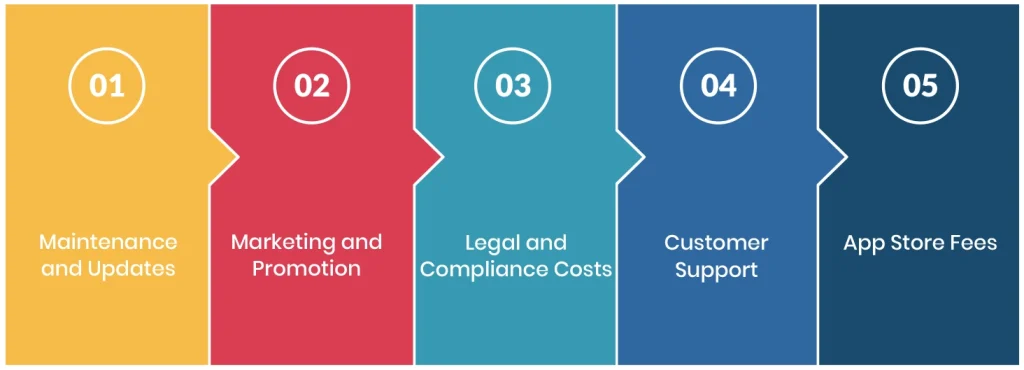
1. Maintenance and Updates
After your app is live, it will need regular updates, bug fixes, and performance improvements. This is important because devices and operating systems are always changing, and an app that isn’t updated can start causing problems. Maintenance usually costs about 15–25% of the initial development budget per year, depending on how complex the app is.
2. Marketing and Promotion
Of course, launching your food delivery app does not automatically guarantee an influx of users. You also need marketing efforts like app store optimization, social media campaigns, influencer partnerships, and retention strategies. These expenses start at launch, but they can continue every month if you want to stay competitive. Without marketing, even a well-built app might struggle to get noticed.
3. Legal and Compliance Costs
At the same time, running a food delivery app involves legal responsibilities. You might need to follow data protection laws such as GDPR or CCPA, get business licenses, or prepare contracts with restaurants and delivery partners. These costs vary depending on your market, but skipping them can create bigger problems in the long run.
4. Customer Support
Meanwhile, offering good customer support keeps users happy and encourages them to return. This could be through chatbots, email, or a 24/7 helpdesk. However, it does come with ongoing costs, so you need to include it in your budget from the start.
5. App Store Fees
Finally, you have built a great quality food delivery app. But publishing your food delivery app also has its own costs. To be specific, Apple charges $99 per year for individual accounts and $299 for organizations. Contrarily, Google Play charges a one-time $25 registration fee. Both platforms also take 15–30% of in-app purchases or transactions. Because these fees affect your revenue, it’s important to factor them into your planning early.
6 Practical Tips to Optimize Your Food Delivery App Budget
Building a food delivery app can get expensive, but with careful planning, you can keep costs under control without sacrificing quality. Here are six ways to do it smartly:
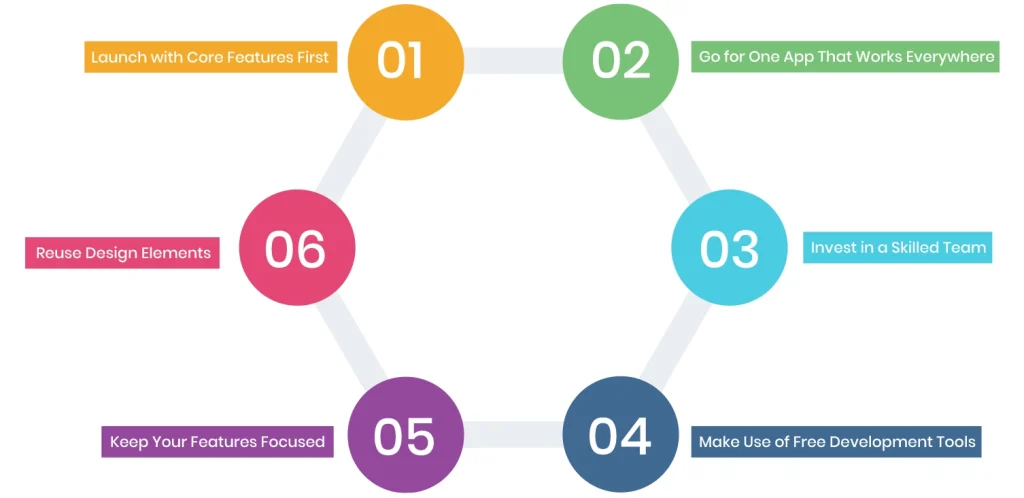
1. Launch with Core Features First
Start with only the essential features, like browsing menus, placing orders, and payment. This lets you test your idea with real users and save money by adding extra features later based on feedback.
2. Go for One App That Works Everywhere
Instead of making separate apps for different platforms, consider a single cross-platform app. It reduces development time and cost while still reaching most users.
3. Invest in a Skilled Team
Hiring experienced developers may seem costly, but they work efficiently, avoid mistakes, and build a solid foundation. This saves time and money in the long run.
4. Make Use of Free Development Tools
Using open-source frameworks for your backend, database, and other components lowers licensing costs. It also lets your team focus on features that make your app unique.
5. Keep Your Features Focused
Define what your app absolutely needs at launch and stick to it. Adding new features mid-development can increase costs and delay your timeline.
6. Reuse Design Elements
Instead of designing every button or screen from scratch, use pre-built UI templates. This speeds up development and frees your team to focus on custom parts of your app.
Bottom Line
Creating a food delivery app is more than just building features. Costs are influenced by a variety of factors such as design, platform complexity, and the region of your development team. While a simple app would cost around $20,000 and a full-featured platform $250,000 or more, ongoing expenses such as updates, maintenance, marketing, and customer support are equally important to plan for.
If you want to take your business to the next level with a custom and user-friendly food delivery app, connect with an experienced on-demand food delivery app development company like Linkitsoft. A thoughtfully built app does more than process orders. It helps build customer loyalty, encourages repeat purchases, and drives long-term growth.
Frequently Asked Questions
How much does it usually cost to build a food delivery app?
The cost depends on the type of app and features you want. A simple single-restaurant app can start around $20,000, while a full-featured marketplace like Uber Eats can go beyond $250,000. Keep in mind that updates, marketing, and support add to the total investment.
What features make a food delivery app successful?
A food delivery app succeeds when it focuses on convenience because users want to browse menus, place orders quickly, track deliveries in real-time, and get personalized recommendations. At the same time, features that help restaurants manage orders and couriers coordinate deliveries make the platform efficient for everyone.
Should I build a custom food delivery app or use a pre-made template?
Custom apps win this race because they let you tailor features, branding, and workflows to your business model. This is better for long-term growth. Pre-made solutions are quicker to launch, but they often limit flexibility and may not scale well as your app expands.
Can I integrate my food delivery app with other services?
Of course, you can! You can integrate payment gateways, mapping tools, inventory systems, and marketing platforms into your food delivery app.