
The healthcare industry is booming, and there is no better time to hit the iron while it is hot and start your own healthcare app. People are paying more attention to their health than ever. In fact, the mobile health app market is expected to grow from 42 billion USD in 2025 to over $87 billion by 2030, with an annual growth rate of about 16%. This growth is due to more people using smartphones, wanting to track their health, and looking for ways to stay fit or manage chronic conditions.
If you have been looking for ideas for your next project, we have put together a list of 15 healthcare app ideas to give you some inspiration. These ideas are based on what people are actually using and finding helpful, so you can create a healthcare app that users will enjoy and rely on every day.
15 Winning Healthcare Apps Ideas That Could Go Big in 2026
The healthcare app world is growing fast, and now is the perfect time to create something people will actually use. In fact, according to Rock Health, 73% of people downloaded health apps on their own. That means people are actively looking for simple ways to track their health, manage daily habits, or stay fit without anyone telling them what to do.
With that in mind, here are 15 healthcare app ideas you should pay attention to in 2026:
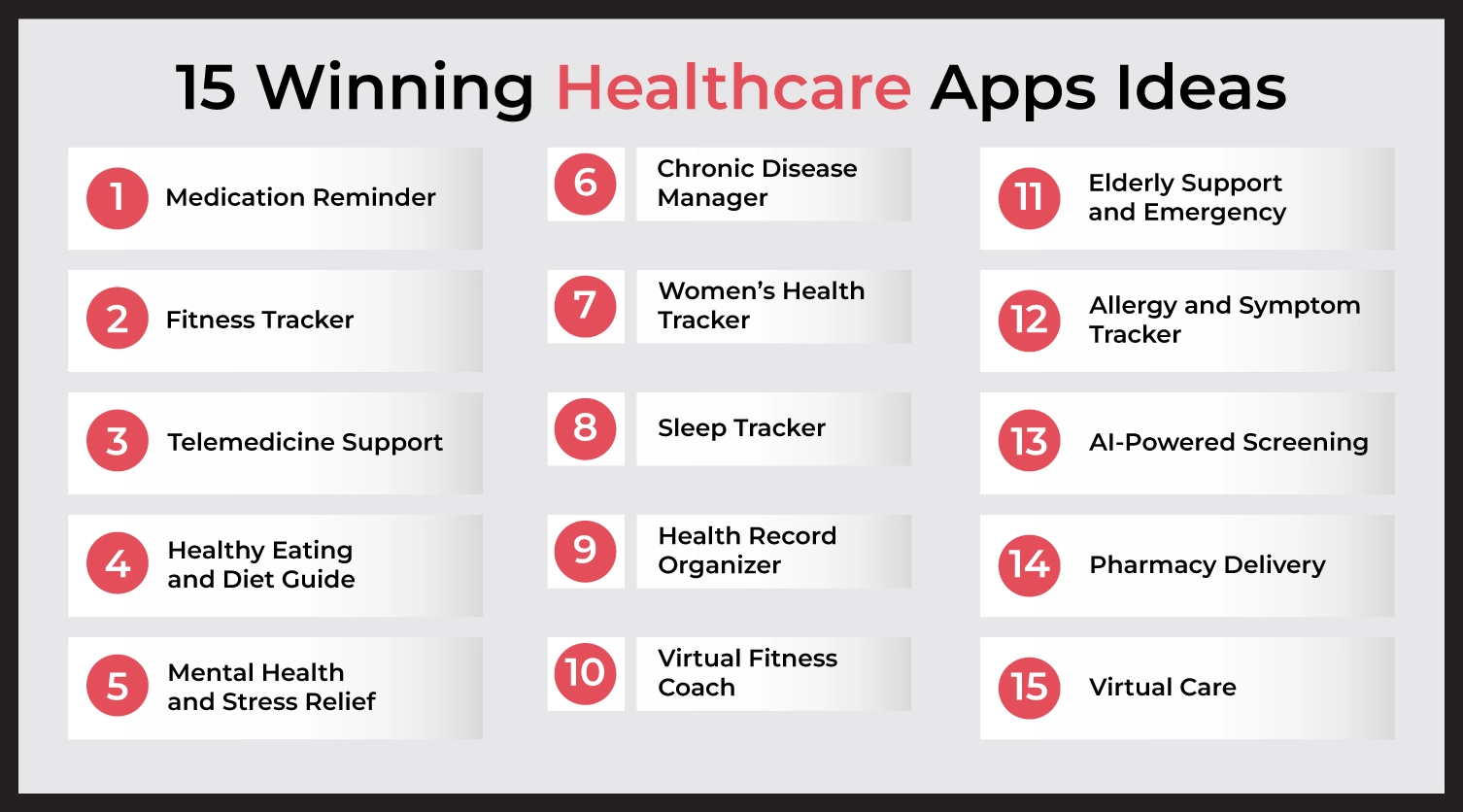
1. Medication Reminder
We all know how easy it is to forget taking medicines, especially if there’s more than one prescription. A medication reminder app could send gentle notifications when it’s time for each dose and even track when medicines are taken. It could also remind users to refill their prescriptions before they run out. With everything logged in one place, managing daily medications becomes much simpler. Users feel less stressed and more in control of their health.
2. Fitness Tracker
Did you know that 3 in 10 adults use a health app on their phone? It can track your daily activity, including steps, distance walked, and calories burned. Many trackers also monitor workouts such as running, cycling, or even home exercises. They set small goals, remind you to move, and celebrate your progress. Moreover, they also check your heart rate and sleep cycle. You can also track your water intake on the app. In short, it’s like having a personal gym trainer in your pocket to keep you on track.
3. Telemedicine Support
Ever skipped the doctor’s visit because life got in the way? A telemedicine app lets you book virtual appointments and talk to a doctor from home. You can get advice, prescriptions, or follow-up tips without stepping into a clinic. It’s perfect for busy schedules or if moving around is tough. You get care fast and without the stress of waiting rooms.
4. Healthy Eating and Diet Guide
Eating well can feel confusing or overwhelming at times, even when people know what’s good for them. That’s why an app like this can help users record their daily meals and track their calorie intake. The app would also feature some simple meal plans or recipe ideas that fit their lifestyle. In addition, it could give tips for balanced eating and suggest small swaps to make nutrition easier, like switching sugary drinks for water or adding more veggies to meals. Over time, these little changes build healthy habits without making food feel restrictive. Anyone wanting to eat smarter while still enjoying meals could benefit from this kind of app.
5. Mental Health and Stress Relief
Life can get hectic, and stress can sneak up on anyone without warning. This is where a mental health app like this could offer short exercises, track moods, and give simple tips to calm down. Users could also find therapists near them and book online sessions for extra support. By checking in every day, they start to notice their patterns and understand what works best for them. In the end, it’s like having a friend who gently nudges you to take care of yourself and feel more balanced.
6. Chronic Disease Manager
Living with diabetes, asthma, or high blood pressure can be exhausting. What if an app could help users log symptoms, track readings, and remind them to take their meds or see their doctor? It could also spot patterns that need attention, which makes daily management less stressful. Keeping all information in one place helps users feel safer and more in control. Over time, managing chronic conditions becomes a simpler, everyday habit.
7. Women’s Health Tracker
Tracking periods, symptoms, or pregnancy milestones can feel overwhelming, especially with a busy schedule. This app lets users keep a record of everything, notice any changes, and follow simple health tips. It also sends friendly reminders for checkups or healthy habits, so nothing gets forgotten. With all your information in one place, looking after your health feels easier for women. And, they also feel more confident knowing they haven’t missed anything important.
8. Sleep Tracker
Many people have insomnia or trouble falling asleep. This can make mornings feel rough. That’s why a sleep tracker app is so useful. It records sleep patterns and also helps you figure out what might be affecting your nighttime rest. A good sleep tracking app also includes features such as guided meditation, simple bedtime routines, and small changes to improve sleep quality. As users follow these tips, they start waking up feeling more refreshed and energized. In the long run, better sleep improves mood, focus, and overall health.
9. Health Record Organizer
Tired of digging through papers for your lab results or vaccination records? An app that keeps all your medical info in one place makes life so much easier. You can quickly find what you need, especially in an emergency. Everything being organized gives you a sense of control and peace of mind. More importantly, having your health details at hand makes appointments and checkups simpler.
10. Virtual Fitness Coach
It can be hard to stick to workouts when life is busy. A virtual fitness coach app guides you with easy-to-follow workout plans. You can exercise at home, in the park, or anywhere without paying hefty gym fees. The app tracks your progress and gives small nudges to keep going. The app also rewards your achievements with badges or milestones. This makes staying consistent more fun. Users are motivated when they see progress, and this makes fitness feel doable.
11. Elderly Support and Emergency
Emergencies have a way of happening when you least expect them, especially for older adults or people living alone. This app lets users send an alert with one tap or automatically detects problems such as a fall or sudden health issue. It instantly notifies family members or emergency contacts and shares the user’s location so help can reach them faster. The app can also include simple features like medication reminders, quick video calls, and a family view so loved ones can check in anytime. Knowing that support is just a tap away brings peace of mind to users and the people who care about them.
12. Allergy and Symptom Tracker
Allergies can pop up suddenly and make daily life tricky. An allergy tracker app helps users log their symptoms, track triggers, and plan their day around their condition. It can even show updated information on pollen levels, local allergens, and even air quality in your area. This way, the app users can keep track of their daily well-being and find nearby allergy clinics if needed. Over time, the app helps spot patterns, prevent surprises, and makes managing allergies easier and less stressful.
13. AI-Powered Screening
Some health problems are hard to spot early, such as skin issues or eye conditions. An AI-powered screening app comes to the rescue by letting users upload a photo of a mole or scan their retina and get an early alert if something looks unusual. It uses data from images, health history, and population trends to help identify potential concerns. The goal is to make detection easier and reduce stress on clinics. But it’s equally important to remind the app users that it’s a screening tool, not a full diagnosis one. With clear guidance, these AI health apps help people act faster and seek professional care when needed.
14. Pharmacy Delivery
Running out of medicines can be stressful, especially when you are sick or short on time. A pharmacy delivery app makes things easy by letting users order medicines from their phone and get them delivered to their home. Users can search for medicines, upload their prescription, track the delivery, and set reminders so they do not forget their doses. Safe payments and quick delivery are a big help for elderly users and people who take medicines daily. Even though some medicines may not always be in stock, this app idea is in high demand because it saves time and effort.
15. Virtual Care
Seeing a doctor doesn’t always mean leaving home. These virtual healthcare apps let patients book appointments, talk to doctors over secure video calls, and even get prescriptions online. Moreover, users can easily schedule appointments, join consultations, and track their health with a simple app design. Furthermore, adding multilingual support or connecting with wearables helps in reaching more people. This also makes the app experience feel personal and helpful. The best apps stand out by keeping the process easy and straightforward for everyone.
What Is the Cost to Develop Healthcare Apps?
The cost to develop a healthcare app usually ranges between $8,000 and $30,000. However, the final price depends on how complex the app is. A basic app with only essential features costs less, while an advanced app with more functions costs more.
If you start with an MVP, which includes only the core features, the mobile app development cost stays on the lower side. On the other hand, apps with advanced features like real-time monitoring or wearable support need more time and budget. Below is a simple cost breakdown to help you understand this better:
| App Category | Core Features | Approximate Cost |
| Starter Health App | Secure sign-up, appointment scheduling, user profiles, basic alerts | $8,000 – $12,000 |
| Standard Medical App | Online doctor visits, digital prescriptions, payment setup, and health records | $13,000 – $20,000 |
| Advanced Health Platform | Smart health checks, wearable device connection, real-time tracking, data insights | $21,000 – $30,000 |
Is Investing in a Healthcare App Worth It?
Simply put, yes! Healthcare apps are no longer a luxury. They have become a daily need for many people today. From virtual care and fitness tracking to emergency alerts and pharmacy delivery, these healthcare app ideas show strong potential for 2026 and beyond. People around the globe want simple tools that help them manage health without stress or long hospital visits.
If you choose the right app idea and start with the right features, a healthcare app can grow into a trusted solution for users. Working with an experienced healthcare app development agency can help turn your idea into a secure, user-friendly app that people rely on every day.
Frequently Asked Questions
How long does it take to build a healthcare app?
It usually takes 3–6 months for a basic app, 6–9 months for a mid-level app, and 9–12 months or more for an advanced healthcare app with smart features. The exact timeline depends on the features, design, and testing required. When you work with a trusted healthcare app development company such as Linkitsoft, we will provide you with a clear app development timeline.
Are healthcare apps only for younger people?
Not at all. Many apps are designed for senior citizens too, with features like emergency alerts, fall detection, medication reminders, and family-view options. This way, older adults can stay safe and healthy while their loved ones can check in easily.
Are AI-powered screening apps safe to use?
These apps help users spot potential issues early by analyzing photos or scans. However, they are meant as a screening tool, not a final diagnosis. They encourage users to see a doctor sooner rather than later.
How much does it cost to develop a healthcare app?
It depends on complexity. A basic app costs around $8,000–$12,000, a standard app with features like telemedicine and prescriptions costs $13,000–$20,000, and an advanced app with wearables, real-time tracking, and smart analytics can cost $21,000–$30,000.
How do I choose the right healthcare app idea for 2026?
You must look at what users need most in the upcoming year. Look at healthcare trends and current healthcare apps that simplify everyday health, which are in high demand. Pick an idea you can build with the right features, and focus on making it easy to use.