
One of the first questions businesses ask when planning a mobile app is how long development will take. The timeline matters because it affects budgeting, product launches, and overall business planning.
In 2026, mobile apps often include advanced technologies such as AI, cloud services, and real-time data, which can influence development time. The exact timeline depends on several factors and elements.
In general, simple apps may take a few months to build, while more complex platforms can take close to a year. Understanding these timelines helps businesses set realistic expectations and plan their app properly.
What is the Timeline Based on an App’s Complexity?
An app’s complexity and feature requirements determine both the app development timeline and costs. Let’s talk about the estimated time periods here:
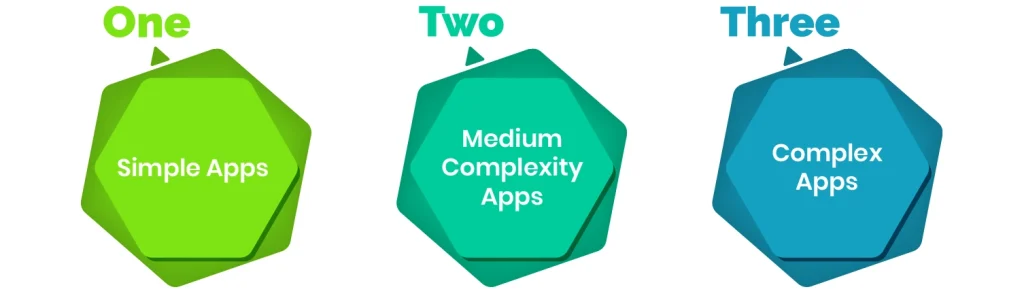
Simple Apps
Simple apps usually focus on a single core function. They often have minimal user interaction. They typically do not require complex backend systems or advanced integrations.
These apps are often used for utility or informational purposes. They can be developed relatively quickly.
Examples of simple apps include:
- Calculator apps
- To-do list apps
- Basic information or reference apps
Estimated timeline:
Simple apps usually take 2 to 4 months to build. This usually depends on the design requirements and testing process.
Medium Complexity Apps
Medium complexity apps introduce more functionality and user interactions. They often require backend infrastructure, user accounts, and data management systems.
These apps are more common in modern digital products because they provide ongoing value and engagement for users.
Examples include:
- Fitness tracking apps
- Food delivery apps
- Appointment or service booking apps
Estimated timeline:
Medium complexity apps generally take 4 to 8 months to complete.
Complex Apps
Complex apps involve advanced functionality with large datasets. They often require live interactions between users or systems. These platforms often require sophisticated architecture and strong security frameworks.
Examples of complex mobile apps include:
- Social media apps
- Ride-sharing services
- Fintech or digital banking apps
Estimated timeline:
Complex apps usually take 8 to 12 months or longer, depending on features and scalability requirements.
How Does the App Type Affect the Development Timeline?
While each project is unique, businesses can refer to the following general timeline estimates according to app type for planning purposes.
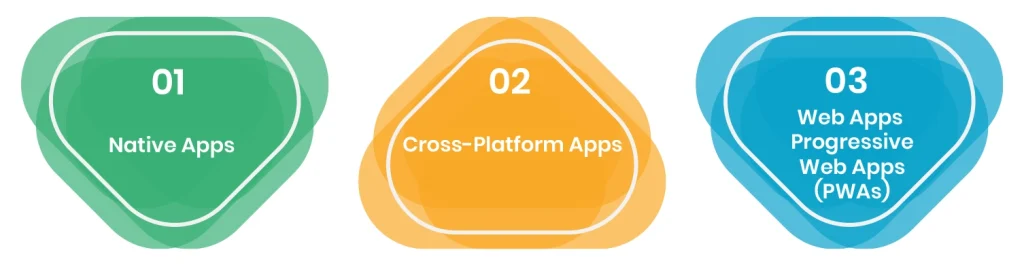
Native Apps
These apps are developed separately for iOS and Android OS using platform-specific technologies. Since two versions are developed, timelines are usually longer, but performance and user experience are often better.
Cross-Platform Apps
Built with a single codebase that runs on multiple platforms. Development is generally faster because the same code is reused for both iOS and Android.
Web Apps / Progressive Web Apps (PWAs)
Accessed through a browser instead of being installed. These typically require less development time. However, due to this, they have limited access to a device’s features compared to native apps.
Here’s a table giving a quick explanation:
| App Type | Minimum Timeline | Maximum Timeline |
| Web App / PWA | 1–2 months | 4–6 months |
| Cross-Platform App | 2–3 months | 6–9 months |
| Native Mobile App | 3–4 months | 9–12+ months |
These timelines represent the full process from early planning to launch preparation.
However, development time can still vary significantly depending on technical and strategic decisions made during the project.
Why Does the Development Time Vary from App to App?
Even apps that fall into the same complexity category can have different development timelines. Several factors influence how quickly a mobile product can be built.
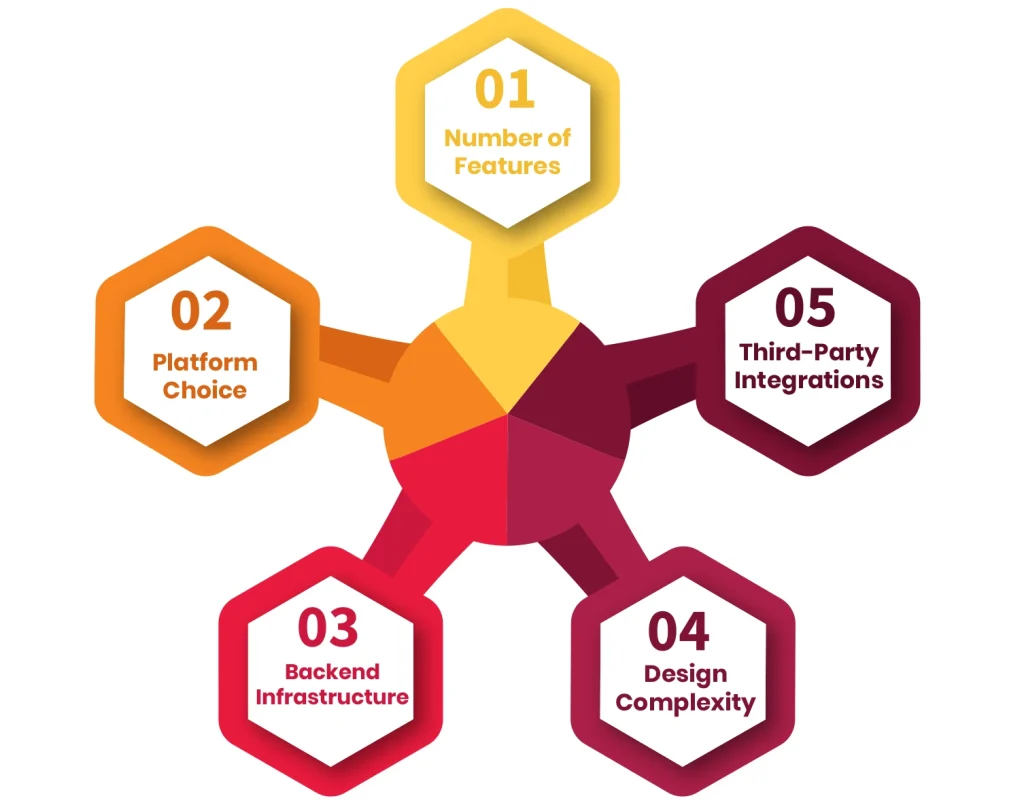
Number of Features
The amount of features plays one of the biggest roles in development timelines. The more functionality an app includes, the more time developers need to implement, test, and optimize those features.
For example, adding messaging systems or real-time notifications can significantly extend development time.
Platform Choice
Whether an app is built for iOS, Android, or both affects the schedule.
Developing for a single platform requires fewer resources and less testing. Building for both platforms may require additional work unless cross-platform frameworks are used.
Backend Infrastructure
Apps that store large amounts of data or support real-time updates require robust backend architecture. This includes servers, databases, APIs, and cloud infrastructure.
Designing and implementing these systems can take considerable time, especially for apps that must scale to thousands or millions of users.
Design Complexity
User experience is an essential component of any given successful app. However, custom animations and detailed interface elements can increase design and development time.
Apps with highly converting user interfaces often require multiple design iterations and user testing phases.
Third-Party Integrations
Many apps tend to rely on external services. This can include payment gateways, analytics tools, and more. Integrating these systems requires configuration, testing, and security verification.
Each integration introduces additional development tasks. This, in turn, extends the overall timeline.
What are the Main Stages of Mobile App Development, and how do they affect the timeline?
Understanding how development is structured makes it easier to estimate how long the process will take. It typically follows several key phases, each with its own timeline.
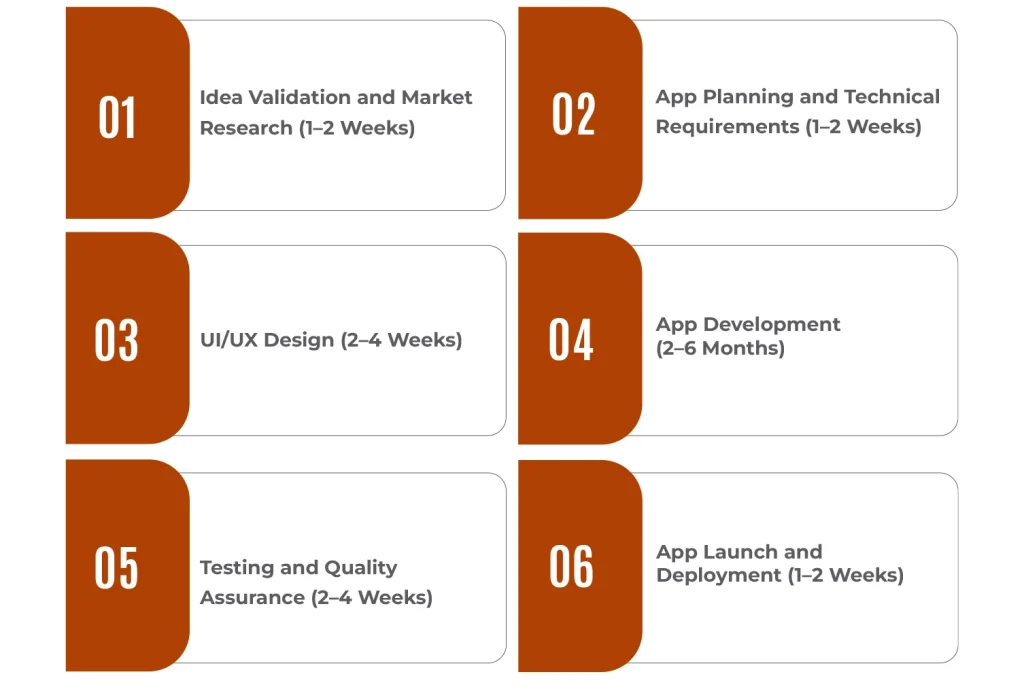
Idea Validation and Market Research (1–2 Weeks)
Every successful app begins with a clear idea. However, before investing in development, businesses need to validate whether the concept solves a real problem.
During this stage, teams describe the core purpose of the app and identify the value it offers users.
Market research also helps determine the target audience. Understanding user behavior and expectations ensures that the app is designed around real needs.
By the end of this stage, the development team should clearly understand:
- The problem the app solves
- The primary user group
- The essential features needed for launch
App Planning and Technical Requirements (1–2 Weeks)
Once the idea is validated, the next step is turning it into a structured development plan.
During this phase, the team defines the technical architecture and outlines how the app will function. Developers create detailed feature lists and map user flows to understand how people will interact with the app.
Tech stack decisions are also made at this stage. Proper planning reduces uncertainty and prevents delays during later development stages.
UI/UX Design (2–4 Weeks)
Design plays a quite an important role in the success of any app. A well-designed interface ensures users can easily navigate the app and achieve their goals without confusion.
The design process usually begins with wireframes, which represent the basic layout of the application. These wireframes focus on structure rather than visual style.
Next, designers map the user journey. Once the structure is finalized, designers create high-fidelity visual designs. They are made to reflect the brand identity and overall aesthetic of the product.
Prototypes are often developed at this stage to simulate the app’s functionality.
App Development (2–6 Months)
This is the development phase where the actual coding begins. This stage typically represents the longest portion of the project.
It is divided into frontend and backend work.
Frontend Development
Frontend development focuses on the UI and interactions within the app. Developers translate design elements into functional components that users can interact with.
This includes:
- Interface layouts
- Navigation systems
- Animations and transitions
- Interactive features
Frontend developers ensure the app runs smoothly across different devices and screen sizes.
Backend Development
The backend handles data processing and server communication. It is responsible for storing user information and allowing communication between the app and any external systems.
Backend components often include:
- APIs for data exchange
- Databases for storing user data
- Authentication systems for security
These systems ensure the app functions reliably behind the scenes.
Testing and Quality Assurance (2–4 Weeks)
Before an app can be released to users, it has to go through strict testing. Quality assurance teams examine the app to identify bugs/issues and compatibility problems.
Testing will help make sure that the app functions correctly across:
- Different devices,
- Operating systems,
- And screen sizes.
By the end of this stage, the app should meet stability and usability standards required for launch.
App Launch and Deployment (1–2 Weeks)
The final stage of development involves preparing the app for public release.
Developers will submit your relevant online store. This would either be the Apple App Store and/or the Google Play Store for review. Each platform has its own approval process, which typically evaluates compliance with technical and policy requirements.
Once the app is approved and published, it becomes available for users to download.
What are the Factors That Affect App Development Time?
Even with a structured process, several factors can influence how long development ultimately takes.
Feature Complexity
The more sophisticated the functionality, the more time developers need to build and test it.
Development Team Size
Larger teams can handle multiple tasks simultaneously, which can accelerate progress. However, coordination and communication still play important roles in maintaining efficiency.
Third-Party Integrations
External services such as payment processors, messaging systems, and APIs introduce additional technical requirements that extend development timelines.
Changes During Development
Frequent revisions or new feature requests during development can delay the release schedule. Clear requirements at the start of the project help prevent these delays.
How to Speed Up Mobile App Development to Save Time?
While app development requires careful planning, there are strategies that can significantly reduce the time needed to launch a product.
- Start an MVP – Build a minimum viable product with only core features to launch faster and gather user feedback before expanding.
- Use Cross-Platform Development – Develop for iOS and Android simultaneously using frameworks to save time and cost.
- Define Clear Requirements – Detailed documentation and feature lists help the team stay focused and avoid delays.
- Work with an Experienced Development Team – Skilled developers can prevent mistakes and reduce overall development time.
Final Thoughts
Building an app requires careful planning and a clear technical strategy. While timelines vary, most apps follow a structured path from idea to launch.
Many businesses start with an MVP to release their core features faster. This helps them improve the app based on user feedback. With the right strategy and an experienced team, companies can manage timelines effectively and deliver an app that provides real value to its users.
Frequently Asked Questions
Can a mobile app be developed in less than two months?
In rare cases, very simple apps with minimal functionality can be developed quickly. However, most apps require sufficient time for planning till store approval.
Do Apps require updates after launch?
Yes. Apps usually receive regular updates after launch to improve performance, introduce new features, and maintain compatibility with operating system updates.
How do businesses estimate the cost of building an app?
Cost estimates usually depend on development time, feature complexity, platform selection, and the experience level of the development team involved in the project.