

In 2026, almost every organization has its own website/app or platform. Some businesses are modernizing their existing platforms, while others are growing their existing systems. Whether you’re aiming to develop a new platform or grow/modernize an existing one, finding the right software developer is necessary!
To simplify this process, Linkitsoft conducted in-depth research on the current software development market. We analyzed industry trends, developer rates, and regional pricing data to provide accurate insights into the cost of hiring software developers.
Why Should You Hire Professional Software Developers?
Software development might be common nowadays, but it isn’t something that you should take lightly. Good software development involves heavy investment of time, money, and effort. Moreover, as a business owner, you constantly have to stay involved in the process. This is why hiring reliable and skilled software developers from the beginning needs to be a priority since the beginning.
Here are some market stats that show the importance of hiring the right software developer:
- 70% of software projects tend to fail. A huge reason for this is hiring the cheapest available developers and ignoring quality.
- 50% of the development budget in software projects is frequently spent on fixing errors after they are implemented. This happens when things are not paid enough attention to during the development.
- Only 39% of projects actually meet the success criteria. It happens all thanks to hiring the right developer.
How Much Does It Cost To Hire A Software Developer?
The costs to hire a software developer can vary based on different factors. Below is a breakdown of the estimated developer rates in 2026 based on experience and location:
Based on Experience
| Experience Level | Average Hourly Rate (2026) | Description |
| Junior Developer (0–2 years) | $20 – $40 | Suitable for basic development tasks, bug fixes, and assisting senior developers |
| Mid-Level Developer (2–5 years) | $40 – $80 | Can handle full feature development, integrations, and moderate complexity projects. |
| Senior Developer (5–10+ years) | $80 – $150 | Experienced in system architecture, complex problem solving, and leading development teams. |
| Tech Lead / Architect | $140 – $200+ | Responsible for designing scalable systems, technical strategy, and overseeing development processes. |
Based on Location
| Region | Average Hourly Rate (2026) | Notes |
| North America | $100 – $200 | Highest development rates due to strong demand and experienced talent pool. |
| Western Europe | $80 – $150 | High-quality development services with slightly lower rates than in North America. |
| Eastern Europe | $40 – $80 | Popular outsourcing destination with skilled developers and competitive pricing. |
| South Asia | $20 – $50 | Affordable development with a large pool of skilled developers. |
| Southeast Asia | $25 – $60 | Growing tech talent and competitive development rates. |
What Are The Factors That Influence Software Developer Costs?
The cost of hiring a software developer is influenced by several technical and market factors. These costs are not fixed and can vary depending on many aspects, as they play a significant role in determining overall development expenses.
Understanding these factors helps businesses estimate project budgets more accurately and choose the right development resources for their needs.
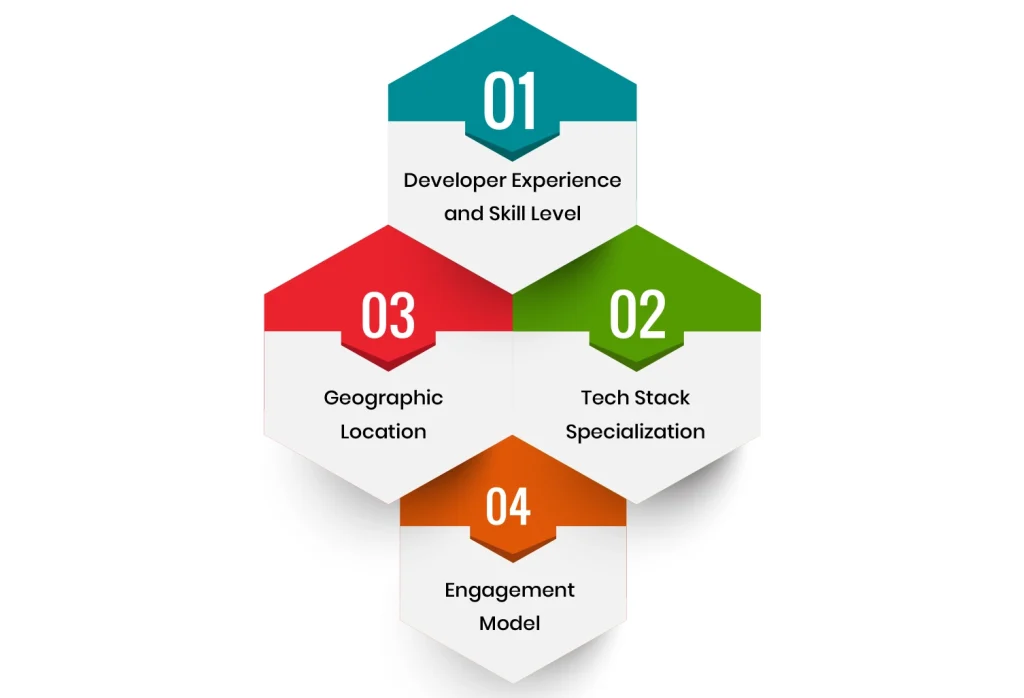
Developer Experience and Skill Level
A developer’s experience level is one of the biggest factors affecting development costs.
- Junior developers typically handle basic coding tasks, debugging, and minor feature development.
- Mid-level developers can manage full feature implementation and integrations.
- Senior developers contribute to system architecture, complex problem-solving, and performance optimization.
Developers with more experience usually charge higher rates because they bring deeper technical expertise and can deliver solutions more smoothly.
Tech Stack Specialization
The technology stack required for a project can also influence developer costs. Developers who specialize in widely used technologies such as JavaScript or Python may have more competitive rates due to a larger talent pool. However, developers skilled in advanced or niche technologies, such as:
- AI frameworks
- Blockchain systems
- High-performing languages like C++
They often charge higher rates because their expertise is more specialized and in higher demand.
Geographic Location
Developer rates vary significantly depending on geographic location. Developers in regions such as North America and Western Europe generally charge higher hourly rates due to higher living costs and strong demand for experienced talent.
In contrast, regions like Eastern Europe, South Asia, and Southeast Asia often offer more affordable development services while still providing access to highly skilled developers. Many companies choose offshore or nearshore development teams to optimize costs without compromising quality.
Engagement Model
The hiring model you choose also impacts the overall development cost. Businesses can hire developers as:
- Full-time employees
- Contract freelancers
- Outsourcing companies
- Development agencies
In-house developers typically involve additional expenses such as salaries, benefits, and infrastructure. Freelancers may offer lower short-term costs, while outsourcing to a development company can provide a full team, project management, and technical expertise under a structured engagement model.
In-House vs Offshore vs Freelance Developers
Businesses can hire software developers through different engagement models depending on their budget and long-term goals. Each model has its own advantages, costs, and level of control over the development process.
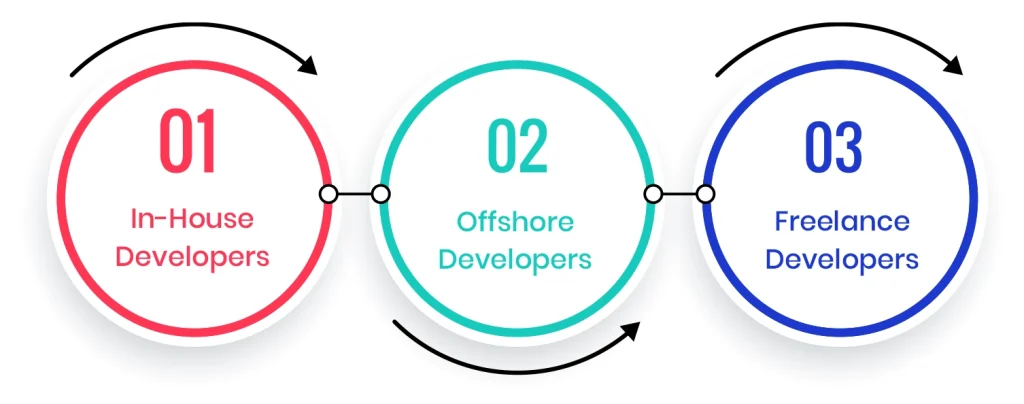
In-House Developers
In-house developers are full-time employees who work directly within a company’s internal team. They are deeply involved in the organization’s workflows and long-term development goals. This model offers better communication, stronger collaboration, and greater control over the development process.
However, hiring in-house developers often comes with higher costs, including salaries, benefits, office infrastructure, and recruitment expenses. This model is typically preferred by companies that require ongoing development, maintenance, and long-term product support.
Estimated Cost (2026):
- Average Salary: $80,000 – $150,000+ per year (depending on region and experience)
- Total Cost with Benefits & Overhead: $100,000 – $200,000+ per year
Offshore Developers
Offshore developers are located in different countries and are usually hired through outsourcing companies or remote development teams. This approach allows businesses to access global talent while significantly reducing development costs compared to hiring locally.
Offshore development teams can provide specialized expertise, flexible scaling, and faster project delivery. However, companies may need to manage challenges such as time zone differences, communication barriers, and coordination between distributed teams.
Estimated Cost (2026):
- Average Hourly Rate: $20 – $70 per hour
- Monthly Cost (Full-time equivalent): $3,000 – $9,000
Freelance Developers
Freelance developers are independent professionals hired on a contract or project basis. They are often used for short-term projects, specific technical tasks, or when companies need additional development support without committing to full-time hires.
Freelancers can be a cost-effective option and offer flexibility for businesses with limited budgets or smaller projects. However, managing freelancers may require more oversight, and availability can sometimes be limited if the developer is working with multiple clients simultaneously.
Estimated Cost (2026):
- Average Hourly Rate: $30 – $120 per hour
- Project-Based Cost: $1,000 – $50,000+, depending on project complexity
How to Reduce Costs When Hiring Software Developers?
Just because your project is complex and is costing a little over your estimated budget doesn’t mean that you should give it up. There are a few strategic ways to skillfully optimize the hiring costs for hiring software developers.
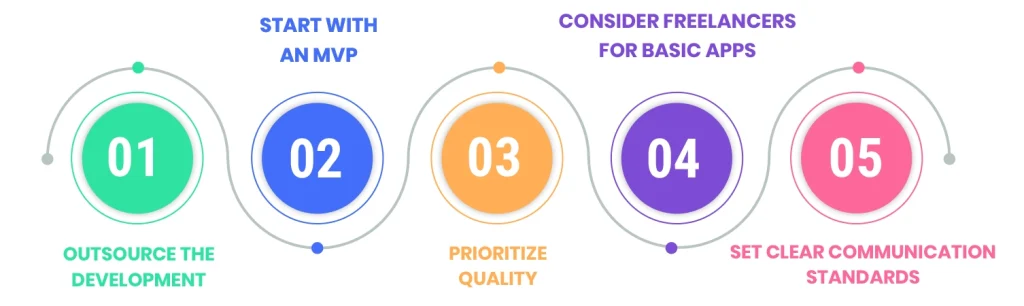
Outsource the Development
In-house developers may be a great option for heavy enterprise projects. Outsourcing software development is one of the most effective ways to reduce hiring costs. By working with offshore development teams or specialized agencies, businesses can access experienced developers at more competitive rates compared to local hiring.
Start with an MVP
Launching a Minimum Viable Product (MVP) is one of the most effective ways to reduce initial development costs. Instead of building a fully featured software from the start, businesses can develop only the core functionalities needed to test the product idea.
Prioritize Quality
While reducing costs is important, maintaining high development quality should always remain a priority. Poorly developed software can lead to performance issues, security vulnerabilities, and expensive maintenance in the future. Investing in skilled developers, proper testing, and reliable development practices ensures that the final product is stable, scalable, and easier to maintain over time.
Consider Freelancers for Basic Apps
Freelance developers can be a cost-effective solution for small projects, prototypes, or basic software. They are often hired on a contract or project basis, which allows businesses to avoid long-term hiring commitments. Freelancers are especially useful for short-term development tasks, UI improvements, or simple application builds.
Set Clear Communication Standards
Clear communication and well-defined project requirements can prevent misunderstandings and costly development delays. Businesses should establish clear documentation, project timelines, and regular progress updates. Using project management tools and structured workflows helps development teams stay aligned, reducing rework and unnecessary expenses.
Conclusion
Successful software development depends on strategy, expertise, and effective collaboration. Choosing the right developers and hiring model, aligned with clear goals, ensures reliable, scalable, and cost-effective solutions. Treating development as a long-term investment positions businesses to innovate, optimize operations, and grow sustainably in the digital era.