
Hiring a software developer can shape the success of your entire project. The right developer can turn your idea into a reliable product. But the wrong hire can lead to delays, higher costs, and technical issues.
That is why businesses need a clear hiring process. Without the right approach, it becomes difficult to evaluate skills and choose the best candidate.
The challenge is growing every year. According to the US Bureau of Labor Statistics, jobs for software developers are expected to grow by 25% between 2022 and 2032. This rapid growth means companies are competing for the same skilled professionals.
So how do you find the right developer for your project?
In this guide, you will learn how to hire a software developer step by step. We will also cover key factors to consider so you can make the right hiring decision.
10 Practical Steps to Find the Right Software Developer
Hiring a developer is an important decision and shouldn’t be rushed. These 10 steps will help you go from understanding your project needs to bringing the right developer on board. Following them carefully can make the whole process faster and less stressful for your team.

1. Define Your Project and Developer Needs
Before you start searching, clearly outline your project’s objectives. Decide what you want to build, the key features, and the final deliverables. Include the technologies, programming languages, system requirements, and timeline for completion. This helps you understand the complexity of your project and the type of developer you need.
Different projects require different expertise. For example:
- Web and Mobile Apps: Front-end developers, back-end developers, full-stack developers (React.js, Angular, Node.js), PHP developers, iOS/Android mobile developers
- Specialized Software Development: DevOps engineers, Cloud engineers and CRM or ERP developers
- Data and Analytics: Data scientists, machine learning engineers and database developers
- Infrastructure and Security: Security engineers and systems developers
- Quality Assurance and Testing: QA engineers and test automation specialists
- Niche Projects: Game developers and embedded systems engineers
For instance, if you are building a web app under a tight deadline, a full-stack developer with experience in React.js for the front-end and Node.js for the backend would be an ideal choice. On the other hand, if your software project involves complex data processing or AI integration, a Python developer familiar with Django or Flask would be the perfect option.
Setting a clear project scope like this ensures you attract developers with the right skills and experience, and it keeps everyone aligned from the start.
2. Decide on the Level of Commitment and Flexibility
Once your project needs are clear, the next step is to decide how much commitment and flexibility you require from your developer. These decisions can affect both the project timeline and overall costs.
Consider these key aspects:
- Project Duration: Short-term projects need developers who can quickly adapt and deliver results. Long-term projects may benefit from a full-time developer who can fully immerse in your company and product.
- Work Setup: Onsite developers allow in-person collaboration and faster communication. Remote developers give you access to a wider global talent pool and greater flexibility.
- Size of Team: Small teams are ideal for simple projects with clear goals. On the other hand, complex projects may require a larger team which includes a project manager, QA engineers, and multiple developers to manage broader scopes.
- Employment Type: Part-time or freelance developers can handle specific tasks or project phases and may save costs. Whereas, full-time developers provide continuous support and integrate more deeply with your team and company culture.
Deciding on these factors early makes sure that you hire developers who match not just your technical needs, but also your project’s pace and structure.
3. Set a Practical Hiring Budget
Once you know your project needs and the level of commitment required, it’s time to plan your budget.
Start by reviewing your project’s scope, required skills, and timeline. Decide whether you need a junior developer, a senior front-end or back-end developer, or a full team. Also consider if the team will work onsite, nearshore, or offshore, since location can affect costs by a great extent.
Next, research current market rates for the skills and experience you need. Salaries vary depending on role, expertise, and geography, so this makes sure that your salary offer is market-competitive.
Remember to include extra expenses too. Like, benefits, equipment, software licenses, training, and post-launch support. It’s smart to set aside a small contingency fund for unexpected costs.
Finally, make sure your hiring budget matches your overall project or departmental budget. This way, you can hire the right talent without compromising other areas of your project.
4. Create an Effective Job Description
A strong job description helps you attract the right candidates quickly. It makes it easier to filter out applicants who don’t meet your project’s needs.
Focus on the key points every candidate should know:
- Job title: Make it specific.
- Company overview: Highlight your culture and core values.
- Responsibilities: Outline the main tasks and what is deemed as success.
- Technical and soft skills: List required tools, languages, frameworks, and teamwork abilities.
- Qualifications: Show which skills or experience are essential and which are preferred.
- Benefits: Mention perks or incentives.
- How to apply: Give clear instructions for candidates.
A well-written job description sets clear expectations and helps you connect with developers who are truly a good fit.
5. Identify the Right Candidates
Once your job description is ready, the next step is to find a pool of qualified candidates. Focusing on the right people saves time and ensures you interview only those who fit your project and team.
There are several ways to find potential developers:
Recruitment agencies: Partner up with agencies that specialize in tech hiring.
Freelance platforms and job boards: Post your listing on sites that cater to developers.
Referrals: Ask your network for recommendations of skilled developers.
Professional networks: Use LinkedIn Recruiter to search for candidates with the specific skillset you require.
Events and meetups: Connect with software developers at conferences, hackathons, and industry gatherings.
You can also use an applicant tracking system to organize applications and monitor candidates throughout the hiring process. This helps you stay focused on the most promising developers and make better hiring decisions.
6. Assess Candidates with a Structured Interview
Once you have a shortlist, it’s time to evaluate candidates thoroughly. A structured interview ensures you fairly assess both their technical abilities and how well they fit your team and company culture.
How to Conduct the Interviews?
- Screening call: Start with a short call to discuss the candidate’s background, motivation, and overall fit for the role.
- In-depth interview: You should ask relevant questions that reveal problem-solving skills, past experiences, and cultural fit. You can also ask behavioral questions to understand how they handle sudden challenges.
- Practical assessments: Use coding tests, technical exercises, or small projects to evaluate their skillset objectively.
- Team interaction: Your team can meet the candidate to see how well they collaborate and communicate.
A structured approach keeps the evaluation consistent. It also helps you identify software developers who can deliver high-quality work and integrate smoothly with your team.
7. Verify Background and Compliance
Before making a final decision, it’s important to check a candidate’s background.
To be on the safer side, contact references to validate their past work experience and professional achievements. And, make sure any certifications or licenses they claim are legitimate.
Next, it’s also important to review legal restrictions, such as non-compete clauses or previous agreements. This will decide whether the candidate can legally join your team.
These checks can also give insights into a candidate’s character, integrity, and professional ethics. Completing this step carefully lowers risks and helps you hire with confidence.
8. Make a Competitive Offer and Finalize Hiring
Once you’ve selected the right software developer, you can present a salary package that reflects their skillset, experience, and industry standards.
You can also include benefits such as bonuses, paid time off, equity, and health plans. Be prepared to negotiate and stay flexible on aspects that matter to the candidate, such as remote work, flexible hours, or personalized perks.
A fair and attractive offer shows your commitment to talent and increases the likelihood that your top choice will accept and stay engaged with your project.
9. Create a Smooth Onboarding Process
A strong onboarding process helps new developers settle in quickly and understand your team’s culture and expectations.
First, an orientation session that introduces your company’s values, work culture, and project goals. Secondly, provide detailed technical onboarding, including access to codebases, documentation, and the tools they’ll need. Thirdly, pair them with a mentor to guide them through the first few weeks.
Fourth, review their work early and regularly to catch any issues before they grow. And lastly, schedule consistent check-ins to give feedback and track progress. Overall, a structured onboarding process makes sure that new hires become productive and feel supported from day one.
10. Implement a Probation Period
A probation period, usually a few weeks to a few months, helps you to evaluate a software developer’s skills, team fit, and overall contribution.
Set clear objectives for this period and provide ongoing feedback. Make sure they have access to all necessary resources and guidance to succeed.
At the end of the probation, review their performance based on predefined criteria. Decide whether to offer a permanent role based on their technical abilities, collaboration, and alignment with your team’s culture.
A well-managed probation period gives both you and the developer confidence that the hire is the right fit.
Hiring Mistakes to Avoid When Bringing Developers Onboard
Avoiding these common mistakes can make your hiring process smoother and help you secure the right developer faster:
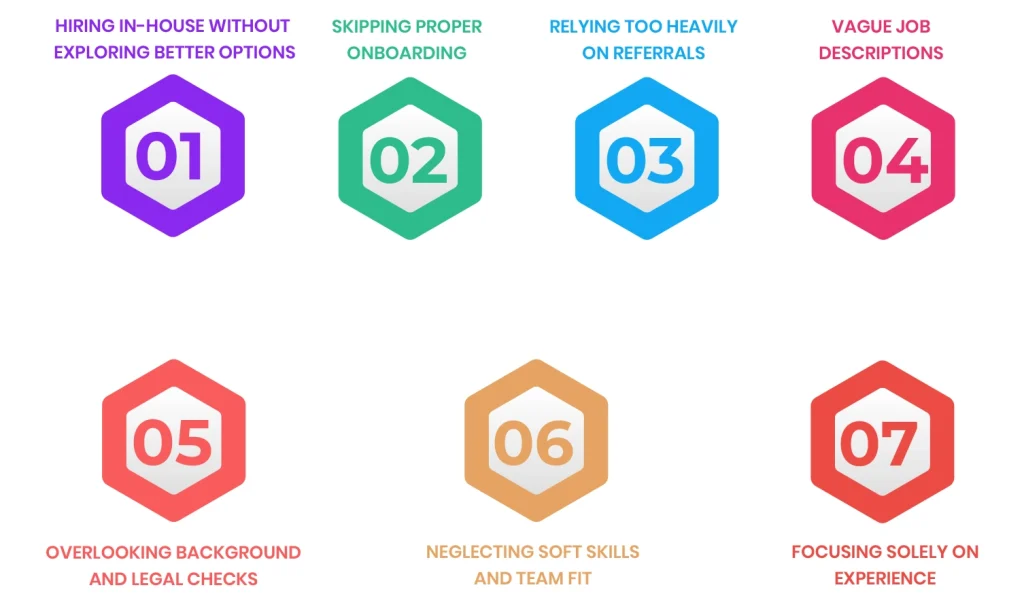
Mistake #1: Hiring In-house Without Exploring Better Options
While it may seem easiest to hire internally, limiting your search to local candidates can prevent you from finding the most skilled developers. By considering remote or external teams, you gain access to a wider range of skillsets and expertise, and often at a lower cost.
Mistake #2: Skipping Proper Onboarding
Even top developers can struggle if they aren’t given clear guidance and support. Without structured training, access to tools, and mentorship, productivity drops and frustration grows, which can lead to early turnover.
Mistake #3: Relying Too Heavily on Referrals
Relying just on personal or professional referrals narrows your candidate pool. In addition, it can create unconscious bias, which makes it harder to objectively select the best fit for your team and project.
Mistake #4: Vague Job Descriptions
Vague or incomplete job descriptions can confuse candidates about their role. As a result, even highly skilled developers may not perform at their best, and the hiring process may take longer.
Mistake #5: Overlooking Background and Legal Checks
Verifying past employment, certifications, or contractual obligations is a must. Without these checks, you can encounter integrity or compliance problems later in the software development project.
Mistake #6: Neglecting Soft Skills and Team Fit
Technical skills alone are not enough. Software developers need strong communication, teamwork, and adaptability. When these soft skills are ignored, it can lead to conflicts, poor collaboration, and lower productivity.
Mistake #7: Focusing Solely on Experience
Years in the field do not always translate into problem-solving, creativity, or adaptability. So, you should evaluate both skills and attitude to ensure you hire someone who can grow with your team.
Why Outsourcing Your Development Works Better
Instead of hiring developers in-house, outsourcing lets you bring in external teams or contractors to handle all or part of your project. This means you can tap into specialized skills without spending months building a full internal team.
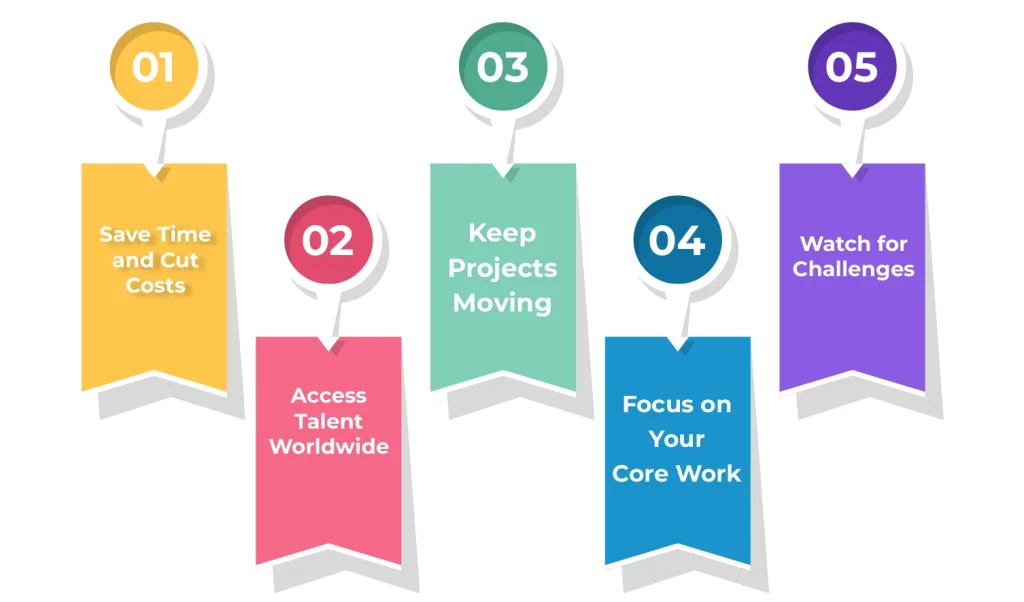
1. Save Time and Cut Costs
Outsourcing avoids extra expenses like salaries, benefits, or office space. As a result, you can hire experienced developers at a fraction of the cost. In addition, working with teams in countries with lower rates can stretch your budget further without compromising quality.
2. Access Talent Worldwide
By outsourcing, you can reach software developers who have skills you might not find locally. For example, if you need expertise in mobile apps, AI, or cloud systems, you can hire someone from anywhere in the world who has exactly that experience. At the same time, you don’t have to wait for local talent to become available.
3. Keep Projects Moving
Experienced outsourced teams know how to handle tasks efficiently. So, your project can move faster and meet deadlines. You can also adjust the team size depending on the project’s needs, which helps keep costs in line and resources balanced.
4. Focus on Your Core Work
While outsourced developers handle the technical tasks, your in-house team can focus on business priorities. For example, a retail company can manage sales and customer support while remote developers work on building and maintaining its e-commerce platform. This way, everyone focuses on what they do best.
5. Watch for Challenges
Outsourcing isn’t risk-free. However, you can avoid most issues by choosing a reliable partner and setting clear agreements. Otherwise, you might face occasional quality issues, communication gaps, or less control over daily progress.
How to Effectively Manage Outsourced Software Developers
Managing outsourced software developers or contractors requires a mix of clear processes and the right tools. When done well, it keeps everyone accountable, ensures quality, and avoids bottlenecks.
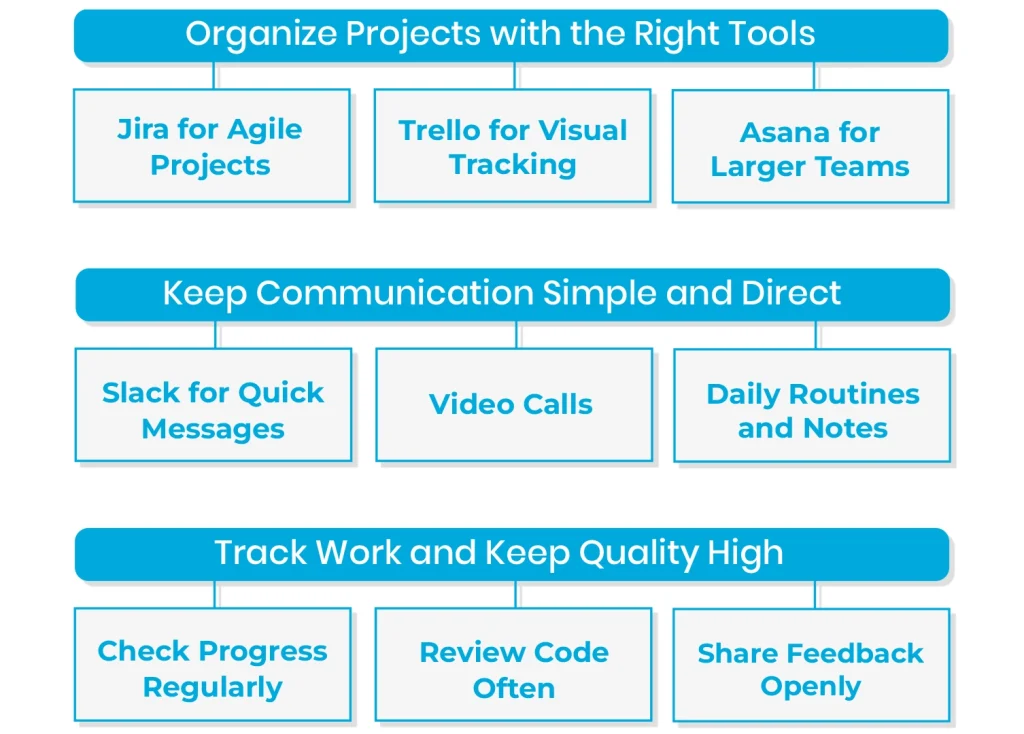
1. Organize Projects with the Right Tools
Jira for Agile Projects
Jira helps break a large project into smaller, manageable tasks. You can set priorities, deadlines, and track progress through sprints and bug reports. This makes it easier to follow the flow of work and see what needs attention next.
Trello for Visual Tracking
Trello uses boards and cards to show tasks clearly. It’s great for smaller teams or simpler projects, letting everyone see at a glance what’s done and what’s next.
Asana for Larger Teams
For bigger projects with multiple developers, Asana shows timelines, task dependencies, and overall progress. This way, nothing is missed, and everyone knows which tasks to focus on.
2. Keep Communication Simple and Direct
Slack for Quick Messages
Slack lets you create channels for projects or topics, keeping conversations organized. Messages are easy to find, which helps the team stay in sync and solve problems quickly.
Video Calls
Video meetings with Google Meet, Teams, or Zoom help clarify tasks, address challenges, and keep a personal connection between remote and in-house team members. Seeing each other helps avoid misunderstandings.
Daily Routines and Notes
Set up check-ins every day or week, depending on the project. Ask the team to keep notes or record sessions when needed, so everyone can refer back to decisions and instructions later in the working.
3. Track Work and Keep Quality High
Check Progress Regularly
Maintain a close eye on completion rates, the quality of work, and whether tasks are finished on time. Tracking progress helps spot issues early and keeps things moving.
Review Code Often
Have senior engineers or in-house staff review work using tools such as GitHub or Bitbucket. This catches mistakes early and keeps code clean and efficient.
Share Feedback Openly
Encourage the team to speak up if they face problems and give clear, helpful feedback. This keeps the project moving optimally and helps developers improve along the way.
By combining these best practices with the right tools, you can manage outsourced developers effectively, keep projects on schedule, and maintain high standards of work.
Outsource Your Software Development with Linkitsoft
Linkitsoft is a trusted software development company that helps you build skilled teams from around the world. By working with us, you can access top talent across multiple time zones and advanced technology without the costs of hiring in-house.
Our teams cover mobile and web development, quality assurance, and project management. Your team can start quickly, communication stays clear, and projects stay on track.
We offer flexible engagement models to fit your needs. Dedicated developers focus solely on your project, ideal for enterprise-level solutions. Fixed-cost projects give you a clear timeline and budget. Hourly or on-demand hiring lets you add developers for specific tasks, audits, or upgrades while paying only for the time used.
Contact Linkitsoft today to expand your team and speed up your software projects.
Is Outsourcing the Right Choice for Your Project?
That wraps our guide on how to hire a software developer. Today, hiring developers will be are more competitive as demand grows for software developers in AI, data, cloud, and cybersecurity. As a result, companies are moving beyond local talent pools and using distributed or nearshore teams to meet their needs.
Modern hiring focuses on skills, problem-solving, and collaborative coding exercises rather than just years of experience. At the same time, flexible talent models such as outsourcing with Linkitsoft allow companies to benefit from specialized expertise quickly while scaling teams as projects grow. Together, strong hiring practices and global teams help businesses stay ahead and build software products that meet today’s market demands.