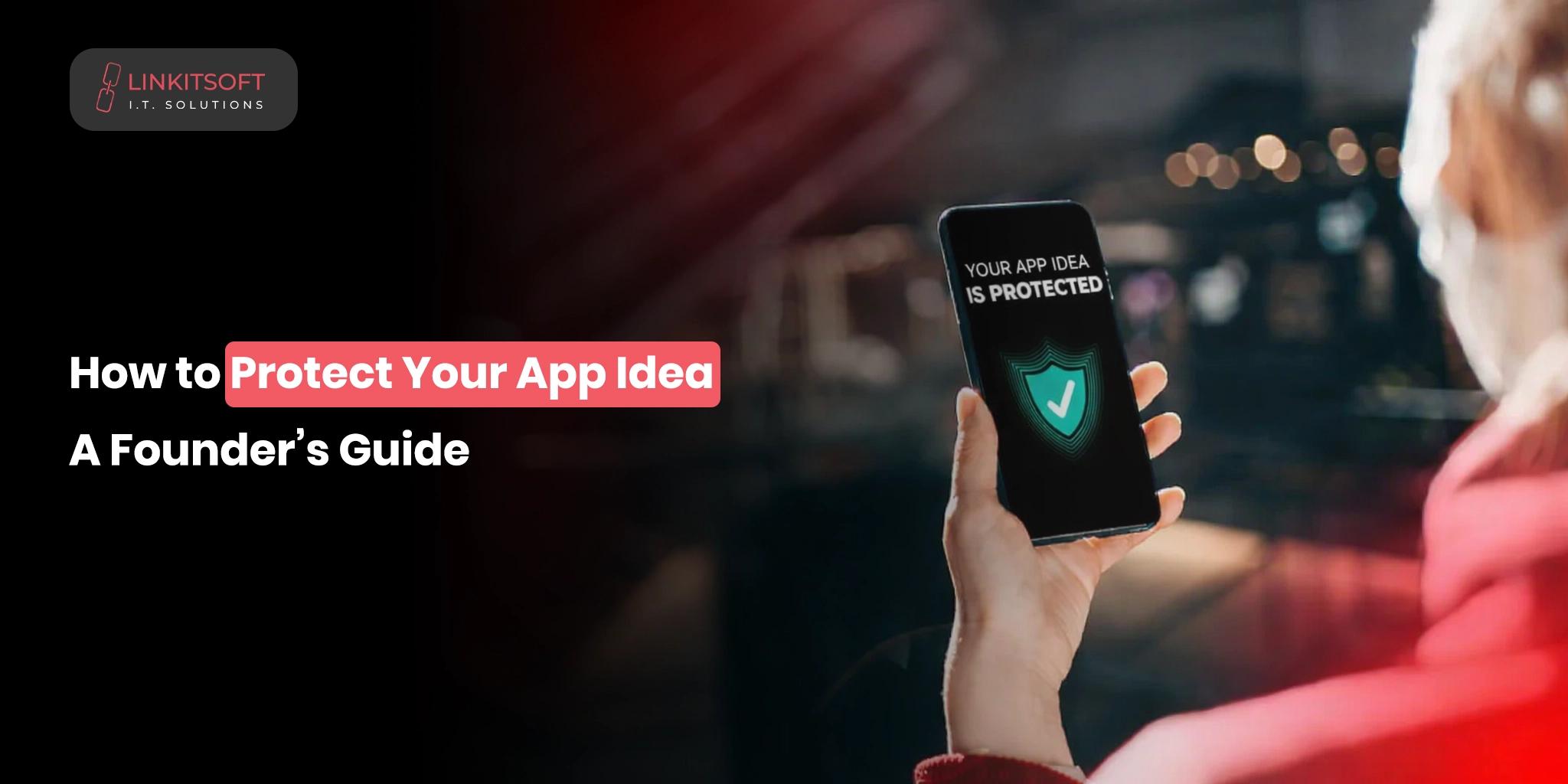
If you have an app idea, your first thought is probably, “How do I stop someone else from building this app before me?” That is normal. Every founder worries about it. The tricky part is figuring out what actually works to protect your app while still moving forward with development.
This guide will show you how to protect your app from day one. You will learn how to limit who sees your idea, secure your code, and protect your branding. You will also understand copyrights, patents, trade secrets, and trademarks, so no one can take what is yours. Let’s dive in!
What Founders Should Do to Protect an App Idea Early?
Before worrying about legal documents or registrations, the first step is to understand the strength of your idea and plan how to protect it. This will guide every other action you take.
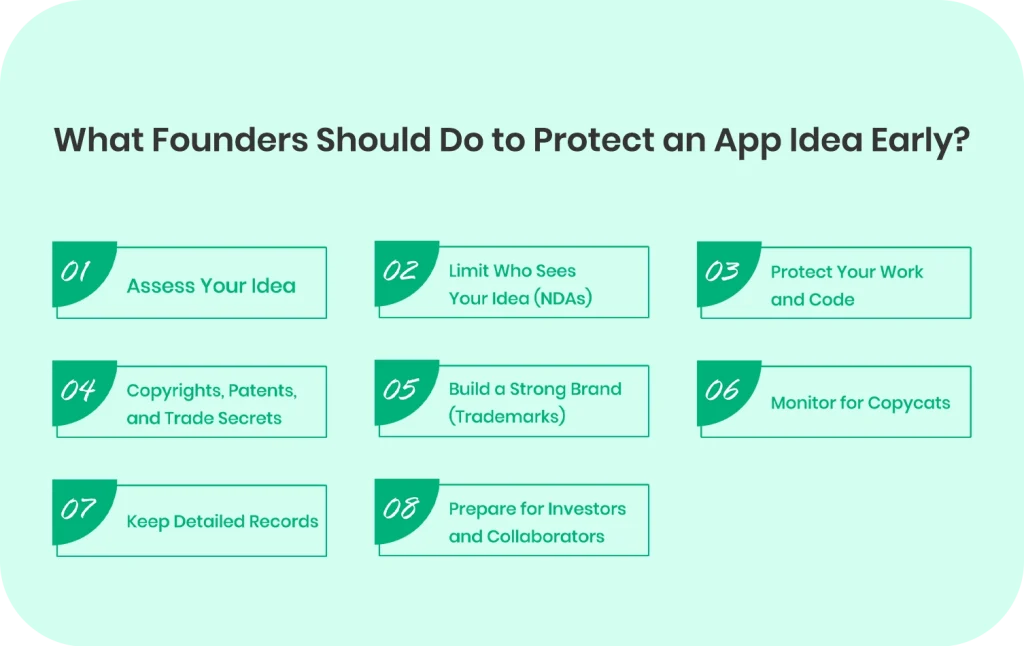
Assess Your Idea
Not every app concept is worth a heavy investment. Compare your idea with similar apps and note how yours is different. Ask yourself if it solves a real problem and whether users would pay for it. Document your research with dated notes, sketches, or screenshots.
Moreover, this documentation serves as proof if you ever need to show your idea’s originality. On the other hand, skipping this step can make investors or collaborators question ownership. Therefore, evaluating your idea carefully is the foundation of protection.
Limit Who Sees Your Idea (NDAs)
The fewer people who know your idea, the lower the risk of it being copied. When you do share details, ask them to sign a Non-Disclosure Agreement (NDA). NDAs are not just legal formalities. They protect trade secrets, design documents, pricing, and other confidential information.
By signing an NDA, the other party legally agrees not to share or use your information. If they break this promise, you can claim a breach of contract. Furthermore, having an NDA makes your project look professional and serious to partners, developers, and investors. On the other hand, sharing without one leaves your idea vulnerable.
Protect Your Work and Code
Ideas themselves aren’t protected by law, but the work you create is. This involves source code, app designs, UI elements, and written content. Therefore, start documenting and versioning everything from day one. Tools like GitHub or GitLab can track every change and timestamp your progress.
If you hire developers or freelancers, make sure your contract clearly states that all rights belong to you. Moreover, check if your vendor uses third-party tools or platforms. You need the rights to use these technologies if you ever change vendors. Otherwise, your app could face legal or technical roadblocks.
Copyrights, Patents, and Trade Secrets
Copyright protects the work you create, including code, designs, and written content. It goes into effect as soon as you start creating something tangible. While registering a federal copyright is optional at first, it is necessary if you plan to enforce your rights legally.
Patents, on the other hand, protect inventions. If your app includes a unique process, system, or visual design, a patent can give you exclusive rights for a limited time. Patents are more complex and usually require consultation with an IP specialist.
Trade secrets cover valuable parts of your app that you choose not to make public. This could be a pricing logic, matching process, or internal workflow. There is no registration involved, but protection only lasts as long as the information stays private. Because of that, access should be limited and shared only with people who truly need it.
Build a Strong Brand (Trademarks)
Your app’s name, logo, and other branding elements are part of its intellectual property. Before launching, research existing trademarks to ensure your branding doesn’t infringe on others. It’s more common to accidentally violate someone else’s trademark than the other way around.
Once you confirm your branding is unique, you should consider registering it. A trademark prevents others from copying your brand and gives you legal options if infringement occurs. Moreover, strong branding helps users recognize and trust your app. On the other hand, apps without clear branding often fail to stand out, even if their features are excellent.
Monitor for Copycats
Even after taking precautions, it is important to watch the market. Many founders use simple tools to keep an eye on the market. For instance, Google Alerts can notify you when similar application names or features appear online, while App Store and Play Store notifications help you track new or updated apps that look similar to yours.
If you spot infringement, you must act quickly. Sending a cease-and-desist letter or reporting the app to the platform can stop the problem before it escalates. On the other hand, ignoring infringement allows competitors to gain users and traction from your work. Therefore, vigilance is as important as legal protection.
Keep Detailed Records
Every sketch, prototype, and version of your code counts as evidence of ownership. Keep organized files and backups. Date everything and maintain a clear record of who contributed what.
Additionally, keep a record of all agreements with your team, developers, and advisors. That way, everyone knows who owns what and what their responsibilities are. On the other hand, skipping this step can lead to disputes or messy situations later.
Prepare for Investors and Collaborators
When you bring in investors or co-founders, showing that your idea is protected makes a big difference. You can show them your documentation, copyrights, trademarks, and NDAs.
Moreover, talk openly about ownership, profit sharing, and responsibilities from the start. Many early-stage startups run into conflicts because they wait too long to have these conversations. Therefore, having clear protections in place makes your project stronger and safer.
Why Should You Protect Your App Idea Early?
Protecting your app idea is just as important as building it. According to WIPO, nearly half of technology startups face intellectual property challenges in their first five years. This involves disputes over code, branding, patents, and copyrights. Hence, by keeping your agreements, code, and branding secure from the start, you, as a founder, can focus on growth and innovation. Moreover, taking action early reduces the risk of copied ideas, wasted effort, or conflicts with collaborators, giving your app a stronger chance to succeed in a competitive market.
Frequently Asked Questions
How can I protect my app?
You protect an app by protecting the work around it. That means keeping your idea private early on, using NDAs when talking to developers, and making sure contracts clearly say you own the code. Moreover, once development starts, things like copyrights and trademarks give you real legal backing. On the other hand, talking openly without paperwork leaves you exposed.
Can I sell my idea for an app?
In most cases, no one buys just an idea. Buyers pay for execution, not inspiration. However, if you have wireframes, market research, or early validation, the idea becomes easier to sell. Therefore, turning your idea into something tangible increases its value and makes serious buyers more interested.
How do I protect my ideas from being stolen?
As a founder, you should start by controlling who hears about it. Share details only when necessary and always with an NDA. Furthermore, keep records of your work, such as drafts, designs, and timelines. If someone copies you later, those records help prove the idea started with you. Without proof, it just comes down to your word against theirs.
How do I patent my idea for an app?
You cannot patent an idea by itself. A patent applies only when your app includes a new and specific technical solution. Because of that, most founders first build the product, then speak with a patent attorney to see if it qualifies. Patents are expensive and slow, so they make sense only if your app truly does something new at a technical level.
Can ChatGPT write a patent?
ChatGPT can help you understand patent language or organize thoughts, but it cannot replace a patent lawyer. Patents require legal accuracy and technical depth. If you file something incorrectly, it can weaken your protection. So while AI can assist with learning, a real patent filing should always go through a professional.
Can I protect an app idea?
An idea alone is not protected by law. However, the moment you turn it into something real, such as code, designs, content, or branding, protection begins. Therefore, the sooner you document and build, the safer your idea becomes.
How much is an app idea worth?
On its own, an idea usually has little to no monetary value. Its worth depends on validation, users, revenue, or strong intellectual property. However, a well-researched idea with demand, clear use cases, and early traction can be extremely valuable once it is executed properly.