
Smart homes were once viewed as luxury upgrades. Today, they are becoming a practical standard. IoT devices now automate daily tasks and provide real-time control.
As expectations around convenience and safety grow, connected living is becoming a standard. In this blog, we’ll explore how IoT smart home apps are becoming essential.
Understanding IoT Smart Home Applications
In very simple terms, the Internet of Things refers to certain devices that connect to the Internet and communicate with each other. Within a home environment, this means everyday objects gain digital intelligence. for example:
- Lights can turn on/off automatically
- Thermostats can learn temperature preferences
- Cameras can send alerts directly to a phone
These systems aren’t limited to a single category. They include connected lighting and security cameras. Then, they also include the smart speakers, appliances, locks, and window blinds. Each device contributes to a network that transforms a house into a responsive living space.
How Do IoT Smart Home Applications Work?
These devices rely on internet connectivity and cloud platforms. They send data and then receive commands. This way, they synchronize actions through centralized systems.
A mobile app often acts as the control hub, allowing users to manage everything from a single interface.
Sensors play a key role in automation. There are motion and light sensors that can trigger actions without manual input.
Why are IoT Smart Home Applications becoming essential?
IoT smart home apps are becoming essential because they address everyday needs in a more easy and reliable way. Here’s what they provide:
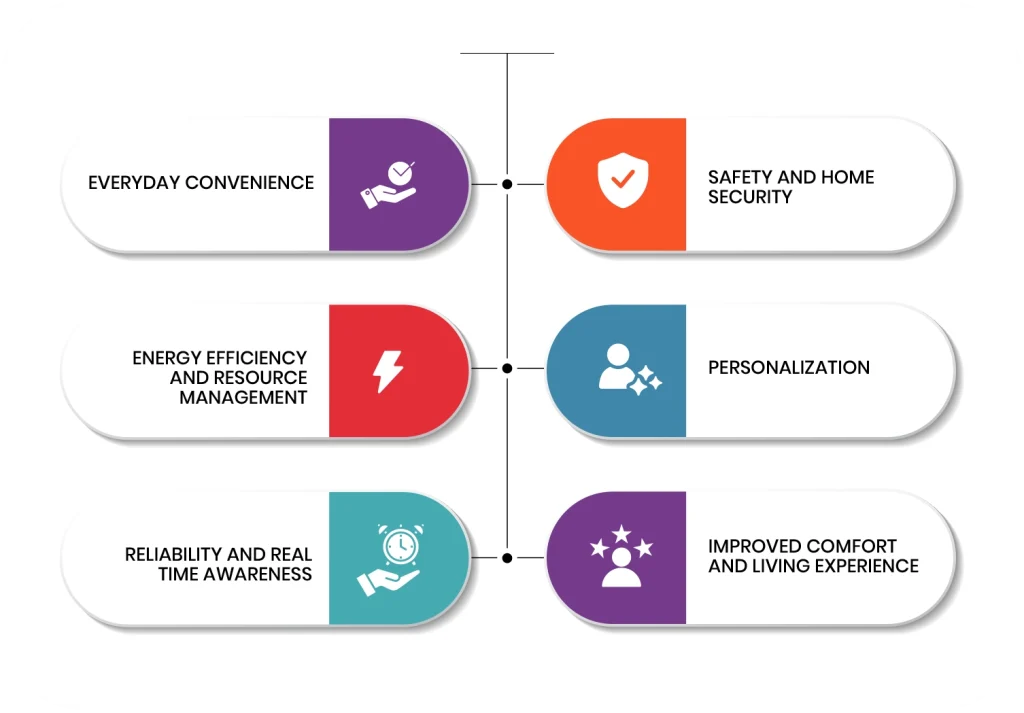
Everyday Convenience
One of the most immediate benefits of connected living is convenience. Automated routines handle repetitive tasks like adjusting lighting, temperature, and blinds without manual effort. Morning and evening settings can run automatically. This automatically creates a seamless daily flow.
Remote access adds practical control. Whether checking if a door is locked or adjusting the temperature before arriving home, everything can be managed instantly through a smartphone. Voice and app-based commands further simplify interactions, reducing small but frequent tasks.
Over time, automatic light shutoff and appliance scheduling reduce daily friction. This way, this “luxury” quickly becomes an expected standard of modern living.
Safety and Home Security
Connected technology has updated and transformed home security into a live and responsive system. Smart surveillance cameras and motion sensors provide live monitoring and instant alerts. This also keeps homeowners informed from anywhere.
Smart doorbells and keyless entry systems improve access control by allowing remote verification of visitors and eliminating physical keys. At the same time, environmental sensors monitor smoke and water leaks. They send immediate notifications if risks are detected.
These real-time alerts enable faster responses and improve safety to provide a much greater peace of mind.
Energy Efficiency and Resource Management
Energy efficiency is a key reason IoT smart home applications are becoming essential. Smart thermostats automatically adjust temperature based on usage patterns and occupancy. This way, they reduce unnecessary heating and cooling.
Smart lighting systems further cut waste through motion sensors and daylight brightness. This happens through the right adjustments. These small optimizations significantly lower electricity consumption over time.
These apps also provide live energy monitoring, helping homeowners identify high-usage appliances and make informed decisions. Water management features, such as leak detection, prevents waste and minimizes the damage. Together, these systems promote more controlled resource use.
Personalization
Personalization is an excellent feature of connected living. Smart home applications allow customized profiles. They enable different temperature and device settings for each household member.
Over time, systems learn daily routines and adjust automatically. This way, they reduce the need for constant manual input. Adaptive lighting and climate control improve comfort even more by responding to the time of day and preferences that are set specifically.
The result is a seamless environment where devices work at their own pace. This allows them to create a home that feels responsive and tailored to its occupants.
Reliability and Real-Time Awareness
Reliability is what makes IoT smart home applications essential rather than optional. Live status monitoring allows homeowners to check whether doors are locked, lights are off, or appliances are running at any time. This constant visibility reduces uncertainty in many people. Moreover, it provides reassurance, especially when homeowners and families are away from home.
Live alerts further strengthen this awareness. Notifications for unexpected motion or environmental changes allow very quick action before issues escalate.
In addition, system health updates, such as battery levels or connectivity status, also help prevent potential disruptions. Together, these features create a dependable and continuously monitored home environment.
Improved Comfort and Living Experience
Connected systems significantly improve daily comfort. Smart climate controls maintain stable temperatures. In turn, this supports zoned heating or cooling. It ensures that each room matches its usage and also the required preference. This eliminates uneven temperature distribution and enhances the overall unity.
Lighting customization also enhances the living experience. Dimming options and preset scenes make it easy to adjust the ambience for work or entertainment.
Smart ventilation, including fans and air purifiers, further supports indoor air quality. Collectively, these features create a home that feels consistently comfortable, balanced, and responsive throughout the day.
Examples of IoT Smart Home Applications in Different Living Scenarios
Smart home technology shows real value when it adapts to different lifestyles and living environments. Connected systems adjust their features to match the needs of the people using them.
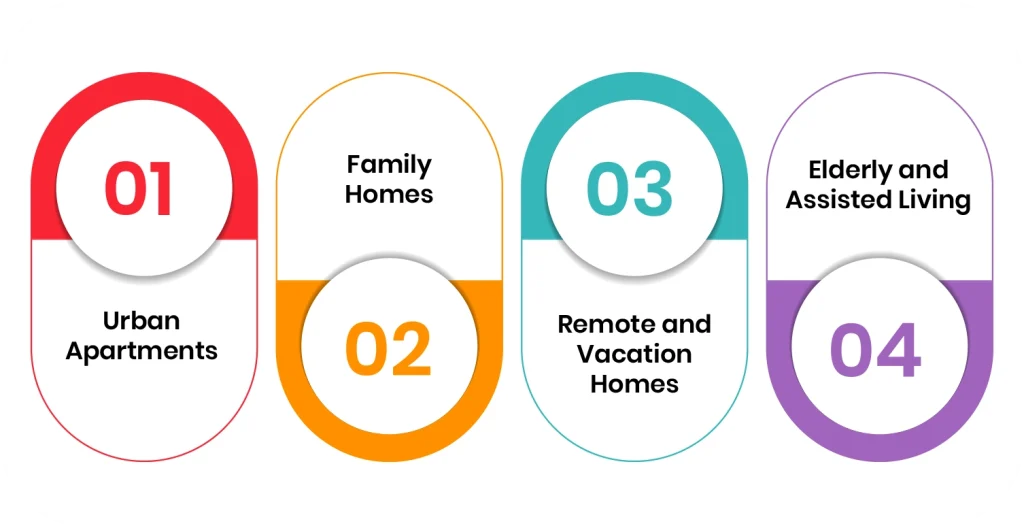
Urban Apartments
Smart IoT technology makes compact living feel bigger and much more safe. With stronger central control, residents reduce confusion while gaining tighter command over their own environment. Securit also improves for rented or shared spaces.
- Space-saving digital controls instead of multiple devices
- Remote visitor verification and entry monitoring
- Instant alerts for unusual activity
Family Homes
In busy households, connected systems act like assistants. This is because they help parents stay aware and manage resources much more wisely. They simplify supervision while keeping energy use under control across multiple rooms and devices.
- Activity monitoring for kids arriving or leaving
- Automated lighting and temperature adjustments
- Usage tracking to reduce utility costs
Remote and Vacation Homes
When a property sits empty for long periods, visibility and control matter most. This is why smart systems can be very useful here. This is because they let owners check in anytime and prepare the home before anyone’s arrival. This is a great way to make it feel maintained rather than entirely unused.
- Live surveillance and motion alerts
- Remote door and appliance status checks
- Pre-arrival climate adjustment
Elderly and Assisted Living
For seniors, smart environments support independence. The best part is that this all happens while keeping caregivers informed. These systems simply watch for risks and send alerts if something seems wrong. It helps loved ones respond much faster.
- Movement and activity pattern monitoring
- Fall or inactivity detection alerts
- Emergency notifications to caregivers
This adaptability across living situations shows why connected home technology isn’t limited to one lifestyle. It scales to fit different needs, making it practical for city residents, families, travelers, and seniors alike.
How to Address the Common Concerns Involved with IoT Smart Home Applications?
Despite their advantages, some people hesitate to adopt these connected systems. This is because many have huge concerns about privacy and also control. Modern systems are increasingly designed to minimize these risks and improve user confidence.
- Privacy and Data Security: Most platforms use encrypted communication and secure authentication methods. Users can manage permissions and control what data is shared.
- Ease of Setup: Guided installation, plug-and-play devices, and intuitive mobile apps have simplified onboarding. Many systems no longer require professional installation or advanced technical skills.
- Internet Dependence: While cloud connectivity enhances the functions and features, many devices support local or offline operation for essential features.
- System Reliability: Real-time status monitoring and connectivity notifications help users stay informed. Automatic updates also improve performance and fix vulnerabilities.
- User Control and Flexibility: Automation can be customized or turned off at any time. Users maintain full control over routines and device behavior.
Conclusion
The evolution of smart homes reflects changing expectations around how living spaces should work and function. Homes actively support daily routines while improving the overall living safety. They even optimize energy use, which is great for the environment.
IoT smart home applications deliver practical, everyday benefits through several qualities. The shift toward connected living is not about novelty; it’s about making homes more secure and responsive to modern needs.