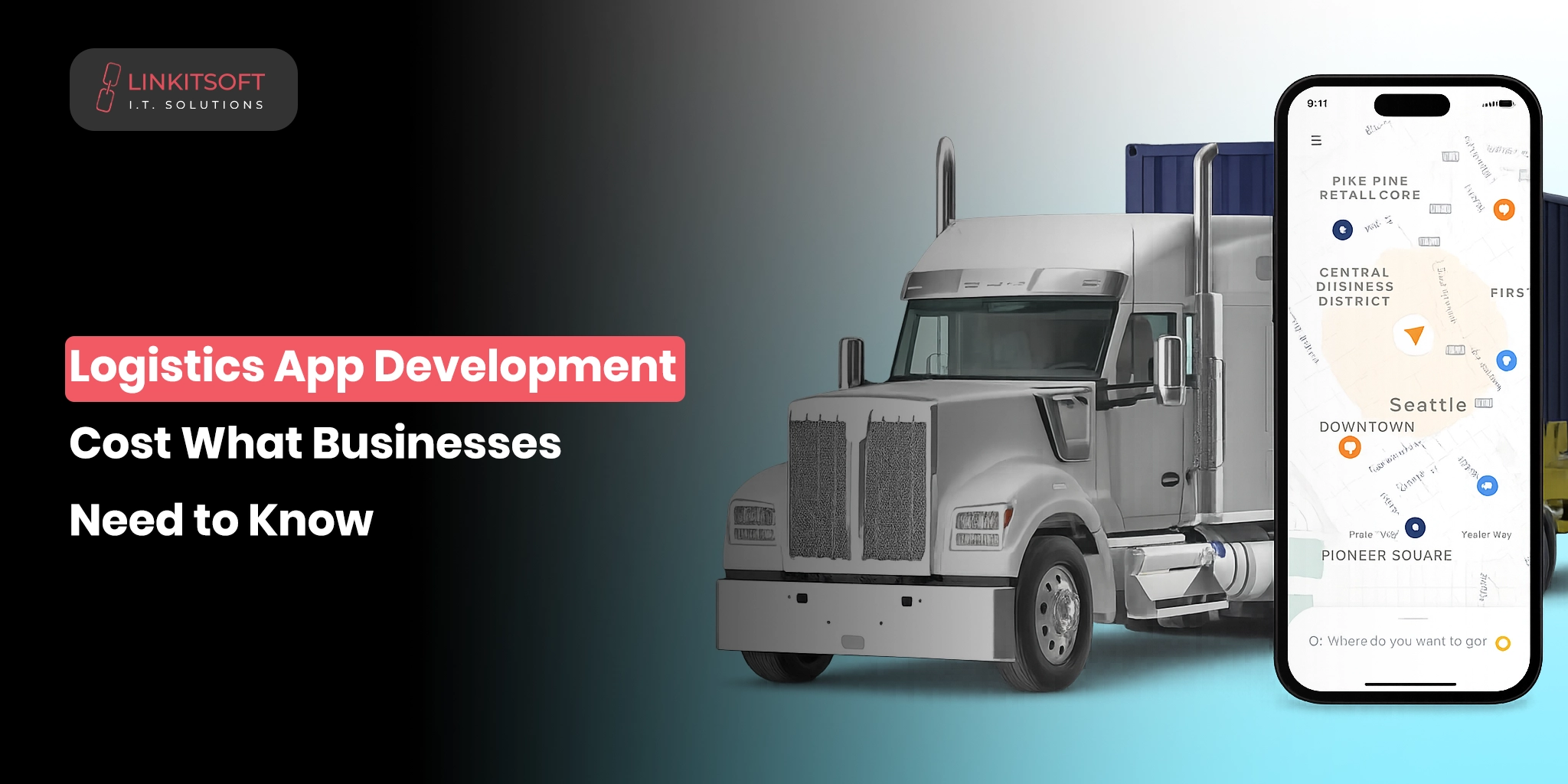
Logistics now plays a direct role in operational performance and customer experience. As delivery volumes grow and expectations rise, managing fleets and shipments without a centralized system becomes increasingly challenging for logistics companies worldwide.
That’s why app development in logistics is often approached as a big-level investment. The overall cost depends on fleet size, delivery volume, feature requirements, and long-term growth plans.
In this guide, we’ll break down the essential cost factors, estimated investment ranges, and what businesses should consider before starting development.
Why Are Companies Investing in Logistics Apps in 2026 (With Market Data)?
The push toward logistics app development is not speculative. It is backed by measurable industry growth and changing consumer behavior.
According to recent industry reports:
- The logistics market is expected to exceed $14 trillion globally by 2028.
- The global fleet management software market is anticipated to surpass $55 billion by 2030.
- eCommerce sales worldwide are forecasted to cross $7 trillion by 2028. This will intensify delivery pressure, raising the need for more logistics operations.
- Studies show that over 90% of consumers expect real-time order tracking once a shipment is dispatched.
At the same time, operational expenses are rising. Fuel prices remain volatile, and regulatory compliance requirements are becoming stricter.
Logistics companies are also expanding into multi-city and cross-border operations, which demand more sophisticated coordination systems. In this environment, investing in logistics app development is more about survival.
What is the Cost of Logistics App Development Based on Complexity
Instead of categorizing logistics apps by business model, it is more accurate to classify them by complexity. Several factors come together to influence the development cost; we’ve categorized them into three main categories:
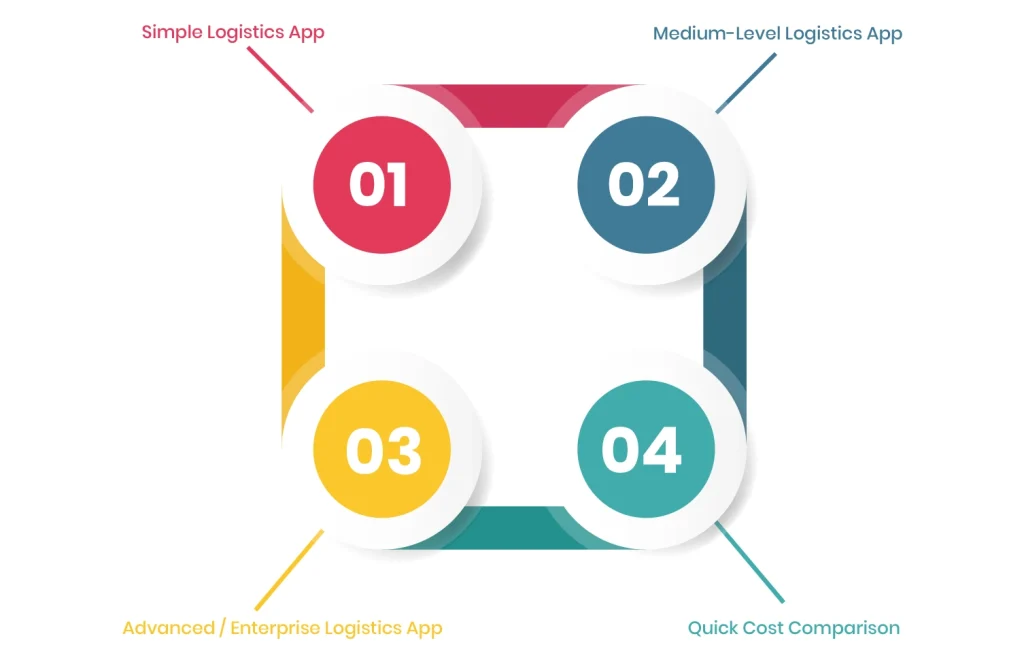
Simple Logistics App
A simple logistics app is typically built for small courier companies or local delivery startups. These businesses operate within a single city and manage fewer than 50 vehicles.
Their goal is to digitize the dispatch procedure and track it without introducing advanced automation.
Common features include:
- Order creation and assignment
- Basic driver mobile app
- Standard GPS tracking
- Delivery status updates
- Admin dashboard
- Push notifications
Estimated Cost: $15,000 – $35,000
Costs remain relatively low because operations are limited to one region and integrations are minimal.
Medium-Level Logistics App
As operations grow, logistics management becomes more complex. Regional courier companies handling 50–300 vehicles across multiple cities require automation tools to maintain the workflow.
At this stage, route optimization becomes essential. Similarly, dispatchers need visibility, and customers expect real-time tracking.
A medium-level logistics app typically includes:
- Real-time vehicle tracking
- Route planning and optimization
- Dispatcher control panel
- Driver performance monitoring
- Customer tracking link
- Analytics dashboard
Estimated Cost: $35,000 – $85,000
This level of investment is suitable for companies that are scaling their operations and seeking gains through automation.
Advanced / Enterprise Logistics App
Enterprise-level logistics apps are designed for nationwide fleets and third-party logistics (3PL) providers. These systems handle hundreds of vehicles and thousands of deliveries daily.
Enterprise systems often include:
- Advanced route optimization algorithms
- Automated dispatching
- Multi-warehouse management
- Custom analytics dashboards
- Role-based access control
- Multi-language and multi-currency support
Estimated Cost: $85,000 – $250,000+
For companies where logistics is the primary revenue driver, enterprise systems are mission-critical infrastructure.
Quick Cost Comparison
| App Type | Typical Cost Range | Best For |
| Simple Logistics App | $15,000 – $35,000 | Small/local operators |
| Medium-Level Logistics App | $35,000 – $85,000 | Growing regional businesses |
| Advanced / Enterprise Logistics App | $85,000 – $250,000+ | Large-scale logistics companies |
What are the Major Factors That Influence Development Cost?
Even within the same category, pricing can vary depending on system requirements. Several structural elements directly affect total investment.
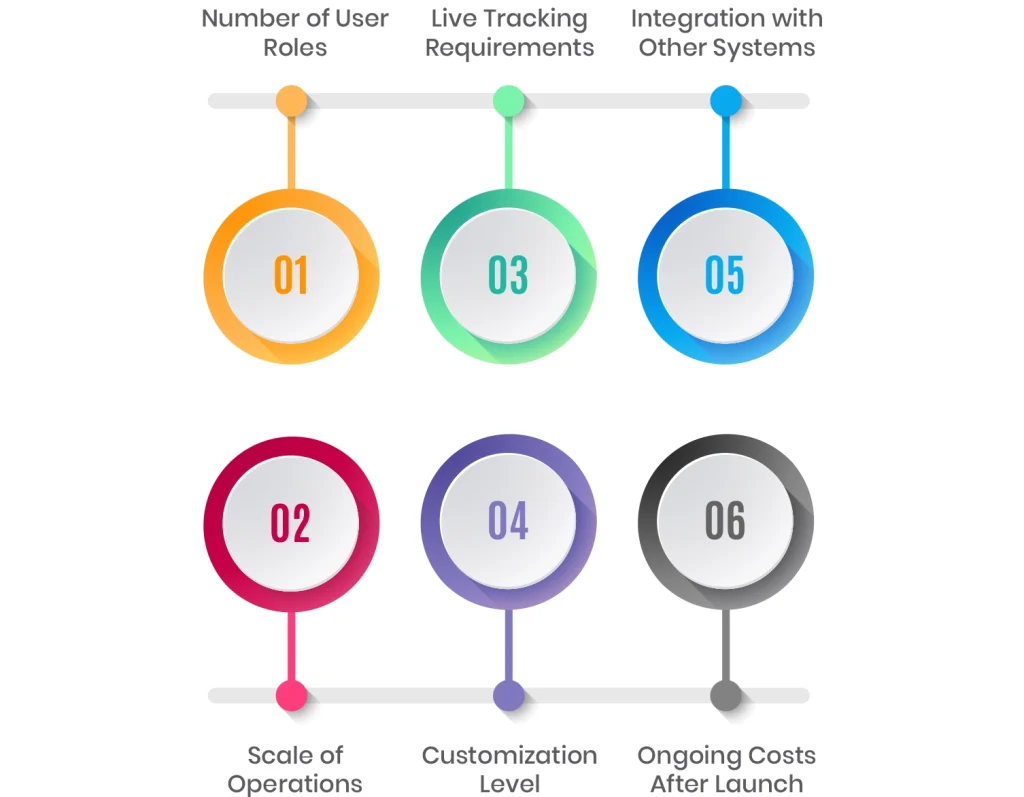
Number of User Roles
Most logistics apps include multiple user types, such as administrators, dispatchers, drivers, and customers. Each role requires its own interface and specific access permissions to ensure smooth operations.
How this affects cost:
- Adding more user roles increases development time. This is because each interface must be designed and tested individually
- Security measures, like role-based access and permissions, become more complex
- More roles mean more maintenance and updates over time
The more distinct roles your app supports, the higher the initial investment and ongoing management effort.
Scale of Operations
The size of your fleet and delivery volume directly impacts the complexity of your system. Managing 20 vehicles is much simpler than coordinating 500 or more.
How this affects cost:
- Larger fleets produce more data. This is why they require more powerful servers and cloud storage
- Backend systems must handle increased load and real-time processing easily
- Infrastructure for multi-city or multi-region operations adds both development and operational costs
Scaling up operations often leads to a nonlinear increase in cost due to the additional resources required.
Live Tracking Requirements
Tracking frequency is a major cost driver. Systems that update vehicle locations every few minutes are less resource-intensive than those providing near-instant, live tracking.
How this affects cost:
- Higher frequency tracking increases server load and bandwidth usage
- More frequent API calls to map or navigation services can raise ongoing costs
- Cloud storage needs grow as tracking data accumulates over time
Deciding the right tracking interval is a balance between operational needs and infrastructure expenses.
Customization Level
A logistics app can either use standard templates or be fully customized to fit unique workflows and branding. While templates reduce development time, they may limit flexibility and operational efficiency.
How this affects cost:
- Custom dashboards, workflows, and interfaces require more design and development hours
- Tailored apps often improve usability and employee adoption
- Investing in customization in the beginning can reduce the need for costly adjustments as operations grow
Highly customized apps generally have higher initial costs. However, they can provide a better long-term return on investment.
Integration with Other Systems
Modern logistics apps rarely function in isolation. Integration with other tools and platforms is often necessary to streamline operations and maintain data consistency.
How this affects cost:
- Integrations with payment gateways, warehouse management systems, CRMs, and accounting software increase development complexity
- Each integration requires configuration and maintenance
- Future updates to connected systems may add long-term costs
The more integrations your app requires, the higher the beginning and ongoing investment.
Ongoing Costs After Launch
Development cost is only part of the financial picture. Post-launch expenses for maintenance and platform evolution are equally important.
How this affects cost:
- Annual maintenance typically ranges from 15% to 25% of the initial development cost. Moreover, it covers performance updates, security patches, and feature upgrades
- Infrastructure expenses grow as delivery volume increases
- Expanding into new regions or increasing fleet size requires platform adaptations and additional configuration
Accounting for these ongoing costs ensures the logistics app remains reliable and sustainable over the long term.
Team & Budget Structure for Logistics App Development
The way you structure your development team has a direct impact on the total cost of a logistics app. Beyond features and infrastructure, the team model determines how much you spend in the beginning, how quickly you launch, and how flexible your system will be in the long run.

In-House Development
An in-house development team gives you full control over product direction and long-term system ownership. Developers work closely with operations, which improves alignment between software and real logistics workflows.
However, this approach comes with high fixed costs. This includes:
- Salaries
- Benefits
- Recruitment
- Onboarding time
Building a complete internal team can take months and requires significant annual investment.
Outsourcing
Outsourcing reduces long-term salary commitments and allows faster project initiation. Instead of building a team from scratch, companies often partner with a logistics app development company that already has the required expertise.
However, it requires a little extra effort to avoid delays or scope expansion, for example:
- Clear communication
- Defined milestones
- Strong oversight
Outsourcing is often ideal for startups and growing logistics businesses that want affordability without sacrificing technical quality.
Regional Developer Cost Comparison
Developer rates vary significantly by region, which directly affects total project investment. Below is an estimated comparison of average hourly rates in 2026:
| Region | Development Cost |
| North America | $120 – $200 |
| Western Europe | $80 – $150 |
| Eastern Europe | $40 – $90 |
| Southeast Asia | $25 – $60 |
What are Some Hidden Costs to watch in Logistics App Development?
Even a well-planned logistics app project can cause unexpected expenses. Some of the most commonly underestimated costs include:
- Map API overuse charges: High-frequency tracking or frequent route calculations can significantly increase usage fees.
- SMS and notification costs: Automated alerts for drivers and dispatchers can add up quickly at scale.
- Peak-season scaling expenses: Handling surges during holidays or high-demand periods may require temporary infrastructure upgrades.
- Compliance and regulatory updates: Changes in regional transportation laws or digital documentation requirements may necessitate app adjustments.
- Payment processing fees: For apps that include in-app payments, transaction charges and additional security measures can impact the budget.
Careful planning during the architecture and feature prioritization stage can help mitigate these hidden costs. Factoring them in early ensures the app remains sustainable and avoids financial surprises later.
What are some smart ways to Control Logistics App Development Cost?
Controlling logistics app development costs doesn’t mean limiting your app’s capabilities. Optimizing these costs means strategic planning and prioritization.
- Start with the core features: Launch with essential dispatch and tracking functionalities. As an MVP, this will help you validate workflows and system performance.
- Build in phases: Introduce advanced features like automated routing or AI optimization gradually.
- Choose scalable infrastructure early: Investing in cloud-based, flexible systems prevents expensive rebuilds as the business grows.
- Prioritize ROI features: Focus on the functionalities that directly reduce fuel consumption and delivery delays.
- Leverage integrations selectively: Integrate only the most critical third-party systems initially.
By approaching development strategically, businesses can manage upfront investment and ensure significant operational returns over time.
Conclusion
Unlike consumer apps, logistics platforms are heavily affected by operations systems. They influence dispatch accuracy and customer satisfaction simultaneously.
When properly planned, a logistics app does more than support business operations. It reduces waste, enhances transparency, and directly improves the overall delivery performance.
For logistics businesses in 2026, the real financial question is not whether they can afford to build a logistics app. It is whether they can afford to operate without one.