Getting an app idea is cool and all. But turning that app idea into an actual working app is what will get you super confused. Yes, we know that you don’t even understand where to start. We understand that in the beginning, hiring app developers sounds exciting, until you actually start doing it.
You open Google, type “hire app developers”, and suddenly you’re drowning in options. Freelancers. Agencies. Offshore teams. You’ll see varying hourly rates that make no sense. The portfolios will definitely look impressive, but tell you nothing about how the developer actually works.
Yes, this is why you’ll find yourself confused.
Because the problem isn’t that there aren’t enough developers.
The problem is that there are too many, and no one really tells you how to choose the right ones. In the mid of 2025, there were 47.2 million developers around the world. This number just keeps increasing! This is exactly why we’re here to help.
This guide isn’t here to rush you into a decision. Instead, it walks you through the process the same way most successful app owners figure it out. We’ll go step by step with clarity and without pressure.
Before You Hire Anyone, Get Clear on One Thing
Most people think that hiring starts with finding developers.
It doesn’t start there.
It starts with understanding what you’re building and why. And no, this doesn’t mean you’ll have to understand things from a developer’s perspective. You actually need to understand things from your end-user’s perspective. This is one big secret that most successful app owners have followed.
So, instead of a 40-page technical document, you just need to answer a few basic questions:
- Is this a small MVP or a full-size product?
- Are you testing an idea or building something long-term?
- Will this app grow over time, or stay simple?
These questions are the big three. Now, why do they matter?
They matter because the kind of developer you need depends entirely on the stage of your app.
Basically, if your goal is a super simple MVP, then hiring a senior agency team is literal overkill.
Simultaneously, if your goal is an enterprise level, scalable app, then hiring a solo freelancer is risky.
This is why you need to just answer the basics at first.
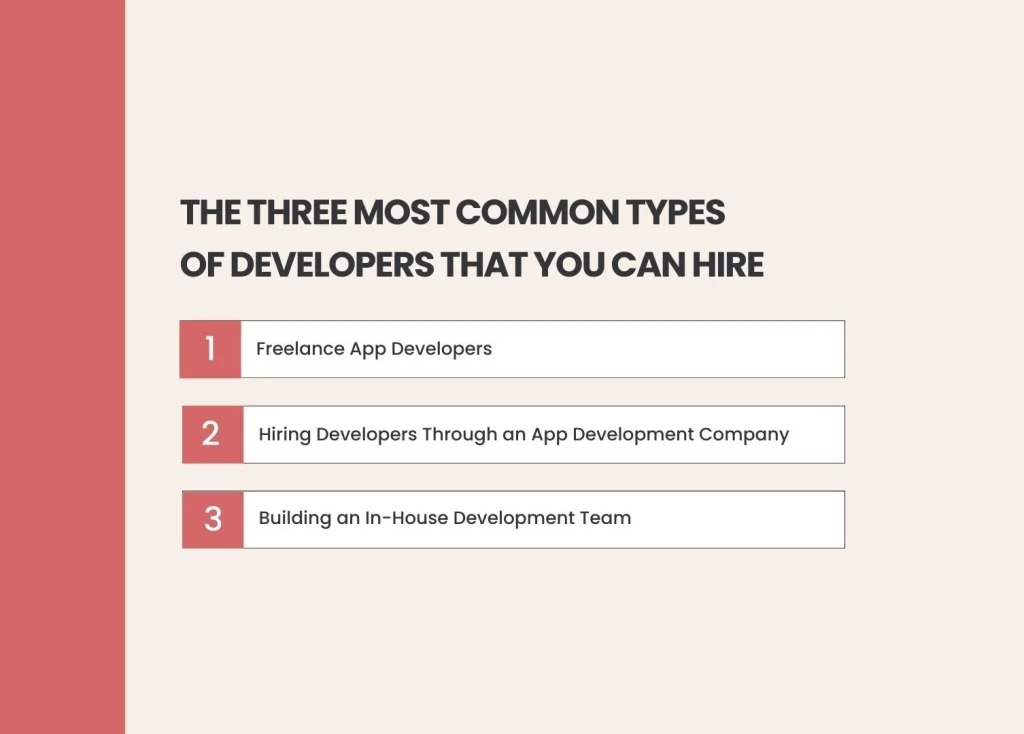
The Three Most Common Types of Developers That You Can Hire
You’ve probably already heard of these. However, we’ve explained why you should select the one you should. There’s no “best” option here. Just read carefully and select what fits your situation.
1. Freelance App Developers
Freelancers are usually the first option that people explore. They are especially popular among startups and solo founders.
They really are the best option when you’re building a basic MVP. This is because you’re probably working with a limited budget, or flexibility matters more than the structure. Platforms like Upwork and PeoplePerHour make it easy to find freelance developers. These platforms allow you to hire quickly. You just browse some profiles and select based on the reviews.
From there, you can compare hourly rates and look at their past work all in one place.
But here’s the part people don’t talk about enough… freelancers vary a lot.
Some are excellent. Some disappear halfway through the project. Others are technically strong but still struggle with communication or basic deadlines. Because of that, hiring freelancers usually means you need to stay VERY closely involved. You’ll need to give them time through frequent check-ins. At the same time, you will have to set realistic timelines to keep things moving.
If you’re comfortable managing the process by staying this involved, then freelancers are the best possible choice.
2. Hiring Developers Through an App Development Company
Hiring an app development company is a different experience altogether. This option usually makes more sense when your app is more than just a side project.
Instead of working with one person, you’re working with a whole team. That includes more than just designers and developers. There are QA testers and, of course, a project manager who keeps everything organized. Thanks to that, there’s more structure and clearer processes being followed. This results in better coordination.
This option works best when your app has complex features or the time period is tight. It’s also feasible when you simply don’t want to manage individual freelancers yourself. Just go to the search bar and look up the best app developers around. Look at their track record, talk to their consultants, and decide!
Yes, it costs more than hiring a freelancer. But what you’re really paying for is accountability and peace of mind. For business-critical or long-term products, this trade-off is usually very worth it.
3. Building an In-House Development Team
Building an in-house team is usually the long-term play, not the starting point.
With an internal team, you have full control over the development and product direction. The developers are fully aligned with your vision, and over time, this can lead to faster decisions and better collaboration.
That said, it’s also the most expensive and time-consuming option. At first, you’re dealing with hiring and salaries. And later, the onboarding and ongoing management, too. For early-stage startups, this often isn’t realistic until the product has already proven itself. Directly investing in a whole in-house team without even knowing if your product will succeed or not is a huge gamble.
That’s why most founders only move to an in-house team once the app is growing and the business is stable enough to support it.
How to Evaluate Developers Without Being Technical
You don’t need to be a tech expert to hire good developers. You just need to look for the right signals. This begins with understanding a few basic things. Once you get them, you are less likely to hire the wrong person. Here they are:
- Past work: Does their portfolio show apps similar to yours?
- Communication: Do they explain things clearly?
- Process: Can they walk you through how the project will move forward?
- Honesty: Do they point out risks, or are they just saying yes to everything?
If someone promises fast delivery and perfect results with low prices, be careful. Good developers are confident, not unrealistic.
How does the costing work when hiring app developers?
App development costs aren’t fixed because all apps aren’t identical or the same. They vary in genres, type, and a lot more. What a healthcare app is prioritizing, a retail app might not even consider. This is the main reason why costs vary a lot.
That said, here’s a realistic way to think about it:
- Small MVPs usually cost less and take a few months
- Mid-level apps cost more depending on features and platforms
- Enterprise or complex apps require larger teams and longer time periods.
Companies usually charge based on scope and duration, so this is usually somewhere between $10,000-$300,000+. Yes, it can be even more than that, depending on how huge your project is. And yes, hiring an In-House team can cost even more.
Now, freelancers usually charge hourly or per milestone. The ones at entry level charge as low as $15 an hour, while the experienced ones can ask for $100+ per hour.
Linkitsoft’s Tip: Instead of chasing the cheapest option, just remember that cheaper development in the beginning might result in expensive fixes later. So a slightly higher upfront cost often saves money later by avoiding poor-quality work.
Why Many Businesses Eventually Choose an App Development Company
A lot of founders start with freelancers. This is also because most founders begin by launching an MVP. But as apps grow, so do the demands. That’s where app development companies come in. They offer:
- Dedicated teams instead of individuals
- Built-in QA and testing
- Clear project ownership
- Post-launch support
Companies like Linkitsoft, for example, focus on end-to-end app development. We help you plan and only move on to development once you approve of the UI/UX design. Our designers prioritize easy user flows alongside accessibility to ensure that your project turns out great. And after the launch, we’ll be there for the ongoing maintenance too.
This kind of setup works well when your app is tied directly to business growth and delivering a great user experience. No, it’s not about replacing freelancers. It’s just about choosing stability when the stakes for your product are higher, and you need better collaboration.
Conclusion
Hiring app developers isn’t a race, so don’t worry. In reality, it’s a decision that shapes your product for months or even years to come.
The best results usually come when:
- You understand your app goals
- You choose a hiring model that fits your stage
- You value communication as much as technical skill
So in the end, whether you work with a freelancer or a full team, the goal is always the same. And that’s building something users actually want to use. When you get the hiring part right, everything that follows becomes easier and much more worth the effort.