ERP and CRM are two foundational systems that power modern businesses in different ways. As organizations grow, managing internal operations and customer relationships becomes increasingly complex. This is why these tools are essential for a better structure and smooth operations.
In this blog, we’ll explore what each system brings to the table and how they fit into the bigger picture of business management.
What is an ERP System?
Enterprise Resource Planning (ERP) is a system that helps businesses manage and connect their main operations in one place. Instead of using separate tools for different departments, an ERP brings everything together into a single, unified system.
What makes ERP powerful is how all these parts work live together. When one department updates information, it’s instantly available across the system, helping teams stay aligned and reducing the need for manual data sharing or duplicate work.
ERP systems also help automate routine tasks and reduce operation-related delays. By removing information silos between departments, they make collaboration easier and give businesses a clear, complete view of how everything is running.
What are the Benefits of Using ERP Systems for Businesses?
ERP systems make day-to-day work more organized and smooth for businesses. By centralizing data and automating key processes, they improve the overall accuracy thanks to technology and give teams better visibility across the entire organization.
- Automation improves productivity by handling repetitive tasks that usually take up time.
- It provides real-time access to accurate data, helping teams stay aligned across departments.
- Communication and coordination between teams become smoother with better system integration.
- Businesses can reduce costs by reducing manual work and minimizing errors.
- Making a decision becomes stronger with a complete, unified view of business performance.
- The system stays scalable, making it easier for the business to grow without barriers.
What is a CRM System?
Customer Relationship Management (CRM) is a system that helps businesses manage all their interactions with customers in one place. It’s designed to make it easier to track leads and improve the overall customer experience throughout the entire journey.
A CRM stores important customer information like contact details and past communications. This gives businesses a clear understanding of their customers and helps them offer more personalized and relevant experiences.
It also automates many everyday tasks such as follow-ups and support tracking, saving time and keeping customer interactions consistent and well-organized.
In simple terms, CRM helps businesses build stronger relationships with their customers in the long term.
What are the Benefits of Using CRM Systems for Businesses?
CRM systems help businesses go beyond just storing customer data. By keeping everything organized in one place, businesses can respond faster in a much more customized way. This allows them to stay consistent and create better experiences for their clients.
- Lead tracking becomes easier, allowing sales teams to follow up at the right time without missing opportunities.
- Customer engagement improves through timely and more personalized communication.
- Teams gain better visibility into customer behavior and interaction history, helping them understand needs more clearly.
- Sales opportunities increase with a more structured and organized pipeline management system.
- Response times to customer queries and support requests become faster and more consistent.
- Marketing efforts become more effective by using real customer insights instead of assumptions.
What Are The Fundamental Differences Between ERP and CRM Systems?
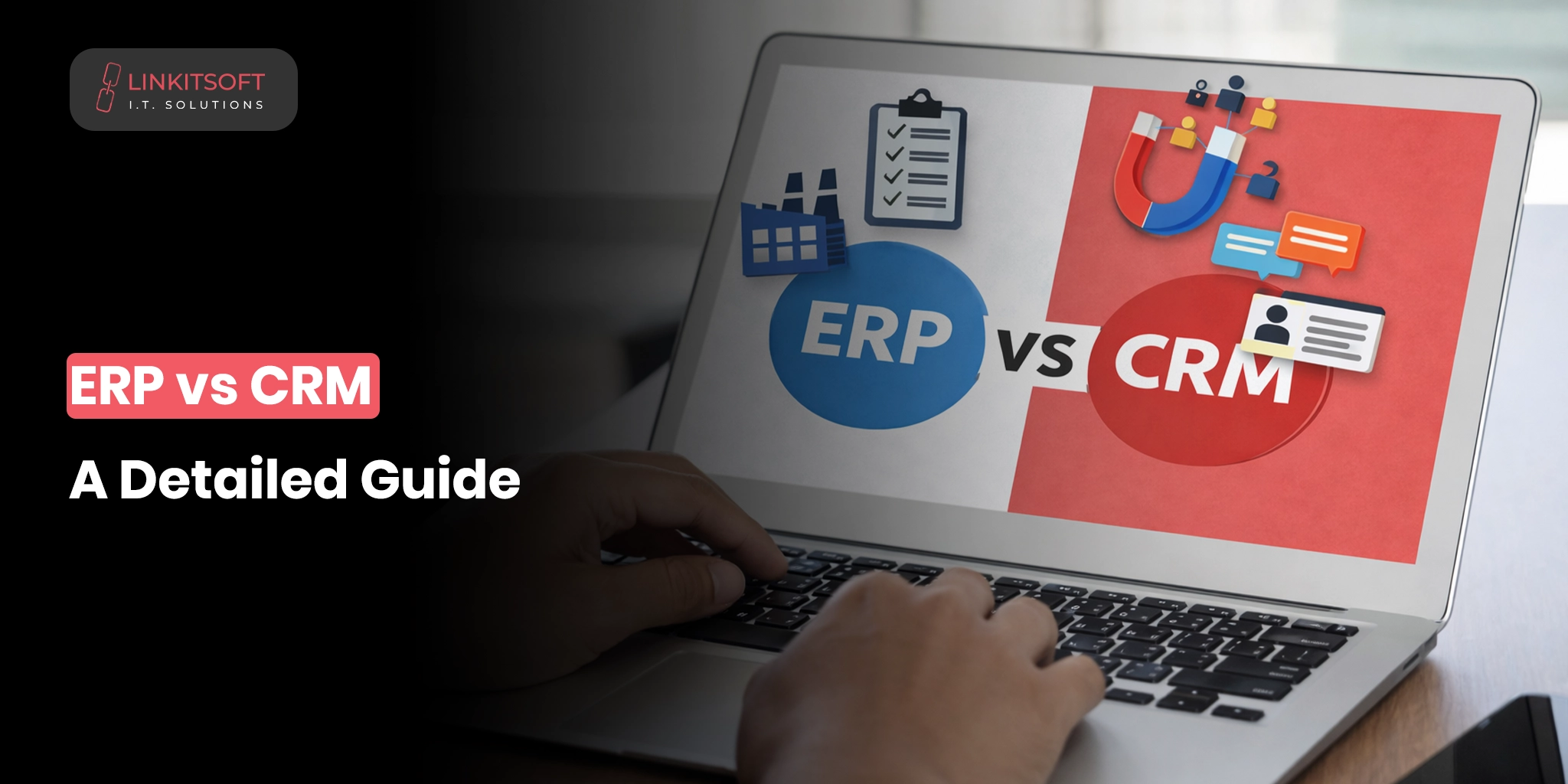
ERP (Enterprise Resource Planning) and CRM (Customer Relationship Management) systems serve two different but equally important purposes in a business. In ERP vs CRM, ERP focuses on managing and simplifying internal business operations. It acts as the base of a company’s structure, ensuring that all internal processes are connected and well-coordinated.
CRM, on the other hand, is centered around managing interactions with customers and potential leads. It helps businesses track sales and manage marketing efforts. While ERP is about optimizing internal processes, CRM is focused on building stronger relationships and driving revenue through better customer engagement.
Here is a table explaining further:
| Aspect | ERP | CRM |
| Primary Focus | Internal business operations | Customer relationships and sales |
| Core Purpose | Streamline business processes and resources | Improve customer acquisition and retention |
| Key Functions | Finance, HR, inventory, supply chain, procurement | Sales tracking, marketing, and customer support |
| Users | Finance teams, operations, HR, management | Sales teams, marketing teams, support teams |
| Data Handling | Business-wide operational data | Customer interaction and behavior data |
| Goal | Improve efficiency and reduce operational costs | Increase sales and enhance customer experience |
What Are The Similarities Between ERP and CRM Systems?
Although ERP and CRM systems focus on different areas of a business, they share several objectives. Both systems are designed to improve how a business functions and grows by centralizing data and reducing manual processes.
They help organizations make better decisions through accurate information. Additionally, both ERP and CRM systems aim to improve collaboration across departments by ensuring that teams have access to the information they need when they need it.
| Aspect | ERP | CRM |
| Centralized Data | Stores and manages all core business data in one system | Centralizes customer and interaction data for easy access |
| Process Efficiency | Automates and streamlines internal operations | Automates sales, marketing, and customer workflows |
| Decision-Making Support | Provides real-time operational insights | Offers customer insights and sales analytics |
| Collaboration | Connects departments like finance, HR, and operations | Connects sales, marketing, and support teams |
| Productivity | Reduces manual tasks across business functions | Functions reduces manual effort in customer management |
| Integration Capability | Integrates with multiple business tools and systems | Integrates with marketing, ERP, and support tools |
How Do You Know Which System Your Business Needs?
You probably got a general idea of which one to choose by now. However, some technical advice can be helpful here because both CRM s and ERP systems are not a small investment. They are a complete enterprise-level system that requires a heavy initial investment.
If your main challenge is managing internal operations like:
- Finance
- Inventory
- HR
- Supply chain
Then an ERP system is usually the right fit because it helps streamline and unify your back-end processes.
On the other hand, if your focus is on:
- Improving customer relationships
- Increasing sales
- Strengthening marketing efforts
Then a CRM system is exactly what you need, as it will deliver more direct value.
Can a business use both ERP and CRM systems?
You might be surprised at this, but if you know that your business is capable of affording both, then get both. Here’s why: It’s actually the most effective setup.
While ERP handles internal operations, CRM basically focuses on the external customer-facing activities. When used together, they create a connected ecosystem where internal data and customer data work in sync.
This integration helps businesses get a complete view of their operations and customers in one place. For example, sales data from the CRM can directly inform inventory and revenue planning in the ERP, leading to better forecasting.
Conclusion
ERP and CRM systems both play important roles in helping businesses operate properly, but they solve different challenges within the organization. One strengthens internal operations by bringing structure and control, while the other enhances how businesses interact with and serve their customers.
The right choice depends on where your business needs the most support right now, or how you can strategically combine both to build a more connected and scalable operation.