
In 2026, the world is vibing to events across different sectors. From small exhibitions to huge festivals, people enjoy their time to the full extent. However, only the organizations managing these events know how to manage these events and keep track of everything from the registrations to the payments and more.
That’s where event app development comes in. In this blog, we’ll learn more about how event apps are beneficial for your company and why your event business should definitely have one!
What is an Event App?
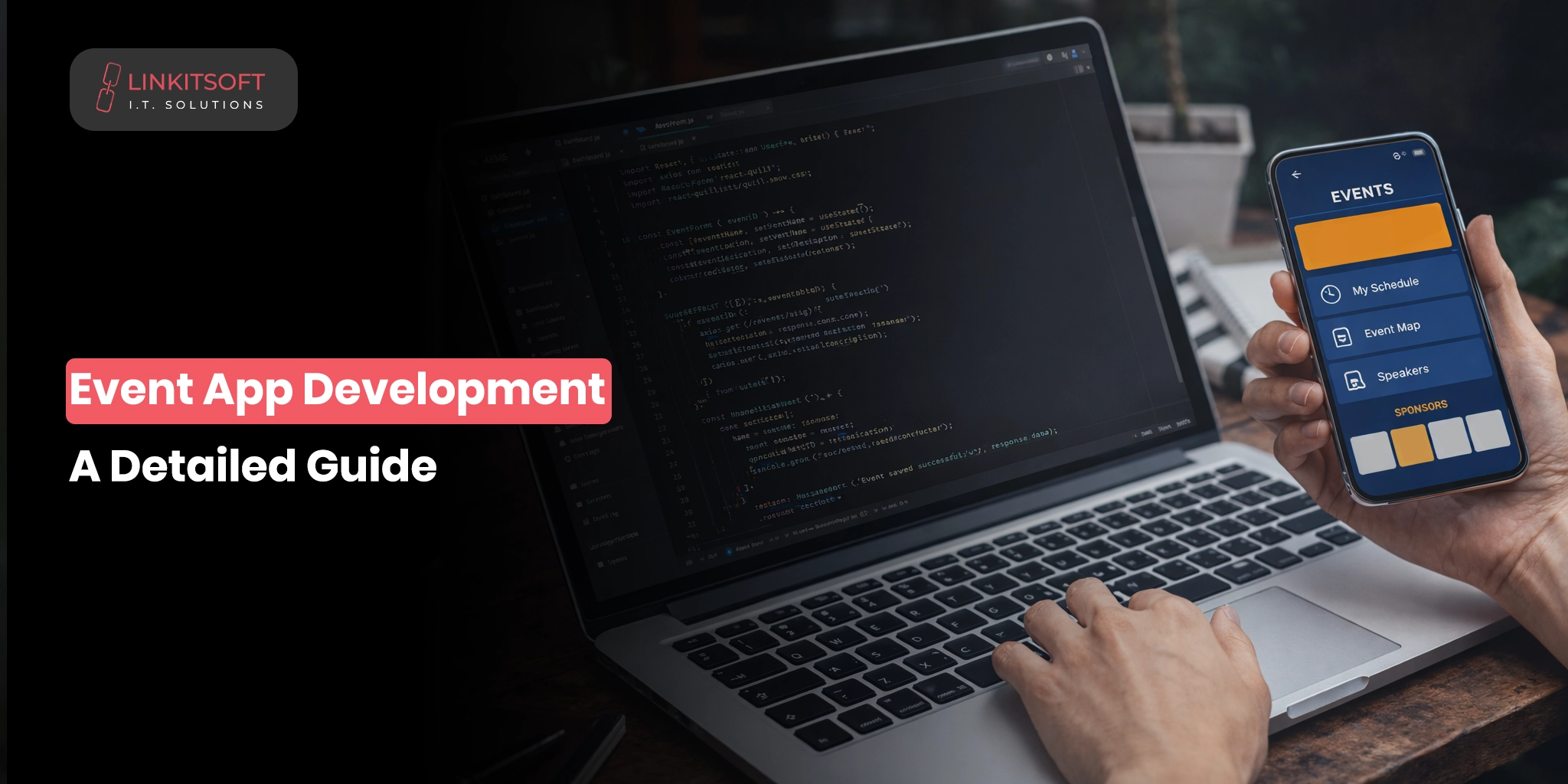
An event app is a specialized digital platform designed for complete event management. It is developed to support attendees, organizers, and sponsors in effectively engaging with a specific event.
It functions as a personalized assistant for each participant. Moreover, it is accessible directly from their mobile device and provides real-time guidance on:
- Schedules,
- Locations,
- Networking opportunities,
- Ongoing activities,
- and more…
Historically, event apps were limited to static information such as speaker lists and session timings. However, modern event apps have evolved into highly interactive and dynamic tools. They now enable beneficial features that allow both attendees and organizers to do a lot more.
What are the Types of Event Apps?
When businesses think about building an event app, the first question isn’t about features.
It’s what type of app should we build? Because that decision directly impacts several factors, especially the user experience.
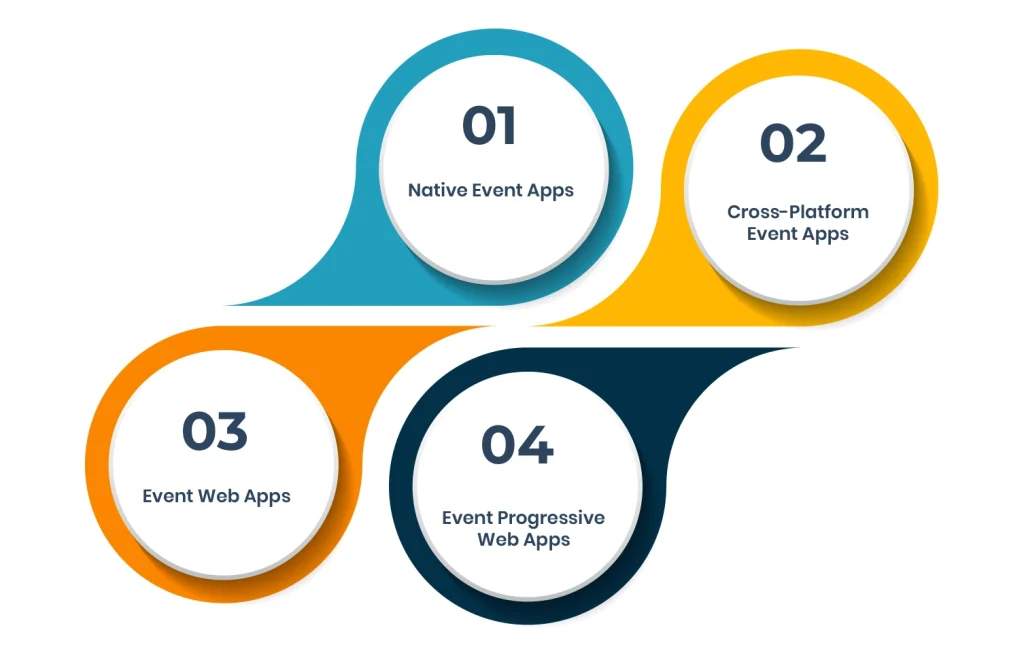
Native Event Apps
Native apps are built specifically for a single platform. In mobile apps, this is mostly for iOS or Android. These apps are developed using platform-specific technologies.
When you get a native event app, you get maximum performance and a high-quality user experience. Everything from the animations to live updates runs smoothly because the app is optimized for that device.
For large-scale events or exhibitions where engagement is a priority, native apps are the best choice. However, this level of quality comes with separate development efforts for each platform.
Cross-Platform Event Apps
Cross-platform apps are built using frameworks that allow a single codebase for an app to run on both iOS and Android.
From a business perspective, this is where maximum benefits kick in. You can reduce development time and cost significantly while still delivering a consistent experience across devices.
Modern frameworks have come a long way, so performance is generally strong enough for most event use cases. If you don’t want to compromise too much on quality, cross-platform is often the best choice.
Event Web Apps
Web apps are essentially responsive websites designed to function like an app within a browser. Users don’t need to download anything; they just open a link, and they’re in.
This makes them incredibly accessible, especially for one-time events. They’re also faster to build and easier to maintain.
However, there is only limited access to device features. This is why it is ideal for smaller events or situations where ease of access matters more.
Event Progressive Web Apps
Progressive Web Apps sit somewhere between web apps and native apps. PWAs are still accessed via a browser, but they offer app-like capabilities.
For businesses, this means you can deliver a near-native experience without full native development. Plus, users don’t have to go through app stores.
While PWAs are powerful, they still have some limitations compared to native apps. So they are great for mid/large sized events.
Which Industries Can Make Use of Event Apps?
Honestly, any sector that’s arranging events on a regular basis can benefit from an event app. Events aren’t something to take lightly. There are high-end, private events, and then there are events open to all. Businesses need to keep track of tickets and bookings; moreover, some companies track analytics and more to arrange future events, so technically, there are several industries that can make use of event apps.
Let’s take a look at some of the prominent ones:
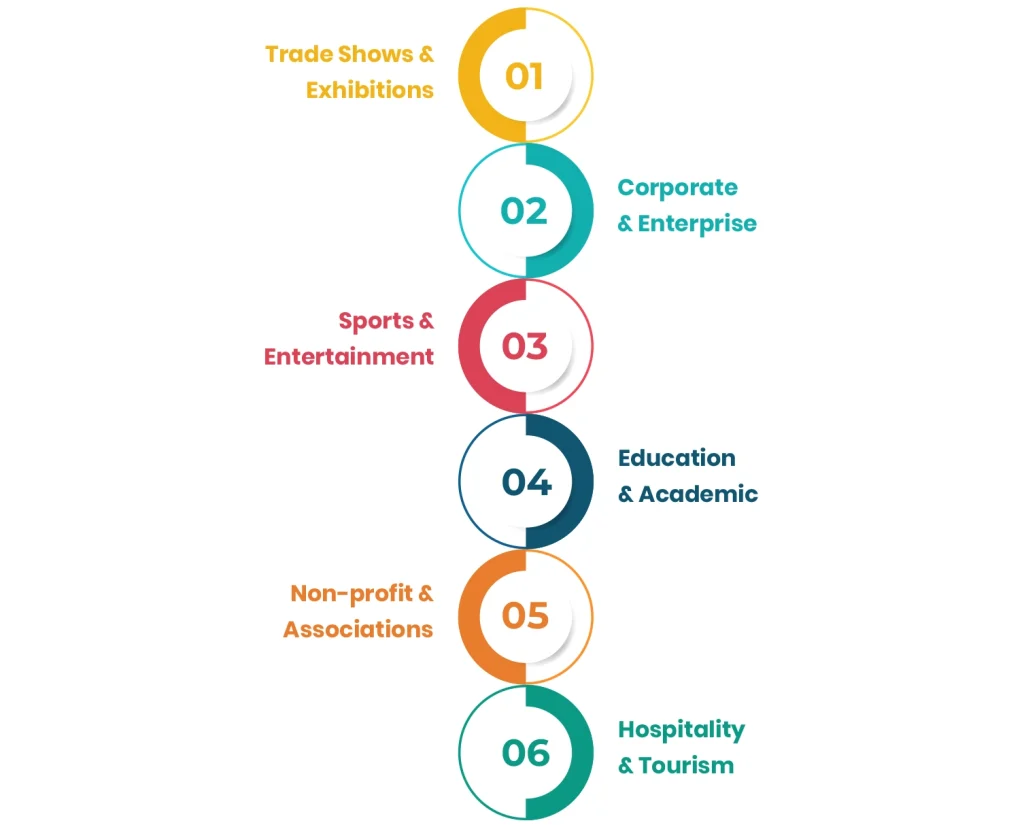
Trade Shows & Exhibitions
Trade shows are all about visibility and lead generation. In this era, if you are without the right system, things get messy. Event apps help exhibitors and organizers manage things like booth listings and live schedules. Attendees can easily find exhibitors, bookmark sessions, and even connect with potential partners directly through the app.
From a business perspective, you can collect insights on attendee behavior and engagement levels, which can directly influence future ROI.
Corporate & Enterprise
For enterprises, events are rarely “just events.” They’re often tied to internal alignment or client engagement. An event app centralizes everything, so there’s way less dependency on emails and manual coordination.
It also adds a layer of professionalism. Features like live updates and performance tracking allow companies to measure success beyond attendance, which is critical for strategic planning.
Sports & Entertainment
A sports event is where engagement is everything. Here, event apps enhance the audience experience through outstanding features. Fans don’t just attend, they participate. Whether it’s voting or accessing exclusive content, the app becomes part of the experience itself.
For organizers, it opens up monetization opportunities through sponsorship placements and premium features.
Education & Academic
Universities and training institutions regularly host seminars and conferences. Here, in this sector, event apps simplify coordination for both organizers and attendees. Students can access schedules and session materials in one place, while organizers can manage registrations and track participation.
More importantly, it creates a structured environment for knowledge sharing and feedback collection, helping institutions continuously improve their academic events.
Non-profit & Associations
For non-profits, events are often tied to fundraising and community building. An event app helps simplify registrations and volunteer coordination. It also makes communication during the event easier.
What really matters here is impact tracking. With the right data, organizations can better understand engagement levels and demonstrate value to stakeholders and donors.
Hospitality & Tourism
In hospitality, events are closely tied to guest experience and brand perception. Hotels and tourism companies use event apps for managing destination events and adding convenience for users.
For businesses, it’s a way to differentiate their service. A well-designed event app can turn a standard stay or trip into a more organized, premium experience. That’s the level of impact that comes from an event app,
What are the Latest Features and Trends in Event Apps?
Any business can come up with an event app, but only a few of them can actually make a benefit from it. The secret lies in the features that a specific event app is offering. Moreover, following the latest trends also positions an organization as modern and up-to-date.
Businesses should stay up-to-date with what’s trending to build a unique event app with robust features. Here are a few of the latest trends and features in event apps mentioned below:
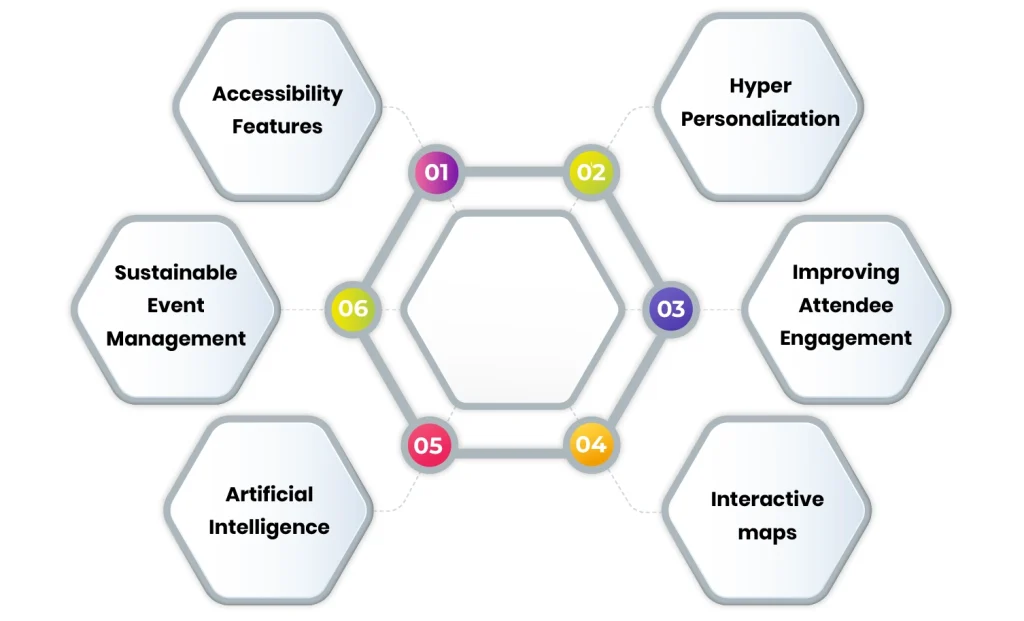
Accessibility Features
Modern event apps are being designed to ensure everyone can participate equally, regardless of physical or cognitive limitations. This includes features like screen reader compatibility and adjustable text sizes. For even more accessibility, we can add high-contrast modes and multilingual support.
Hyper-Personalization
Users now naturally expect apps to understand their preferences and deliver customized content live. This is usually powered by user behavior and past interactions data. The more relevant the experience, the higher the engagement.
Improving Attendee Engagement
Event apps are increasingly integrating features like live polls and gamification to keep users involved throughout the event. Instead of people just sitting through sessions, they’re responding and contributing in live.
Interactive maps
Interactive maps solve this by providing real-time navigation inside the event space. Users can locate restrooms and key areas with ease. Some advanced implementations even include indoor positioning or AR-based directions, making navigation feel intuitive.
Artificial Intelligence
It is responsible for everything from smart recommendations and chatbots to predictive analytics. For example, AI can suggest sessions based on user behavior or even predict attendance trends. Chatbots, in particular, are becoming a go-to feature.
Sustainable Event Management
Event apps contribute by reducing the need for printed materials. Everything is digitized, significantly reducing waste because nothing is physically present on paper. Some apps also include features that track carbon footprints or encourage sustainable choices among attendees.
What are the Steps to Build a Custom Event App for your Organization?
Unlike what you might be thinking, building a custom event app isn’t only a technical process. It’s a business decision layered with user experience and long-term value. The difference between an average app and one that actually delivers results usually comes down to how well each stage is handled.
Let’s walk through the process in a way that keeps both the technical and business sides aligned.
Research & Planning
At this beginning stage, you will set what the app is supposed to achieve. Is it improving attendee engagement? Simplifying event operations? Or something else? This stage involves determining your target audience and identifying must-have features.
UI/UX Design
For the UI/UX design, you need to focus on creating a smooth, intuitive experience. Attendees should be able to navigate schedules easily. They shouldn’t need assistance to find sessions and interact with features. This stage usually includes making prototypes and user flow design.
Coding & Development
Developers take the approved designs and turn them into a functional product. Here, they will build the frontend and backend of your event app. Key components are developed during this phase, while making sure they work reliably under real event conditions.
QA & Testing
QA (Quality Assurance) ensures that everything functions as businesses expect it to. This is especially true across different devices and usage scenarios. This includes performance testing and usability testing. For event apps, this stage is especially critical because there’s no room for failure during a live event.
Launch & Support
The launch phase includes deploying the app to app stores or web servers and ensuring everything is ready for users. But it doesn’t end there. The support that comes after the launch is just as important to keep your app in great shape.
Conclusion
Event app development in 2026 is more essential than ever for businesses to manage their events effectively. By keeping up with the latest trends and features, organizations can grow and organize even bigger events over time. When you go on to build an event app, you’re creating an ecosystem that’s more inclusive and built for long-term effect.