

Finding the right developers for your project is never easy. Even the best ideas can fail if the team behind them does not have the right skills. Today, hiring is not limited by location. You can bring in skilled developers from anywhere in the world. So, remote hiring gives you access to a much larger pool of talent that may not be available locally.
Hiring remote developers does come with its own challenges. With so many options, it can be hard to know where to start. How do you find someone with the right skills who communicates well and can work independently? These are the questions that make many businesses pause before hiring remotely.
This ultimate guide will show you when it makes sense to hire remote developers. We will also talk about how to find the right people and how to manage your team, so projects run smoothly. By the end, you will have a clear understanding of how to build a strong remote team that helps your company grow, no matter where the developers are located.
What Does It Mean to Hire Remote Developers?
Hiring remote developers is more than letting someone work from home. It is about building a team that can work from anywhere and still contribute fully to your project. Remote developers give you access to skilled people outside your local area. They also make it easier to scale your team when you need extra help.
Who Are Remote Developers
Remote developers are professionals who do their work outside your office. They can work from home, a coworking space, or even another city or country. They handle the same tasks as your in-house developers. They write code, test software, and build the features your project needs.
The only difference is that they are not physically in your office. Choosing remote developers lets you find people with the skills your project requires, even if they are far away.
How Remote Work Fits Modern Software Development
Software development has changed a lot in recent years. Teams no longer need to sit together to build great products. With tools like cloud platforms, project management apps, and video calls, remote teams can collaborate easily.
Remote work also lets your team work across time zones. This can keep your project moving faster and help meet strict deadlines. You can also hire specialists for short-term projects or grow your team quickly when needed.
Why Companies Hire Remote Developers
Hiring remote developers has become a smart choice for many businesses, including IT and software companies. Companies can access the right skills, save costs, and scale their teams without the limitations of location. Here are some reasons why businesses prefer remote talent:

Access to Global Talent
Remote hiring lets you reach skilled developers anywhere in the world. Meaning, you are not limited only to your local job market. This makes it easier to find people with the exact skills your project needs. Companies can choose from a much larger pool of candidates and bring in experts who would not be available locally.
Lower Hiring and Operational Costs
Hiring remote developers can reduce expenses in multiple ways. You do not need to provide office space or pay for utilities and equipment. You can also hire talented developers from regions with lower living costs without lowering the work quality. This makes building a strong team more affordable.
Higher Productivity and Focus
Remote developers usually work in quieter places than a traditional office. This helps them stay focused and get more done. With flexible hours and no commute, your team can spend more time on coding and solving project problems. This way, your projects can move faster, and the quality stays high.
Flexibility to Scale Teams Faster
Remote teams also let you adjust the size of your team whenever you need to. For instance, if a project suddenly needs extra hands, you can bring in more devs right away. You can also hire specialists for short-term tasks without committing to long-term contracts. As a company, this gives you the freedom to mix and match your team to your project needs.
Key Benefits of Hiring Remote Developers
Hiring remote developers can bring several advantages to your business. From building a more creative team to cutting costs, remote talent offers ways to make your projects run better and grow faster. Here are some of the benefits you can expect from building a remote team:
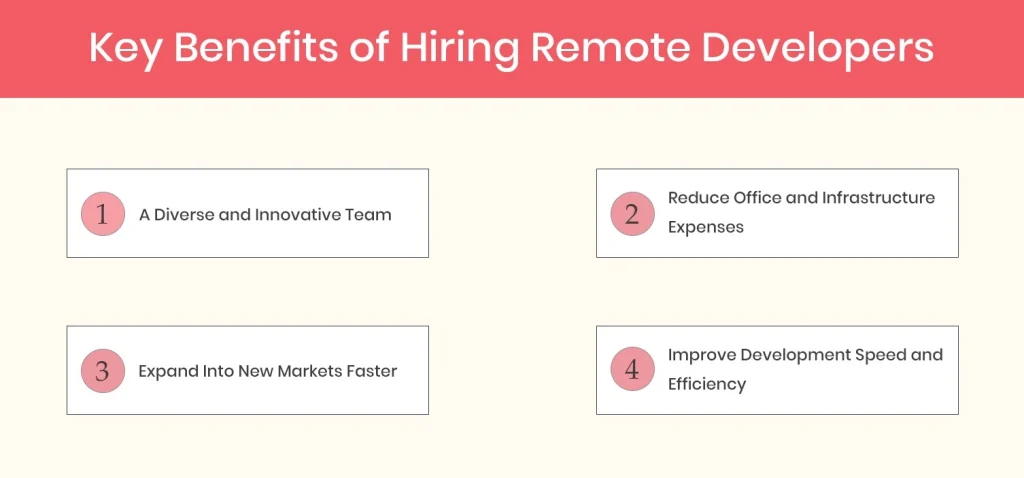
A Diverse and Innovative Team
When you hire remotely, you can bring together people from different countries and backgrounds. This gives you a really good combination of skills, fresh perspectives, and ideas that you might not find locally. Long story short, a diverse team can help you approach problems in new ways and come up with solutions that stand out.
Reduce Office and Infrastructure Expenses
Remote developers work from their own space, which means you save expenses on office rent, desks, or utilities. You also save on equipment and other overhead costs. This makes it easier to manage your budget while still hiring skilled developers for your projects.
Expand Into New Markets Faster
Having a remote team in different locations can help you understand and reach new markets. Your developers can provide insights into how your product might be used in other regions. This local perspective can give you an advantage when launching in new areas.
Improve Development Speed and Efficiency
With remote developers working from different time zones, your projects can keep moving almost around the clock. Flexible schedules and focused work environments help your team complete tasks faster. This means your projects can progress quickly without sacrificing quality.
When Should You Hire Remote Developers?
Knowing the right moment to bring in remote developers can make a big difference for your project. They are most useful when your needs cannot be met by your current team or local resources.

When Skilled Developers Are Hard to Find Nearby
Sometimes you just cannot find the right people with the skills you need in your area. Hiring remote developers means you can work with people from anywhere in the world. This way, you get the expertise your team might be missing.
When Budgets Are Tight
If you want to keep costs down, remote developers can help. You do not have to pay for office space, desks, or equipment. You can also hire people from places where the rates are lower, but the work is still good.
When Time-to-Market is Limited
If your project needs to move quickly, remote developers can help you finish on time. With people working in different time zones, work can continue even when your office is closed. This keeps the project moving and helps you meet your deadlines.
Types of Remote Developers You Can Hire
When you hire remote developers, you have different options depending on what your project needs. Each type of developer has its own focus and skills. Hiring the right one can make your project easier and faster.
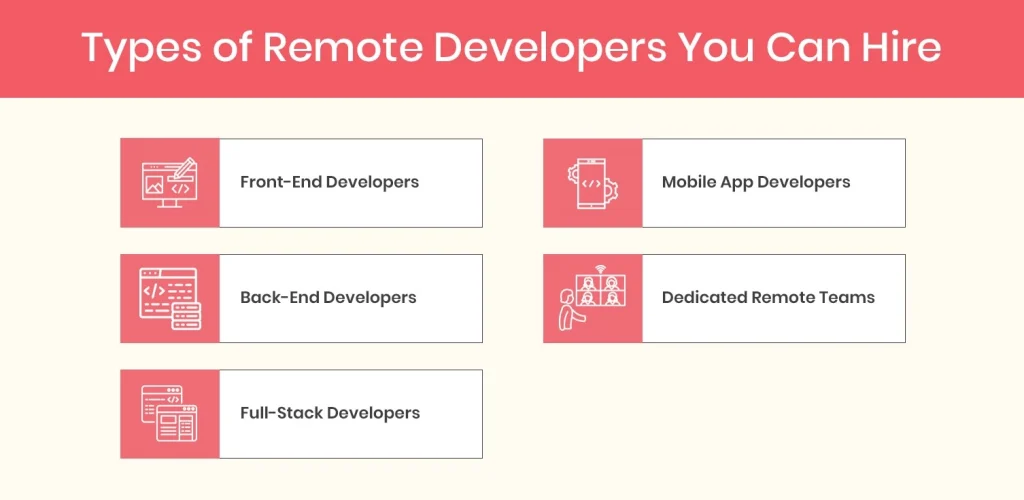
Front-End Developers
Front-end developers work on the website or app’s interface that people see and use. They manage the entire layout, buttons, menus, and other visuals that make your project easy to navigate. They work with HTML, CSS, and JavaScript, and may work with tools like React or Angular. So if you want your project to look visually attractive and user-friendly for the users, front-end devs are what you need.
Back-End Developers
Back-end developers work behind the scenes. They handle servers, databases, and the logic that keeps your app, website, or software running. They often use languages like Python, Java, or PHP. You need back-end developers if your project deals with logins, payments, or storing and managing lots of data. They make sure everything works properly without the user seeing it.
Full-Stack Developers
Full-stack developers handle both front-end and back-end. They can build a complete application from start to finish. This makes them a good choice if you have a small team or want someone who can manage multiple parts of your project. Full-stack developers are flexible and can save time since you don’t need separate specialists.
Mobile App Developers
Mobile app developers focus on building mobile apps for phones and tablets. They create apps for iOS, Android, or both. iOS developers use Swift or Objective-C, while Android developers use Java or Kotlin. If you want your mobile app to function smoothly on any device, a mobile developer is essential.
Dedicated Remote Teams
Instead of hiring individual devs, you can hire a full remote team. This team usually includes front-end, back-end, mobile, and testing specialists, all working together in collaboration. Such dedicated teams are great for bigger projects or ongoing support. They help you get work done faster and save you the trouble of managing multiple individual freelancers.
Skills to Look for in Remote Developers
When you hire remote developers, certain skills make a big difference because they help your team stay productive and complete projects on time. They help your team stay on track, finish work on time, and avoid unnecessary problems.

Technical Expertise
First, your developer needs to know the tools and languages your project uses. They should be able to write solid code and fix problems when they come up. Without these skills, even someone easy to work with can struggle to deliver quality work.
Communication and Collaboration
Secondly, communication is key. Developers should explain their ideas clearly, ask questions when in doubt, and work in collaboration with other team members in different locations. So, having good communication skills keeps everyone on the same page and avoids misunderstandings.
Time Management and Accountability
Thirdly, it is important that your remote devs know how to manage their time well and stick to deadlines. Basically, your devs should take responsibility for their tasks without being under constant supervision. This keeps the project moving forward without any delays.
Ability to Work Independently
Finally, your dev should be able to work on their own. They should be able to make decisions and handle small problems without waiting for instructions. This way, progress keeps going even when you’re busy with other things.
Step-by-Step Guide to Hiring Remote Developers
Hiring remote developers doesn’t have to be confusing, but it’s not just posting a job either. Here’s a detailed look at what really happens at each step.
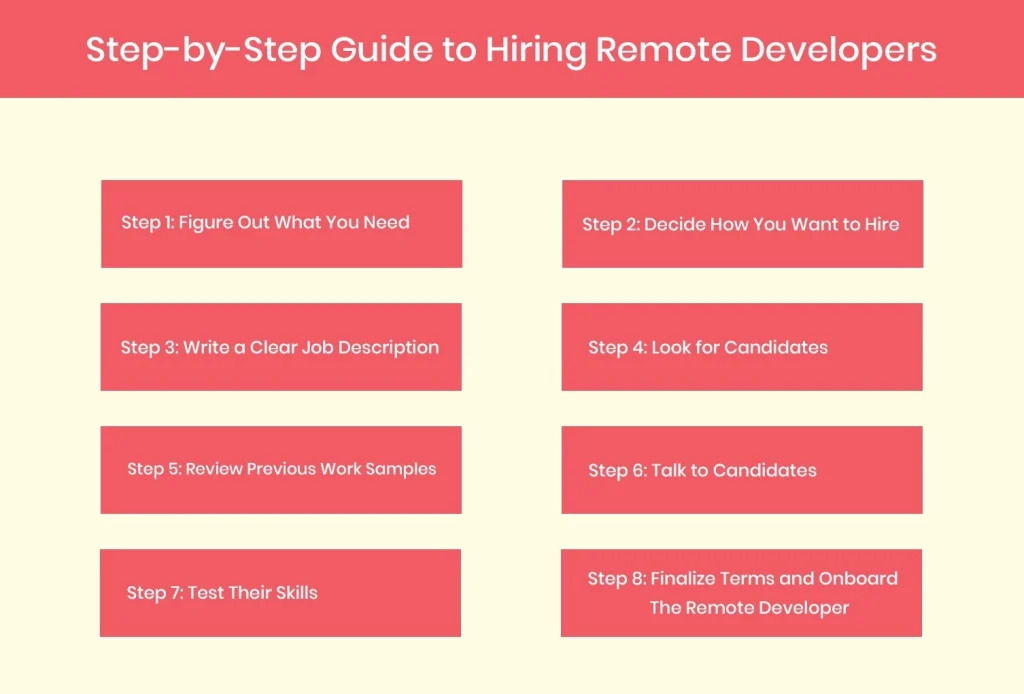
Step 1: Figure Out What You Need
You should start by being clear about your project. Do you need someone for a website, a mobile app, or backend work? Write down the technologies and tools you use. Think about soft skills too, such as communication and time management. Making an “ideal candidate” profile beforehand will guide you through the whole process.
Step 2: Decide How You Want to Hire
Choose whether you need a freelancer, a full-time developer, or a dedicated, fully remote team. Freelancers are good for short tasks. Full-time developers are better for continuous work. And, a dedicated team works well if you need multiple roles and someone to take responsibility for the whole project.
Step 3: Write a Clear Job Description
Your job post should be honest and simple. This involves the job role, daily responsibilities, and the tools or technology stack they will work with. You should also mention the experience level and any deadlines. You can also explain how your team works and the expected availability of your team. A clear job post helps attract the right candidates and saves your time.
Step 4: Look for Candidates
Post your job where developers will see it. Use freelance platforms such as Upwork or Fiverr for short-term work. LinkedIn and Remote.co work for more serious hires. You can also check GitHub or Stack Overflow to see their work. You may get many applications. Be ready to spend some time filtering through them.
Step 5: Review Previous Work Samples
Start by looking at portfolios and past projects carefully. Check if they have done similar work before. You should look at the quality of the code and the final product, too. Also, ask for references or talk to previous clients if needed. This step will help you distinguish between the existing pool of devs and hire reliable developers remotely.
Step 6: Talk to Candidates
Once you have shortlisted the candidates, set up video call interviews. Ask how they solve problems and handle deadlines. Check how they communicate with others. You should make sure that they can fit in with your existing team and workflow.
Step 7: Test Their Skills
Give them a small task. This could be a bug fix, a small feature, or a mini project. This would show you the quality of work they will do. This step shows you who will actually perform and is not just all talk.
Step 8: Finalize Terms and Onboard The Remote Developer
Once you have hired a remote dev for your needs, make them sign a virtual agreement on timelines, payment, and responsibilities. Then, give them access to the tools and project details. Have an onboarding session so they understand your workflow clearly. Regular check-ins in the first few weeks help them settle in and keep the project on track.
How to Manage Your Remote Developers Effectively
Now that you have hired the remote devs, managing them is way different from leading an in-office team. Here’s how you can keep everyone on the same page and make sure that the work progresses steadily:

Use the Right Collaboration Tools
Firstly, make sure your team has the right tools they need to stay connected. Video calls, chats, and project management platforms such as Zoom, Slack, and Trello help in organizing tasks and sharing project updates regularly.
Set Clear Expectations and Goals
Next, be clear about what you expect from your team. Priorities, responsibilities, and deadlines should be clearly defined. When expectations are clear, developers can focus on the right tasks.
Take Advantage of Time Zones
Since remote teams often work across different time zones, you can use it to your advantage. You can assign tasks in a way that the work continues throughout the day.
Encourage Regular Feedback and Connection
Finally, don’t forget the human side of remote work. So, as a good employer, you should check in often and not just about tasks. Ask for feedback and listen to your team’s concerns. Encourage team members to share ideas.
Wrapping It Up
Building a remote team can feel challenging at first. But with a clearly defined plan and the right approach, it is completely manageable. From defining your development needs to hiring the right people and keeping them connected effectively, each step matters in making your team productive and reliable.
This detailed guide has covered the key steps to find, hire, and manage remote developers effectively. By following these practices, you can tap into global talent, keep projects on track, and grow your business without limits. That’s it for this guide, and best of luck building your dream remote team!
Frequently Asked Questions
How do I know if a remote developer is right for my project?
You should look for someone who knows the tech you need and can work well with your team. You should look at their past work, talk to them over video, and see how they communicate. If they can explain their ideas clearly to you and stay on top of deadlines, you’re on the right track.
Where can I find skilled remote developers?
There are lots of places to look. Freelance platforms like Upwork or Fiverr are good for short-term projects. LinkedIn or remote job boards work for more serious hires. You can also work with a trusted company like Linkitsoft to hire dedicated remote teams that match your project needs.
Can remote developers work across various time zones?
Absolutely! It might sound tricky at first, but with good planning, clear priorities, and collaboration and project management tools like Slack or Trello, it works really well. Different time zones can even keep your project moving almost all day.
How do I manage a remote development team?
Managing remote devs is more about communication than watching over them. You must make sure that everyone knows what they’re responsible for and when things are due. Use video calls, chat, and project boards to stay connected. Regular check-ins and feedback can help keep your team on track.