
The real number for how much your app development can cost in the UK comes down to several factors. From the technical requirements to your growth plans, every aspect is summed up.
This is why Linkitsoft’s guide breaks down everything UK businesses need to know… From average development costs and hidden expenses to realistic scenarios and ways to reduce spend without compromising quality. If you’re planning to launch an app in 2026, this will give you clarity before you commit budget.
What is the Average App Development Cost in the UK?
For businesses, the most important factor influencing cost is complexity. A basic MVP will cost significantly less than a fully integrated enterprise platform. Let’s start with a clear overview of app development UK pricing.
Simple App: £5,000 – £15,000
A simple app is typically built as a Minimum Viable Product (MVP). It focuses only on the core and essential features. These are the ones that are required to validate an idea or provide a basic service.
They may include:
- Basic user interface and navigation
- Simple data storage
- Limited integrations
- Core functionality only
Simple apps are ideal for startups testing a concept or small businesses digitising a specific process.
Medium Complexity App: £15,000 – £50,000
This is the most common cost range for UK SMEs building a serious digital product. A medium complexity app focuses on more than just the core features.
These apps typically involve:
- User accounts and authentication
- Payment gateway integration
- API integrations
- Admin dashboards
- Push notifications
- Cloud hosting infrastructure
At this level, development includes structured UI/UX design and backend architecture. It also needs extra testing and deployment planning. The app is built to scale.
Enterprise App: £50,000 – £150,000+
Enterprise-level apps are complex platforms. They are built for scalability and integration with existing business systems.
Enterprise apps may include:
- Advanced backend infrastructure
- Real-time data processing
- AI or machine learning functionality
- Integration with CRM, ERP, or internal systems
- Enterprise-grade security compliance
- High-performance scalability for large user bases
At this stage, app development becomes a strategic investment managed by dedicated teams and ongoing optimisation.
Quick Cost Overview
| App Type | Estimated Cost | Time Period |
| Simple App | £5,000 – £15,000 | 1–3 months |
| Mid-Level App | £15,000 – £50,000 | 3–6 months |
| Complex App | £50,000 – £150,000+ | 6+ months |
These are realistic UK-based ranges for 2026. However, pricing varies significantly because no two apps are identical.
What are the Factors That Affect App Development Cost in the UK?
Several factors affect an app’s final development costs. Each phase in the SDLC is responsible for a chunk of the costs. However, here are a few other decisions that may take your budget higher than you think.
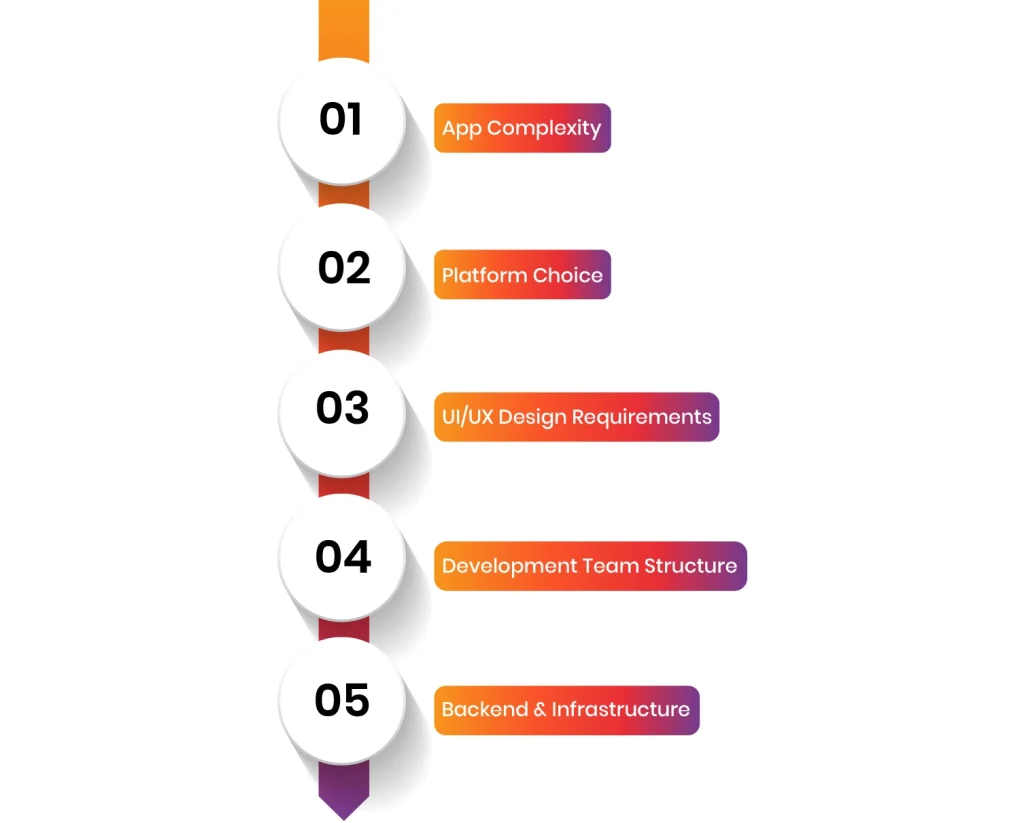
App Complexity
Complexity is the single biggest cost driver.
A basic app with login, profile management, and simple data storage requires far less development time than one with:
- Real-time messaging
- Live tracking functionality
- Payment gateways
- Advanced admin dashboards
- Third-party integrations
Real-time features increase server load and backend development. AI features require data modelling and machine learning frameworks. Enterprise integrations demand custom APIs and powerful testing. The more you add, the more development hours and costs.
Platform Choice
Choosing between iOS/Android or cross-platform development directly affects the budget.
Developing individual native apps for Android and iOS means essentially building two different products, increasing the design and development costs.
Cross-platform frameworks such as:
- React Native
- Flutter
UI/UX Design Requirements
Design is directly impacts user retention and competitiveness.
In the UK market, users expect smooth and intuitive interfaces. A template-based design may cost £1,000–£3,000. A fully custom UI/UX strategy that includes user research, wireframes/prototyping, and usability testing may range from £5,000 to £20,000 or more.
Custom design becomes particularly important in competitive industries such as fintech, healthcare, and retail. Poor UX increases churn. Strong UX improves engagement and long-term ROI.
Development Team Structure
Who builds your app matters just as much as what you build.
In the UK, typical hourly rates look like this:
| Development Model | Hourly Rate (per hour) | Best For | Advantages | Considerations |
| Freelancers | £30 – £80 | Small apps, MVPs, limited-scope projects | Lower cost, flexible hiring | Limited scalability, less structured project management |
| Small UK Agencies | £60 – £120 | Growing SMEs, mid-level apps | Structured workflow, better reliability, team support | Higher cost than freelancers |
| Established UK Agencies | £100 – £180+ | Complex apps, enterprise projects | End-to-end service, strategic input, scalability, security standards | Premium pricing |
| Offshore Teams | £20 – £60 | Cost-sensitive projects with internal oversight | Lower development cost, larger teams | Requires strong communication and quality control oversight |
Backend & Infrastructure
Frontend development is only part of the equation. Backend systems drive functionality, security, and scalability.
The key cost components include:
- Cloud hosting
- Database architecture
- API integrations
- Payment processing systems
- Security compliance (especially GDPR)
- Scalability planning
Most UK businesses rely on cloud platforms. This often includes Amazon Web Services (AWS), Microsoft Azure, or the Google Cloud. Monthly infrastructure costs can range from £50 to several thousand pounds.
What are the Hidden Costs UK Businesses Often Overlook in App Development?
Hidden costs don’t give a warning before they pop up… Businesses need to plan strategically with full awareness of any potential costs that may come up.
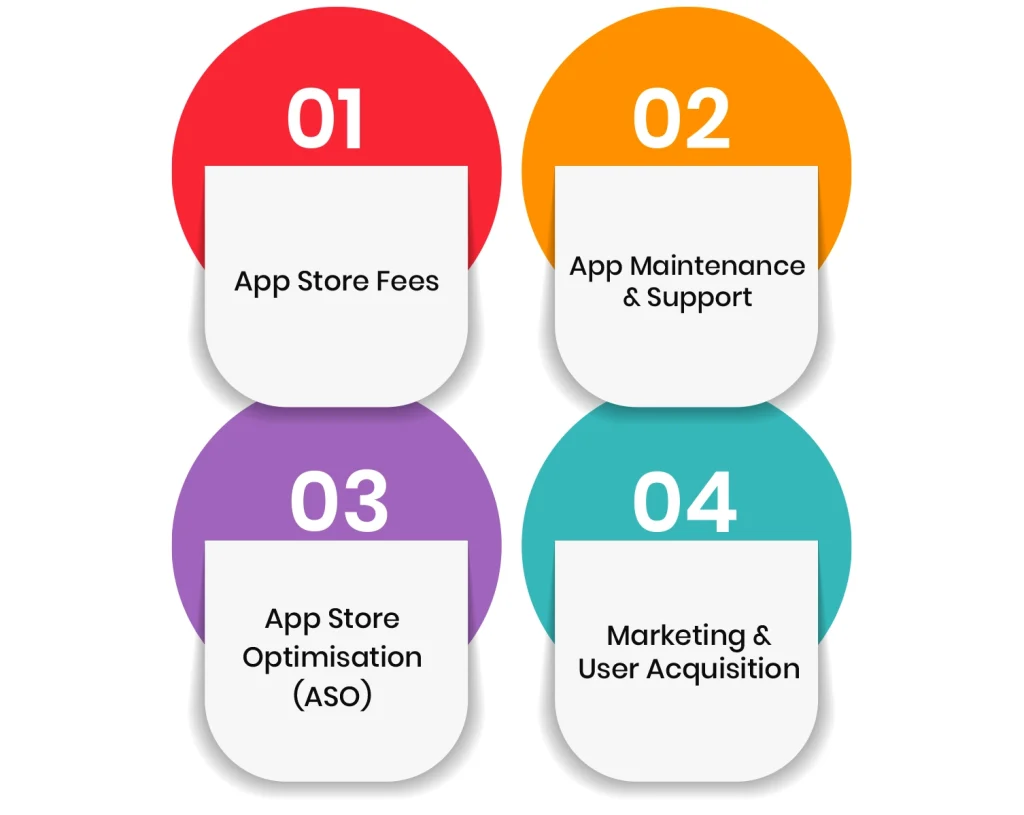
App Store Fees
Publishing is not free. To release on Apple’s App Store, you need a developer account costing approximately £79 per year. A Google Play Developer account requires only a one-time fee of around £25.
Transaction fees and revenue-sharing models also apply. Although this may be a small cost, it is still one that surprises.
App Maintenance & Support
A common rule in the industry is the 15–25% annual maintenance rule. That means if you invest £40,000 in development, you may spend £6,000–£10,000 annually on:
- Bug fixes
- Performance optimisation
- OS compatibility updates
- Security patches
- Minor feature enhancements
App Store Optimisation (ASO)
Visibility determines success. App Store Optimisation improves search rankings within app marketplaces.
This includes:
- Keyword strategy
- Visual assets
- A/B testing
- Review management
Additionally, ASO is very important. Without it, even a well-built app may struggle to gain traction organically.
Marketing & User Acquisition
Development is only part of the overall investment. There’s more… Marketing budgets can include a whole world within themselves.
They mainly include:
- Paid advertising
- Influencer partnerships
- PR outreach
- Social campaigns
- Email marketing
In competitive sectors, marketing spend can equal or exceed development costs.
What are some Real App Development Cost Scenarios for UK Businesses?
Here are some real life scenarios that can help give businesses an idea for how the costs will add up to finalize their app development cost UK.
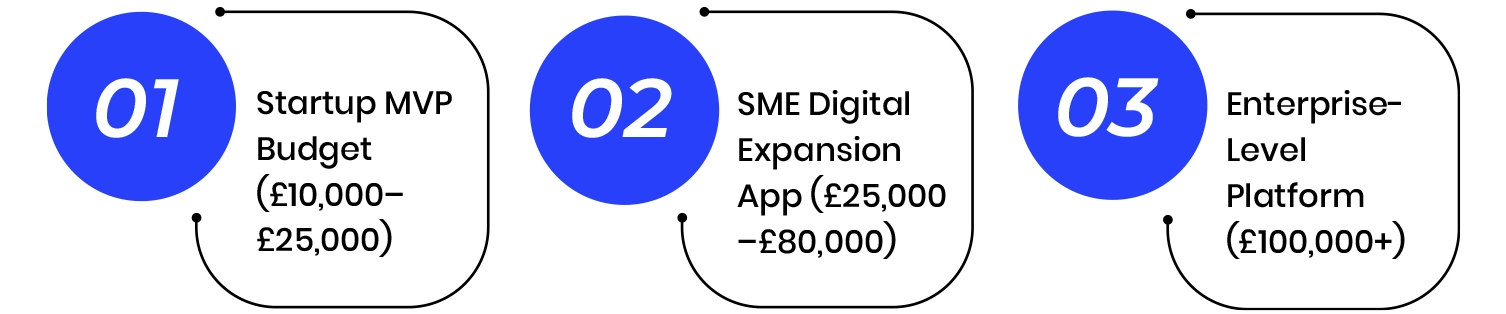
Startup MVP Budget (£10,000–£25,000)
A startup in the UK that is building a focused MVP typically prioritises the core features only. The aim is testing and validation only. At this stage, perfection does not matter that much.
This budget may include:
- Cross-platform build
- Basic backend
- Essential integrations
- Minimal custom design
This approach reduces risk while allowing rapid market testing.
SME Digital Expansion App (£25,000–£80,000)
Small to medium businesses often build apps to improve customer engagement. They are mainly looking to automate their services or expand digitally.
These apps include:
- Custom dashboards
- Payment integration
- CRM connectivity
- Push notifications
- Enhanced security
The larger budget reflects custom functionality and scalability planning.
Enterprise-Level Platform (£100,000+)
Enterprise apps involve complex infrastructure. This is because they are capable of many functions and come with advanced security. Some enterprise apps handle data in real-time and even integrate with legacy systems.
Budgets exceed £100,000 due to:
- Multi-platform support
- AI integration
- Compliance requirements
- Load testing
- Dedicated DevOps teams
These projects are long-term and require careful planning, hence businesses go for professional mobile app development services.
How to Reduce App Development Costs UK Without Sacrificing the Quality
Controlling costs does not mean stripping your product down to the bare minimum or hiring the cheapest team available. This often leads to expensive rebuilds later. Here’s how businesses can approach cost planning properly:
Start With a Focused MVP
An MVP allows you to launch with only the essential features required to solve your users’ core problem. This way, you prioritise what delivers immediate value.
This approach reduces development hours and shortens timelines, limiting upfront investment. Once the product gains traction, additional features can be introduced in phases.
Phased growth protects capital and lowers financial risk.
Control Feature Creep
Scope expansion during development is one of the main causes of budget overruns. Before the development phase of your app begins, separate:
- Must-have features
- Post-launch enhancements
Lock the launch scope. Any additional requests should move to a future plan. This keeps the timelines predictable. Additionally, it also prevents unnecessary cost increases. Clear scope control equals financial control.
Use Cross-Platform Development Wherever Appropriate
If your app doesn’t require heavy native performance, then it doesn’t really need to be native. Cross-platform frameworks like React Native or Flutter can reduce the duplication.
With a shared codebase for iOS and Android, development and maintenance costs are typically lower. However, the decision should be technical first, financial second.
Plan Before You Build
Strong documentation prevents costly revisions. You need to document everything and write it down. Make a file where you keep track of everything.
Before development, define:
- Core features
- User journeys
- Technical requirements
- Integration needs
When expectations are clear, developers work faster and with fewer revisions. This reduces wasted hours and protects the budget.
Preparation saves money.
Choose the Right Development Model
Whether you work with a UK agency or an offshore model, structure matters more than the price alone.
A well-managed team with clear milestones and deliverables will always be more cost-effective. When you compare this to a cheaper team with unclear processes, it will cost you in the long run.
Outsourcing strategically helps reduce cost without reducing your app’s quality.
Build for Scalability From the Start
Reducing the infrastructure costs too aggressively in the beginning can lead to expensive rebuilds later.
Using reliable cloud platforms such as Amazon Web Services or Microsoft Azure allows you to scale gradually without overpaying early.
Smart scalability planning prevents long-term financial waste.
How to Accurately Estimate Your App Budget?
Budget estimation is not about guessing a number and hoping for the best. It is a structured process. The more precise your preparation, the more accurate your cost projections.
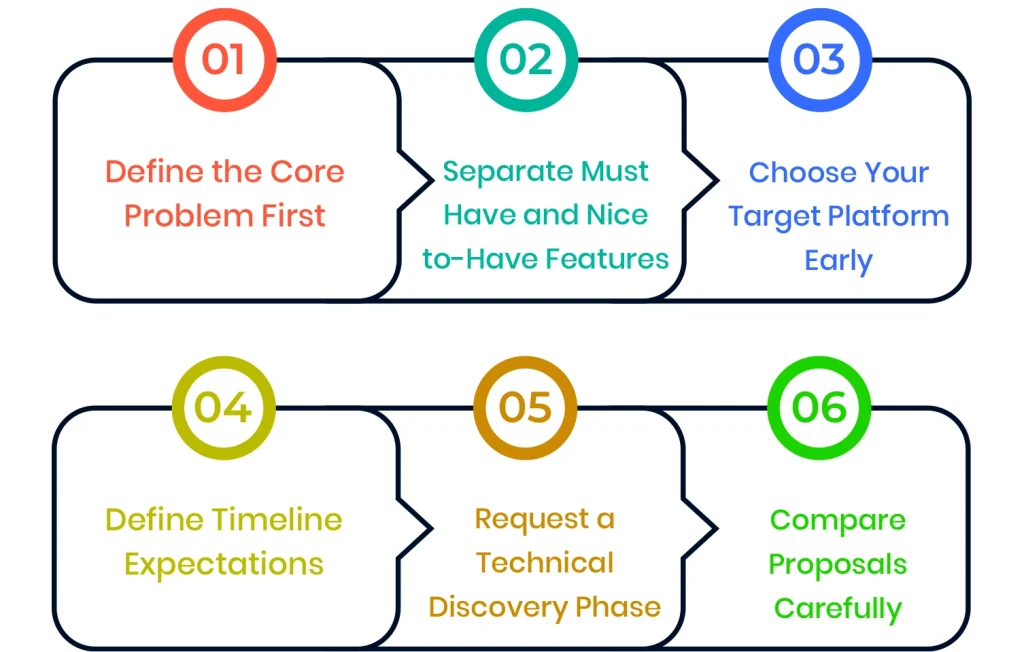
Define the Core Problem First
Before discussing features, define the business problem.
Ask:
- What problem are we even solving?
- Who is the target user?
- What measurable outcome do we want?
If the problem is unclear, the solution will be unclear. This is why you’ll see that the costs will spiral.
A clear problem definition anchors the entire budget.
Separate Must-Have and Nice-to-Have Features
This step alone dramatically improves cost estimation accuracy.
Create three categories:
- Core features (required for launch)
- Enhancement features (post-launch improvements)
- Future innovation features (long-term roadmap)
Developers can then estimate each category independently. This gives you flexibility. If budget constraints arise, you reduce scope without compromising core functionality.
Choose Your Target Platform Early
Decide whether you are launching on:
- iOS
- Android
- Both
- Web + mobile combination
Platform decisions directly influence the time period and cost structure. So, this decision needs to be carefully executed.
Define Timeline Expectations
Timeline impacts cost more than most founders realise.
A standard 4–6 month build spreads development hours. A rushed 8–10 week delivery may require additional developers and designers working overtime. This again increases the costs. Being realistic with deadlines keeps the app development UK pricing stable.
Request a Technical Discovery Phase
Instead of asking for a rough quote immediately, consider commissioning a structured discovery phase.
This typically includes:
- Technical feasibility analysis
- Architecture planning
- Wireframes
- Infrastructure recommendations
- Risk assessment
Discovery transforms your idea into a documented plan. One that comes with credible and transparent cost expectations that businesses can trust.
Compare Proposals Carefully
When reviewing the proposals, don’t just focus solely on the price. Read every single thing carefully.
Evaluate:
- Scope clarity
- Technical approach
- Scalability planning
- Post-launch support
- Maintenance structure
A lower quote with a vague scope often results in additional charges later. A detailed proposal with more clearly discussed deliverables provides much better cost predictability.
Conclusion
App development costs in the UK vary widely because business needs can be different due to various factors like organizational goals and sectors. A small MVP may require modest investment, while an enterprise platform demands significant capital.
The key is building the right solution with proper planning. When approached correctly, an app becomes a long-term asset rather than an expense.
Well-informed decisions lead to better digital outcomes.