
Running a hotel today is not easy. You have to handle bookings, cancellations, and pricing every day. At the same time, you also need to make sure that different teams, such as the front desk and housekeeping, work together. Guests expect quick responses and smooth service. Technology changes fast, which makes everything harder.
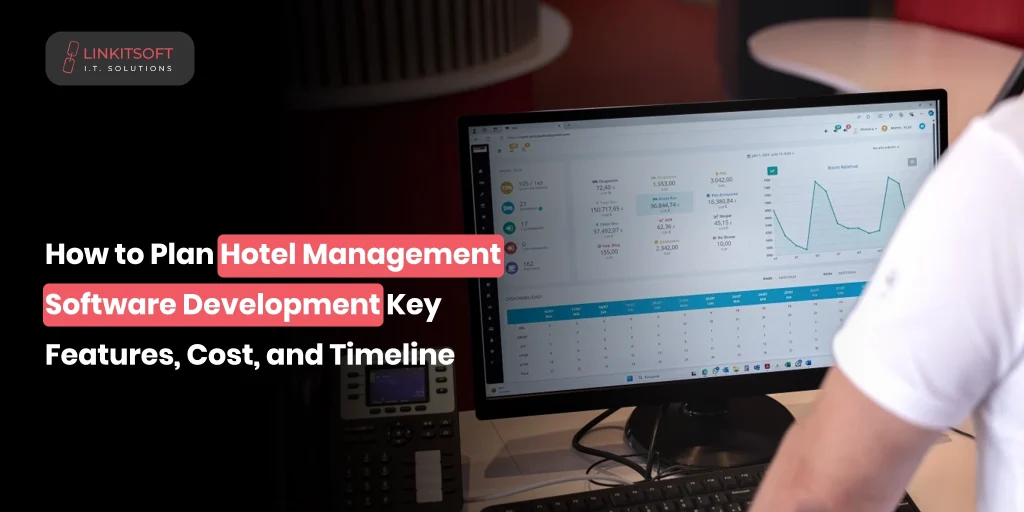
Hotel management software puts all operations in one place. Reservations, check-ins, housekeeping, billing, and reports can be managed from a single system. The result is that your staff spends less time fixing mistakes and more time focusing on guests. A custom hotel management software that fits your hotel can also grow as you add new tools or properties.
So whether you run a small boutique hotel or are an entrepreneur who manages multiple properties that the standard off-the-shelf software cannot handle, this guide is for you. This guide will cover the key features, costs, and typical development timelines for a custom hotel management software. Let’s dive in!
What Is a Hotel Management System (HMS)?
A hotel management system (HMS), also called a property management system (PMS), is software that helps hotels manage daily operations. It handles the full guest cycle. This includes reservations, check-in, housekeeping, billing, and checkout. Automating routine tasks, it reduces the workload for staff and keeps operations running smoothly.
Why Hotels Are Adopting Digital Solutions
Hotels are increasingly moving to digital systems. More guests are using smartphones and the Internet. They expect digital services when they stay at a hotel. Today, travelers want mobile check-ins, contactless payments, and instant responses online. Studies show that 71% of guests are more likely to choose hotels with self-service options like digital keys or contactless check-in.
Changing Expectations of Guests and Hoteliers
Guests now use hotel software to plan their entire stay. They prefer tools that let them request services without visiting the front desk. Hoteliers are also using automated systems for staffing, accounting, and managing hotel assets.
Some hotels use ready-made property management systems while others prefer custom hotel management software. And, custom systems are designed to fit the hotel’s workflow. They give owners and staff more control and flexibility.
Average Cost of Custom Hotel Management Software Development
The cost of developing a hotel management system depends on various factors, including the design of the user interface, the number and complexity of features, the tech stack, and the location of the software development team. Features such as reservation management, guest profiles, room tracking, billing, and system integrations can also increase the development effort and cost.
In general, a custom hotel management system can cost anywhere from around $40,000 to over $300,000. The final price varies based on the hotel’s specific needs, the level of customization, and whether mobile apps or advanced reporting are included.
| Software Level | Estimated Cost | Development Tim | Key Features |
| Basic | $40,000 – $60,000 | 2–4 months | Room booking, guest check-in/check-out, simple billing, and standard reportings |
| Mid-level | $60,000 – $90,000 | 4–8 months | Advanced reservation tools, inventory management, detailed billing, guest profiles, and expanded reporting |
| Full-Scale | $90,000 – $300,000+ | 9 months or more | Real-time bookings, dynamic pricing, third-party integrations, advanced guest CRM, analytics, mobile apps for staff and guests |
Next, we will look at the main factors that affect the cost of developing custom hotel management software.
Factors That Affect the Cost of Hotel Management Software
There are several factors that influence the cost of building a hotel management system. Knowing these can help hotel owners plan a system that fits their operations and avoids surprises.
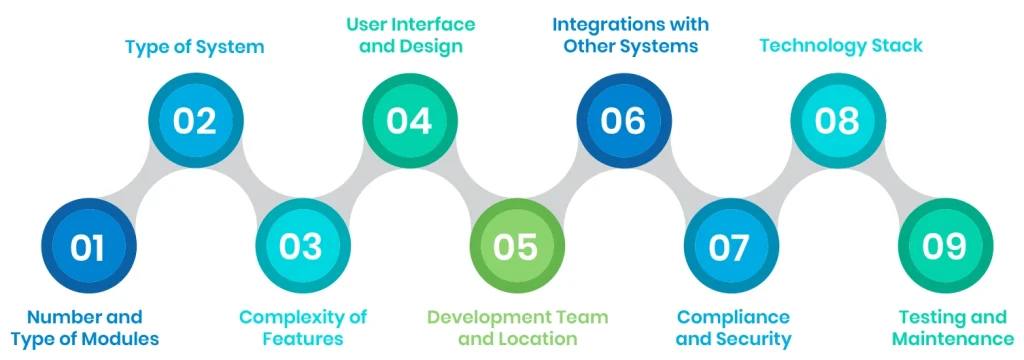
Number and Type of Modules
The number and type of modules have a big impact on cost. Basic modules, like booking, check-in, check-out, and billing, are easier to develop. On the other hand, advanced modules such as guest management, housekeeping, and inventory tracking take more work and testing. If your hotel needs extra features, like loyalty programs or event management, it will require even more effort. Each module adds work, but it also makes the software more suited to your hotel’s needs.
Type of System
The kind of system you build also changes the budget. Smaller hotels usually only need a basic property management system with core features. Larger hotels, resorts, or multi-property chains need more advanced systems. These must handle multiple locations, more guests, detailed reporting, and stronger security. All of this affects the overall cost.
Complexity of Features
Features play a big role in pricing. Simple features, like room booking or billing, are faster to create. More advanced features, like real-time analytics, dynamic pricing, automated guest notifications, or staff scheduling, take more time and expertise. Features that link to mobile apps or third-party services also add to the cost. The more complex the feature, the higher the investment.
User Interface and Design
How the system looks and works matters too. Clear, well-organized screens reduce mistakes and help staff work faster. Dashboards, scheduling tools, and reporting features take extra effort to build. Good design costs more, but it makes the system easier for your team to use every day.
Development Team and Location
Who builds the system makes a big difference. Experienced developers may charge more, but they can handle complex features better. Costs also vary by region. Here’s a list of hourly rates of some regions:
| Region | Hourly Rate |
| United States | $95–$100 |
| Western Europe | $80–$90 |
| Australia | $70–$90 |
| UAE | $60–$65 |
| Asia | $50–$55 |
| Eastern Europe | $25–$40 |
Larger projects often need designers, project managers, and testers, which adds to the total custom software development cost.
Integrations with Other Systems
Most hotels use several systems at once. So, connecting your custom hotel management software to payment gateways, booking platforms, or POS systems adds work. Each connection needs testing to make sure information flows correctly. Integrating existing platforms can save time, but it still requires careful setup.
Compliance and Security
Hotels handle sensitive guest information. Regulations for data protection must be followed. Security measures, like secure access controls and encryption, also add to the budget. These measures protect both the business and guests and can prevent costly breaches or fines.
Technology Stack
The programming languages, frameworks, and tools used also influence the overall software development cost. For example, using modern or specialized technologies can increase the initial investment. But, at the same time, it also allows the hotel management software to handle higher loads, provide better analytics, and support future upgrades.
Testing and Maintenance
Testing catches errors before the system goes live. This includes checking each function and making sure everything works together. After launch, ongoing maintenance keeps the system running, adds updates, and fixes problems as they come up. Spending on testing and maintenance now can save bigger issues later.
Key Modules to Include in Hotel Management Software
A hotel management system can have many modules. Each one serves a different purpose. Adding more modules costs more, so it’s important to focus on what your hotel really needs.
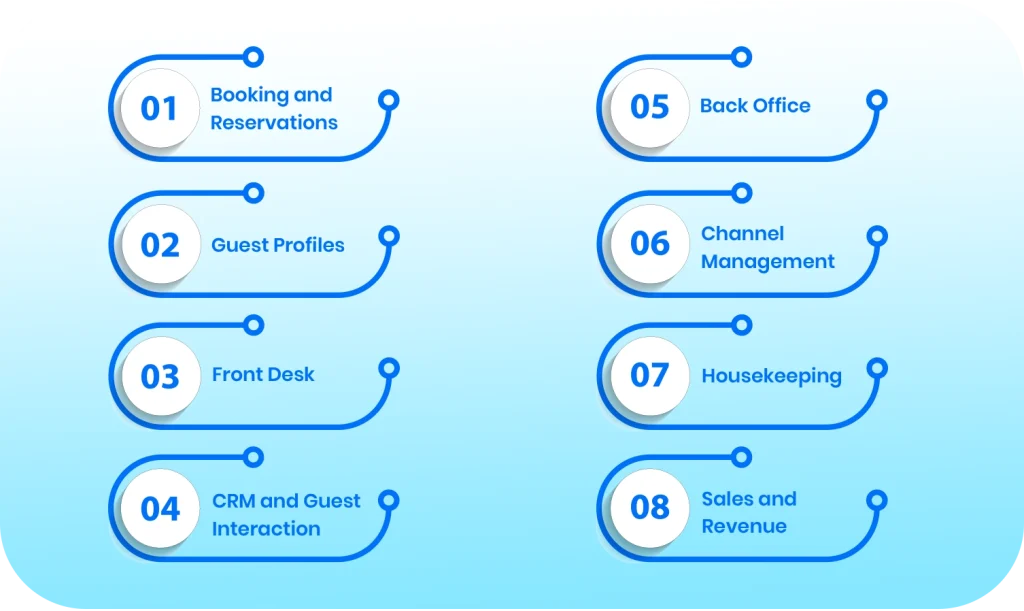
Booking and Reservations
The booking module manages all reservations. It keeps track of room availability, handles new bookings, and updates cancellations in real time. It can also connect to your website and online booking platforms. This reduces double bookings and speeds up the reservation process, which keeps guests happy.
Guest Profiles
The guest module stores information about each guest, including preferences and stay history. It tracks loyalty program participation as well. Staff can use this to personalize service and make check-ins and check-outs faster. It also helps remember requests for future visits.
Front Desk
The front desk module manages reception tasks. It handles room assignments, guest notifications, and daily audits. Staff can respond to check-ins, check-outs, and other requests without delays. This keeps operations organized and running well.
CRM and Guest Interaction
What this module does is track guest feedback, communications, and loyalty program activity. It also allows staff to follow up on feedback and plan marketing campaigns. This strengthens guest relationships and encourages repeat visits. In addition, it helps the team deliver a more personal experience.
Back Office
The back office module handles administrative and financial tasks. This includes invoices, deposits, guest ledgers, and reporting. It also helps staff keep records organized and reduces errors. As a result, daily operations run more efficiently.
Channel Management
The main purpose of this module is to connect your software to booking platforms and travel agencies. It updates room availability and rates across all channels in real time. It also reduces double bookings and helps hotels reach more customers. This increases occupancy and maximizes revenue.
Housekeeping
The housekeeping module focuses on room maintenance and cleaning. It schedules tasks, tracks room status, and monitors supply availability. By organizing these tasks, the hotel can maintain high standards and make sure that its guests always find clean and ready rooms.
Sales and Revenue
The sales module manages room rates, inventory, and group bookings. It also keeps track of inquiries and generates performance reports. Staff can use this information to adjust rates or plan promotions. This helps increase revenue and keeps operations efficient.
Hotel Management Software Development Process
Building a hotel management system involves several steps. Each step ensures that the final software meets the needs and wants of both hotel staff and guests. Following a clear process also helps avoid delays and extra costs.
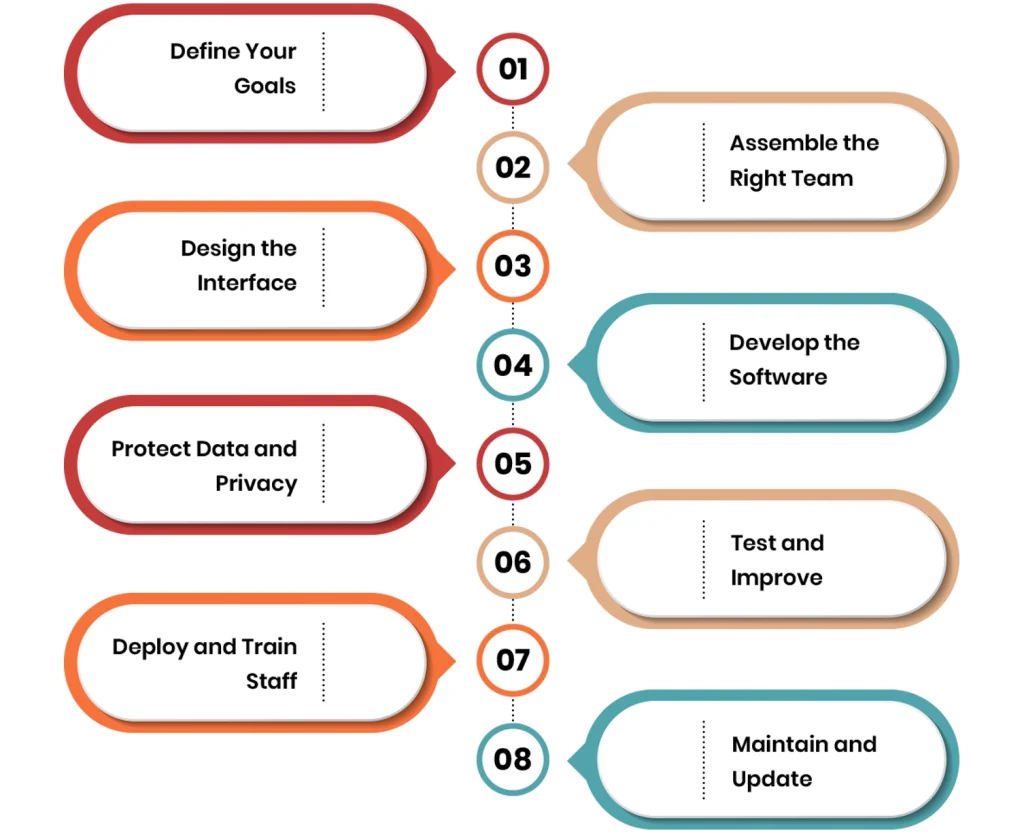
Define Your Goals
Start by identifying the main challenges in your hotel operations. For example, managing reservations, tracking inventory, handling billing, or monitoring staff performance. Once you know these challenges, you can set clear goals for your software and decide what problems it should solve.
Assemble the Right Team
Next, bring together a team with the right skills. You will need devs, designers, and database specialists. It also helps to have people familiar with hotel operations. This way, the team understands how staff work and what guests expect.
Design the Interface
Design focuses on making the system clear and easy to use. Pay attention to screens for reservations, room status, and guest information. By organizing the interface well, staff can complete tasks faster. At the same time, guests using self-service features can use the system without confusion.
Develop the Software
After design, the development stage builds the main system. This includes reservation management, housekeeping schedules, billing, and reporting. In addition, you may need to link the software with external tools, like payment gateways or CRM systems. These connections help the hotel run day-to-day operations more effectively.
Protect Data and Privacy
Hotels handle sensitive guest information, so it must be kept safe. Use encrypted storage, secure payments, and controlled access for staff. Doing this not only protects data and keeps guest information private, but it also lowers the risk of running into any legal or financial problems later.
Test and Improve
Before launch, test the custom software carefully. Try different scenarios, including busy booking periods. Testing helps find problems or errors that need fixing. Once adjustments are made, the staff and guests can use the system without interruptions.
Deploy and Train Staff
Once testing is done, install the software on all devices that staff will use. This includes computers, tablets, and mobile apps. At the same time, train staff to use the system. This reduces mistakes and helps staff get used to the new processes quickly.
Maintain and Update
After launch, monitor the software regularly. Fix any problems as they come up. You should also update features and make changes as the hotel’s needs change. Regular maintenance keeps the software working well and supports daily operations.
Key Features for Hotel Management Software
A hotel management system has features for both staff and guests. These features help run daily operations efficiently and make the stay more enjoyable for visitors. Here is a list of the must-have admin and user-side features you should include in your hotel management software:
Admin Panel Features
- Reservation Management: View, update, and manage bookings, including room assignments and guest details.
- Inventory Management: Track rooms, amenities, and other resources to optimize usage.
- Billing and Invoicing: Generate invoices, monitor payments, and handle group or corporate accounts.
- Staff Management: Schedule shifts, assign tasks, and track attendance or payroll.
- Maintenance Management: Plan and track repairs and routine checks for rooms and facilities.
- Access Control: Manage who can view sensitive information and what actions staff can take.
- Analytics and Reporting: Monitor occupancy, revenue, and guest satisfaction to support decision-making.
User Panel Features
- Reservation Booking: Search for rooms, make bookings, or modify and cancel reservations easily.
- Check-In/Check-Out: Quick self-service or assisted processes to reduce waiting times.
- Billing and Payments: View bills and pay using multiple payment methods.
- Room Service and Amenities: Request services or amenities directly from the user panel.
- Feedback and Reviews: Submit reviews and provide feedback on the stay.
- Account Management: Manage personal information, preferences, and loyalty memberships.
- Concierge Services: Access recommendations, transportation, or activity bookings.
- Notifications and Alerts: Receive updates about bookings, promotions, or hotel information.
Hotel Management Software Development: Key Considerations
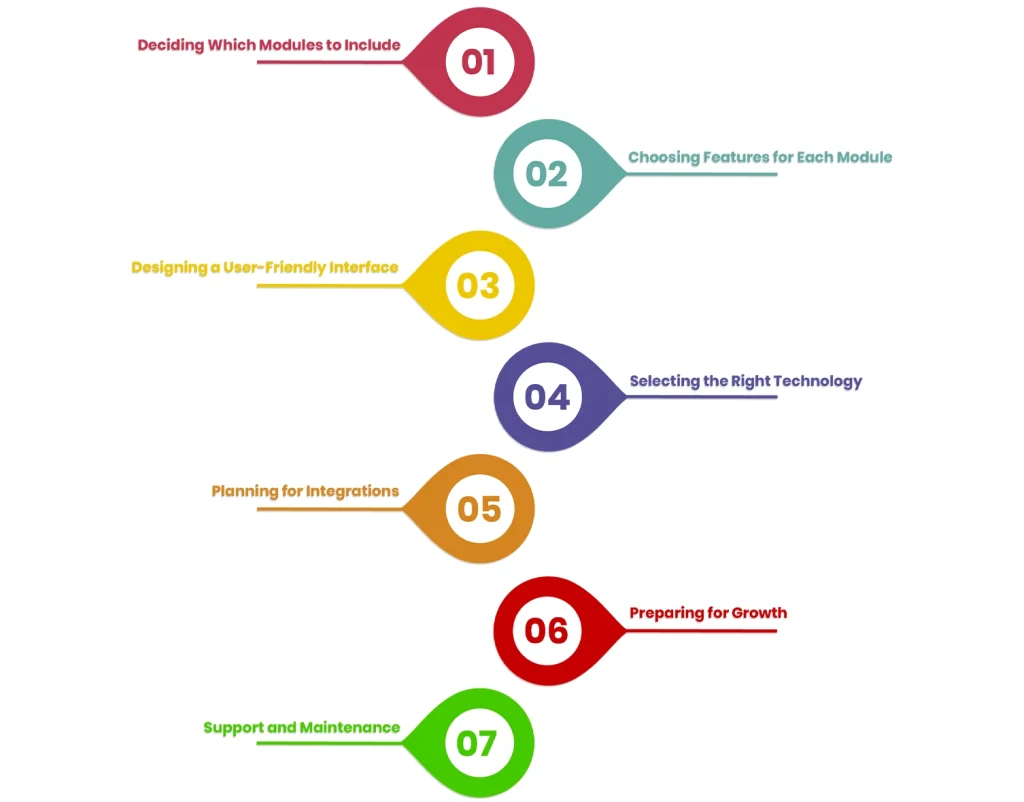
Creating a custom hotel management system starts with knowing what your hotel really needs. Here’s what to keep in mind before investing in a complete customised hotel management software:
Deciding Which Modules to Include
The first step is choosing the modules that suit your hotel. Even a small hotel has multiple workflows to manage. The system should cover essential areas while leaving room for future integrations. Some functions can be connected through third-party tools, which can save time and reduce cost.
Choosing Features for Each Module
After deciding on modules, focus on the must-have features you need for each of your modules. For example, the booking module should track rooms, handle cancellations, and connect with online platforms to prevent double bookings. Similarly, the staff module should allow assignments, shift tracking, and progress updates. While analytics should give insight into income, expenses, and performance. Customer communication should store guest information and allow messaging for updates or offers. Each feature should help staff work efficiently and improve the guest experience.
Designing a User-Friendly Interface
A simple and clear interface is important. Staff should be able to navigate the system easily and complete tasks without confusion. Good design saves time and reduces mistakes. It also makes adopting the software much easier for your team.
Selecting the Right Technology
The tech stack behind the hotel management system affects how it works. The front end should work well on all devices, while the back end handles data reliably. A strong database and cloud services allow the system to scale during busy periods. So, your system is up and running and supports future growth.
Planning for Integrations
Hotels often use multiple systems. Your software may need to connect with booking platforms, accounting tools, or POS systems. Testing these connections is important so that data flows correctly. Integrating existing platforms can save time and make the system more flexible.
Preparing for Growth
Even if you don’t plan to expand immediately, build the system keeping in mind the potential growth. Cloud-based architecture allows it to handle more traffic during the busy season, while a scalable design keeps the system reliable and maintains performance during peak times.
Support and Maintenance
But even the reliable systems can have issues. In that case, your hotel staff may need guidance while learning new software. So, opting for an experienced software development partner who offers ongoing support helps resolve problems quickly.
Common Problems in Hotel Management Software Development
Building hotel management software can bring several problems. These involve technical issues as well as the needs of staff and guests. Understanding these problems early helps you plan a system that works for your hotel.
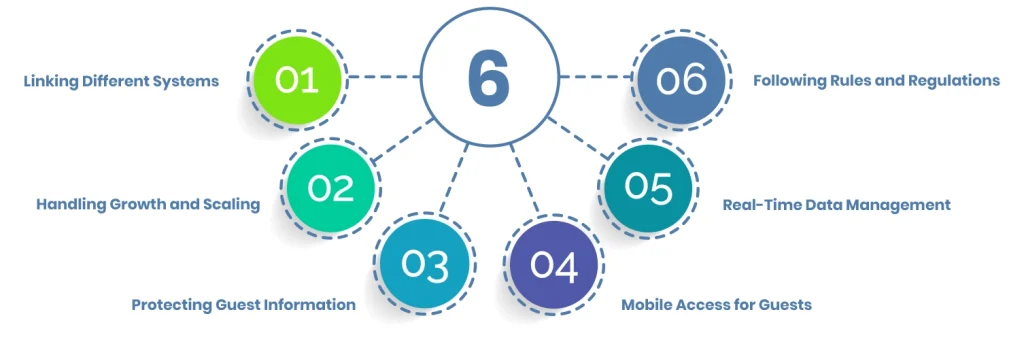
Linking Different Systems
A common problem is connecting different systems. These include reservations, housekeeping, point-of-sale, and CRM tools. Each system may use different formats or rules. This makes it difficult for them to work together. One solution is a unified API. It acts as a bridge, allowing all the systems to share data and function together.
Handling Growth and Scaling
Hotels come in all sizes. The software must handle small hotels as well as large chains. If it cannot, it may slow down during busy periods. Cloud services can help. They let the system expand when demand is high and reduce resources when demand is low.
Protecting Guest Information
Hotel software stores sensitive guest details, like personal information and payment records. Protecting this information is very important. Encryption can keep data safe. Access controls make sure only authorized staff can see sensitive information. Using roles and multi-factor authentication reduces the risk of misuse.
Mobile Access for Guests
Guests expect to access hotel services on their phones. Features like mobile check-in, room service requests, and concierge services must work on any device. Responsive design adapts the interface to different screens. Native apps for iOS and Android make the experience even better.
Real-Time Data Management
Managers need quick information about occupancy, revenue, and guest preferences. Hence, processing this data instantly can be challenging. Big data tools help analyze information in real time. This allows managers to make informed decisions faster.
Following Rules and Regulations
Hotel software must comply with laws such as GDPR and PCI DSS. These rules protect guest and payment information. A compliance framework helps the system follow regulations. Regular audits and checks keep the software up-to-date and legally compliant.
Final Thoughts
This brings us to the end of our detailed guide on planning hotel management software development. We hope it has given you a clear idea of what goes into building a custom hotel management system that fits your hotel’s operations. From understanding essential features and modules to estimating costs and planning timelines, every step plays a role in making a reliable hotel management system that facilitates both staff and guests. So, if you are upgrading an outdated hotel management software or creating a new one from scratch, this guide should help you make informed decisions. With the right approach, your hotel management software can streamline operations, improve guest satisfaction, and support long-term growth.
Frequently Asked Questions
How much does it cost to develop a custom hotel management software?
The cost varies depending on the features, complexity, and size of your hotel. Generally, basic systems start around $40,000, while more advanced solutions with multiple modules and integrations can reach $300,000 or more. Planning your needs carefully can help control costs.
How long does it take to build a hotel management software?
Well, the time it takes to develop the custom hotel management software depends on the complexity of the system. Basic software can take 2–4 months, intermediate systems 4–8 months, and advanced, multi-module solutions 9 months or longer. This includes planning, designing, developing, testing, and deployment.
Can hotel management software be customized for my hotel?
Yes, custom hotel management software can be built to match your hotel’s specific operations. At Linkitsoft, you can choose which modules to include, such as reservations, housekeeping, CRM, billing, or reporting. Customization allows your software to fit your workflow and grow with your business.