


When Uber launched in 2009, very few people believed that it would change the way people travel. Today, millions of riders open an app. Book a ride in seconds, and reach their destination without calling a taxi or waiting on the street. What once felt like an innovative idea has now become a global industry worth billions.
The success of Uber also opened the door for many new startups such as Lyft, Bolt, and Grab. They followed a pretty similar business model and made their own ride hailing platforms. As a result, many entrepreneurs now see ride hailing apps as a strong business opportunity. However, making a successful ride hailing app is not just about copying Uber’s design. It requires careful planning, the right features, and a clear development strategy.
In this guide, you will learn how to build a ride hailing app like Uber. We will explain the key features that these apps need. You will also learn about the ride hailing app development and the estimated budget. This information will help you understand how to turn your ride hailing app idea into a real product.
Must-Have Features of a Ride Hailing App
If you want to build a successful ride hailing app, features are where it’s at. They are the main reason why riders would choose you over hundreds of ride hailing apps.
A ride hailing app usually has two sides. One app is for riders who book trips. The other is for drivers who accept and complete rides. Before we look at these separately, it’s important to know the core features that keep the app running smoothly.
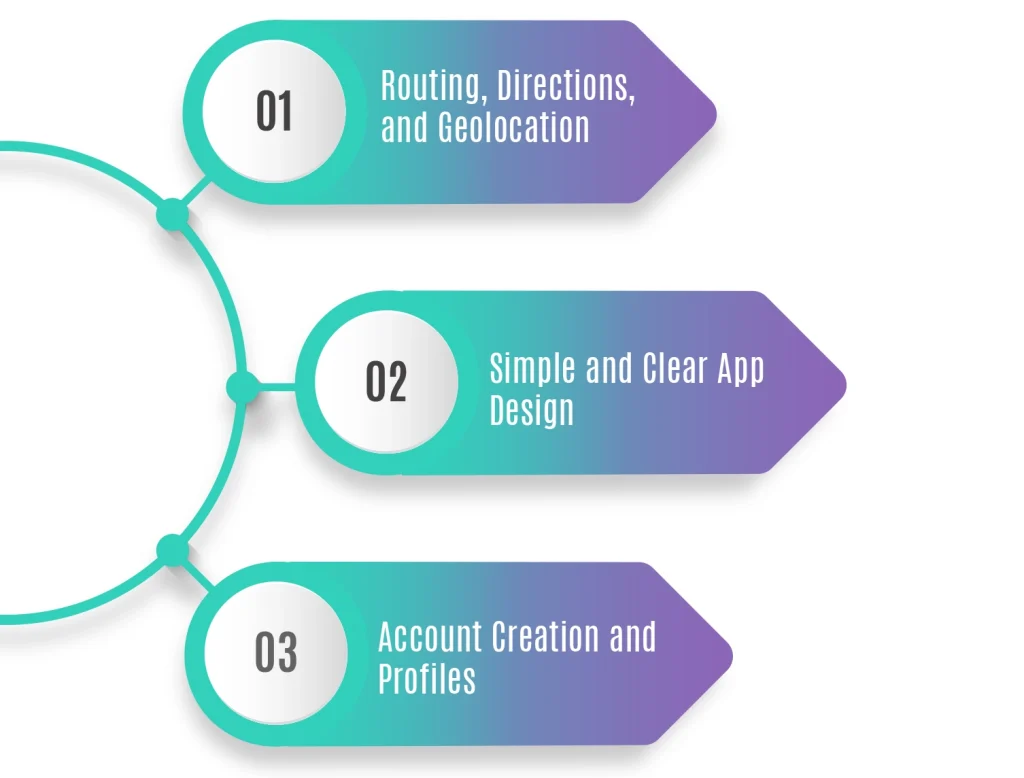
1. Routing, Directions, and Geolocation
Location tracking is one of the most important parts of a ride hailing app. It lets the app find the rider and show nearby drivers.
GPS alone is not enough. The ride hailing app also needs a system that calculates the best route. That means taking some metrics into account, such as traffic, distance, and estimated travel time. This way, riders know how long the trip will take, and drivers can pick the fastest route.
2. Simple and Clear App Design
The design of the app should be user-intuitive. Meaning, riders should be able to book a ride in a few taps. And, drivers should see requests and trip details clearly.
If your ride hailing app is confusing and a puzzle in itself, people would be quick to uninstall it. So, clear buttons, simple navigation, and quick-loading screens make the app easier to use and more reliable for everyone.
3. Account Creation and Profiles
Every app needs a simple signup process. So, both riders and drivers should be able to create accounts quickly.
Users can sign up with email, phone number, or social media. Riders have profiles with name, phone number, and payment info. Drivers’ profiles include license, vehicle details, and verification documents. A rating and review system is also helpful. It builds trust between riders and drivers.
Key Features for Riders
Riders want rides to be fast, safe, and convenient. These features make booking simple and hassle-free.
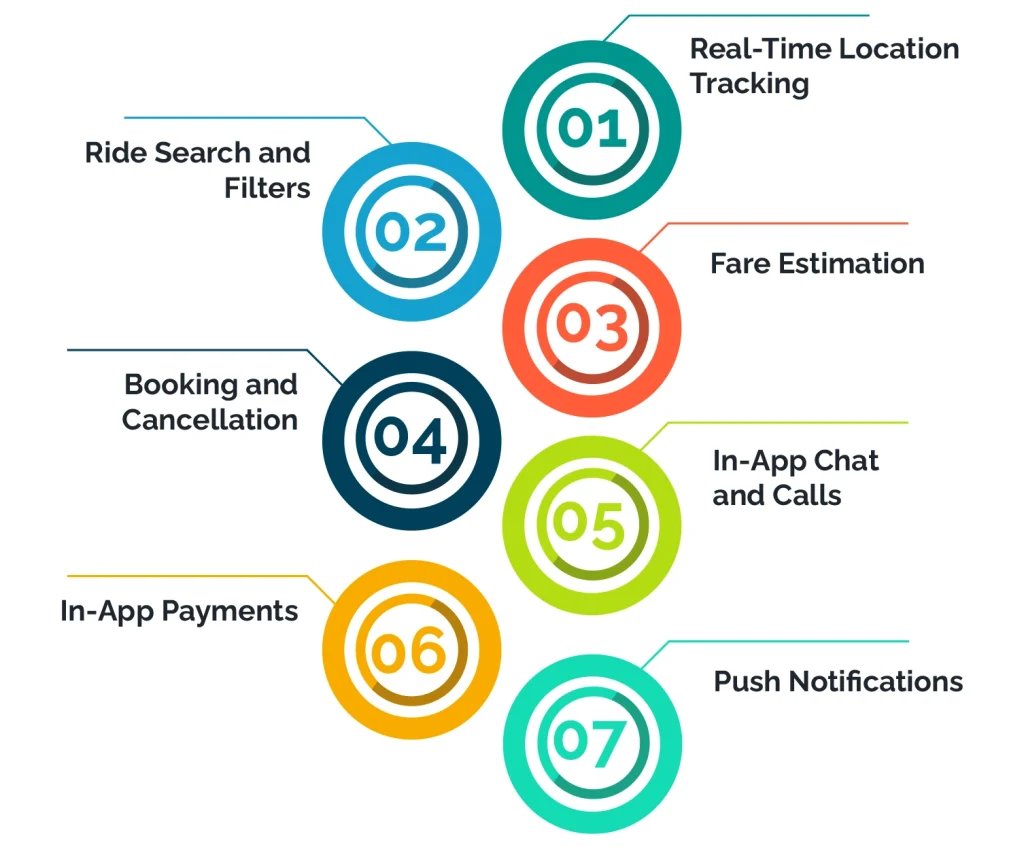
Real-Time Location Tracking
When riders enter pickup and drop-off points, the app shows the route on a map. So, they are able to track the driver and how much time it would take for him to reach the location.
Ride Search and Filters
Riders should find rides easily. Filters help them pick the type of car, price range, or driver rating. Some apps even let riders choose the driver’s gender for safety.
Fare Estimation
Riders want to see what they pay for a ride before they confirm it. So, having a fare estimation calculates the price depending on distance, route, vehicle type, and traffic. In this way, riders can choose the best option quickly.
Booking and Cancellation
Riders should be able to book a ride in a matter of seconds. Also, they should be able to cancel quickly if plans change. This makes the app more reliable.
In-App Chat and Calls
Riders and drivers may need to communicate about pickup or directions. Hence, an in-app chat or call feature lets them contact each other safely without sharing their personal numbers.
In-App Payments
Riders can pay directly in the app using multiple payment options such as bank cards, digital wallets, or online payment services. This keeps payments quick and secure.
Push Notifications
Notifications keep riders informed. In this way, they stay updated as they get alerts for driver arrival, ride updates, or payment confirmation.
Key Features for Drivers
A simple interface is as crucial for drivers as it is for riders. Drivers of your ride hailing app also need dependable tools to manage their rides, trips, and earnings easily.
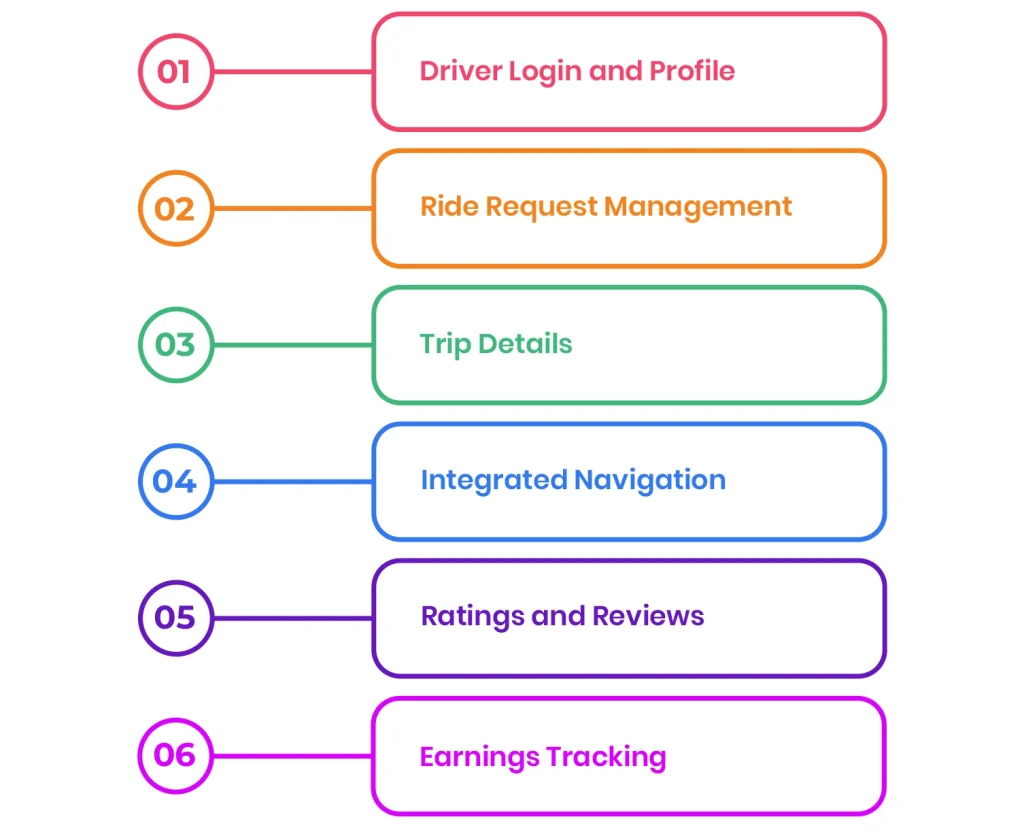
Driver Login and Profile
Drivers log in with their credentials. Their profiles show name, contact info, license details, and vehicle information. Verified profiles help riders feel safe.
Ride Request Management
Drivers see nearby ride requests. They can accept or reject rides depending on availability.
Trip Details
Drivers can check pickup location, destination, distance, and approximate fare before starting a ride. So, they can plan the route better.
Integrated Navigation
Navigation is used by drivers to reach pickup and drop-off points accurately. An integrated in-app navigation system would suggest the best route based on traffic and distance.
Ratings and Reviews
Ratings and reviews keep drivers motivated to give a good ride hailing experience to their customers. Because if the riders can rate drivers, and drivers can rate riders, everyone gets to have a good experience.
Earnings Tracking
With this feature, drivers can receive their ride payments easily through the app. They can also track their daily earnings, completed trips, and performance. So, keeping income from the rides organised becomes easy.
How to Create a Ride Hailing App?
Now that we’ve covered all the must-have features for riders and drivers, it’s time to move to the next step: building the actual app. Here’s a step-by-step guide to help you get started.
1. Do the Market Research
Before you make anything, you need to understand the ride hailing market first. The ride hailing industry is growing fast. People prefer it because it’s convenient and cheaper than traditional transport.
But even with huge potential, you need to study your competitors. Look at the apps that are already out there. Notice what they do well and where they fall short. This will help you spot business opportunities and decide which features can make your app stand out.
So, doing primary research through surveys and interviewing frequent ride hailing app users can be a good start. Or, you can do secondary research to get a general view of the market. It helps you identify your target audience. It tells you which niche to focus on if you plan to specialize.
2. Analyze Your Value Proposition
To succeed, your app needs something unique. If it’s just like every other app, it will be hard to attract users.
Brainstorm ideas, analyze the market, and figure out which feature or approach will make your app special. Choose features that match your idea and the audience you want to target. This will also help you decide on the best development approach.
3. Choose Your Development Approach
There are three main ways to build a ride hailing app, namely native, cross-platform, and hybrid. Now, all options have their pros, cons, and tech stack requirements.
Native App Development
First in the list are native applications. They are made specifically for iOS or Android operating systems. If you want your ride hailing app on both platforms, you need separate apps for each. That means hiring both an Android and an iOS developer.
Native apps cost more but give a smooth user experience and top performance.
Tech stack for Android: Java, Kotlin, Android Studio, Jetpack Compose, and IntelliJ IDEA.
Recommended Tech stack for iOS: Swift, Objective-C, XCode, UIKit, and SwiftUI.
Cross-Platform App Development
Cross-platform apps work on multiple platforms, such as Android, iOS, and web, using the same code. This approach is cheaper and faster than native apps. Some of the latest and modern frameworks even provide performance close to native apps.
Preferred Tech stack for cross-platform apps: Flutter, React Native, Xamarin
Hybrid App Development
Hybrid apps run across platforms using web technologies like HTML, CSS, and JavaScript. Performance and user experience are okay, but usually not as strong as cross-platform apps.
Tech stack: JavaScript, HTML5, Ionic, Apache Cordova
4. Create Your Minimum Viable Product (MVP)
Once you choose a development approach, start with an MVP. An MVP is a basic version of your app with only the essential features.
It helps you show your business idea to early users and investors. Doing so can help you to gather feedback, test your concept, and improve it step by step. This approach saves time and money compared to building the full app from the start.
5. Launch and Test the App
Before releasing your ride hailing app, test it thoroughly. You should make sure that the QA professional checks for bugs and errors.
Once fixed, submit the app to app stores. You should keep in mind that app stores review apps before publishing. This can take a few days.
6. Gather Feedback and Improve
After deploying your app, collecting feedback from users is a must. That’s because it helps to see what works and what doesn’t. Then, changes and improvements can be made based on real user experiences.
Iterate your app multiple times. This will help you build a fully functional ride hailing app that people prefer to use.
How Much Does It Cost to Build a Ride-Sharing App?
Creating a ride-sharing app requires smart design, strong technology, and careful planning. Every feature in your app affects the overall user experience and the total cost.
Here is a quick breakdown to give you an idea and avoid surprises:
This breakdown gives you a rough idea of the investment needed. Remember, each tier includes multiple cost factors. Before asking “how to make an app like Uber,” consider every feature, technology, and development step that together bring your vision to life.
Timeline to Build a Ride-Sharing App
Building a ride-sharing app takes time, and it all depends on the complexity of the app features and the development approach you choose. On average, creating a fully functional ride hailing app like Uber can take anywhere from 4 to 8 months.
Here’s a rough breakdown of the stages:
Research and Planning (2–4 weeks)
Understand the requirements and wants of your target audience, analyze competitors, and finalize your app features. This stage sets the foundation for a smooth development process.
Design (3–6 weeks)
Make the user interface and user experience for both riders and drivers. A clean, intuitive design makes booking rides simple and enjoyable.
Development (8–16 weeks)
Build the app for riders, drivers, and admin panels. The time depends on whether you go with a native, cross-platform, or hybrid approach.
Testing and QA (2–4 weeks)
Test the ride hailing app thoroughly to fix bugs, improve performance, and ensure all features work as expected.
Launch (1–2 weeks)
Deploy the ride hailing app to the App Store and Google Play. You may also need time for store reviews and approval.
Post-Launch Updates (Ongoing)
Collect feedback from users, fix issues, and add new features to keep the app competitive and reliable.
Following this timeline ensures your app is delivered efficiently, meets user expectations, and is ready to compete in the ride-sharing market.
How Ride Hailing Apps Earn Revenue?
Ride hailing apps do more than just get people from one place to another. They also need ways to earn money and keep the business running efficiently.
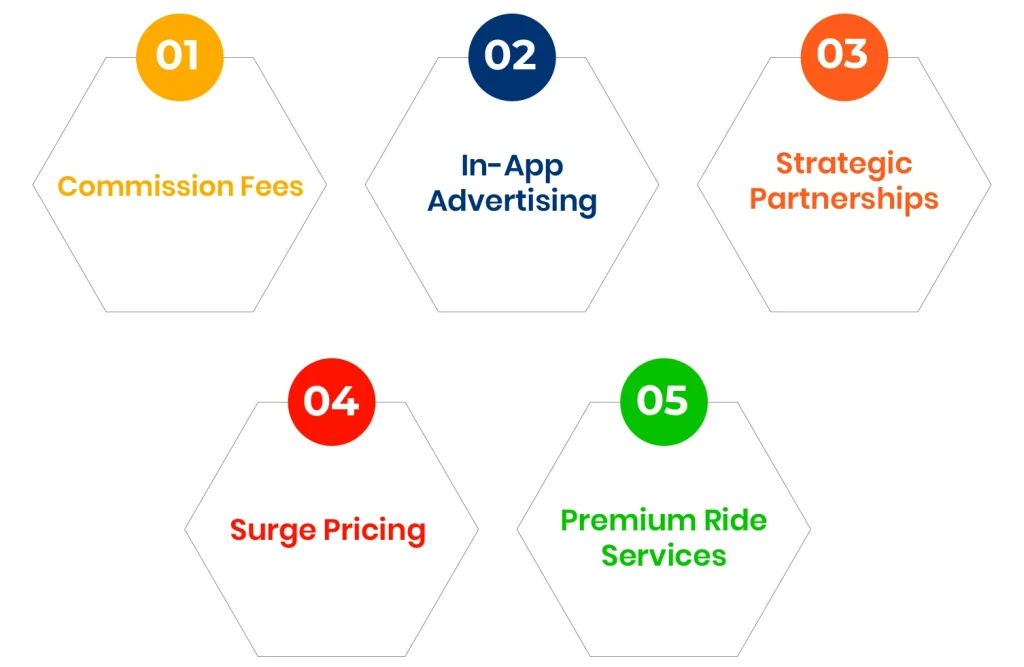
1. Commission Fees
The most common way these apps make money is through commission. The platform takes a small percentage from each ride. This can either come from the driver, the passenger, or both. Because these fees are made on every trip, it is a reliable source of income.
2. In-App Advertising
Some ride hailing apps use in-app ads to generate extra revenue. These ads can promote partner services, local businesses, or special deals such as discounts and offers. Although, it’s not the main source of income, it is still an additional way to monetize the app users without really affecting the core ride experience.
3. Strategic Partnerships
Ride-sharing companies often collaborate with other businesses. For example, they might partner with fuel stations, restaurants, or loyalty programs. What these partnerships do is bring more visibility, add value for riders, and create additional income streams for the platform.
4. Surge Pricing
During periods of high demand or in busy areas, ride hailing apps use surge pricing. That means fares increase temporarily because they are based on the perceived value of the ride during peak hours. This encourages more drivers to go online. Also, it helps balance supply and demand.
5. Premium Ride Services
Some platforms offer luxury rides. These include high-end vehicles, faster pick-ups, or guaranteed availability. Premium rides cost more. This attracts riders as they are willing to pay more for convenience and comfort.
By combining these different revenue streams, ride-sharing apps can stay profitable while giving riders and drivers more options. Also, these methods evolve as the market changes, helping platforms stay competitive and grow over time.
Final Thoughts
Now, that wraps up our guide on building a ride hailing app. As you’ve read, the cost and app development process depend on several factors. This includes the features you pick, app complexity, design, and the development approach. With careful planning, you can manage all these elements effectively.
The key is to clearly outline your app requirements and make informed decisions at every stage. This ensures your ride hailing app is delivered on time, within budget, and meets your business goals. If you want expert guidance or a detailed evaluation for your ride-hailing app project, you can reach out to us. Linkitsoft can help you plan efficiently and get the best results from your investment.
Frequently Asked Questions
How much does it cost to build a ride-sharing app like Uber?
The cost depends on the features, platforms, and development approach. A basic app starts around 15,000 USD, while more advanced apps with features like surge pricing, AI ride matching, and in-app chat can go above 130,000 USD.
How long does it take to build a ride-sharing app?
On average, a fully functional app takes 4 to 8 months. This includes research, design, development, testing, and launch. The time taken to make a ride hailing app can change depending on the amount of modern app features you choose to add and the development approach you choose.
What features are essential for a ride hailing app?
The key features of a ride hailing app include real-time location tracking, ride booking, in-app payments, ride search and filters, driver and rider profiles, notifications, ratings and reviews, and a reliable admin panel. Advanced apps may also include AI ride matching, dynamic pricing, and chat features.
How do ride-sharing apps make money?
Most apps earn through commission fees on rides. Other revenue sources include surge pricing during high-demand periods, premium services, partnerships with other companies, and in-app advertising.