

Healthcare services are increasingly delivered through digital platforms. Web-based healthcare systems power telemedicine portals, patient dashboards, and hospital management platforms.
These systems manage critical functions like patient records, appointment scheduling, and secure communication. For hospitals and clinics, building healthcare software requires careful planning due to strict regulations, complex integrations, and high security requirements.
In this blog, we’ll explore the process, cost breakdown, and strategic considerations involved in building modern medical web applications.
What Are the Common Types of Medical Web Apps?
Healthcare web platforms serve different stakeholders across the medical ecosystem. Most digital healthcare products fall into several key platform types.
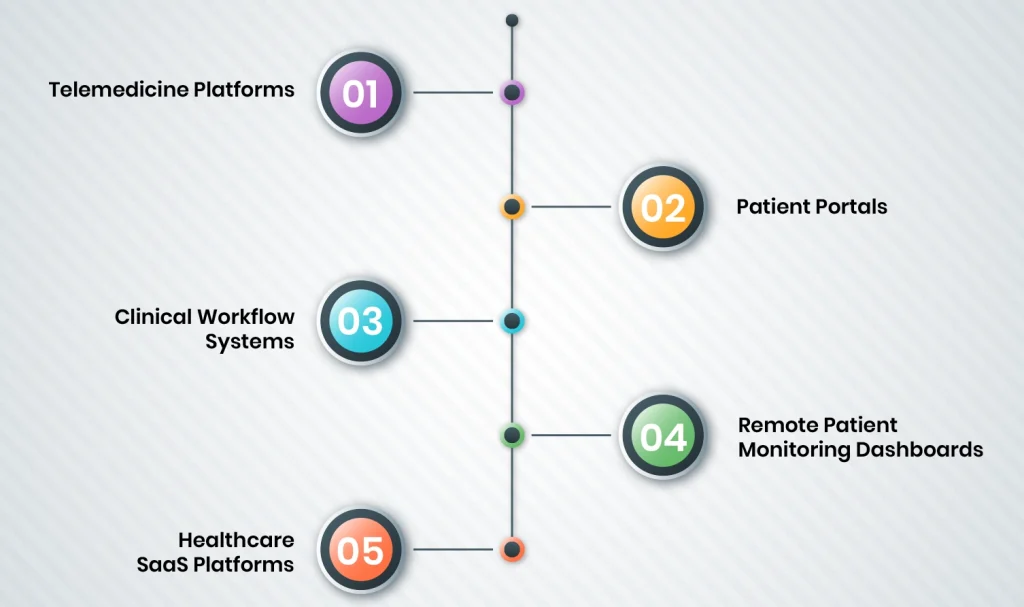
Telemedicine Platforms
Telemedicine platforms let doctors and patients interact remotely through video consultations and digital prescriptions. These platforms gained enormous traction during the COVID-19 pandemic and have continued to grow as healthcare providers recognize the efficiency of remote care.
Patient Portals
Patient portals provide individuals with direct access to their medical records, appointment history, prescriptions, and laboratory reports. These systems improve transparency and help patients become more engaged in managing their health.
Clinical Workflow Systems
Hospitals rely on workflow management platforms to coordinate the daily operations of healthcare staff. These systems help clinicians manage patient queues and document treatment plans. They also help update medical records and collaborate with other healthcare professionals.
Remote Patient Monitoring Dashboards
Remote patient monitoring platforms collect health data from wearable devices and medical sensors. These dashboards allow clinicians to track vital signs. This means checking heart rate, oxygen levels, blood pressure, and glucose levels live.
Healthcare SaaS Platforms
Healthcare SaaS platforms provide specialized software solutions to clinics, hospitals, and healthcare organizations through subscription models. These systems may include hospital management tools, medical billing software, or population health analytics platforms.
How to Define the Product Strategy for Medical Web Development?
Developing healthcare software without a clear strategy often leads to costly delays, compliance challenges, and usability problems. Founders must begin with a strong product strategy that defines the problem, stakeholders, and platform model.
Identifying the Problem You’re Solving
The first step is identifying the specific problem the platform is solving. Healthcare organizations face numerous operational challenges, and digital platforms typically target one or more of these areas.
Some platforms focus on provider workflow optimization, helping doctors and nurses manage patient documentation better. Others concentrate on patient engagement, offering communication tools that keep patients informed about their treatments and appointments.
These systems have become especially valuable for managing chronic illnesses and post-surgical recovery.
Designing for Clinical Environments
Designing healthcare web apps requires a different mindset than building consumer apps. Doctors and nurses operate in high-pressure environments where time is limited, and decisions can directly impact patient outcomes.
One of the biggest UX challenges in healthcare software is time efficiency. Clinicians may have only a few minutes to review patient information and document treatment updates. Interfaces must therefore minimize unnecessary steps and allow users to access critical information quickly.
Poorly designed systems can also increase the risk of clinical errors. If medical information is difficult to read or interpret, healthcare professionals may misinterpret critical details.
Medical dashboards are particularly complex because they often display multiple patient metrics simultaneously. These dashboards may include real-time monitoring graphs and multi-patient monitoring interfaces used in intensive care units. This is why accessibility is important.
Building the Architecture of the Web App
The frontend layer of a healthcare web app is responsible for how clinicians, administrators, and patients interact with the system. In medical platforms, the interface must support complex dashboards and real-time updates while still maintaining fast performance.
A well-designed frontend ensures that healthcare professionals can locate patient data quickly without unnecessary clicks or delays.
Backend Architecture
The backend layer powers the core functionality of the healthcare platform. It processes data requests, manages authentication systems, and coordinates communication between different services.
Most healthcare platforms follow an API-driven architecture, where the backend exposes secure APIs that allow other systems to interact with the platform. This approach is essential for integrating external services such as electronic health records, laboratory reporting systems, and pharmacy networks.
Database Architecture
Medical web platforms manage enormous volumes of sensitive information, including patient records, clinical notes, diagnostic reports, prescriptions, and billing data. The database architecture must therefore support secure storage, fast retrieval, and high reliability.
Structured databases are commonly used to store patient records because medical data often follows standardized formats. These databases must support encryption both during storage and during transmission to ensure patient privacy.
Integrations for Web Platforms
Healthcare systems rarely function in isolation. Most medical platforms must integrate with a wide range of external services that form the broader healthcare ecosystem.
Electronic Health Record (EHR) Integration
Electronic Health Records are among the most critical systems used in healthcare institutions. They store comprehensive patient histories, diagnostic reports, treatment plans, and medication records.
Healthcare Data Standards
To ensure interoperability between healthcare systems, medical data exchanges follow standardized protocols.
Two of the most widely used healthcare data standards are FHIR (Fast Healthcare Interoperability Resources) and HL7 (Health Level Seven). These standards define how healthcare data should be structured and transmitted between systems.
Medical imaging systems also require specialized integrations. Radiology platforms often use DICOM standards to store and transmit medical images. This can include X-rays, CT scans, and MRIs.
Third-Party Integrations
Beyond core healthcare systems, many medical platforms integrate with additional third-party services to support operational workflows.
Compliance and Security for Medical Web Apps
Healthcare platforms handle some of the most sensitive personal information that exists. As a result, security and regulatory compliance are central components of medical app development.
Healthcare Data Regulations
Healthcare software must comply with strict regulations designed to protect patient privacy.
In the United States, platforms must follow HIPAA regulations, which establish rules for storing and transmitting protected health information.
Different regions may also have their own healthcare data laws that impose additional requirements on how patient information is handled.
Security Architecture
A strong security architecture protects medical platforms from cyber threats and unauthorized data access.
Encryption is one of the most important security mechanisms. Healthcare data should be encrypted both during transmission and while stored in databases.
Secure authentication systems also play a key role. Multi-factor authentication and biometric verification methods are increasingly used to prevent unauthorized access.
Infrastructure Compliance
Beyond app security, the underlying infrastructure must also meet healthcare compliance requirements.
Healthcare platforms often operate in secure cloud environments designed specifically for regulated industries. These cloud systems include built-in monitoring tools and compliance certifications.
What Is the Medical Web App Development Process?
Developing healthcare software involves multiple stages, each focused on ensuring that the platform meets both technical and regulatory standards.
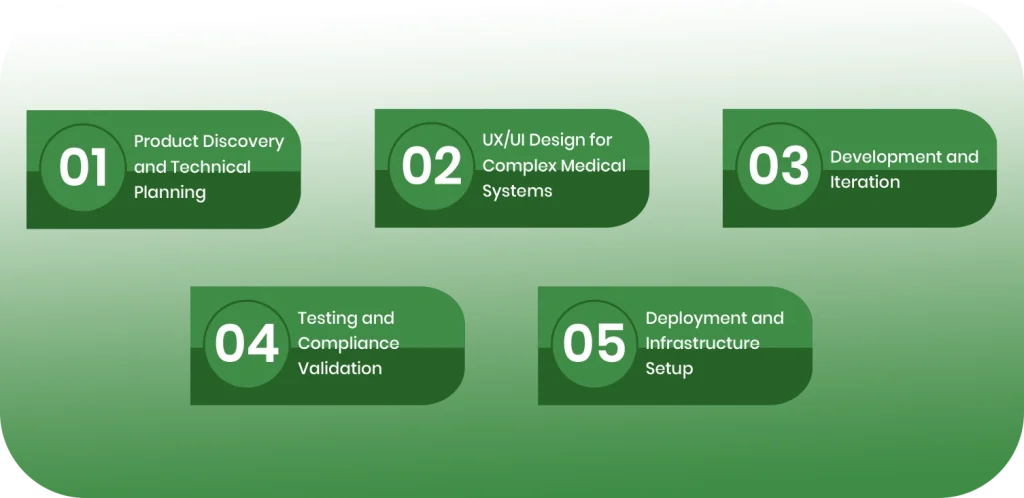
Product Discovery and Technical Planning
The development journey begins with product discovery. During this stage, teams analyze and understand healthcare workflows and identify user requirements. This helps us define the system architecture.
This phase often involves consultations with clinicians, hospital administrators, and healthcare IT specialists. Their insights help developers understand how medical systems are used in real clinical environments.
UX/UI Design for Complex Medical Systems
Once requirements are defined, designers begin creating wireframes and interface prototypes.
Healthcare dashboards are carefully designed to display complex patient data while remaining easy to navigate. Designers often test prototypes with healthcare professionals to gather feedback before development begins.
Development and Iteration
Healthcare platforms are typically developed using agile methodologies that allow continuous improvement throughout the development lifecycle.
Instead of building the entire system at once, development teams release modular features in stages. This approach allows stakeholders to review progress. It helps them provide feedback while the platform evolves.
Testing and Compliance Validation
Before the deployment, healthcare platforms undergo extensive testing. Security testing ensures the web platform can withstand cyber threats. Then the performance testing comes in to verify that the web system can handle high user loads without slowdowns.
Compliance validation also ensures that the platform meets healthcare regulatory requirements.
Deployment and Infrastructure Setup
Once the testing is complete, the platform is deployed to secure cloud environments.
Deployment typically includes infrastructure configuration along with automated CI/CD pipelines and monitoring systems. They track platform performance and security in real time.
What Is the Cost Breakdown of Medical Web App Development?
Developing healthcare platforms requires significant investment due to the complexity of medical systems and compliance requirements.
Major Cost Factors
Several factors influence the total development cost of medical web platforms. These include:
- Feature complexity
- Regulatory compliance requirements
- Integration depth
- Infrastructure setup
Platforms that require extensive EHR integrations or advanced monitoring systems generally involve higher development costs.
Cost Estimates by Platform Type
Development budgets vary depending on the type of healthcare platform being developed.
Basic patient portals typically cost between $40,000 and $80,000, while telemedicine platforms with video consultations and messaging systems may range between $80,000 and $200,000.
Large enterprise healthcare platforms designed for hospitals or healthcare networks can exceed $500,000. This is especially the case when multiple integrations and compliance certifications are required.
What Is a Reliable Tech Stack for Medical Web Platforms?
Selecting the right technology stack ensures that healthcare platforms remain secure, scalable, and maintainable over time.
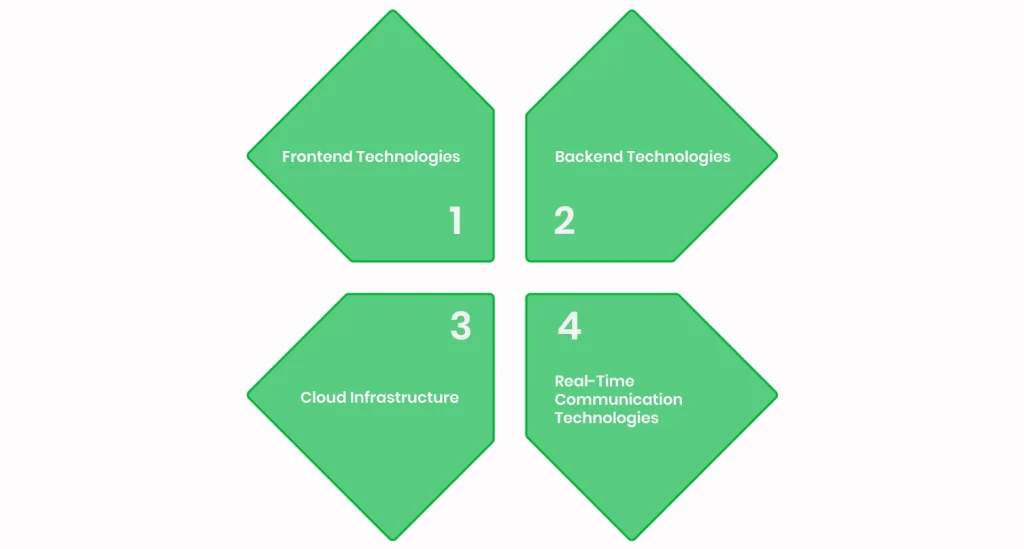
Frontend Technologies
Modern medical web interfaces are commonly built using JavaScript frameworks such as:
- React
- Angular
- Vue
These frameworks allow developers to build modular and responsive interfaces suitable for complex medical dashboards.
Backend Technologies
Backend systems often rely on secure frameworks such as:
- Node.js
- Django
- Spring Boot
These frameworks provide reliable environments for handling APIs and processing healthcare data.
Cloud Infrastructure
Healthcare platforms are typically hosted on secure cloud infrastructure that supports compliance requirements, such as:
- Google Cloud
- Private Server
- AWS
Cloud providers offer encryption services and scalable computing resources necessary for medical platforms.
Real-Time Communication Technologies
Telemedicine platforms frequently use technologies such as WebRTC to support video consultations and real-time communication between doctors and patients.
Notification services also enable platforms to deliver alerts, appointment reminders, and medical updates instantly.
Strategic Advice for Healthcare Founders
Healthcare software development requires long-term planning that goes beyond technology decisions.
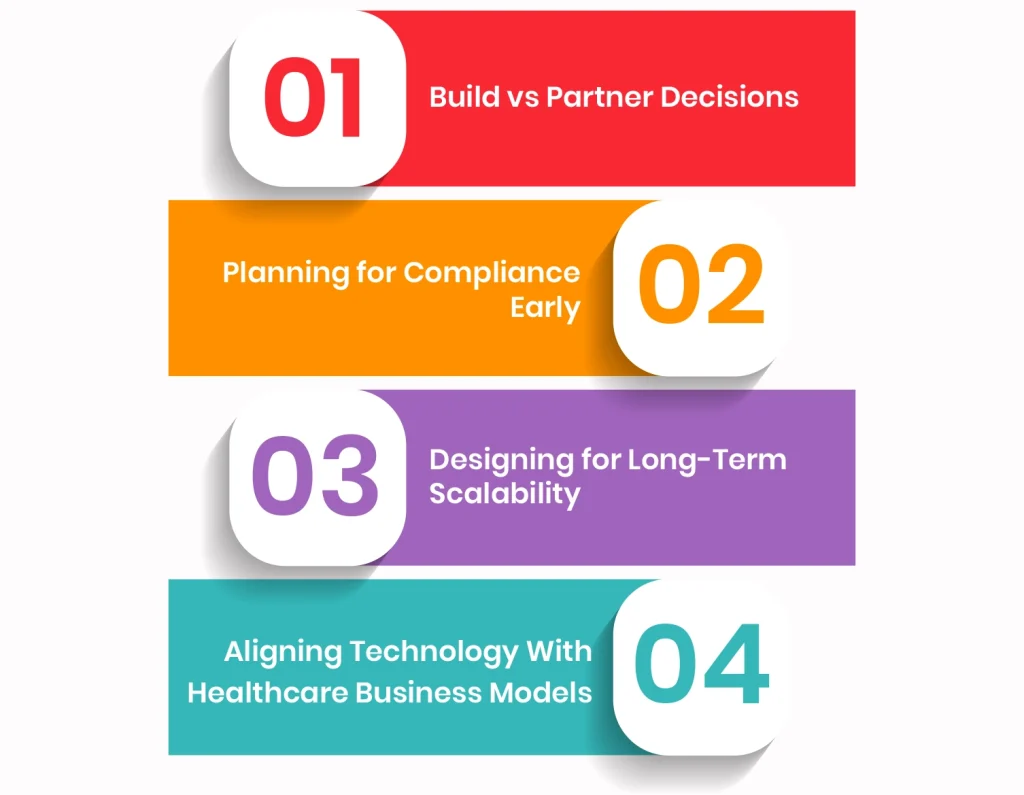
Build vs Partner Decisions
Many healthcare startups partner with specialized development companies that understand regulatory compliance and healthcare integrations. This approach often accelerates development and reduces technical risks.
Planning for Compliance Early
Compliance should never be treated as an afterthought. Integrating regulatory requirements into the early planning stages prevents expensive redesigns later.
Designing for Long-Term Scalability
Healthcare platforms often grow rapidly once adopted by providers. Building a scalable architecture ensures the system can support growing patient databases and increasing user numbers.
Aligning Technology With Healthcare Business Models
Finally, the technology architecture should align with the platform’s business model. SaaS healthcare platforms must support multi-tenant infrastructure, while hospital-specific systems may focus more heavily on custom integrations.
Conclusion
Medical web platforms represent one of the most technically demanding categories of software development. These systems must combine advanced architecture and seamless interoperability with existing healthcare infrastructure.
From telemedicine systems to enterprise hospital platforms, every successful healthcare app begins with careful strategic planning. Founders must consider compliance, security, and long-term scalability before development begins.
When these factors are addressed properly, healthcare platforms can deliver enormous value by improving clinical efficiency, enhancing patient engagement, and enabling entirely new models of digital healthcare delivery.