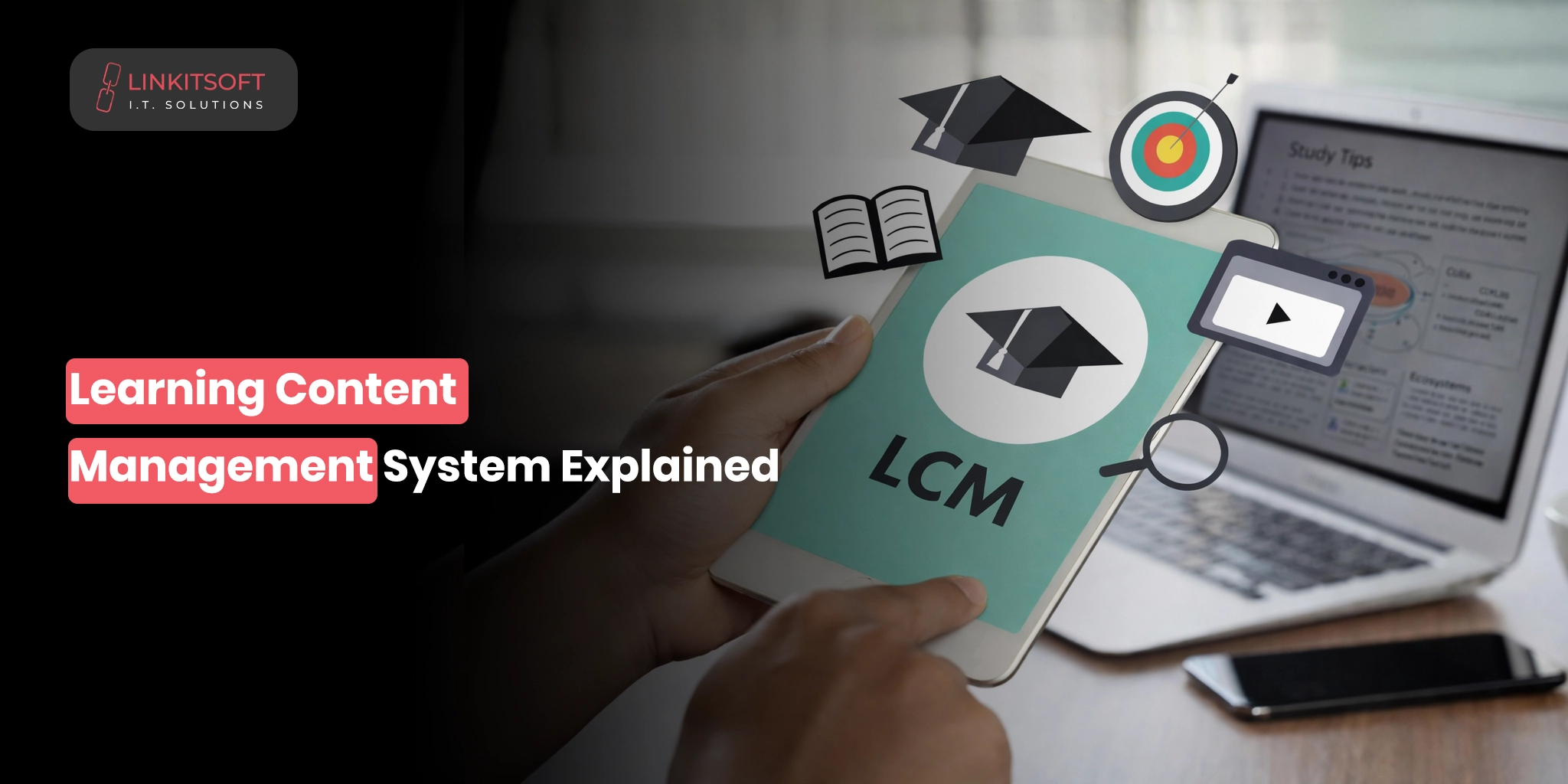
A learning content management system is a form of e-learning technology. Schools, colleges, and institutes use it to create, publish, and teach, using content. It basically provides a unified system where teachers, administrators, and students can easily teach and learn.
However, several people face confusion on whether their organization will do better with an LMS or an LCMS. So, Linkitsoft is presenting this well-researched guide to help explain what an LCMS really is, and how it differs from an LMS.
What Exactly is a Learning Content Management System?
In general, a system that allows you to manage content enables you to authorize, deliver, publish, and analyze content on a centralized platform. Similarly, a learning content management system is one that facilitates all these factors related to e-learning. It provides a multi-user environment. Here, administrators and teachers can manage their content and cooperate with others if required.
Organizations may be perplexed by other terms in this sector. This could include Content Management Systems, Learning Management Systems, and even a Component Content Management System.
They shouldn’t be mixed with an LCMS, because it deals only with learning. An LMS has some similarities with an LCMS; we’ll explore those later in this blog.
What are the Main Features of an LCMS?
In 2026, most institutes are digitalizing their form of teaching. Turning to software comes with several benefits, including remote access to learning and increased productivity for both professors and their peers. An LCMS comes in handy because of its unique content creation and management features.
Here, we have mentioned a few of the unique features that an LCMS offers:
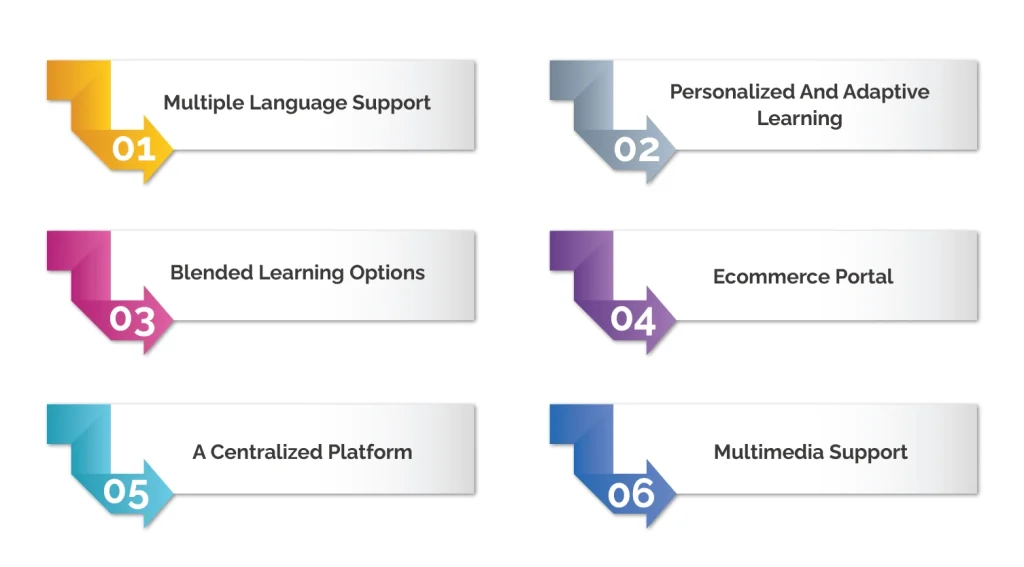
Multiple Language Support
An LCMS can provide support for multiple languages. This makes it accessible, as students from different backgrounds can translate content into different languages. This way, every student receives the same learning experience, regardless of where they are located.
Personalized And Adaptive Learning
Learning students often have unique needs; what works for one student may naturally not work for the other. This is why an LCMS platform can help provide personalized learning paths. This can simply guide users through content that feels personalized for them. Ones that feel like they are aligned with their specific skill levels.
Adaptive learning takes it even further as it can adjust content in real time on the basis of performance and other factors.
Blended Learning Options
Just like preferred learning styles, every student has separate training styles, too. As a growing institute, businesses have to consider this factor. An LCMS can provide a blend of several different learning options. This can include synchronous and asynchronous learning.
The difference is simply allowing students to learn at their own pace. They can take live content sessions in virtual classrooms, and even learn flexibility from previously uploaded content.
Ecommerce Portal
An E-commerce portal on a Learning Content Management System? Yes. It allows instructors to sell courses and certifications via the LCMS platform. Learners never have to leave the platform; they can simply pay via secure payment gateways (like PayPal or credit cards).
A Centralized Platform
Overall, an LCMS is a completely unified platform. From creating content to uploading it and growing from it, educators get the ease of managing their teaching resources on one platform. On the other hand, learners also find it much more effortless to be able to keep track of their courses, progress, and scores on one platform.
Multimedia Support
Nowadays, students have shorter attention spans due to the constant stimuli from reels and other content consumption. Due to this, they find simple learning boring. LCM systems bring a little creativity into the mix. With gamified elements like animations and videos, they make a notable difference in keeping users engaged and interested.
How Does An LCMS Differ from an LMS?
Now comes the big question: How is an LCMS different from an LMS? Basically, an LMS is designed to distribute, assign, monitor, and access specific learning content. It mainly has little to nothing to do with content creation. An LCMS, on the other hand, has a lot to do with it. Content resides exclusively inside an LMS. Any update/change to that content is managed outside the system.
Here’s a table that explains the general difference between the two:
| Aspect | LMS (Learning Management System) | LCMS (Learning Content Management System) |
| Primary Purpose | Delivers and manages training programs | Creates, manages, and organizes learning content |
| Content Creation | Minimal or no built-in content creation tools | Strong content authoring tools (create courses, modules, assessments) |
| Content Storage | Stores and delivers pre-created content | Centralized content repository with reusable learning objects |
| Content Updates | Updates must be done outside and re-uploaded | Content can be edited and updated directly within the system |
| User Focus | Focused on learners and administrators | Focused on instructional designers and content creators |
| Personalization | Limited personalization based on learner progress | Advanced customization of content for different learners/groups |
| Collaboration | Limited collaboration features | Supports collaboration among multiple content creators |
| Scalability of Content | Content is fixed and reused as-is | Content is modular and easily reusable across courses |
| Tracking & Reporting | Strong tracking of learner progress and performance | Basic tracking, not as advanced as LMS |
| Best For | Schools, universities, and institutes delivering courses | Institutes creating large volumes of learning content regularly |
What are the Necessary Legal Standards that an LCMS Should Comply with?
When institutes invest in an LCMS, they step into a space where data, compliance, and user trust matter just as much as the functions. From protecting student information to ensuring accessibility for all learners, an LCMS must meet several legal and industry standards.
Let’s break down the key standards every LCMS should comply with:
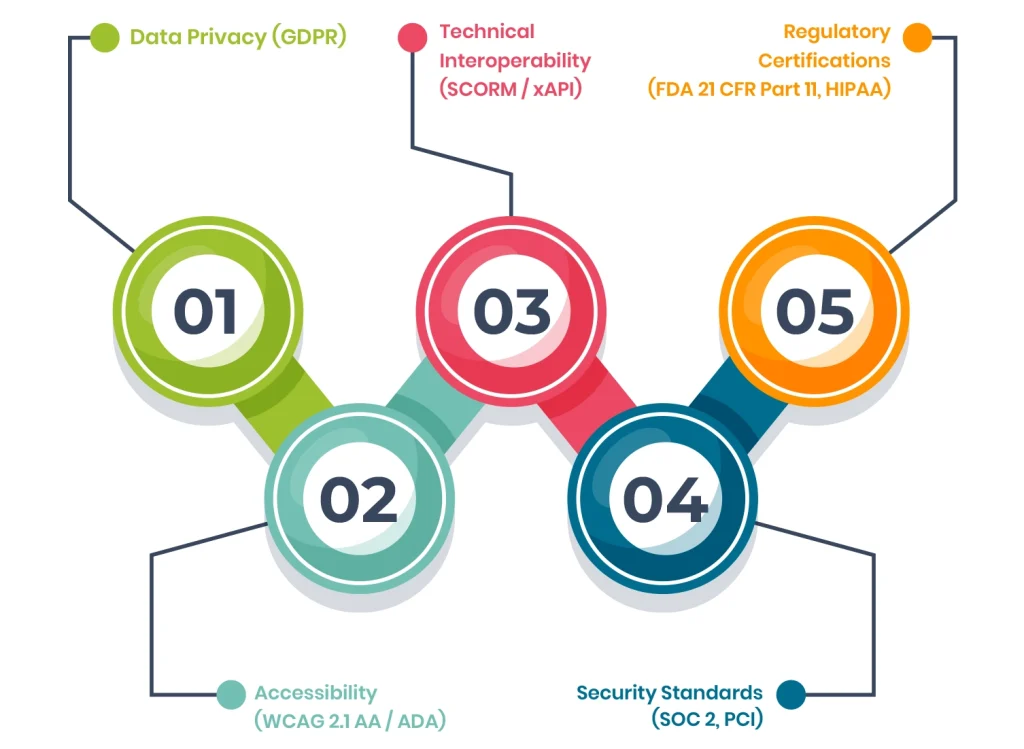
Data Privacy (GDPR)
The General Data Protection Regulation is one of the most important data privacy laws globally. Even if your institute isn’t based in Europe, it still applies if you handle data from EU users.
An LCMS should ensure that all personal data is collected, stored, and processed securely. It must also give users control over their data. This includes the ability to access it and also modify or delete it.
Accessibility (WCAG 2.1 AA / ADA)
Accessibility is a vital requirement. Standards such as the Web Content Accessibility Guidelines and the Americans with Disabilities Act ensure that digital platforms are easily usable by people with disabilities.
A compliant LCMS should support accessible features like screen readers, keyboard navigation, proper color contrast, and captions for multimedia content.
Technical Interoperability (SCORM / xAPI)
Standards like SCORM and xAPI ensure that your learning content works smoothly across different platforms.
An LCMS that supports these standards enables content reuse, sharing, and tracking across multiple systems, including LMS platforms.
Security Standards (SOC 2, PCI)
Security is a big deal, especially when your LCMS handles sensitive data. Frameworks like SOC 2 ensure that systems are designed to keep data secure and confidential.
Similarly, PCI DSS is important if your platform processes payments, such as course fees. Compliance here reduces the risk of data breaches and builds trust with students and stakeholders.
Regulatory Certifications (FDA 21 CFR Part 11, HIPAA)
Depending on your industry, additional regulations may apply. For example, FDA 21 CFR Part 11 is essential for organizations dealing with regulated training in sectors like pharmaceuticals.
Likewise, the Health Insurance Portability and Accountability Act is crucial if your LCMS handles healthcare-related training data.
Conclusion
By the end of this blog, we’re sure that you have a much better idea of what a learning content management system is. More importantly, you now understand that an LCMS isn’t just another e-learning tool. It’s a complete ecosystem built around content creation, management, and delivery.
For institutes, the distinction between an LMS and an LCMS can directly impact how efficiently they operate.
In a world where digital learning is rapidly evolving, investing in the right system is a strategic act. An LCMS gives institutes the flexibility to adapt, scale, and stay ahead, making it a strong foundation for modern education.