
Building a startup app is not just a milestone. It is a process that shapes the future of your business. From idea to launch, every step involves decisions that affect cost, performance, and long term success.
Most startups struggle with similar questions. How do we turn an idea into an app? What should we focus on first? And how do we choose the right development approach?
In today’s market, a strong mobile product can directly impact growth and survival. This guide helps you understand the full process and the key steps involved in startup app development.
Different Types of Mobile Apps
Before you start building a startup app, it is important to understand the type of app you need. This decision affects cost, performance, and future growth. It also helps you choose the right development approach from the beginning.
- Native apps: Built separately for iOS and Android. They use platform specific languages like Swift and Kotlin. They offer strong performance but need separate code for each platform.
- Cross platform apps: Built using a single codebase for both iOS and Android. Tools like Flutter and React Native are used. They reduce time and cost but may not support all device features perfectly.
- Progressive web apps: Run directly in a browser. No installation is needed. They are easy to access and cheaper to build, but have limited access to device features.
- Hybrid apps: Use web and native layers together. One app works on multiple platforms. They are faster to build, but performance is lower compared to native apps.
Lifecycle of Startup App Development
Before moving on to the app development process, it is critical to consider the complete lifecycle of the application creation process. Startup app development is not a singular process; it has several stages that follow a strict structure. Usually, failure to perform any of the stages results in issues during further development of the product.
The goal of the app development lifecycle is rather straightforward. The key objectives include risk reduction, clarity provision, and gradual movement towards creating the final product. Each stage of development influences app performance, price, and user experience.
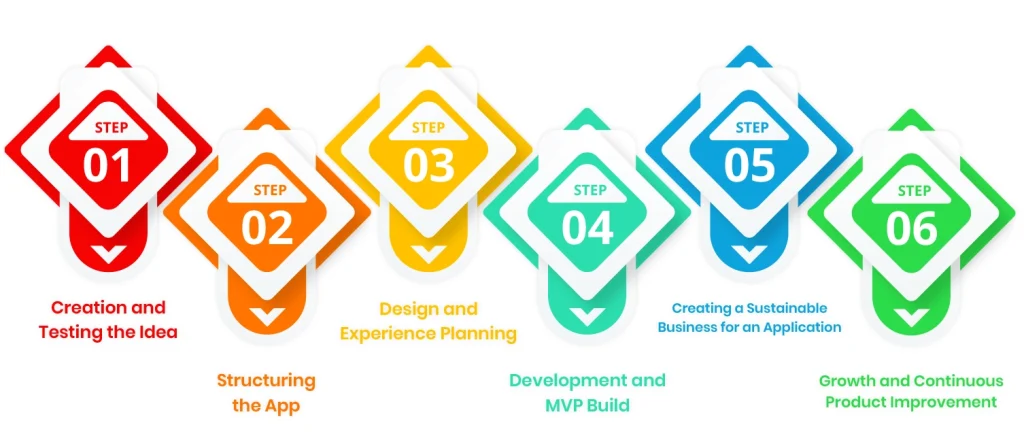
Stage 1: Creation and Testing the Idea
It is important to mention that idea creation and testing are the basis of all startup apps. In other words, no matter the actual development process, each stage starts with the creation of a solid foundation for the app.
The first step in this regard consists of checking whether or not the idea solves any kind of problem. The idea is verified using various techniques such as creating surveys, landing pages, and basic versions of the app itself.
When you figure out that the idea is promising enough, it’s time to get acquainted with the market. The research on its condition, users’ needs, demands, etc., allows making informed decisions without any doubts.
Having gained an initial perspective on the topic, it’s time to check whether any competitors are present in the niche. If there are some products that are already available, you need to analyze their pros and cons and see what opportunities there are.
Another thing to do is to define the target audience for your app. Instead of focusing on developing something for everybody, consider creating a product for specific users who have certain needs.
Finally, you have to understand the key benefit your future product will bring to users. It should help them solve a particular problem which can’t be handled by other applications successfully.
Stage 2: Structuring the App
After having found that the concept can be developed further, you need to make plans on how to create it.
First, it’s necessary to determine which features you’ll implement in the first version of the app. All the functions that will not solve the core issue must not be added to the app structure.
Secondly, there is a selection of a platform. The application might be for iOS, Android, or both platforms. This decision would be based on the targeted market, financial considerations, and future plans.
Thirdly, the method of development is established. In this case, there are two main decisions: the method and tool used in developing the application. This decision affects the speed, flexibility, and total cost of development.
This is followed by the determination of user flow. User flow is the path the user follows through an application. User flow helps to determine how users get from one point to another within an application.
Technical planning is also carried out at this stage. Technical planning involves choosing backend architecture and a data store. Technical planning ensures scalability in the future when the application becomes popular.
Stage 3: Design and Experience Planning
Once all aspects have been determined, the next step is defining the look and feel of the application.
Wireframes are drawn first. Wireframes are basic structures of different screens in an application without any design elements.
The second step is developing interactive prototypes. Interactive prototypes involve navigation tests and flow tests.
After validating the flow, the design is enhanced. It entails enhancing the layout, spacing, and clarity. The objective is to maintain the interface minimalistic and straightforward.
At this stage, user experience takes center stage. Each screen is created with a smooth user experience in mind.
Stage 4: Development and MVP Build
It is at this stage that the development of the product commences.
Development typically starts with an MVP. An MVP is the minimum viable product that comprises all essential features in a product. Its purpose is to test the hypothesis and ensure a quick launch.
During the process of development, the team prioritizes functionality. Any additional features are not incorporated in the development phase to ensure the product is easy to develop.
During development, there is continuous testing and identification of potential bugs. Testing and fixing of errors are done simultaneously.
An MVP is instrumental since it enables user feedback. Based on their feedback, future versions of the product are developed.
Stage 5: Creating a Sustainable Business for an Application
Once an application is developed and tested, it is time to think about how it will operate in the market. Not only does a functioning product need to exist, but it also requires a framework for monetization, planning, and implementation.
The first thing considered at this point is the business model. It outlines how the product will earn money through its usage. Some products go for subscriptions, some go for in-app payments, advertisements, or free access. All depend on the product’s nature.
Then, financing comes into play. It may be achieved through savings, investments, or venture capital. Each source comes with its pros and cons, including ownership rights and obligations.
The next step concerns budget planning, which covers product development and design, promotion, and maintenance costs. Budgets help avoid monetary problems that can occur halfway through the project.
Moreover, accurate cost estimation is carried out, which involves development hours, team size, software tools, and future expenses. Usually, extra costs are included, as prices change during the development process.
A final team structure decision will be made at this stage. In-house development teams or third-party contractors may be used by some start-ups, depending on the budget, the timeframe, and the level of control that the founders require over the product.
Lastly, a delivery timeline is prepared, including all the phases of development and testing, followed by the release. Because of the possibility of delays during the software development process, additional time will be allocated.
Stage 6: Growth and Continuous Product Improvement
With the app launched, the next step involves growing the user base and improving the application continuously. This is not the creation of something entirely new but the improvement of an existing product based on actual user behavior.
Analytics tools are introduced to monitor the use and engagement of users with the app. It allows the identification of frequently-used features, user drop-off points, and other elements that should be improved. Otherwise, most changes will depend on assumptions without data to prove their effectiveness.
User retention will become one of the main tasks for the start-up at this stage. It is not sufficient to attract more customers; the founders will need to make sure that they stay engaged.
Should You Build a Mobile App or a Web App for Your Startup?
When building a startup product, one early decision is choosing between a mobile app and a web app. There is no fixed answer. It depends on users, budget, and long term plans. Both options work, but they behave differently in real situations.
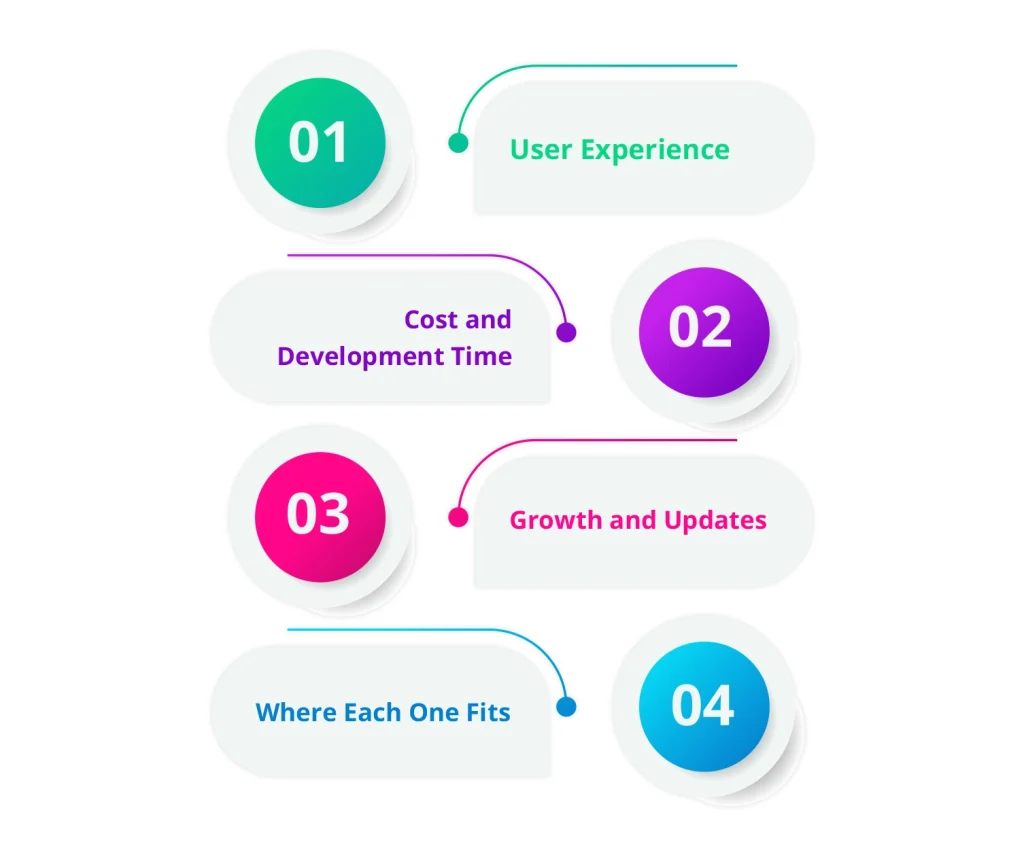
User Experience
Mobile apps feel more direct. They stay on the user’s phone. They can use features like the camera, GPS, and notifications. Some functions also work better when the app is installed. Web apps are easier to access. Users open a browser and start using it. No installation is needed. This helps first time users try the product quickly.
Cost and Development Time
Web apps take less time to build. They also cost less in the beginning because one version works on all devices. Mobile apps take more effort. Separate versions are usually needed for Android and iOS. This increases cost and time. Because of this, startups often start with web apps when they want to move fast. Mobile apps come later when the product grows.
Growth and Updates
Mobile apps are better for adding complex features later. They work well when the product needs more depth over time. Web apps are easier to update. Changes go live without downloads or installs. This is why many startups begin with web apps first and move to mobile later.
Where Each One Fits
Mobile apps are used for consumer products like fitness apps, food delivery, and social platforms. Web apps are used for SaaS tools, dashboards, admin panels, and business systems. Some startups use both based on user needs.
How Startups Build Apps Using Different Development Models
Startups use different development models based on their goals. Some focus on speed. Some focus on cost. Some focus on control. Each model works in a different way. The choice depends on how the product is planned and what the startup wants to achieve.
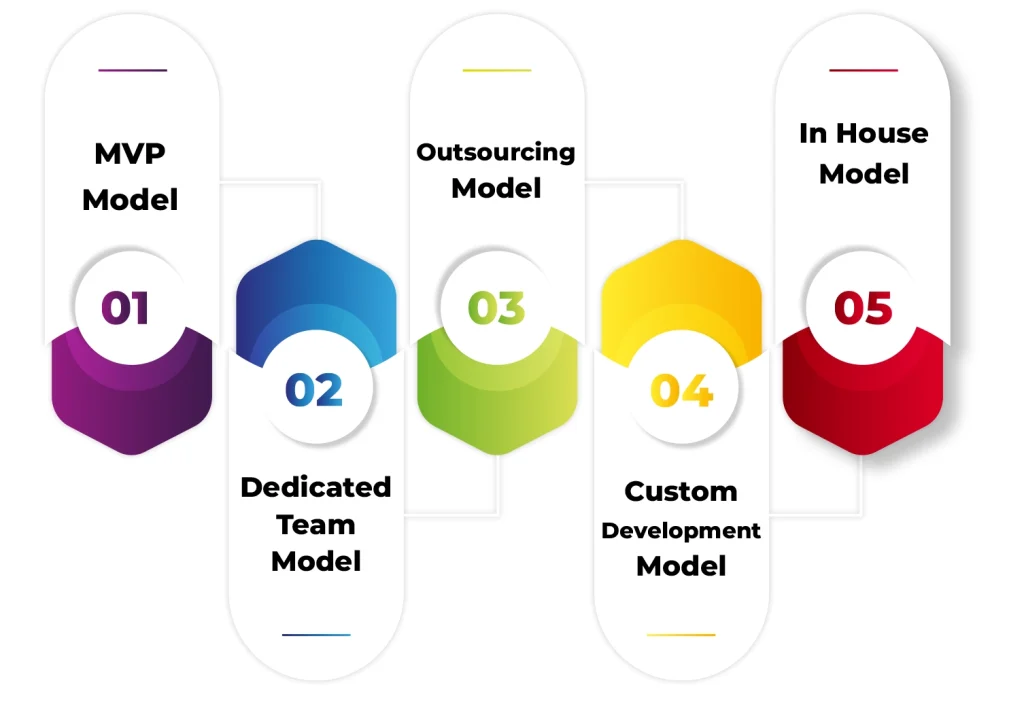
MVP Model
This model focuses on building a basic version of the app first. Only the most important features are added at the start. The goal is to launch quickly and test the idea with real users. This helps startups see what works before spending more time and money.
Dedicated Team Model
In this model, a fixed team of developers works on one project. The same people stay involved from start to finish. This keeps work consistent. It also makes communication easier during development. This model is often used when the product needs ongoing updates.
Outsourcing Model
Here, an external company builds the app. The startup shares the requirements. The vendor handles the development work. This reduces the need to manage a team inside the company. However, it also means less control over daily decisions and progress.
Custom Development Model
This model is used when the app is built from scratch. Everything is designed based on the business needs. It gives full control over structure and features. It also allows complete flexibility in how the product works. But it usually takes more time to build.
In House Model
In this setup, the startup builds its own internal team. All work stays inside the company. This gives full control over the product and its direction. But it also requires hiring effort, team management, and higher long term cost.
The Bottom Line
At Linkitsoft, we know building a mobile app for a startup can feel like a big step. It is not just about having an idea. It is about shaping that idea into something that actually works when real users start using it.
We usually start by understanding what you are trying to build and why. Then we look at how the app should be structured so it does not break as it grows. This includes things like backend setup, how data moves in the system, and what kind of tech stack fits your product. We also pay attention to how users will interact with the app so it feels practical in real use.
If you are planning to move forward, Linkitsoft can help you turn your idea into a working product and take it step by step from concept to launch.
Frequently Asked Questions
How much does it cost to build a startup app?
The cost depends on research, features, design complexity, and the technology used. A basic MVP usually starts around $10,000 to $30,000 because it focuses only on core functions. If the app includes advanced features, backend systems, or third party integrations, it can go from $30,000 to $150,000 or more. Most startups finalize their budget after early product research and feature planning.
How long does it take to build a startup app?
The timeline depends on the scope of work and how well the requirements are defined. A simple MVP can take around 6 to 12 weeks. A more detailed product with multiple features, testing, and refinements can take 3 to 6 months or more. Detailed research at the start helps reduce delays later in development.
What is the best tech stack for startup apps?
There is no single fixed stack. It depends on the product idea and scale. Many startups use Flutter or React Native for mobile apps because they support both platforms. For backend, Node.js and Python are commonly used because they handle performance and scaling better.
Should I start with a mobile app or a web app?
It depends on user behavior and budget. Web apps are faster to build and are often used for early testing. Mobile apps are better when you need stronger engagement and device based features. Many startups start with web apps and move to mobile apps later, after validation.
Why is research important before app development?
Research helps define the product direction. It includes understanding users, checking competitors, and validating the idea. Without proper research, startups often build features that users do not need, which increases cost and delays launch.
Do startups need an MVP before full development?
Yes, in most cases. An MVP helps test the idea with real users before investing in full development. It reduces risk and helps identify which features are actually useful in real scenarios.