
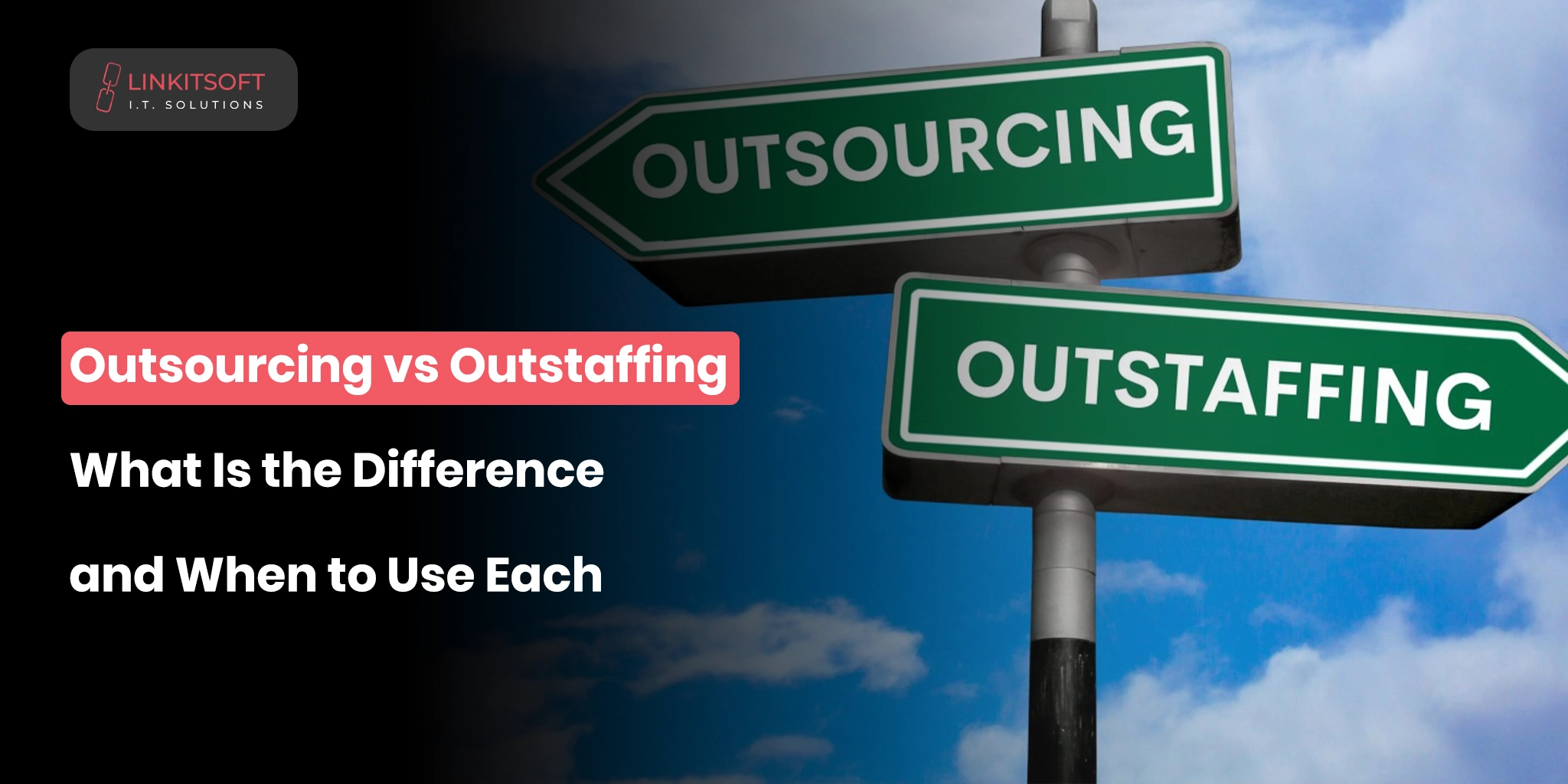
Software teams often face one key question. Should they go for outsourcing or outstaffing? What is the real difference between them?
In simple terms, it is about how you work with external developers. Do you hand over the full project to a vendor? Or do you extend your in house team with remote developers?
This model has become common in recent years. Many companies now work with teams in regions like Eastern Europe and Asia. Countries like Poland, Ukraine, and Romania are popular choices. The goal is usually cost optimization and faster delivery. Remote development has become a normal part of the IT industry.
But the wrong choice can create problems. It can lead to delays. It can also increase costs and reduce control over the project.
That is why it is important to understand both models clearly. You need to know where outsourcing fits better. You also need to know when outstaffing gives more value.
In this guide, we will break down the key differences. We will also explain when each model works best. Let’s get started.
Difference Between Outsourcing and Outstaffing
Let’s understand the difference in simple technical terms.
In outsourcing, the client assigns the entire project to a third party vendor. This vendor takes full responsibility for software development. They manage planning, development, testing, and delivery. The client does not manage the development team directly. Communication usually happens through a project manager. Developers may also work across multiple client projects.
In outstaffing, the model is different. The client hires remote developers through an IT staffing provider. These developers work exclusively for the client. Legally, they are employed by the vendor. The vendor handles payroll, taxes, benefits, equipment, and HR management. The client manages day to day tasks and technical direction.
With outstaffing, the developers function as an extension of the internal team. They can follow the client’s workflows, tools, and sprint cycles. Management can be done by the client’s tech lead or engineering manager. In some cases, a dedicated remote team lead is also added for coordination.
What to Expect From Outsourcing and Outstaffing
Outsourcing and outstaffing are two ways to work with external teams. Both help companies build software without hiring full in house teams. But they work in different ways.
Outstaffing Pros
- You can hire skilled professionals without high salaries or heavy taxes. This helps reduce overall cost.
- You get flexibility. You can scale your team up or down based on project needs.
- You have full control over the development process. You can manage daily work directly.
- You get direct access to developers. They work as part of your internal team.
- You can hire talent from different regions. This gives you more hiring options.
Outstaffing Cons
- Communication needs to be strong. Poor communication can lead to delays and misunderstandings.
- You are responsible for managing the team. You also need to track performance.
- Delivery responsibility stays on your side. This includes timelines and output.
- Time zone differences can slow down coordination.
- Security and access control must be managed carefully.
Outsourcing Pros
- The service provider manages the full project, including development and delivery.
- You need less management effort because the external team handles execution.
- The vendor provides all tools, infrastructure, and technical setup.
- You do not need to handle hiring or team building.
- Projects can move faster because experienced teams follow structured workflows.
Outsourcing Cons
- You have less control over daily development decisions.
- A poorly defined scope can increase project cost.
- You depend on the vendor for quality and delivery.
- Communication gaps can happen if requirements are unclear.
- Outsourcing is usually more expensive compared to outstaffing.
Hybrid Approach Between Outsourcing and Outstaffing
A hybrid model combines outsourcing and outstaffing in one setup. It is not always a strict choice between the two models. Many companies use both depending on project requirements.
In this approach, a company keeps its core in house development team. At the same time, it brings in external developers for specific modules, features, or projects. This helps balance control and flexibility in software delivery.
The hybrid model also supports better resource scaling. Companies can increase or reduce external teams based on workload and sprint demands. This helps manage multiple projects without overloading internal engineering teams.
It also improves technical collaboration. In house engineers and external specialists work together in shared workflows. This enables code knowledge sharing, better architecture decisions, and faster problem solving.
Overall, the hybrid approach helps optimize cost and control. It also improves delivery speed and supports better project execution in complex software environments.
How to Decide Between Outsourcing and Outstaffing
Outsourcing and outstaffing both help you work with external developers. The main difference is how much control you want. It also depends on how your project is structured.
Outsourcing works better when you want a team to handle the full project. You share the requirements. The vendor takes care of everything. This helps when you want to reduce workload. It also helps you focus on business growth.
Outstaffing works better when you want to stay involved in the work. You hire developers who join your team. You assign tasks and manage their daily work.
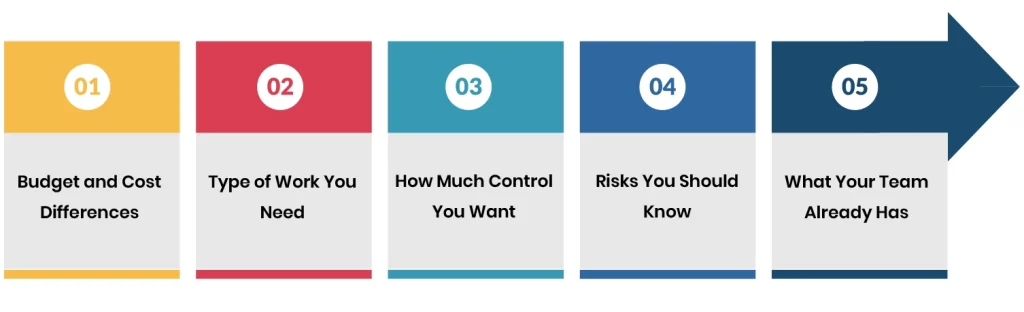
Budget and Cost Differences
Cost is an important factor in this decision.
Outsourcing usually has a fixed project cost. You pay for the full scope of work. Vendors often optimize resources, which can reduce overall cost.
Outstaffing uses a flexible cost model. You pay based on each developer’s skills and experience. This gives you more control over monthly spending.
Type of Work You Need
The type of project also matters.
Outsourcing is better for complete projects with clear requirements. The vendor handles everything from planning to delivery.
Outstaffing is better for ongoing work. It works well when requirements change often. It also fits projects that need continuous updates.
How Much Control You Want
Control is a key difference between the two models.
Outsourcing gives less control. The vendor manages the full development process.
Outstaffing gives more control. You manage developers directly. You assign tasks and set priorities.
Risks You Should Know
Both models have risks.
Outsourcing can create communication gaps. This happens when requirements are not clear. It can also lead to mismatched expectations.
Outstaffing reduces communication gaps because developers work closely with your team. But it needs strong internal management to work well.
What Your Team Already Has
Your current setup also matters.
Outsourcing is useful when you do not have enough technical skills or capacity in your team.
Outstaffing works better when you already have a strong team. You only need extra developers to support your work.
How Outsourcing and Outstaffing Are Managed
Management is very different in both models.
In outsourcing, the vendor manages everything. They handle planning, development, testing, and delivery. The client does not manage developers directly. The client mostly communicates with a project manager. Updates come through that channel.
In outstaffing, the client manages developers directly. The developers become part of the client’s team. The client assigns tasks and sets priorities. The vendor only handles HR work like contracts, payroll, and compliance. Daily work stays with the client.
Communication and Risks in Remote Development Teams
Remote work can create communication challenges.
Time zones are one common issue. Teams may not have overlapping working hours. This slows down feedback and decision making.
Cultural differences can also affect communication. Developers may avoid asking questions or may not challenge unclear instructions. This can lead to errors or rework later.
In outsourcing, there is also a risk of missing business context. The vendor may focus on delivery but not fully understand the product vision. This can result in a working solution that does not fully match user needs.
In outstaffing, the main risk is poor integration. If developers are not properly included in the team, they may feel disconnected. This can reduce ownership and affect long term quality.
Final Thoughts
Now you know the difference between outsourcing and outstaffing. The next step is to decide what fits your business. The choice depends on your setup, your goals, and your internal team strength.
If your company is not very tech focused and you do not have people to manage developers, outsourcing is usually the better option. The vendor takes full responsibility for the project. You do not need to handle daily development work. This helps you stay focused on your business instead of technical tasks.
If you already have a strong team or clear technical leadership, outstaffing can be a better fit. In this model, remote developers work as part of your team. You manage their work directly and can scale your team based on project needs. There is no single right answer. The best choice depends on your budget, control needs, and how you want to run your development process.
Frequently Asked Questions
What is the key difference between outsourcing and outstaffing?
Outsourcing is when you hand over the full project to an external company. They manage everything from planning to delivery. Outstaffing is when you hire remote developers who join your team and work under your control. You manage their tasks directly.
Which is more cost effective, outsourcing or outstaffing?
Outstaffing is usually more cost effective in the long run. You only pay for the developers you hire and their skills. Outsourcing can cost more because you are paying for full project management, delivery, and vendor overheads.
When is outsourcing the better choice?
Outsourcing works best when you do not have a technical team or time to manage development. It is also a good option when you want a complete product built without getting involved in daily technical decisions.
When should I choose outstaffing instead?
Outstaffing is better when you already have a tech team or a CTO. It helps you quickly add skilled developers to your team. You stay in control of the work and can guide development the way you want.
Can outsourcing and outstaffing be used together?
Yes, many companies use both. They may outsource a full project while also using outstaffing to strengthen their internal team. This hybrid approach helps balance speed, control, and flexibility.