

Businesses no longer need to invest heavily in building and maintaining complex IT systems from scratch. Because now, they can get access to ready-to-use services delivered over the cloud.
Among these evolving models, the concept of Everything as a Service (XaaS) is gaining attention across various industries. While it’s not entirely new, its adoption is accelerating as companies look for more flexible and scalable solutions. Organizations of all sizes are exploring how service-based architectures can make their operations easier and reduce their technical burden.
In this blog, we’ll break down what XaaS really means and why it’s becoming an important pillar of modern IT strategy.
What is Everything As A Service?
XaaS, short for Anything as a Service (or Everything as a Service), represents a service delivery paradigm. Here, a wide spectrum of computing capabilities is provisioned to users over a network (mostly cloud environments); this includes:
- Applications
- Platforms
- Infrastructure
- Specialized tools
They don’t deploy and manage these resources on-premises; organizations actually consume them as on-demand services.
XaaS abstracts underlying hardware and software layers into consumable service endpoints. These services are simply designed to integrate seamlessly with enterprise systems. They are often exposed through APIs and managed via centralized orchestration layers. The architecture is inherently aligned with distributed systems, enabling:
- Modular deployment
- Rapid provisioning
- Automated scaling based on workload demands
An important characteristic of XaaS is its reliance on cloud infrastructure for delivery. Services are hosted remotely and accessed over the internet. This eliminates the need for physical installations or dedicated local environments. It’s something that most businesses tend to benefit from. This allows for consistent updates and easier lifecycle management compared to traditional and outdated solutions.
What are the Everything as a Service Models?
XaaS is not a single service model; it actually includes some more well-known categories. Major cloud providers that we all have heard about, such as Microsoft Azure and IBM, have built extensive ecosystems around these models.
Let’s learn more about them below:
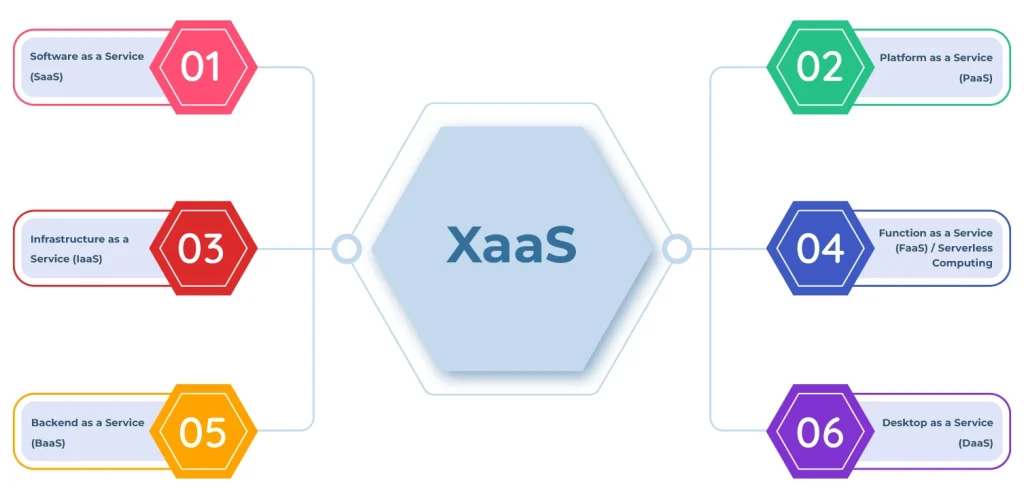
Software as a Service (SaaS):
Delivers fully managed apps over the internet. The end users interact directly with the software without worrying about infrastructure or platform management. Everything is handled by the provider.
Platform as a Service (PaaS):
Provides a managed environment for developers to develop and launch apps. It creates a concise collection for infrastructure concerns while still giving developers control over app logic and runtime configurations.
Infrastructure as a Service (IaaS):
Offers virtualized computing resources like servers and networking. It gives organizations the highest level of control among the core models. This allows them to manage operating systems and software while the provider handles the physical infrastructure.
Function as a Service (FaaS) / Serverless Computing:
Enables execution of discrete functions in response to events, without managing servers. Resources are dynamically allocated, and billing is typically based on execution time and the resources consumed.
Backend as a Service (BaaS):
Supplies ready-to-use backend components. This includes necessary components like databases and APIs, allowing developers to focus primarily on the frontend and business logic.
Desktop as a Service (DaaS)
It simply virtualizes user computing environments by hosting desktop instances on remote servers. These virtual desktops are delivered and accessible over the network, which allows users to access their workspace from any device. That too, with consistent performance and configuration.
What are the Business Benefits of Adopting XaaS?
XaaS is quite a flexible model when you look at the convenience it provides to businesses. It allows organizations and enterprises to let go of their outdated, traditional systems that often slow them down instead of making things easier. But with this change, XaaS also comes with a plethora of benefits for companies:
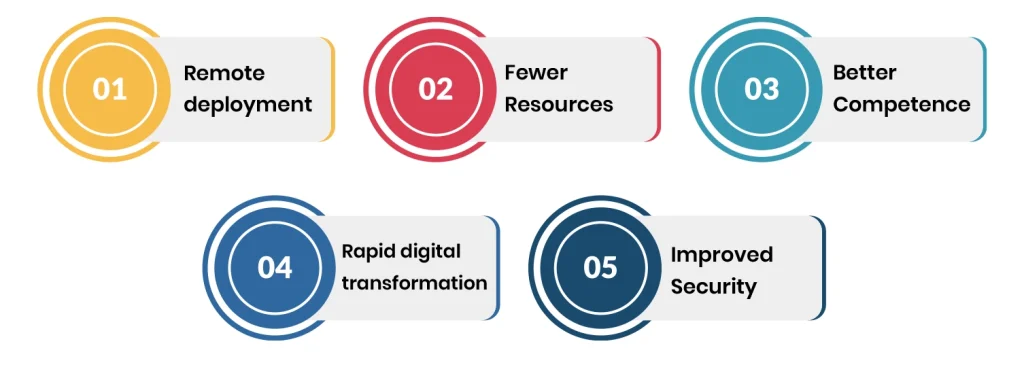
Remote deployment
XaaS solutions are inherently delivered through the cloud. This allows systems and services to be deployed and accessed from virtually anywhere.
The biggest benefit here is that teams are no longer constrained by physical infrastructure or setups that are restricted to a specific location. This makes it easier to support distributed workforces and global operations.
Fewer Resources
Since infrastructure, maintenance, and updates are managed by service providers, organizations can significantly reduce their reliance on in-house IT resources. It also reduces the need for dedicated hardware and data centers, leading to much easier IT management.
Better Competence
When the routine infrastructure and platform responsibilities decrease, teams already start getting some time for themselves. They then focus on higher-value tasks such as product development and optimization. This improves overall productivity and enables businesses to use specialized expertise from service providers.
Rapid digital transformation
XaaS accelerates the adoption of new technologies by removing traditional barriers. Think of those draining procurement cycles and complex deployments that teams originally used to dread. Organizations can now quickly integrate new tools and experiment with very low risk if they are using XaaS.
Improved Security
Many XaaS providers implement advanced security frameworks and regular updates as part of their service offerings. This often results in a stronger security compared to traditional setups. This is very beneficial for businesses because they get peace of mind.
What are the Disadvantages of Adopting XaaS?
Up until now, XaaS sounds flawless. It makes scaling easy and even simplifies complex tasks. However, if it were that easy, a lot of businesses would have invested in it by now. Like everything in the field of technology, XaaS also comes with its unique set of disadvantages.
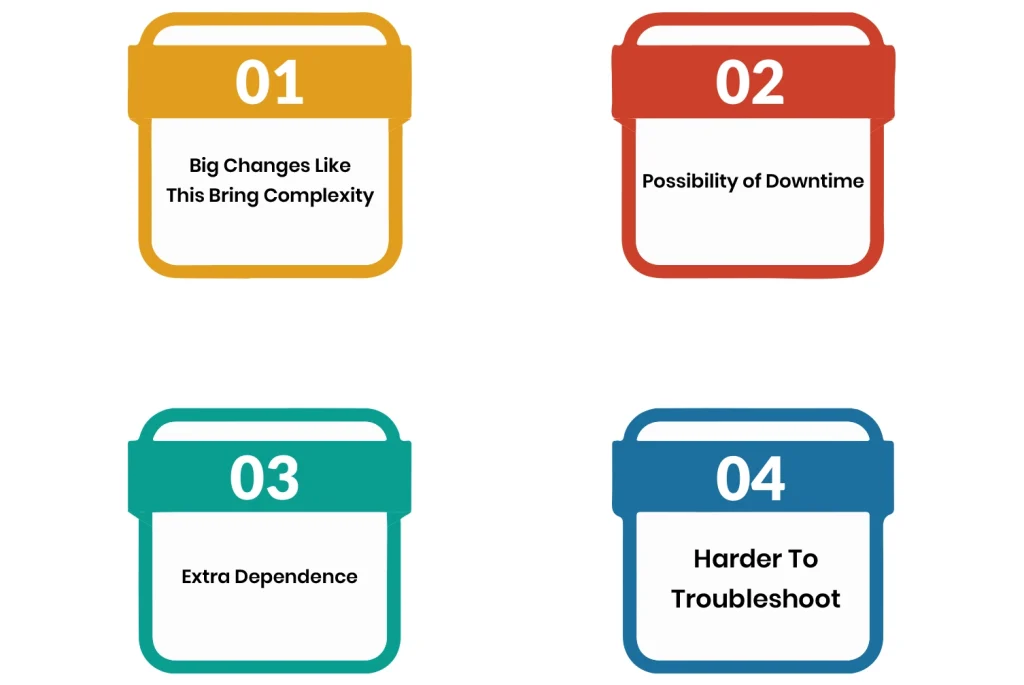
Big Changes Like This Bring Complexity
XaaS is complicated and needs unique and deep technical knowledge to truly understand. Moving to it often requires a fundamental shift in system design… You suddenly have to go from tightly controlled environments on your premises to distributed, service-oriented architectures.
This means dealing with multiple vendors and governance layers. As the number of these services grows, so does the complexity of managing these dependencies and the data flow.
Possibility of Downtime
Basically, XaaS solutions are heavily dependent on cloud infrastructure and network availability. Even with high uptime guarantees, outages can still occur. They can be for any reason such as provider-side issues or regional disruptions. Since critical operations may rely entirely on these services, even short downtimes can have a noticeable business impact.
Extra Dependence
Adopting XaaS means that businesses will have to rely on third-party providers for the main business functions. This includes not just infrastructure, but also performance and pricing stability. Over time, this can lead to vendor lock-in… It will easily end up making it difficult or costly to switch providers or migrate workloads.
Harder To Troubleshoot
With traditional systems, teams have direct access to infrastructure and full visibility into the system’s behavior. This way, they are able to troubleshoot right away. In a XaaS model, much of that control is taken away. Debugging issues often requires working with limited logs and provider support, which can slow down root cause analysis and resolution.
Is Your Business Ready to Shift to XaaS?
Before moving to XaaS, it’s important to check if your business is actually ready for a service-based approach to IT.
If your current systems are still heavily relying on your premise or they are already very tightly managed in-house, then the shift may require some planning. But if you’re already using cloud tools or flexible digital systems, the transition becomes much easier.
You should also consider your team’s readiness. XaaS reduces infrastructure workload, but increases focus on cloud integration and system coordination.
Based on this, your business is ready for XaaS when you’re open to flexibility and cloud adoption. Moving to XaaS comes with shared responsibility, not full in-house control.
Conclusion
Evolving technology brings miraculous platforms and services for modern businesses. With the right guidance and planning, most organizations can enjoy the benefits. However, it is essential to be fully aware of the risks and challenges involved. XaaS isn’t for everyone, but the businesses that are ready to adapt are set for growth and success.