
The backend of software in 2026 isn’t just about writing APIs and connecting databases anymore. It’s about how flawlessly your system can handle real-time load and stay maintainable as things grow. The framework you choose directly affects performance and even how quickly you can ship features.
Today’s backend frameworks are more focused on speed and cloud architecture. Some are built for high concurrency, and others for large-scale distributed systems. So it’s not really about “the best framework,” it’s about choosing the right one for your use case.
In this blog, we’ll break down the top backend frameworks in 2026 and what actually makes them worth using.
What are Backend Frameworks?
When people talk about “the backend,” they’re referring to everything that happens behind the scenes of an app. This is the part users don’t see but rely on constantly. This includes things like:
- Handling requests
- Processing data
- Managing databases
- Authentication
- Smooth performance
- Scalability
And a bunch of other things too. It’s just there to make sure that everything runs smoothly when multiple users interact with the system at the same time.
Now, when we say backend framework, we are talking of a structured foundation that helps developers build this server-side logic without starting from scratch. Instead of writing every component manually, frameworks provide ready-made tools and libraries. These easy-to-use patterns for common tasks like routing and security make it easier to build a reliable backend for an app.
Backend frameworks are a well-designed system built to help teams avoid reinventing solutions for problems that have already been solved many times before. For example, rather than building your own authentication flow from scratch, a framework usually provides a reliable, tested way to implement it.
How do Backend Frameworks Differ from Frontend Frameworks?
The difference between backend and frontend frameworks comes down to where they operate and what problems they solve. Frontend frameworks deal with everything at the front… this is every aspect that the user interacts with directly. Here, you can see:
- The layout
- The design
- The buttons
- The animations
- The elements
- The overall user experience.
They run in the browser and are responsible for making interfaces responsive and interactive. When you click a button or submit a form, the frontend is what captures that action.
Backend frameworks work on the server side. They take those user actions and turn them into meaningful functions and operations. For example, when a user logs in, the frontend collects the input, but the backend verifies the credentials. It then fetches user data (if already stored) and sends back a response. So all the data processing and security checks happen here.
Another difference is how they handle data. Frontend frameworks focus on displaying data and updating the UI when something changes. Backend frameworks are responsible for storing and manipulating that data, often working closely with databases and external services.
Frontend development emphasizes on the user experience and visual consistency across devices. Backend development prioritizes stability and performance under load. A slow frontend might frustrate users, but a weak backend can break the entire system.
What are the Best Backend Frameworks in 2026?
In 2026, technologies and expectations are constantly changing. However, over these decades, there are some backend frameworks that have only gotten stronger and held their reputation over time. These are the best backend frameworks that have made it into our list.
Let’s check out this list:

Node.js
Node has become one of the most widely used runtimes for the backend development of an app, especially in those that demand speed and scalability.
It has an event-driven architecture that allows it to handle multiple requests quite smoothly. This makes it a natural fit for modern and real-time systems. Over the years, it has built a massive ecosystem that developers rely on heavily.
Programming Language:
- JavaScript
What’s it Good For?
- It is ideal for real-time apps like chat apps and live dashboards
- Node is great for handling high concurrency with a non-blocking architecture
- Works seamlessly with frontend JavaScript ecosystems
- Comes with a strong ecosystem with a massive number of libraries
Laravel
Laravel brought a fresh perspective to PHP by focusing on clean syntax and developer experience. It simplifies many common backend tasks and provides a structured way to build apps without sacrificing flexibility. It’s especially popular among developers who want to move fast while keeping their codebase organized.
Programming Language
- PHP
What’s it Good For?
- Amazing when it comes to rapid development with clean and readable syntax
- Comes with Built-in tools for authentication and caching
- Offers strong support for MVC architecture
- It is great for building web apps with lots of features quickly
Express.js
Express is the kind of backend framework that has always been known for its simplicity and flexibility. Instead of enforcing a strict structure, it gives developers the freedom to design apps the way they want. This makes it a powerful choice for building APIs and lightweight services, especially when paired with Node.
Programming Language
- JavaScript
What’s it Good For?
- Express allows for lightweight and minimal backend development
- It is perfect for building REST APIs and microservices
- Express is also easy to integrate with other tools and libraries
- This framework gives developers full control over an app’s structure
ASP.NET
ASP.NET has long been associated with enterprise-level development. It’s built for excellent performance and scalability, making it a reliable option for large apps. It is backed by Microsoft itself and continues to evolve with strong support for modern development practices.
Programming Language
- C#
What’s it Good For?
- It’s an excellent option for enterprise-level apps with high performance expectations
- Offers strong security and scalability features
- Provides excellent integration with the Microsoft ecosystem
- It is suitable for large, complex systems
Flask
Flask takes a different approach compared to larger frameworks. It focuses on simplicity and gives developers just the essentials needed to build an app. This makes it a great option for smaller projects. Some may even use Flask for prototypes or services where flexibility matters more than built-in features.
Programming Language
- Python
What’s it Good For?
- Lightweight apps and small services do great with Flask
- It’s an excellent option for quick prototyping and experimentation
- It is simple and easy to learn
- Flexible structure with minimal overwhelm
Spring Boot
Spring Boot simplifies the process of building heavy apps in Java. It removes much of the complexity that is traditionally associated with Java development and provides a simplified way to create scalable backend systems. It’s widely trusted in environments where reliability is critical.
Programming Language
- Java
What’s it Good For?
- The perfect option when building large-scale apps
- Has a microservices architecture
- Comes with a strong ecosystem and enterprise support
- Brings high performance and reliability
Django
Django is designed to help developers build secure and scalable apps quickly. It comes with many built-in features, reducing the need for external dependencies. Which is honestly great for devs. Its structured approach makes it particularly effective for projects that deal with large amounts of data.
Programming Language
- Python
What’s it Good For?
- Allows developers to perform rapid development with built-in features
- Lets them develop secure apps with authentication and an admin panel
- Is a great option for data-led platforms and websites with heavy content
- Allows for a clean and structured development approach
Ruby on Rails
Ruby on Rails focuses heavily on the developer’s productivity. It follows conventions that reduce decision-making and allow teams to build apps faster. Even in 2026, it remains a strong choice for startups and teams that prioritize speed and maintainability.
Programming Language
- Ruby
What’s it Good For?
- RR Enables Fast development with convention over configuration
- It’s preferred for startups and MVP development
- Allows for a clean and maintainable codebase
- It is great with a strong focus on developer productivity
How do developers know which one to choose?
A good developer won’t ever go ahead and directly choose the best trending backend framework. There are actually a lot of factors that need to be considered before choosing a backend framework. Let’s see which aspects developers and teams look at when picking one:
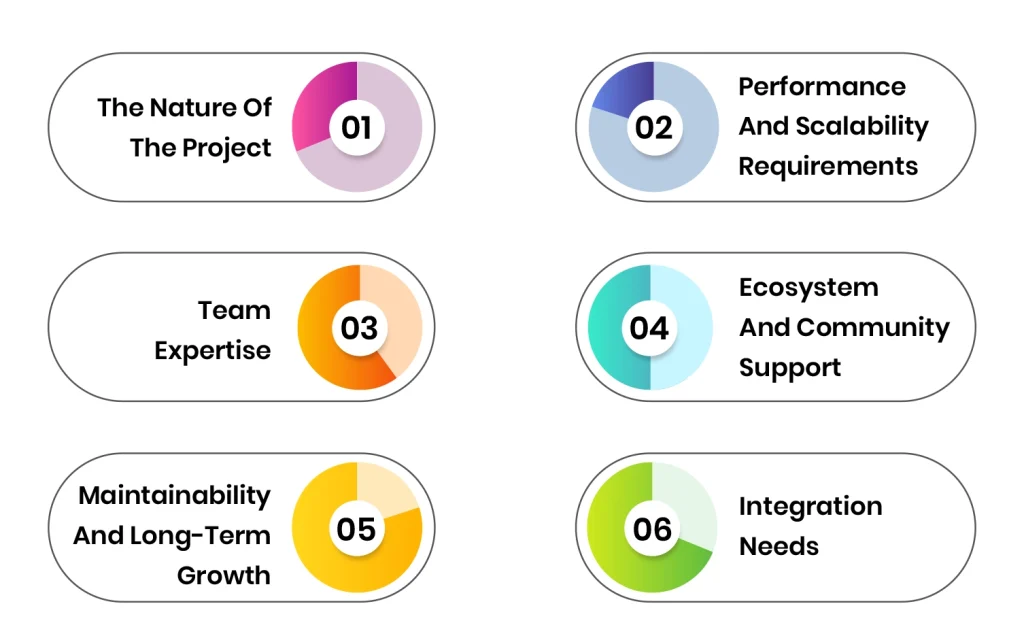
The Nature Of The Project
A small API or MVP doesn’t need the same level of structure as a large-scale enterprise system. For example, something lightweight and flexible might work better for quick development. However, a more opinionated framework is naturally often preferred for complex apps where consistency matters.
Performance And Scalability Requirements
If the app is expected to handle real-time data or a large number of concurrent users, developers lean toward frameworks that are built for high performance and asynchronous processing. On the other hand, for platforms made to handle a lot of content or standard web apps, stability and development speed often take priority over raw performance.
Team Expertise
A framework is only as effective as the people who are going to be using it. If a team is already comfortable with a specific language or ecosystem, then choosing a framework within that space usually leads to faster development and fewer mistakes. Now, switching to a completely new stack might sound appealing, but it can also end up slowing things down in practice.
Ecosystem And Community Support
Mature frameworks come with better documentation and more third-party tools. However, the best of all is that they come with a larger community. This makes problem-solving easier and reduces development time, especially when working on tight deadlines.
Maintainability And Long-Term Growth
In software development, there’s a whole journey that begins after the launch of a project. When choosing the backend, it is about how easy it will be to update and even manage over time. A well-structured framework can make a big difference when the codebase grows, and more developers get involved.
Integration Needs
Modern apps these days rarely exist in isolation… They are just not built that way. Whether it’s payment gateways or third-party APIs, the chosen framework should make these integrations smooth rather than complicated.
Conclusion
It might be true that backend frameworks are just tools, but the way you choose and use them is what shapes the quality of your system. There’s no single option that fits every scenario, and that’s exactly what makes backend development interesting.
Different projects demand different approaches, and the flexibility to make the right call is what sets good development apart from average work.