Across industries, businesses depend on physical assets to run daily operations. These include vehicles, machinery, tools, and inventory. Tracking these assets is still a challenge in many environments. Items get misplaced, underused, or left idle without proper visibility.
IoT asset tracking changes this situation. Instead of manual logs or periodic checks, businesses use connected devices that provide real time visibility of assets. This improves control across logistics, healthcare, construction, and manufacturing operations.
This guide explains what IoT asset tracking is, how it works, its components, types, benefits, and real use cases.
What is IoT Asset Tracking?
To understand the system clearly, here is how IoT asset tracking is generally defined in real environments.
IoT asset tracking is a system that uses connected devices and sensors to monitor physical assets in real time. These devices collect data and send it to a central platform where it is processed and displayed.
Assets are fitted with tracking devices that share location, movement, and condition data. This removes the need for manual tracking and improves operational control.
Basic Concept of IoT Asset Tracking
Before looking at components, it helps to understand how the system is actually structured.
IoT asset tracking links physical assets with digital systems using devices such as GPS trackers, RFID tags, BLE beacons, and NFC tags. These devices capture location, movement, and environmental data.
This data travels through cellular networks like 4G and 5G, WiFi, or LPWAN technologies such as LoRaWAN and NB IoT. After that, it reaches cloud platforms where it is processed and displayed.
This setup gives businesses continuous visibility over assets across different locations.
Key Components of IoT Asset Tracking Systems
Now let’s break the system down into its main working layers. These are the parts that actually make tracking possible.
An IoT asset tracking system works through multiple layers, where each layer has a defined role.
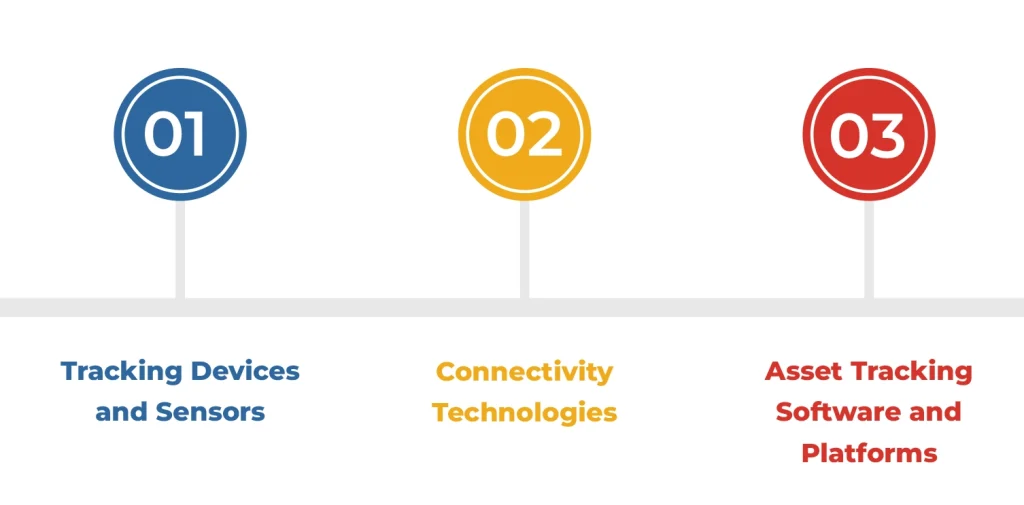
Tracking Devices and Sensors
Here, we look at what sits directly on the asset and collects data.
Tracking devices are fixed to assets. These include GPS modules, RFID readers, BLE transmitters, and environmental sensors.
They collect data such as location, temperature, humidity, vibration, and impact. Device selection depends on usage environment, battery life, and tracking range.
Connectivity Technologies
Once data is captured, it needs a way to move. That is where connectivity comes in.
Connectivity systems transfer data from devices to platforms. Common options include cellular networks, WiFi, Bluetooth Low Energy, and LPWAN protocols like LoRaWAN and NB IoT.
RFID and NFC are used for short range tracking. Cellular and LPWAN are used when wider coverage is needed.
Asset Tracking Software and Platforms
Now the data reaches the system, where it becomes usable information.
Data is sent to cloud dashboards or Enterprise Asset Management systems.
These platforms process and store data and convert it into usable information. They show real time maps, alerts, asset history, and usage data.
Many systems also integrate with ERP and inventory tools through APIs.
Types of IoT Asset Tracking
Different industries use different tracking setups depending on what they manage. Here is how it is usually broken down. IoT tracking systems vary depending on asset type and operational requirements.
Fleet Tracking Systems
This is one of the most common real world applications. Fleet tracking uses GPS devices installed in vehicles. These systems track location, speed, route history, idle time, and fuel usage. Telematics platforms also study driver behavior and vehicle performance.
Equipment and Machinery Tracking
Now we move to tools and heavy equipment used in field operations. Construction and industrial sectors use RFID tags, BLE beacons, and GPS trackers on tools and machines. These systems track location and usage across multiple sites. Maintenance tracking is also supported through usage data.
IT and Portable Asset Tracking
Here is how smaller digital assets are handled inside offices and buildings. IT assets like laptops and tablets are tracked using BLE tags or WiFi based systems. Indoor tracking is done through access points and signal strength mapping.
Condition Monitoring Systems
Some assets are not just tracked, but also monitored for environmental conditions. IoT sensors measure temperature, humidity, and shock levels. This is critical in cold chain logistics where product condition must remain stable.
How IoT Asset Tracking Works
Now let’s connect everything together and see how the full process runs in sequence. The system works in a structured flow from data collection to monitoring.
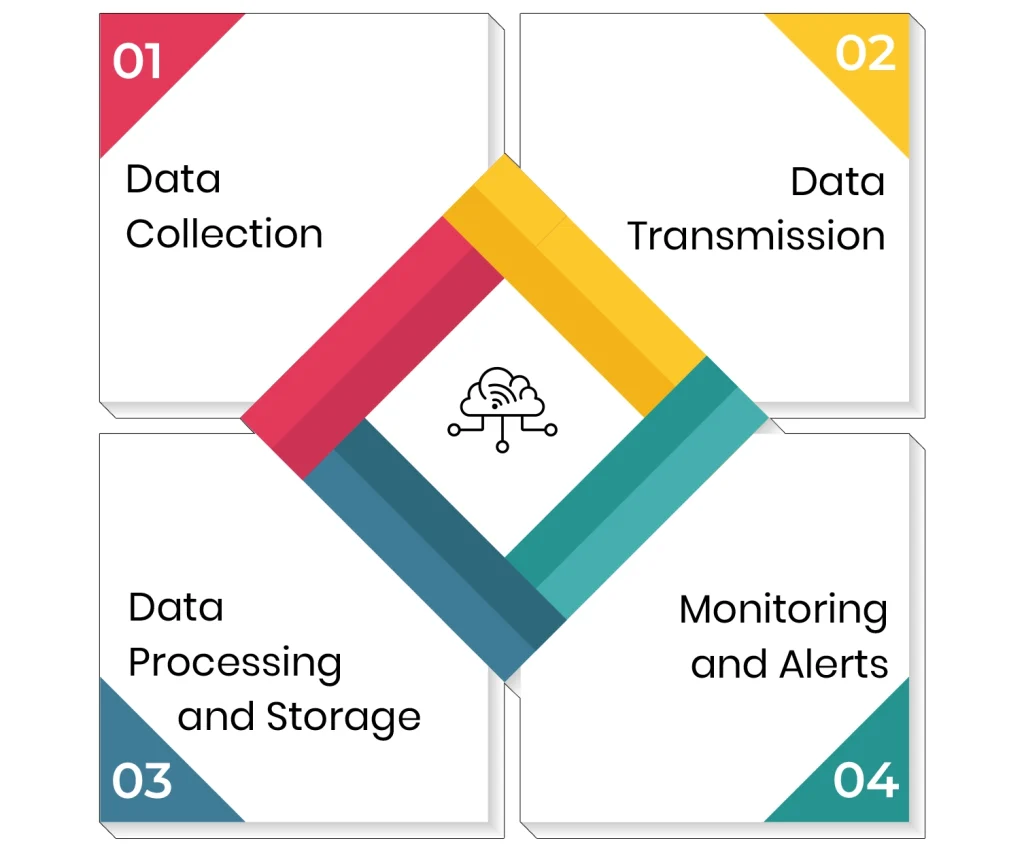
Data Collection
This is the starting point of the system. Sensors collect data such as GPS location, movement, and environmental readings. Data may be collected continuously or at fixed intervals.
Data Transmission
Next, the system moves data from field devices to digital platforms. GPS handles positioning. Cellular networks like LTE and 5G or LPWAN systems like LoRaWAN handle long range transmission.
Data Processing and Storage
Now the system organizes raw data into usable form. Data is received in cloud or edge systems. It is processed, filtered, and stored in databases. Some systems use analytics tools to detect unusual patterns.
Monitoring and Alerts
This is where users actually interact with the system. Users view dashboards to track assets in real time. Alerts are generated for geofence breaches, temperature changes, or unauthorized movement.
Benefits of IoT Asset Tracking
Now let’s look at why businesses actually use this system.
- IoT asset tracking supports better control over operations across industries.
- Real time visibility helps teams know asset location without manual effort. This improves accuracy and reduces tracking errors.
- Data based decisions become possible since systems collect usage and performance information.
- Security improves through geofencing and alerts that detect unauthorized movement. Maintenance becomes structured because usage data supports planned servicing through CMMS tools.
- Supply chain visibility improves as assets can be tracked across transport stages.
Industry Use Cases of IoT Asset Tracking
Here is how this system is applied in real industries.
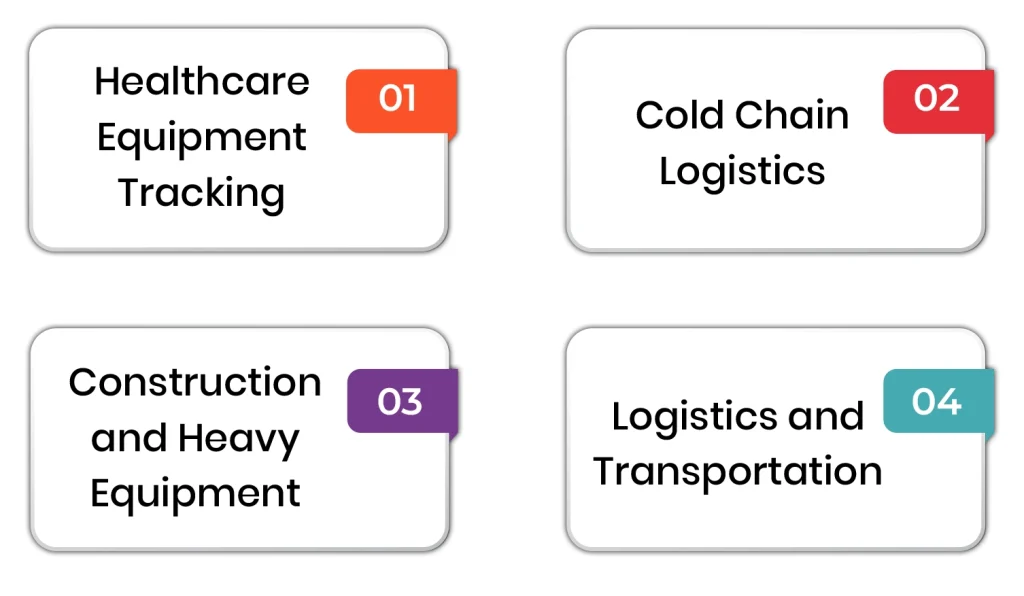
Healthcare Equipment Tracking
Hospitals use RFID systems to track equipment such as wheelchairs and diagnostic machines. This helps staff locate devices quickly and manage availability.
Cold Chain Logistics
Here tracking is mainly about conditions, not just location. Temperature sensors track sensitive goods during transport. This ensures products stay within required conditions across the supply chain.
Construction and Heavy Equipment
Now we move to outdoor and high value machinery. GPS and telematics systems track machinery usage and location. This helps manage equipment across multiple sites and monitor maintenance needs.
Logistics and Transportation
Here tracking is used at scale for movement of goods. Fleet systems track vehicles and shipments. This helps with route planning, delivery tracking, and fuel monitoring.
Technology Behind IoT Asset Tracking
Before ending, here is a quick view of the technical layer behind everything.
Communication Protocols
IoT systems use different communication methods such as MQTT, HTTP, and CoAP. MQTT is widely used because it supports lightweight messaging between devices and servers.
Data Processing Systems
Now the focus shifts to how data is handled after collection. Data is processed using cloud platforms or edge computing systems. Edge systems handle data closer to the device, which reduces delay and network load.
Integration with Enterprise Systems
Finally, systems are connected to business tools. IoT platforms often connect with ERP, EAM, and inventory systems. This helps align asset tracking with business operations and reporting systems.
Challenges in IoT Asset Tracking
Even with strong systems, some real world limitations still exist.
- Network coverage in remote areas can interrupt real time communication between devices and platforms.
- Deployment cost remains high because hardware, software, and infrastructure all require investment.
- Battery limitations affect long term field usage.
- Data management becomes complex when systems scale and integrate with enterprise platforms.
Future of IoT Asset Tracking
The system is still evolving and becoming more advanced.
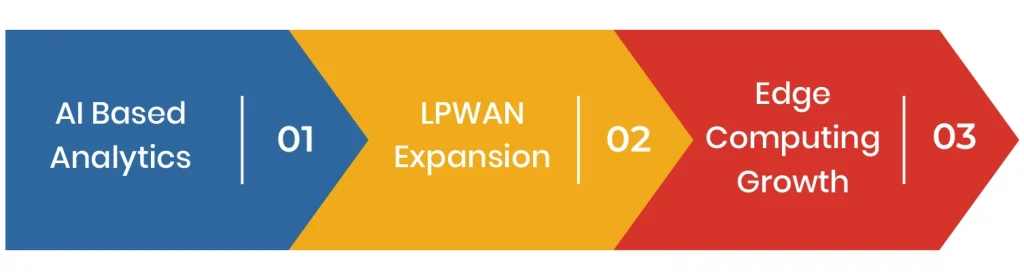
AI Based Analytics
AI models are now used to study asset behavior and detect patterns. This helps predict failures and improve planning.
LPWAN Expansion
Technologies like LoRaWAN and NB IoT are expanding. They support long range communication with low power usage.
Edge Computing Growth
Edge computing processes data closer to the device. This reduces delay and improves response time in remote environments.
Final Words
IoT asset tracking has become part of modern operations across industries. It gives visibility, control, and real time monitoring of assets.
If you are planning to implement an asset tracking system, it should match your asset type, environment, and workflow. Linkitsoft works with businesses to design and implement custom IoT solutions based on real operational needs.
Connect with us to discuss your requirements and plan the right approach.
Frequently Asked Questions
Can IoT asset tracking work without manual checking?
Yes, that’s actually the main idea behind it. Once devices are installed on assets, they keep sending updates on their own. You don’t need to physically go and check where things are. Everything shows up on a screen in real time.
What kind of assets can be tracked with IoT?
Pretty much anything physical that moves or is used in operations. That includes vehicles, tools, machines, containers, and even IT equipment like laptops. If it has value or needs monitoring, it can usually be tracked.
Do you need the internet for IoT asset tracking to work?
Yes, some form of connectivity is needed. It can be mobile networks, WiFi, or LPWAN, depending on where the asset is. The device sends data through these networks so the system can update its location and status.
Is IoT asset tracking only useful for large companies?
Not really. Big companies use it at scale, but smaller businesses also use it for equipment tracking or fleet control. It mostly depends on how many assets you need to monitor and how often you lose track of them.
What are the main benefits of IoT asset tracking?
There are some major benefits of IoT asset tracking for your business, such as real time visibility of assets, better operational control, and improved security. It also helps in tracking usage patterns, managing maintenance schedules, and reducing asset loss. Many businesses use it to improve supply chain tracking and resource management.