Monetization is one of those things that is responsible for a lot of revenue generation in most of today’s digital innovations. In IoT, it’s not limited to just selling smart devices… It’s about what happens after the device is installed. Every connection and every bit of data opens up a new way for businesses to create ongoing value.
Still, making money from IoT isn’t always as easy as it sounds. Between choosing the right model and actually proving value to customers, there’s a lot that needs to come together for it to work smoothly.
So, Linkiitsoft has created this ultimate guide to break IoT monetization down in a clear and practical way. It is designed to help you understand how connected systems can be turned into real and long-term, stable revenue.
What is Monetization?
Monetization simply means the process of turning something into a source of income. In simple terms, it’s how value is converted into money. Now, whether it’s a product or even data, monetization helps an individual or a business make money from it.
It can happen in many ways, depending on what is being offered. Some businesses make money by selling products directly, while others earn through other legal methods. This can often consist of:
- Subscriptions
- Advertising
- Licensing
- Usage-based fees
- And even more
The main idea is the same in every case: you create something useful and then find a way to generate revenue from it.
But monetization is actually a powerful asset because it helps in understanding value and deciding how that value can be exchanged in a way that benefits both the provider and the customer.
How Does Monetization Work in IoT?
Monetization in IoT works by moving past just selling physical devices and focusing on the ongoing value those devices create once they are connected and in use. Thanks to this, revenue keeps generating continuously through data and digital capabilities that are built around the device’s ecosystem.
IoT monetization works in steps:
- It starts with connected devices collecting real-time data from their environment.
- This data is then transmitted to platforms where it is analyzed and turned into usable insights.
- Businesses use these insights to create value-added services such as predictive maintenance or performance optimization.
Revenue can be generated in multiple ways. Some companies charge a subscription fee for access to dashboards or software features. If you use any collaboration tools like Slack or Jira, you’ll see an example of this. Others use usage-based models where customers pay depending on how much they use the service.
What are the business models of IoT monetization?
IoT monetization works in a skillful and strategic way, so it doesn’t rely on a single approach. Instead, businesses use different models depending on how they want to deliver value and generate revenue. The right model often depends on the customer needs and the type of solution being offered.
Understanding these models will allow you to decide which one you need:
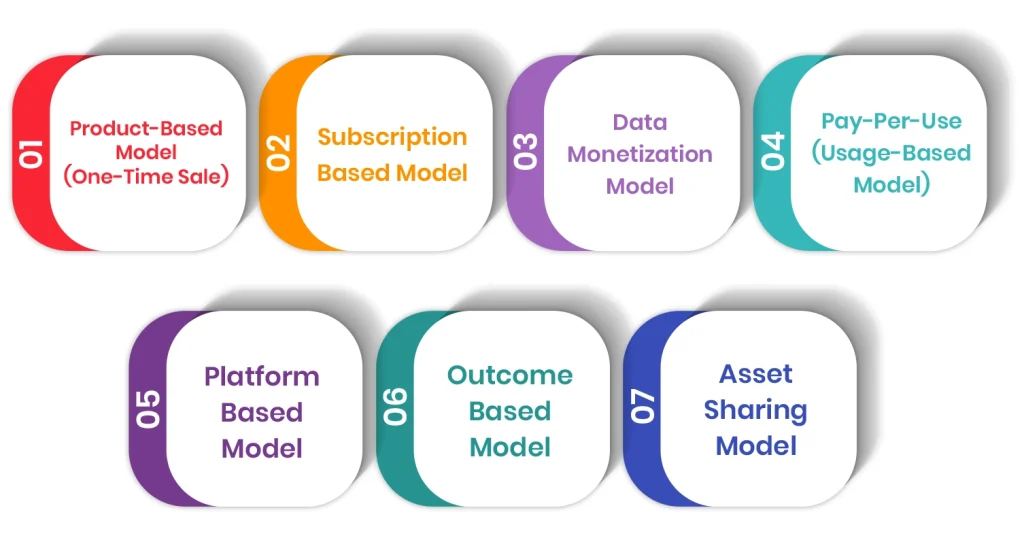
Product-Based Model (One-Time Sale)
This is the most straightforward model where revenue comes from selling IoT devices upfront. Customers pay once to own the product, such as smart sensors or industrial devices. While simple, it limits long-term earnings unless combined with other services.
Subscription-Based Model
In this model, customers pay a recurring fee. If you have a Netflix subscription, you know what we’re talking about. This could be monthly or yearly to allow access to IoT services. This could include software dashboards or analytics.
Data Monetization Model
Here, the focus is on the data generated by connected devices. Companies analyze this data to create insights that can be sold or used to improve the making of decisions. In some cases, anonymized data is shared with third parties for additional revenue opportunities.
Pay-Per-Use (Usage-Based Model)
Instead of a fixed cost, customers are charged based on how much they use the service. This could be based on time or the volume of usage. It’s a flexible model that allows customers to pay only for what they actually consume.
Platform-Based Model
This model involves creating an IoT ecosystem where multiple users or businesses can build and connect services. Even developers can do this for themselves. Platform access fees and ecosystem partnerships generate most of the revenue. This model works well for scalable and interconnected solutions.
Outcome-Based Model
In this approach, customers don’t pay for the device or usage at all. They are actually paying for the results here. Pricing in this model is basically tied to specific outcomes like improved productivity or higher performance. The outcome-based model in IoT monetization shifts responsibility from usage to the actual value acquired.
Asset-Sharing Model
This model allows multiple users to share connected assets, with revenue generated based on access or shared usage. It is commonly used in smart mobility or shared infrastructure systems where full ownership isn’t necessary. This is why the asset-sharing model often shines in the right sector.
What Are The Challenges That Arise With IoT Monetization?
Although it sounds like IoT monetization can help you make good money without any problems, it isn’t the real case. See, everything related to technology, and especially money-making, will always come with challenges. Being aware of these challenges before getting into monetization with IoT is a good idea for businesses that genuinely want to stay one step ahead.
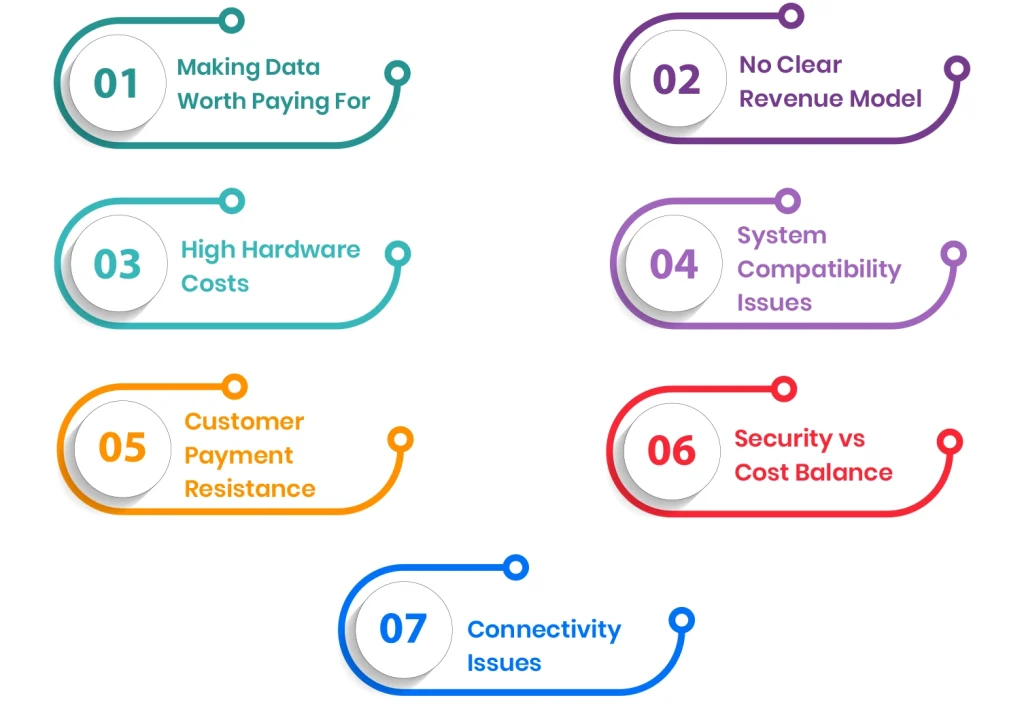
Making Data Worth Paying For
One of the biggest challenges is figuring out how to turn raw data into something valuable enough that customers are willing to pay for. Data alone doesn’t create revenue; it can be spontaneous, too. To deliver value, it needs context and real-world usefulness.
No Clear Revenue Model
Many businesses struggle to decide how exactly they should charge. Whether it’s subscription, usage-based pricing, or any other model, choosing the wrong one can limit growth or confuse customers.
High Hardware Costs
IoT systems often require sensors and infrastructure that can be expensive to build and deploy. These costs can make it harder to achieve quick returns.
System Compatibility Issues
IoT environments often involve multiple devices and platforms that don’t always work well together. This lack of standardization can slow down integration and increase development complexity.
Customer Payment Resistance
Not all customers are comfortable paying ongoing fees for services they once considered part of a one-time purchase. Convincing them to shift their mindset can be a real challenge.
Security vs Cost Balance
Stronger security is essential for connected systems, but it also increases development and maintenance costs. Finding the right balance between adequate safety and affordability is often difficult.
Connectivity Issues
Since IoT systems rely heavily on constant communication between devices, poor or unstable connectivity can directly impact performance and user experience. This will make reliability a key concern and impact the costs.
Conclusion
IoT monetization is a powerful way to make money and rely on modern technology for it. However, it is vital for businesses looking for success to build a proper, strategic plan before they monetize data and use IoT to deliver it to their customers.
With proper planning and execution, IoT can become a sustainable and scalable source of income rather than just a technological investment.