
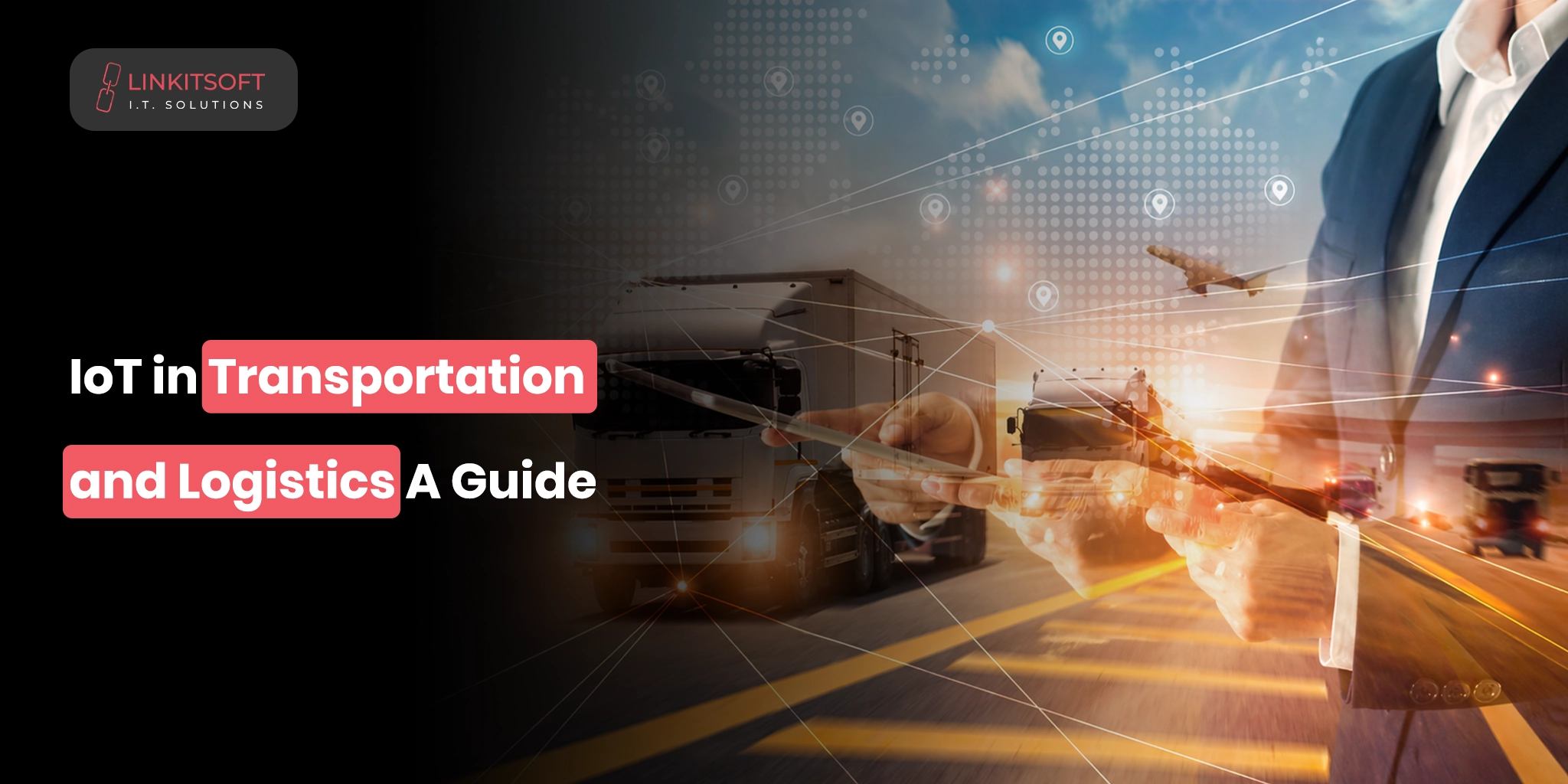
Transportation and logistics are becoming a much better industry with IoT stepping in. Everything from fleet management to warehouse operations is becoming more connected and visible. We’re talking about real-time tracking and systems that actually help businesses stay ahead instead of constantly catching up.
As supply chains increasingly grow more and more complex and customer expectations keep rising, understanding how IoT fits into this space is essential. So, Linkitsoft has created this guide to help you better understand and navigate the world of IoT.
What Does IoT Do in Transportation and Logistics?
IoT connects the moving parts of transportation and logistics into one intelligent system. Thanks to it, businesses get a live view of what’s happening across their entire operation without relying on guesses or delayed updates.
These connected devices collect and share data in real time, making it easier to conduct actions such as:
- Track assets and respond instantly to any disruptions.
- Fleet managers can simply optimize routes based on traffic patterns.
- Logistics teams can keep an eye on temperature-sensitive goods
- Companies can predict maintenance issues before they turn into costly breakdowns.
IoT is genuinely creating better opportunities in every sector. The reason that the transportation industry is benefiting the most is because of the amount of guesswork that businesses have to work with here, and how AI simplifies it.
What Are The Pillars Of A Connected IoT Ecosystem In Logistics?
A connected IoT ecosystem in logistics is built on a few core pillars that work together to ensure smooth and transparent operations across the entire supply chain. These pillars help businesses track goods and improve a lot of aspects.

Connected Devices and Sensors
Everything starts with the physical layer. Devices and sensors are placed across vehicles and warehouses. These include:
- GPS trackers
- RFID tags
- Temperature sensors
- Telematics systems
They continuously collect data from the environment and act as the eyes and ears of the entire logistics network. This way, they are able to capture information that would otherwise go unnoticed.
Real-Time Data Connectivity
Collecting data is one thing, but transmitting it instantly is what makes IoT powerful. Real-time connectivity ensures that data from devices is sent to central systems without delays. This happens by using technologies like:
- Cellular networks
- Wi-Fi
- LPWAN
This constant flow of information allows logistics teams to monitor operations as they happen. It allows them to respond to disruptions quickly and maintain better control over moving assets.
Data Processing and Analytics
Raw data on its own isn’t very useful unless it’s processed and interpreted. This is where analytics comes in. IoT systems analyze incoming data to:
- Identify patterns
- Detect anomalies
- Generate powerful insights
For example, businesses can predict delivery delays and identify inefficiencies in routes. This way, they monitor driver behavior to improve safety and performance.
Cloud Infrastructure
To handle large volumes of data and ensure accessibility, IoT ecosystems rely heavily on cloud infrastructure. The cloud here acts as a centralized platform where all data is:
- Stored
- Processed
- Accessed in real time.
It also allows organizations to grow and expand their operations without investing heavily in physical servers, making it easier to expand IoT capabilities as the business grows.
Automation and Smart Decision Systems
One of the biggest benefits of IoT is its ability to automate routine decisions. Based on rules that are predefined or insights gathered using AI, systems can trigger actions without any human intervention. This could be:
- Rerouting a vehicle due to traffic
- Sending alerts for maintenance
- Adjusting storage conditions automatically
This reduces manual effort and speeds up response times across the supply chain.
Security and Compliance Layer
With so much data being collected and shared at all times, security becomes critical. This pillar ensures that:
- Devices
- Networks
- Data
are sincerely protected from unauthorized access or dangerous cyber threats. It also helps companies in staying compliant with industry regulations, especially when handling sensitive shipment data or operating across multiple regions.
Integration with Supply Chain Systems
Finally, IoT doesn’t operate in complete isolation. It needs to connect seamlessly with existing systems like:
- ERP
- Warehouse management systems (WMS)
- Transportation management systems (TMS)
This integration ensures that data flows smoothly across all platforms, giving businesses a unified view of their operations and enabling better coordination between different parts of the supply chain.
What are the Key Applications of IoT in Transportation and Logistics?
IoT is transforming transportation and logistics by making operations more connected. This way, things are becoming smoother. It helps businesses move goods faster and with better control across the entire supply chain. The best part is that all parties stay updated with what’s happening and when.
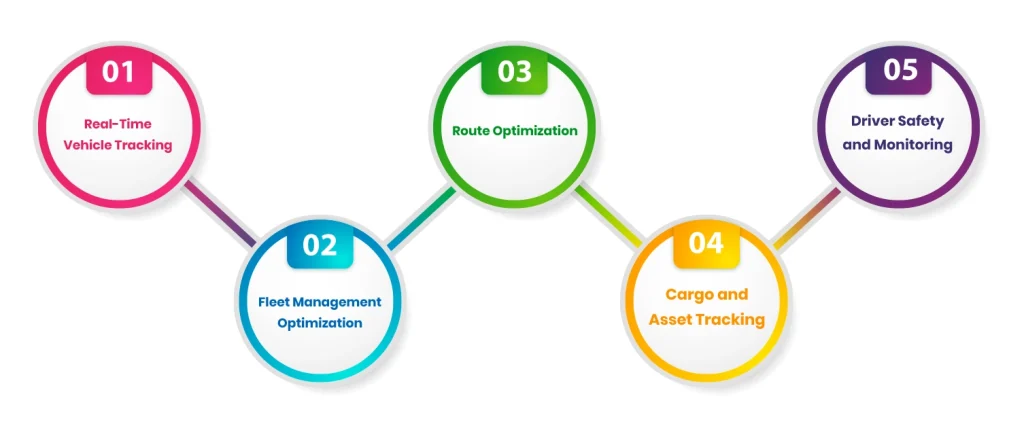
Real-Time Vehicle Tracking
One of the most common and valuable uses of IoT is real-time vehicle tracking. With GPS-enabled devices installed in trucks and delivery vehicles, businesses can monitor their exact location at any given moment. This goes beyond just “knowing where the truck is.” It actually helps logistics teams provide accurate delivery estimates and even improve customer communication.
For example, if a shipment is running late due to traffic or weather conditions, teams can instantly notify customers or adjust schedules accordingly. This kind of responsiveness simply wasn’t possible before IoT became mainstream.
Fleet Management Optimization
Managing a fleet isn’t just about keeping vehicles on the road; it’s about making sure they’re operating properly and cost-effectively. IoT helps businesses track fuel usage, idle time, and overall vehicle health.
With this data, companies can identify the lack of things and reduce unnecessary fuel consumption. This way, they can ensure that vehicles are being used in the smartest way possible. Over time, this leads to lower operational costs and better resource utilization, which can make a huge difference, especially for large fleets.
Route Optimization
Traffic congestion and unpredictable delays can seriously impact delivery timelines. IoT addresses this by allowing dynamic route optimization. Instead of following fixed routes, systems can analyze real-time traffic data and suggest faster, more alternatives.
This doesn’t just save time, it also reduces fuel costs and improves delivery reliability. Drivers spend lesser time stuck in traffic, and businesses can complete more deliveries within the same timeframe, boosting overall productivity.
Cargo and Asset Tracking
Beyond vehicles, IoT also makes it easier to track the actual goods being transported. Sensors and even tracking devices can be attached to shipments, allowing businesses to monitor their location and condition throughout the journey.
This is especially important for sensitive or high-value goods. For instance, temperature-controlled shipments like food or pharmaceuticals can be tracked continuously to ensure they remain within safe limits. If something goes wrong, alerts can be triggered immediately, preventing losses and maintaining quality standards.
Driver Safety and Monitoring
Driver behavior plays a major role in both safety and operational efficiency. IoT systems can monitor factors like speed, braking patterns, and driving hours to ensure that drivers are following safe practices.
This data helps businesses reduce the risk of accidents, improve compliance with safety regulations, and even provide training where needed. Over time, it creates a safer working environment while also protecting company assets and improving overall performance.
Conclusion
The real impact of IoT in transportation and logistics is about control in an industry that has always struggled with uncertainty. For decades, businesses have had to deal with blind spots and constant firefighting. IoT changes that dynamic completely by turning operations into something you can actually see and improve in real time.
What makes this shift even more important is how it changes decision-making. Instead of reacting to problems after they happen, companies can anticipate them and operate with a level of accuracy that simply wasn’t possible before.