Managing infrastructure these days in 2026 isn’t what it used to be in previous years. Systems are more distributed with teams that are often available remotely. Due to this, the pressure to keep everything running smoothly is higher than ever.
Businesses can’t afford downtime or inaccuracies popping up randomly, especially when their operations depend heavily on digital environments.
As technology continues to evolve with the passing time, so does the need for smarter and more flexible ways to monitor and maintain infrastructure without being physically present.
Teams should be able to do this because being physically present at all times gets draining. This shift has made remote approaches not just convenient, but essential for staying competitive and responsive.
In this guide, we’ll walk you through everything you need to know to navigate and make the most of remote infrastructure management.
What is Remote Infrastructure Management?
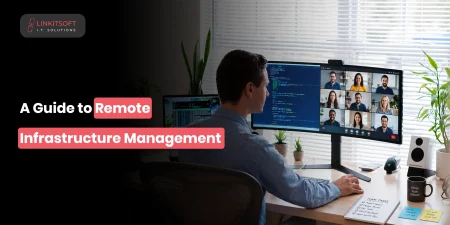
Remote Infrastructure Management is often abbreviated as RIM. It is the practice of monitoring, managing, and maintaining an organization’s IT infrastructure from a remote location. This means that you can do so without being physically available. You could be chilling on your couch or even be in a whole different country, and RIM would still allow you to do your job.
Instead of relying on on-site teams for every issue or update, businesses use centralized tools and platforms to handle their:
- Servers
- Networks
- Systems
- Applications
In simple terms, it allows IT teams to keep everything running smoothly remotely. All of it can be done without being at the location through secure connections and management tools, no matter if it is:
- Tracking system performance
- Applying updates
- Fixing issues
- Preventing potential failures
RIM has the ability to provide live visibility and control. Teams can detect problems early and respond to them right away, much faster. This way, the regular operations don’t get disturbed, and things stay in flow. It also supports scalability, making it easier for businesses to manage their growing infrastructure without constantly expanding their on-site resources.
What are the Components of Remote Infrastructure Management?
Remote Infrastructure Management is built on several key components that work together to keep business systems stable and secure. Each part plays a role in ensuring that infrastructure can be monitored and managed without needing constant on-site presence.
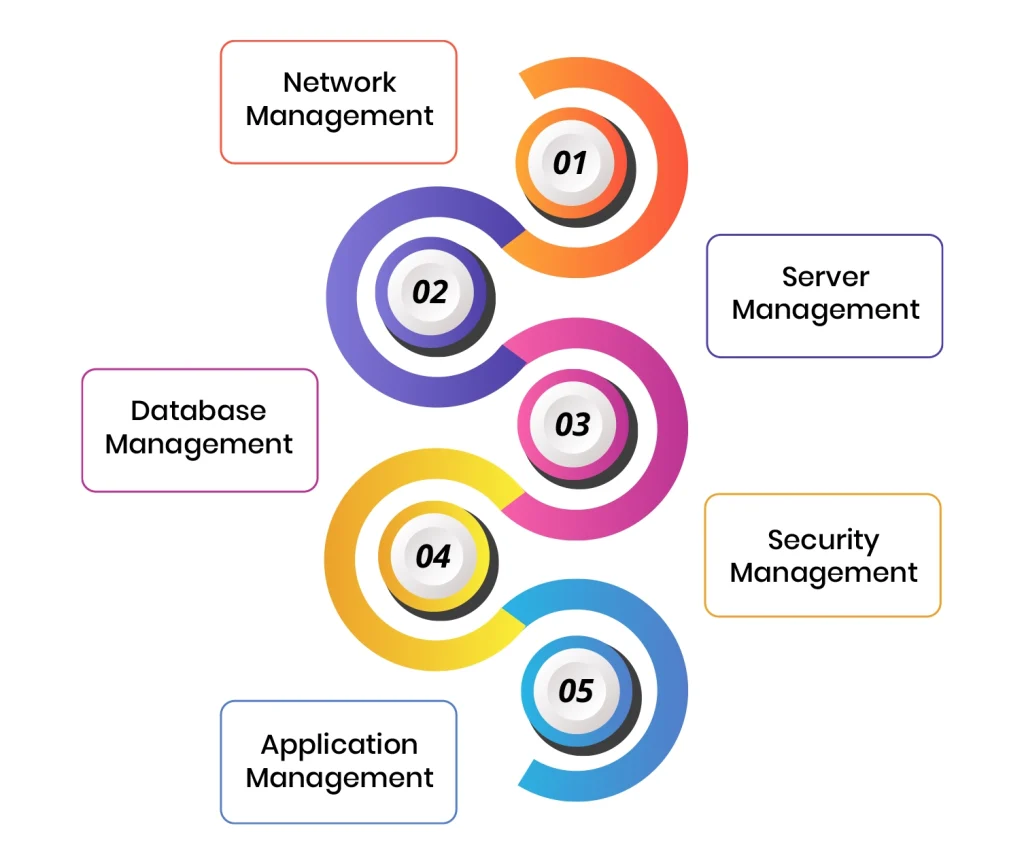
Network Management
The network management component is the most important one. This component focuses on keeping communication between systems stable and uninterrupted. It involves:
- Monitoring bandwidth
- Tracking performance
- Quickly identifying any slowdowns or outages
Since everything depends on connectivity, even a small network issue can impact the ongoing operations, which is why continuous monitoring and quick response are quite critical here.
Server Management
Servers handle the core processing and storage tasks, so keeping them in good health is essential. Remote server management includes:
- Monitoring uptime
- Managing configurations
- Installing updates
This helps in ensuring that resources like CPU and memory are being used properly. It’s not just about fixing issues… it’s about preventing them before they affect the performance.
Database Management
Data is one of the most valuable assets for any business, and databases are where that data lives. This component focuses on making sure databases are always available and running. It includes:
- Regular backups
- Performance optimization
- Monitoring for any unusual activity
This is important so that the infrastructure can stay in good condition and be safe from things that could lead to data loss or slow performance.
Security Management
Security is a great chunk of every part of remote infrastructure management. It involves protecting systems from threats through:
- Firewalls
- Encryption
- Access control
- Regular updates
Since everything is managed remotely, having strong security measures in place is vital to prevent unauthorized access and keep sensitive information safe.
Application Management
Apps are what users interact with daily, so their performance directly affects user experience. This component helps in making sure that:
- All apps are running smoothly
- Their updates are applied on time
- Any bugs or issues are resolved quickly
It also involves monitoring how apps behave under different loads to maintain consistent performance.
What are the benefits of Remote Infrastructure Management?
When implemented properly, Remote Infrastructure Management brings a mix of flexibility and control that traditional on-site setups often struggle to match. The real value lies in how smoothly it keeps everything running behind the scenes while reducing pressure on teams.
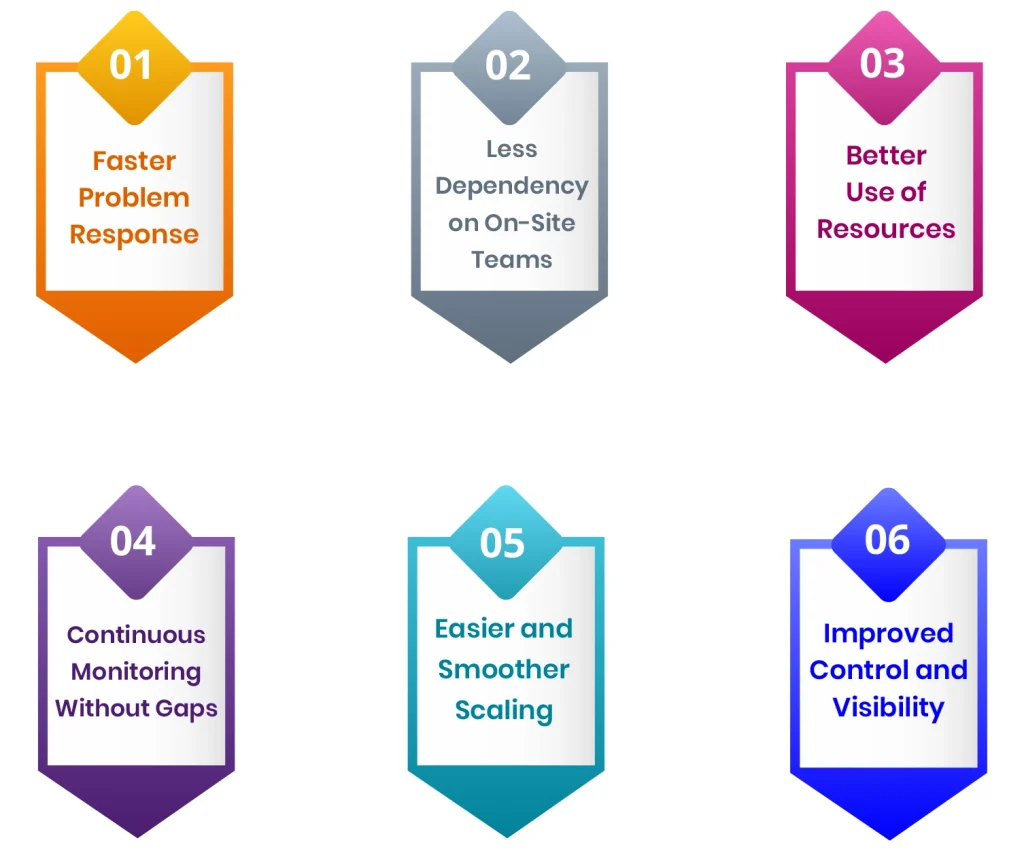
Faster Problem Response
One of the biggest advantages is speed. Instead of waiting for an on-site technician to diagnose and fix an issue, problems can be identified and resolved remotely in real time.
This means less waiting and fewer delays. In many cases, issues are even detected before users notice them, which helps avoid downtime altogether.
Less Dependency on On-Site Teams
With remote infrastructure management, businesses don’t need to rely heavily on physical IT teams at every location. A single centralized team can manage multiple systems across different regions.
This not only reduces staffing pressure but also makes operations more consistent and easier to coordinate, especially for growing organizations.
Better Use of Resources
Instead of investing heavily in large on-site teams or redundant infrastructure, companies can allocate resources properly.
Remote management allows businesses to optimize both human effort and technical assets. Teams can focus much more on strategic tasks rather than spending time on repetitive and draining work.
Continuous Monitoring Without Gaps
Unlike traditional setups where systems are checked during specific hours, remote infrastructure is monitored 24/7. This constant visibility ensures that performance issues or system errors are detected early.
It creates a safety net where small issues don’t have the chance to turn into major failures.
Easier and Smoother Scaling
As businesses expand, their IT infrastructure naturally grows with them. Remote infrastructure management makes this scaling process much easier.
Whether it’s adding new users or entire locations, everything can be integrated without disruptions or complicated on-site setups.
Improved Control and Visibility
Even though the systems are managed remotely, businesses actually gain more clarity over their infrastructure.
Real-time dashboards and monitoring tools provide a complete view of what’s happening at any given moment.
Conclusion
When used properly, remote infrastructure management can be a strategic asset for businesses. It simplifies the way IT systems are monitored and maintained, and also brings better control into everyday operations. With the right approach, it helps organizations stay more responsive in time and support growth without adding unnecessary operational complexity.